
How to compare a die casting parts manufacturer India
Choosing the right die casting parts manufacturer India can directly affect cost, quality, lead times, and supply chain stability. For procurement professionals, a reliable comparison goes beyond price and requires evaluating production capability, certifications, material expertise, tooling control, and export experience. This guide outlines the key factors to help buyers assess suppliers more confidently and make smarter sourcing decisions in a competitive global market.
For buyers sourcing from India, the opportunity is significant. The country offers a broad supplier base, competitive labor economics, and strong engineering depth across automotive, electronics, industrial equipment, and consumer products. At the same time, supplier capability can vary widely between small job shops, mid-sized export-oriented plants, and fully integrated manufacturers.
That is why comparing a die casting parts manufacturer India should involve a structured scorecard. A sound procurement review typically covers 8 to 10 criteria, including alloy range, machine tonnage, tooling ownership, dimensional tolerance control, finishing options, production planning, and shipment performance. When these factors are reviewed together, sourcing decisions become less reactive and more strategic.
What procurement teams should compare first
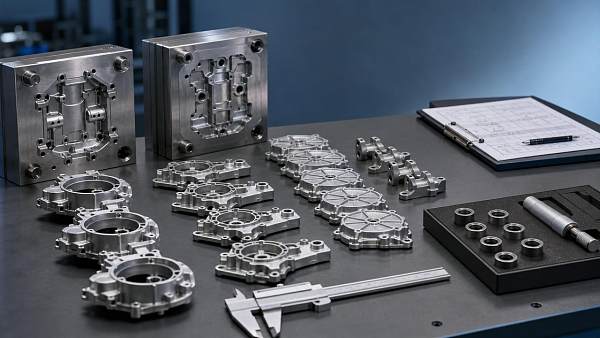
The first stage is to separate basic suppliers from production-ready partners. Many buyers initially compare only quotation value, but a low unit price can quickly lose its advantage if rejection rates rise above 2% to 3%, tooling revisions take 3 to 6 weeks, or shipments slip beyond agreed windows. A better approach is to assess capability before negotiating commercial terms.
Core manufacturing capability
Start with process fit. A die casting parts manufacturer India may specialize in aluminum, zinc, or magnesium alloys, and not every plant is equally strong in each. For most industrial buyers, aluminum die casting remains the most common choice because it balances weight, strength, corrosion resistance, and cost. However, thin-wall electronic housings may require different expertise than pump bodies or gearbox covers.
Ask for practical production limits, not generic claims. Useful checkpoints include machine tonnage range, part weight range, wall thickness capability, annual output, and secondary operations in-house. For example, a supplier running 250T to 800T machines may suit medium parts, while another with 1,200T capacity may handle larger structural castings more efficiently.
Technical questions worth asking
- Which alloys are processed regularly: ADC12, A380, LM24, Zamak grades, or equivalents?
- What tolerance can be held on as-cast and machined features, such as ±0.1 mm or ±0.05 mm on critical dimensions?
- What is the typical porosity control method for pressure-tight parts?
- How many dies can be maintained simultaneously without delaying new projects?
- What share of production is exported versus domestic supply?
These details help buyers compare a die casting parts manufacturer India on operational reality rather than sales language. A supplier serving export markets for 5 to 10 years often has stronger documentation discipline, packaging control, and schedule visibility than a factory focused only on local spot orders.
The table below gives procurement teams a practical first-pass framework for supplier comparison. It can be used during RFQ review, plant audits, or online qualification calls.
A useful pattern emerges quickly. Suppliers that can explain process limits with numbers, show maintenance discipline, and describe inspection flow in 3 to 5 steps are usually easier to onboard than those offering only broad capability statements.
Certifications and system maturity
Certifications do not guarantee perfect execution, but they do indicate process discipline. Buyers commonly look for ISO 9001 as a baseline. If the parts are intended for automotive programs, IATF-aligned quality systems may matter. For medical-adjacent or clean application environments, traceability and controlled documentation become even more important.
Beyond certificates, ask how the system works day to day. How long are inspection records retained? Is batch traceability linked to melt lot and machining lot? How fast can the plant issue a corrective action response—within 24 hours, 48 hours, or 5 business days? These process details often reveal more than framed documents on a wall.
How to evaluate cost, lead time, and total sourcing risk
A quotation should be viewed as a cost structure, not just a unit number. When comparing a die casting parts manufacturer India, procurement teams should break the offer into at least 6 elements: tooling cost, casting price, machining cost, finishing cost, packaging, and logistics terms. This makes supplier-to-supplier comparison far more transparent.
Lead time realism and production planning
Many sourcing issues begin with unrealistic timing assumptions. New die development can take 4 to 8 weeks in common programs, while samples may require another 1 to 3 weeks depending on machining and validation complexity. For repeat production, standard replenishment may range from 3 to 6 weeks, but this depends on die availability, order volume, and finishing sequence.
Ask whether the supplier has dedicated planning software, a weekly capacity review, and a policy for urgent orders. A strong plant can usually define what it can expedite, by how many days, and at what cost impact. If the answer is vague, schedule risk is likely under-managed.
Commercial review checklist
- Confirm Incoterms and whether freight is included or separate.
- Review tooling payment milestones, such as 50/30/20 or similar stage billing.
- Check MOQ and batch economics for low-volume versus mass production.
- Define sampling quantity and approval criteria before production release.
- Clarify liability for die modification caused by design changes.
This commercial discipline helps buyers avoid one of the most common sourcing mistakes: choosing a quote that looks cheaper by 4% to 7%, but later carries higher inspection, air freight, or rework costs.
The next table highlights how procurement teams can compare visible price against hidden supply risk when reviewing a die casting parts manufacturer India.
Procurement value usually sits in the right-hand column. A supplier that is 3% more expensive but protects delivery continuity and quality stability can lower total landed cost over a 12-month program cycle.
Export experience and communication quality
Export readiness matters more than many buyers expect. A capable die casting parts manufacturer India should understand export packing, HS code support, moisture protection when required, pallet discipline, labeling consistency, and document accuracy. Errors in these areas can delay customs clearance by several days and disrupt downstream production schedules.
Communication should also be tested early. During the RFQ phase, note whether technical questions are answered within 24 to 48 hours, whether drawings are reviewed with comments, and whether tolerance concerns are raised proactively. Fast but shallow communication is less valuable than a measured response that identifies a tooling risk before the PO is issued.
Practical supplier audit points before final selection
A final comparison should combine document review with an audit, either on site or remote. Even a 60 to 90 minute structured audit can reveal whether the supplier manages process control consistently. Buyers should verify not only what equipment exists, but how production data is used to control scrap, machine downtime, and first-pass yield.
What to inspect during a plant audit
- Die storage conditions and maintenance logging frequency
- Melt handling, temperature control, and alloy segregation practice
- Trim, deburring, machining, and finishing flow between departments
- Inspection equipment availability, calibration status, and operator records
- Packing area organization and export shipment readiness
If the supplier cannot show a clear flow from raw material to packed shipment in 5 to 7 controlled steps, operational maturity may be limited. For global buyers, that gap often translates into slower corrective actions and inconsistent repeat orders.
Common mistakes when comparing suppliers
One frequent mistake is overvaluing sample appearance while underchecking process repeatability. A good-looking first batch does not confirm stable mass production. Another mistake is failing to define critical dimensions, cosmetic standards, and leak-test needs before RFQ. That often leads to re-quoting, tool changes, and approval delays.
A third mistake is treating all Indian suppliers as interchangeable. In reality, capability differs by region, customer mix, and vertical focus. Some plants are strongest in automotive brackets and housings, while others perform better in electrical enclosures, valve bodies, or industrial cast components. Segment fit matters as much as price.
Recommended scoring model for procurement
Many sourcing teams use a weighted matrix across 100 points. A practical model may assign 25 points to quality systems, 20 to technical fit, 15 to tooling capability, 15 to delivery performance, 15 to commercial competitiveness, and 10 to communication and responsiveness. This reduces bias and creates a documented selection trail.
When comparing a die casting parts manufacturer India for long-term programs, the winning supplier is not always the one with the lowest opening quote. It is usually the manufacturer that can maintain stable output, transparent process control, and predictable collaboration across tooling, production, and export logistics.
How buyers can make a smarter final decision
The most reliable sourcing decision combines 3 layers: technical validation, commercial clarity, and operational confidence. Buyers should request drawings review feedback, sample planning, inspection format, and a clear production roadmap before placing volume orders. This creates alignment early and limits expensive surprises after tooling begins.
For procurement professionals operating across advanced manufacturing and global supply networks, a disciplined supplier comparison process is more than a purchasing task. It is a risk management tool. Evaluating a die casting parts manufacturer India with measurable criteria helps protect continuity, improve landed cost control, and support stronger supplier relationships over time.
If your team is reviewing Indian die casting sources for current or future programs, TradeNexus Pro can help you assess supplier fit through deeper market intelligence, category-focused sourcing insights, and decision-ready comparison frameworks. Contact us to discuss your sourcing priorities, request a tailored evaluation approach, or explore more procurement solutions for industrial component supply.
Get weekly intelligence in your inbox.
No noise. No sponsored content. Pure intelligence.
 Oct 08, 2026How Digital Health Improves Diagnostic Accuracy and Workflow in Clinical LabsHow Digital Health Improves Diagnostic Accuracy and Workflow in Clinical Labs
 Oct 07, 2026Selecting Voice Picking Systems for German Warehouses: Integration, Languages and ROISelecting Voice Picking Systems for German Warehouses: Integration, Languages and ROI
 Oct 06, 2026How to Choose Last Mile Dispatch Software for On-Time Delivery at ScaleHow to Choose Last Mile Dispatch Software for On-Time Delivery at Scale
 Oct 05, 2026Vietnam’s Consumer Electronics Market: Demand Shifts and Sourcing OpportunitiesVietnam’s Consumer Electronics Market: Demand Shifts and Sourcing Opportunities
 Oct 04, 2026Digital Health Investment Priorities for Providers: Improving Access, Outcomes, and EfficiencyDigital Health Investment Priorities for Providers: Improving Access, Outcomes, and Efficiency
 Oct 03, 2026How to Specify an FR4 Custom PCB Board for High-Voltage and High-Heat DesignsHow to Specify an FR4 Custom PCB Board for High-Voltage and High-Heat Designs
 Oct 02, 2026ERP Software Market Intelligence: Adoption, Pricing, and Vendor Signals to WatchERP Software Market Intelligence: Adoption, Pricing, and Vendor Signals to Watch
 Oct 01, 2026How to Select Calibrated Temperature Data Loggers for GMP Cold Storage MonitoringHow to Select Calibrated Temperature Data Loggers for GMP Cold Storage Monitoring
 Sep 30, 2026Custom Molded Rubber Pricing: What Drives Unit Cost and Tooling Fees?Custom Molded Rubber Pricing: What Drives Unit Cost and Tooling Fees?
 Sep 29, 2026How to Evaluate Energy Management Software Vendors for Multi-Site OperationsHow to Evaluate Energy Management Software Vendors for Multi-Site Operations
 Sep 28, 2026How to Select a DIN Rail Smart Meter for Multi-Circuit Energy MonitoringHow to Select a DIN Rail Smart Meter for Multi-Circuit Energy Monitoring
 Sep 27, 2026TWS Earbuds in Vietnam: Demand Drivers, Price Tiers, and Retail Channel OpportunitiesTWS Earbuds in Vietnam: Demand Drivers, Price Tiers, and Retail Channel Opportunities
 Sep 26, 2026How UAE Clinics Can Qualify a Smart Glucometer Supplier for Accuracy and ComplianceHow UAE Clinics Can Qualify a Smart Glucometer Supplier for Accuracy and Compliance
 Sep 25, 2026Buying Aesthetic Lasers in the USA: FDA Status, Wavelengths, and Service SupportBuying Aesthetic Lasers in the USA: FDA Status, Wavelengths, and Service Support
 Sep 24, 2026Laser Cutting Brass Sheet: How to Prevent Burrs and Heat Marks on Thin PartsLaser Cutting Brass Sheet: How to Prevent Burrs and Heat Marks on Thin Parts
 Sep 23, 2026How to Choose Lightweight ANC Headphones for Comfortable All-Day TravelHow to Choose Lightweight ANC Headphones for Comfortable All-Day Travel
 Sep 22, 2026IPX5 TWS Bluetooth Earbuds: What Protection Do They Offer for Workouts?IPX5 TWS Bluetooth Earbuds: What Protection Do They Offer for Workouts?
 Sep 21, 2026What to Look for in a Grid Integration Company for Utility-Scale Solar ProjectsWhat to Look for in a Grid Integration Company for Utility-Scale Solar Projects
 Sep 20, 2026Microgrid Controller Pricing: What Drives Cost in Commercial Energy Projects?Microgrid Controller Pricing: What Drives Cost in Commercial Energy Projects?
 Sep 19, 2026How to Choose a GaN Charger for Laptops Without Compromising Power or PortabilityHow to Choose a GaN Charger for Laptops Without Compromising Power or Portability
 Sep 18, 2026Floating Solar Farm Costs: CAPEX, OPEX, and the Site Factors That Shape ROIFloating Solar Farm Costs: CAPEX, OPEX, and the Site Factors That Shape ROI
 Sep 17, 2026Drone Delivery Solutions for Last-Mile Routes: Site, Payload, and Range PlanningDrone Delivery Solutions for Last-Mile Routes: Site, Payload, and Range Planning
 Sep 16, 2026When Low-Volume Electronics Manufacturing Makes More Sense Than Mass ProductionWhen Low-Volume Electronics Manufacturing Makes More Sense Than Mass Production
 Sep 15, 2026Wholesale WiFi Smart Switches: What Buyers Should Verify Before OrderingWholesale WiFi Smart Switches: What Buyers Should Verify Before Ordering
 Sep 14, 2026How to Select IoT Sensors for Reliable Monitoring in Harsh Industrial EnvironmentsHow to Select IoT Sensors for Reliable Monitoring in Harsh Industrial Environments
 Sep 13, 2026How Procurement Teams Can Improve Supplier Reliability With Supply Chain VisibilityHow Procurement Teams Can Improve Supplier Reliability With Supply Chain Visibility
 Sep 12, 2026Smart Manufacturing Trends 2026: What Leaders Should Prioritize for ROISmart Manufacturing Trends 2026: What Leaders Should Prioritize for ROI



























