What Are Corrugated Plastic Boxes Used For in Warehousing and Returnable Packaging?
What Are Corrugated Plastic Boxes Used For in Warehousing and Returnable Packaging?
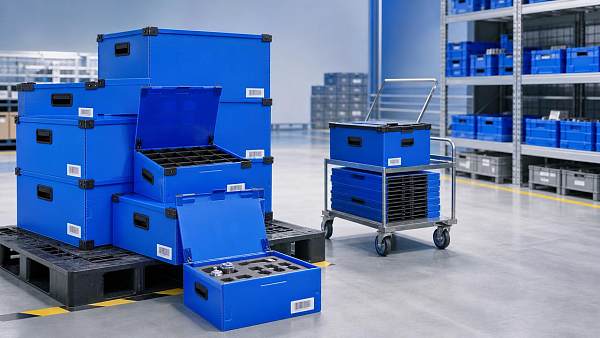
In modern warehousing and closed-loop logistics, corrugated plastic boxes do much more than hold inventory.
They help operations teams protect goods, speed up handling, and reduce one-way packaging waste.
That matters even more when projects involve repeat shipments, line-side delivery, or fragile industrial components.
From a cost and planning angle, corrugated plastic boxes support a cleaner, more controlled packaging flow.
They are widely used in automotive, electronics, medical supply, contract manufacturing, and export staging.
The main reason is simple.
They combine durability, low weight, moisture resistance, and repeat-use value in one practical format.
In real operations, that balance often makes corrugated plastic boxes a better fit than paperboard or wood.
Why Corrugated Plastic Boxes Matter in Warehousing
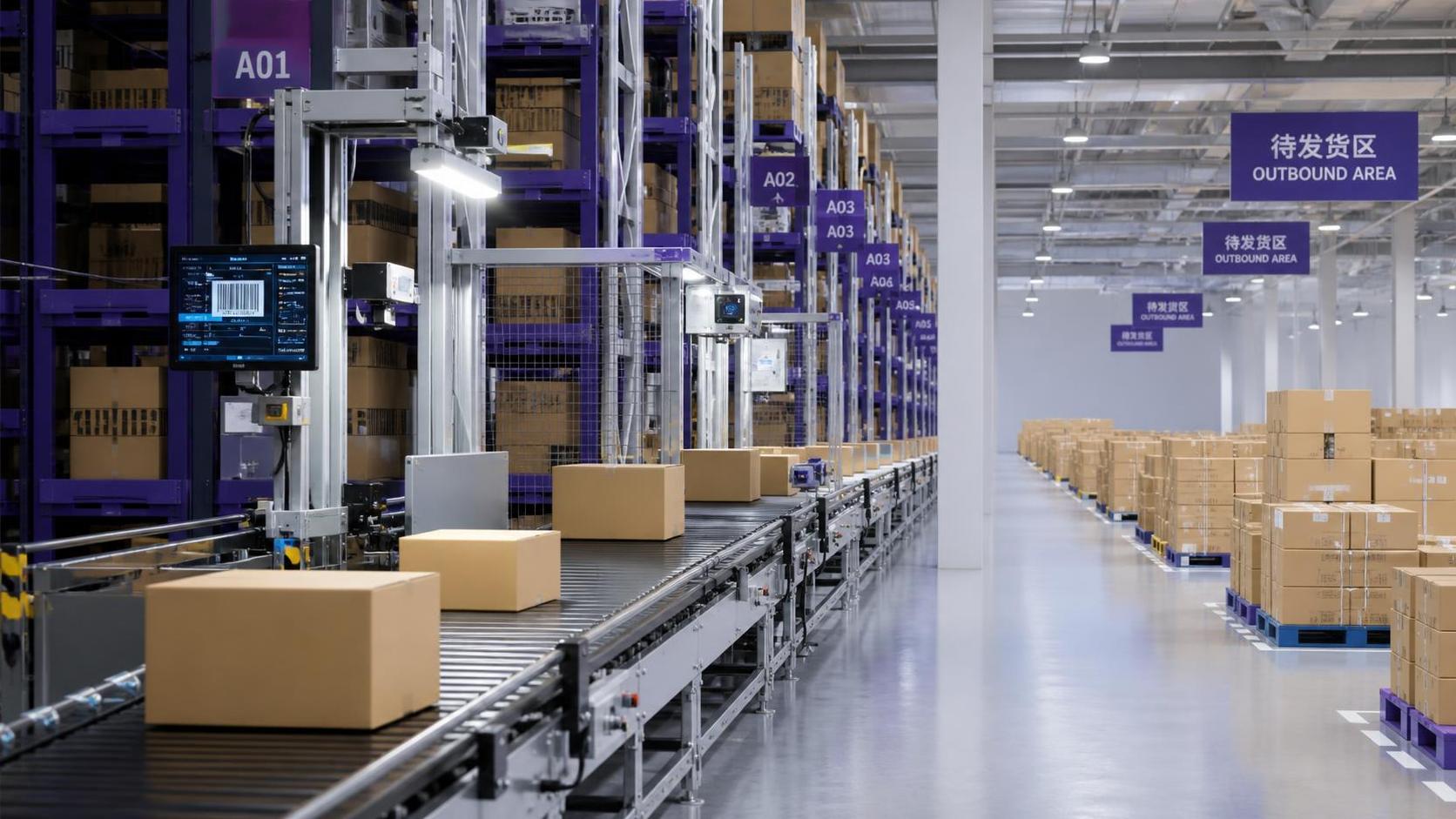
Warehouse environments are tough on packaging.
Boxes are stacked, moved, scanned, opened, repacked, and sent back into circulation.
Traditional cartons work for single trips, but they wear out fast under repeated handling.
Corrugated plastic boxes are built for this kind of repetition.
They resist crushing better than standard cardboard in damp or variable environments.
They also hold shape well, which improves stacking consistency on racks, pallets, and carts.
That stability reduces product damage and makes storage planning easier.
Another practical benefit is cleanliness.
Corrugated plastic boxes are easier to wipe down than fiber-based packaging.
That makes them useful in controlled production areas and cleaner warehouse zones.
Core warehouse uses
- Work-in-process movement between receiving, storage, and production lines.
- Parts kitting for assembly cells and project-based installations.
- Component segregation for SKUs that need visual order and quick access.
- Temporary storage of sensitive items needing dust and splash resistance.
- Export consolidation where return loops exist between facilities.
Where Corrugated Plastic Boxes Fit in Returnable Packaging
Returnable packaging works best when shipments move in predictable cycles.
That includes plant-to-plant transport, supplier milk runs, service parts loops, and regional distribution networks.
In these systems, corrugated plastic boxes reduce the recurring cost of disposable packaging.
More importantly, they create standardization.
Standard box sizes, labels, inserts, and return processes make packaging easier to track and reuse.
This is where corrugated plastic boxes become part of the operating system, not just a container.
They support closed-loop packaging programs by lasting through many trips.
That helps teams forecast packaging demand with more confidence.
It also cuts waste disposal, carton purchasing, and emergency repacking labor.
Common returnable packaging applications
- Automotive parts moving between suppliers and assembly operations.
- Electronic components shipped between factories and contract manufacturers.
- Medical device subassemblies requiring cleaner reusable containers.
- Aftermarket service kits sent to field teams and returned for replenishment.
- Retail-ready replenishment programs with reverse logistics built in.
Key Benefits for Efficiency, Cost, and Risk Control
The strongest case for corrugated plastic boxes is rarely one single benefit.
It is the combined operational effect over time.
First, they improve durability in busy logistics environments.
A stronger box means fewer packaging failures, fewer damaged parts, and fewer rushed replacements.
Second, they improve handling efficiency.
Because corrugated plastic boxes keep their shape, workers can stack and move them more consistently.
Third, they support better inventory discipline.
Labels stay visible, bins stay organized, and reusable packaging becomes easier to count and recover.
Fourth, they help lower total packaging cost in repeat-use systems.
The unit price is higher than disposable cartons, but the life-cycle value is often better.
Finally, they align with waste reduction and sustainability targets.
That is increasingly important in procurement reviews and supply chain reporting.
Quick comparison table
Best Use Cases by Product Type
Not every product needs the same packaging setup.
Corrugated plastic boxes are especially useful when products need protection without excessive packaging weight.
They work well for medium-weight items, repeat shipments, and parts that benefit from custom partitions.
In electronics, they help separate delicate components and reduce abrasion during movement.
In industrial supply chains, they hold machined parts, fittings, housings, and assemblies in a more orderly way.
In healthcare-related manufacturing, they support cleaner handling and reusable packaging routines.
For field operations, corrugated plastic boxes can also serve as reusable kit boxes for tools and service parts.
Good fit scenarios
- Projects with regular internal transfers between sites.
- Programs with high carton replacement rates.
- Operations needing moisture-resistant reusable containers.
- Lines requiring organized parts presentation and fast picking.
- Supply chains measured on waste, damage, and packaging recovery.
What to Evaluate Before Choosing Corrugated Plastic Boxes
Adoption should start with workflow analysis, not just box specifications.
A box that looks durable on paper may fail if the return system is weak.
The first check is trip frequency.
If the packaging returns often enough, corrugated plastic boxes usually make stronger economic sense.
The second check is product sensitivity.
Some items need inserts, dividers, foam, or anti-static features.
The third check is handling environment.
Stack height, forklift movement, conveyor contact, and storage humidity all affect packaging life.
The fourth check is reverse logistics discipline.
Without tracking, reusable assets disappear, and the cost model breaks down.
Decision checklist
- Estimate expected trips per box before replacement.
- Measure damage rates with current packaging.
- Review return rates and asset loss risk.
- Match box design to product dimensions and weight.
- Confirm cleaning, labeling, and storage processes.
- Test a pilot loop before large-scale rollout.
How to Make a Returnable Packaging Program Work
Even the best corrugated plastic boxes need process support.
A successful returnable packaging program depends on operational discipline.
Start with standardization.
Use a limited range of sizes and clear labeling rules.
Then build visibility.
Barcode or RFID tracking makes corrugated plastic boxes easier to recover and redeploy.
Next, assign accountability across shipping, receiving, and packaging control.
That step is often overlooked, but it protects reuse rates.
Finally, monitor actual performance.
Track trips, repairs, losses, damage incidents, and packaging spend over time.
That data shows whether corrugated plastic boxes are delivering the expected return.
For warehousing and closed-loop logistics, corrugated plastic boxes are most valuable when they are treated as part of a system.
When matched to the right products and supported by clear return processes, they improve protection, control cost, and reduce waste.
If packaging performance is becoming a project bottleneck, testing corrugated plastic boxes in one repeat-use lane is a practical place to start.
Get weekly intelligence in your inbox.
No noise. No sponsored content. Pure intelligence.
 Sep 15, 2026Wholesale WiFi Smart Switches: What Buyers Should Verify Before OrderingWholesale WiFi Smart Switches: What Buyers Should Verify Before Ordering
 Sep 14, 2026How to Select IoT Sensors for Reliable Monitoring in Harsh Industrial EnvironmentsHow to Select IoT Sensors for Reliable Monitoring in Harsh Industrial Environments
 Sep 13, 2026How Procurement Teams Can Improve Supplier Reliability With Supply Chain VisibilityHow Procurement Teams Can Improve Supplier Reliability With Supply Chain Visibility
 Sep 12, 2026Smart Manufacturing Trends 2026: What Leaders Should Prioritize for ROISmart Manufacturing Trends 2026: What Leaders Should Prioritize for ROI
 Sep 11, 2026B2B Market Analysis: How Buyers Evaluate Suppliers, Pricing, and Delivery RiskB2B Market Analysis: How Buyers Evaluate Suppliers, Pricing, and Delivery Risk
 Sep 10, 2026Residential Solar Kits in Canada: How to Size a System for Your Home and ClimateResidential Solar Kits in Canada: How to Size a System for Your Home and Climate
 Sep 09, 2026How to Specify a Syringe Assembly Line for High-Volume Sterile ProductionHow to Specify a Syringe Assembly Line for High-Volume Sterile Production
 Sep 08, 2026How to Evaluate Warehouse Robotics System Suppliers for Reliable Multi-Site DeploymentHow to Evaluate Warehouse Robotics System Suppliers for Reliable Multi-Site Deployment
 Sep 07, 2026Renewable Geothermal Energy Explained: How It Works for Heating and PowerRenewable Geothermal Energy Explained: How It Works for Heating and Power
 Sep 07, 2026How to Choose an Industrial Packaging Robot Manufacturer for Your Production LineHow to Choose an Industrial Packaging Robot Manufacturer for Your Production Line
 Sep 05, 2026How to Evaluate a Turnkey Hydro Turbine Generator Supplier for Remote Power ProjectsHow to Evaluate a Turnkey Hydro Turbine Generator Supplier for Remote Power Projects
 Sep 04, 2026Automated Ultrasonic Welding for Thermoplastic Assemblies: Process Controls That MatterAutomated Ultrasonic Welding for Thermoplastic Assemblies: Process Controls That Matter
 Sep 03, 2026Energy Forecasting for Grid Planning: Sizing Solar and Storage CapacityEnergy Forecasting for Grid Planning: Sizing Solar and Storage Capacity
 Sep 02, 2026Which Metrics Should an Energy Analytics Dashboard Track for Factory Energy Management?Which Metrics Should an Energy Analytics Dashboard Track for Factory Energy Management?
 Sep 01, 2026How Warehouse Voice Picking Improves Accuracy and Throughput in Order FulfillmentHow Warehouse Voice Picking Improves Accuracy and Throughput in Order Fulfillment
 Aug 31, 2026How to Automate Dropshipping Order Processing Without Overselling StockHow to Automate Dropshipping Order Processing Without Overselling Stock
 Aug 30, 2026How to Evaluate a Smart Lighting Supplier for Multi-Site Commercial ProjectsHow to Evaluate a Smart Lighting Supplier for Multi-Site Commercial Projects
 Aug 29, 2026Recent Advances in Smart Manufacturing and Materials Reshaping Factory InvestmentRecent Advances in Smart Manufacturing and Materials Reshaping Factory Investment
 Aug 29, 2026Selecting Lightweight Aluminum Extrusions for Strength-Critical Industrial DesignsSelecting Lightweight Aluminum Extrusions for Strength-Critical Industrial Designs
 Aug 29, 2026Vertical Powder Anodizing Explained: Process Controls for Uniform Coating QualityVertical Powder Anodizing Explained: Process Controls for Uniform Coating Quality
 Aug 29, 2026PV Module Product Due Diligence: What Buyers Should Verify Before ContractingPV Module Product Due Diligence: What Buyers Should Verify Before Contracting
 Aug 29, 2026Solar Design for Challenging Terrain: Managing Slope, Soil, and Shading RisksSolar Design for Challenging Terrain: Managing Slope, Soil, and Shading Risks
 Aug 29, 2026IS 16444 Smart Meter Requirements: Key Functions, Tests, and ComplianceIS 16444 Smart Meter Requirements: Key Functions, Tests, and Compliance
 Aug 29, 2026Rehabilitation Equipment Market Outlook: Demand Drivers and Growth SegmentsRehabilitation Equipment Market Outlook: Demand Drivers and Growth Segments
 Aug 29, 2026When Does Container Handling Automation Deliver ROI in Port Yard Operations?When Does Container Handling Automation Deliver ROI in Port Yard Operations?
 Aug 29, 2026Customs API Integration: A Practical Checklist for Automated Trade ComplianceCustoms API Integration: A Practical Checklist for Automated Trade Compliance
 Aug 29, 2026Returnable Packaging for Automotive: How to Cut Damage and Reverse Logistics CostsReturnable Packaging for Automotive: How to Cut Damage and Reverse Logistics Costs