
China-Europe Railway Express Hits 130,000 Trains
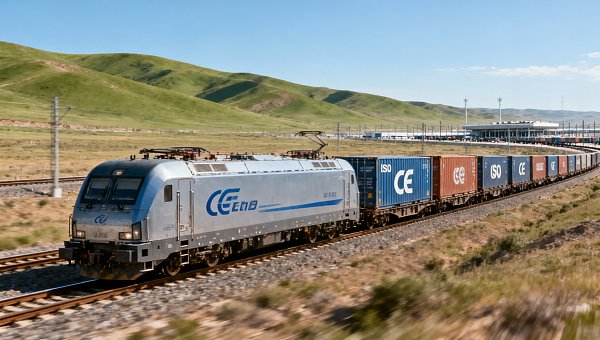
On May 9, 2026, the China-Europe Railway Express (CERX) reached a cumulative total of over 130,000 trains operated since its inception — a milestone underscoring its maturation as a strategic land corridor for Eurasian trade. For European importers and industrial buyers, this scale-up translates into renewed predictability in logistics cost, transit time, and end-to-end supply chain resilience — particularly amid ongoing maritime volatility and air freight capacity constraints.
Event Overview
As of May 9, 2026, the China-Europe Railway Express has operated more than 130,000 trains, carrying goods valued at over USD 520 billion. It currently operates 94 scheduled routes, reaching over 200 cities across 25 European countries. The return-trip train ratio has risen to 68%, reflecting improved cargo balance and market-driven demand on the European leg.
Industries Impacted
Direct Trading Enterprises: Importers engaged in cross-border B2B trade — especially those sourcing finished or semi-finished industrial goods — benefit from reduced lead-time variability. With average transit times 22 days faster than sea freight and freight rates stable year-on-year, order planning cycles can be shortened and safety stock levels adjusted downward.
Raw Material Procurement Firms: Companies procuring specialty metals, rare-earth components, or high-purity chemical feedstocks face tighter quality and timing windows. CERX’s fixed schedules and rail-controlled temperature/humidity environments (on select services) support just-in-time replenishment without the congestion risks of port-based intermodal handoffs.
Contract Manufacturing & OEMs: Manufacturers serving global clients in Factory Automation, Industrial Materials, and EV Infrastructure sectors rely on synchronized inbound component flows. The rising return-trip share (68%) signals stronger European export readiness — enabling dual-direction visibility for production scheduling and reducing dependency on single-origin logistics.
Logistics & Supply Chain Service Providers: Third-party logistics (3PL) and freight forwarding firms must adapt service portfolios to integrate rail-first planning tools, customs pre-clearance workflows for EU-recognized TIR/ATA procedures, and multimodal rate benchmarking that reflects CERX’s growing share of mid-value, mid-urgency shipments — a segment previously dominated by air-sea hybrids.
Key Considerations & Recommended Actions
Evaluate modal shift thresholds for priority SKUs
Analysis shows that products with landed value above USD 15,000 per TEU and delivery sensitivity exceeding ±5 days are now economically and operationally better served by CERX than by ocean + expedited trucking — especially when factoring demurrage risk at congested North Sea ports.
Reassess Incoterms for rail-specific liabilities
Current CERX operations increasingly use CIP (Carriage and Insurance Paid to) or DAP (Delivered at Place) terms aligned with EU rail terminals — rather than traditional FOB or CIF. Firms should review insurance coverage scope, liability handoff points, and documentation compliance (e.g., CIM consignment notes vs. bills of lading).
Engage with certified rail-forwarding partners early
With 94 scheduled lines now operational, route selection is no longer binary (e.g., “Chongqing–Duisburg”). Carriers differ significantly in terminal handling speed, customs facilitation at border crossings (e.g., Malaszewicze vs. Khorgos), and last-mile integration. Pre-vetted partners with EU AEO status and digital rail tracking capability reduce administrative friction.
Editorial Insight / Industry Observation
Observably, the 130,000-train milestone marks less a quantitative inflection than a qualitative shift: CERX is transitioning from an emergency alternative to a core logistics pillar for time- and value-sensitive industrial trade. Its rising return-trip ratio — now at 68% — suggests European exporters are treating it not as a one-way aid channel, but as a commercially viable export artery. That said, infrastructure bottlenecks persist at key nodes (e.g., Warsaw, Vilnius), and regulatory harmonization on rail safety standards and digital documentation remains uneven across EU member states. This makes interoperability — not just volume — the next frontier.
Conclusion
The CERX’s scale-up delivers tangible, measurable advantages for industrial importers — but its real impact lies in reshaping expectations around reliability in Eurasian trade. Rather than merely shortening timelines, it enables recalibration of inventory models, procurement cadences, and even product design cycles (e.g., modular EV charging hardware shipped in phased rail consignments). For stakeholders, the milestone is best understood not as an endpoint, but as confirmation that rail is now a structural element — not a contingency — in resilient industrial supply chains.
Source Attribution
Data sourced from the China State Railway Group Co., Ltd. and the China-Europe Railway Express Joint Coordination Council (as of May 9, 2026). Key metrics — including return-trip ratio, route count, and cargo valuation — are subject to quarterly verification. Ongoing observation is warranted on EU regulatory alignment under the Trans-European Transport Network (TEN-T) revision and implementation timelines for the Digital Freight Corridor initiative.
Get weekly intelligence in your inbox.
No noise. No sponsored content. Pure intelligence.
 Oct 08, 2026How Digital Health Improves Diagnostic Accuracy and Workflow in Clinical LabsHow Digital Health Improves Diagnostic Accuracy and Workflow in Clinical Labs
 Oct 07, 2026Selecting Voice Picking Systems for German Warehouses: Integration, Languages and ROISelecting Voice Picking Systems for German Warehouses: Integration, Languages and ROI
 Oct 06, 2026How to Choose Last Mile Dispatch Software for On-Time Delivery at ScaleHow to Choose Last Mile Dispatch Software for On-Time Delivery at Scale
 Oct 05, 2026Vietnam’s Consumer Electronics Market: Demand Shifts and Sourcing OpportunitiesVietnam’s Consumer Electronics Market: Demand Shifts and Sourcing Opportunities
 Oct 04, 2026Digital Health Investment Priorities for Providers: Improving Access, Outcomes, and EfficiencyDigital Health Investment Priorities for Providers: Improving Access, Outcomes, and Efficiency
 Oct 03, 2026How to Specify an FR4 Custom PCB Board for High-Voltage and High-Heat DesignsHow to Specify an FR4 Custom PCB Board for High-Voltage and High-Heat Designs
 Oct 02, 2026ERP Software Market Intelligence: Adoption, Pricing, and Vendor Signals to WatchERP Software Market Intelligence: Adoption, Pricing, and Vendor Signals to Watch
 Oct 01, 2026How to Select Calibrated Temperature Data Loggers for GMP Cold Storage MonitoringHow to Select Calibrated Temperature Data Loggers for GMP Cold Storage Monitoring
 Sep 30, 2026Custom Molded Rubber Pricing: What Drives Unit Cost and Tooling Fees?Custom Molded Rubber Pricing: What Drives Unit Cost and Tooling Fees?
 Sep 29, 2026How to Evaluate Energy Management Software Vendors for Multi-Site OperationsHow to Evaluate Energy Management Software Vendors for Multi-Site Operations
 Sep 28, 2026How to Select a DIN Rail Smart Meter for Multi-Circuit Energy MonitoringHow to Select a DIN Rail Smart Meter for Multi-Circuit Energy Monitoring
 Sep 27, 2026TWS Earbuds in Vietnam: Demand Drivers, Price Tiers, and Retail Channel OpportunitiesTWS Earbuds in Vietnam: Demand Drivers, Price Tiers, and Retail Channel Opportunities
 Sep 26, 2026How UAE Clinics Can Qualify a Smart Glucometer Supplier for Accuracy and ComplianceHow UAE Clinics Can Qualify a Smart Glucometer Supplier for Accuracy and Compliance
 Sep 25, 2026Buying Aesthetic Lasers in the USA: FDA Status, Wavelengths, and Service SupportBuying Aesthetic Lasers in the USA: FDA Status, Wavelengths, and Service Support
 Sep 24, 2026Laser Cutting Brass Sheet: How to Prevent Burrs and Heat Marks on Thin PartsLaser Cutting Brass Sheet: How to Prevent Burrs and Heat Marks on Thin Parts
 Sep 23, 2026How to Choose Lightweight ANC Headphones for Comfortable All-Day TravelHow to Choose Lightweight ANC Headphones for Comfortable All-Day Travel
 Sep 22, 2026IPX5 TWS Bluetooth Earbuds: What Protection Do They Offer for Workouts?IPX5 TWS Bluetooth Earbuds: What Protection Do They Offer for Workouts?
 Sep 21, 2026What to Look for in a Grid Integration Company for Utility-Scale Solar ProjectsWhat to Look for in a Grid Integration Company for Utility-Scale Solar Projects
 Sep 20, 2026Microgrid Controller Pricing: What Drives Cost in Commercial Energy Projects?Microgrid Controller Pricing: What Drives Cost in Commercial Energy Projects?
 Sep 19, 2026How to Choose a GaN Charger for Laptops Without Compromising Power or PortabilityHow to Choose a GaN Charger for Laptops Without Compromising Power or Portability
 Sep 18, 2026Floating Solar Farm Costs: CAPEX, OPEX, and the Site Factors That Shape ROIFloating Solar Farm Costs: CAPEX, OPEX, and the Site Factors That Shape ROI
 Sep 17, 2026Drone Delivery Solutions for Last-Mile Routes: Site, Payload, and Range PlanningDrone Delivery Solutions for Last-Mile Routes: Site, Payload, and Range Planning
 Sep 16, 2026When Low-Volume Electronics Manufacturing Makes More Sense Than Mass ProductionWhen Low-Volume Electronics Manufacturing Makes More Sense Than Mass Production
 Sep 15, 2026Wholesale WiFi Smart Switches: What Buyers Should Verify Before OrderingWholesale WiFi Smart Switches: What Buyers Should Verify Before Ordering
 Sep 14, 2026How to Select IoT Sensors for Reliable Monitoring in Harsh Industrial EnvironmentsHow to Select IoT Sensors for Reliable Monitoring in Harsh Industrial Environments
 Sep 13, 2026How Procurement Teams Can Improve Supplier Reliability With Supply Chain VisibilityHow Procurement Teams Can Improve Supplier Reliability With Supply Chain Visibility
 Sep 12, 2026Smart Manufacturing Trends 2026: What Leaders Should Prioritize for ROISmart Manufacturing Trends 2026: What Leaders Should Prioritize for ROI



























