Choosing handheld RFID readers for cold chain operations
Choosing the right handheld RFID readers for cold chain operations can directly impact traceability, compliance, and product integrity. For procurement teams, technical evaluators, and supply chain decision-makers, the challenge is balancing durability, scanning accuracy, connectivity, and total cost across demanding refrigerated environments. This guide explores the core selection criteria, practical use cases, and key performance factors that matter most in modern cold chain workflows.
What matters most when selecting handheld RFID readers for cold chain operations?
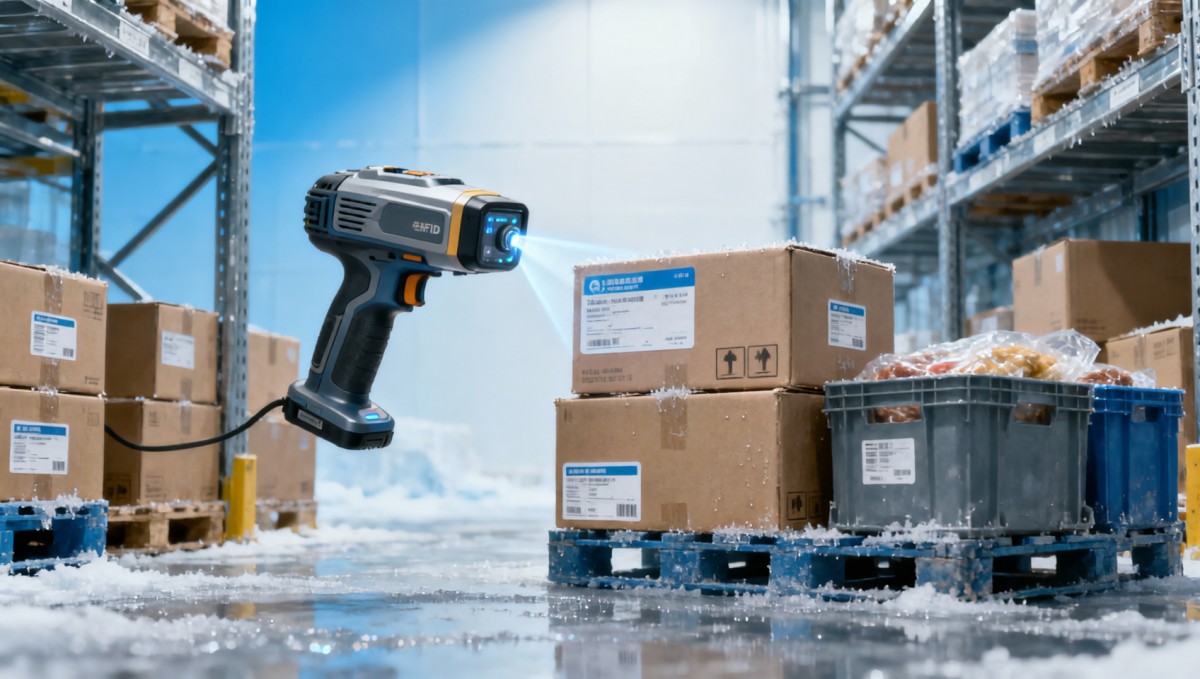
In cold chain environments, handheld RFID readers do more than identify pallets or cartons. They support chain-of-custody visibility, faster receiving, temperature-sensitive inventory control, and exception handling across refrigerated docks, cold rooms, and transport handoff points. For teams working with food, pharmaceuticals, biologics, diagnostics, and sensitive electronics, the wrong device can create blind spots that only surface during an audit or product claim.
A practical buying decision usually depends on 5 core dimensions: reading performance, environmental durability, battery behavior in low temperatures, connectivity options, and integration workload. In many projects, the operating range spans from about 2°C in chilled handling zones down to -20°C or lower in freezer areas. A handheld RFID reader that performs well in ambient warehousing may struggle when condensation, gloves, fogging, or frequent doorway transitions are involved.
Technical evaluators often focus on antenna quality, tag read consistency, and device operating temperature. Procurement teams usually compare lead times, warranty terms, accessories, and serviceability. Finance and approval stakeholders tend to prioritize the 12–36 month total cost picture, including charging infrastructure, spare batteries, software licenses, and replacement cycles. These are not separate conversations; they should be aligned early in the sourcing process.
For B2B buyers navigating multiple vendors, the best approach is to assess handheld RFID readers against actual cold chain workflows instead of generic brochure claims. TradeNexus Pro helps procurement directors, supply chain managers, and project owners frame this evaluation with sector-specific intelligence, especially where healthcare technology, advanced manufacturing, and supply chain SaaS intersect with traceability requirements.
The first screening checklist for procurement and technical teams
- Verify the reader’s specified operating temperature range and whether performance is maintained during repeated transitions between cold storage and loading areas.
- Check ingress protection, drop resistance, trigger durability, and glove-friendly ergonomics for 6–10 hour shift use.
- Confirm support for Wi-Fi, Bluetooth, or cellular backhaul based on indoor and yard-level data synchronization needs.
- Review middleware, API, or mobile application compatibility with WMS, ERP, MES, or temperature monitoring systems.
- Ask for validation under your tag types, packaging materials, and reading distances, not just standard lab conditions.
Which technical specifications should you compare before purchase?
A robust comparison starts with the use case. A cold room cycle count task differs from dock-door receiving, and both differ from route delivery proof-of-condition. That means handheld RFID readers should be evaluated by read range, speed, tag orientation tolerance, battery swap strategy, screen usability with gloves, and the stability of wireless communication in metal-heavy, insulated, or moisture-prone environments.
In practical terms, many teams group requirements into 3 bands: short-range item verification, medium-range case or tote handling, and longer-range pallet identification. If your operation includes mixed materials such as liquid-filled containers, foil packaging, dense stacked cartons, or reusable insulated bins, you also need to verify tag readability under real packing density. This is where field pilots over 3–7 days are more useful than one-time demos.
The table below summarizes common specification areas that matter when choosing handheld RFID readers for cold chain operations. These are not fixed acceptance values for every project, but they provide a clear framework for supplier comparison and internal approval.
This comparison helps teams avoid overbuying on headline specs while missing critical low-temperature behavior. For example, a powerful RFID engine may still underperform operationally if the battery falls short after 4–5 hours in freezer zones or if the touchscreen is unreliable with insulated gloves.
How to separate brochure features from operational value
Ask suppliers to map each specification to a cold chain task. Can the handheld RFID reader complete receiving, exception checks, and transfer confirmation in one workflow? Does it support barcode fallback when some suppliers still use hybrid labeling? Can it queue data offline for 30–60 minutes if a vehicle bay loses connection? Those answers are often more important than peak performance claims.
Project managers should also review accessory ecosystems. Pistol grips, freezer-rated holsters, spare battery kits, charging docks, and vehicle cradles can affect rollout speed just as much as the reader core. A device with limited accessory availability may create hidden implementation delays of 2–4 weeks.
Which cold chain scenarios require different reader configurations?
Not every cold chain operation needs the same handheld RFID reader profile. A pharmaceutical distributor handling validated shipments usually prioritizes traceability accuracy, audit-ready records, and careful exception capture. A food distribution center may place more weight on speed, route staging, and repetitive pallet movements. A healthcare technology supplier may need tighter integration with serialized inventory and quality documentation.
This is why scenario-based selection is more reliable than category-based selection. Buyers should define where the device will be used, who will use it, how many scans or reads occur per shift, and whether the process includes chilled zones, freezer zones, loading ramps, or mobile delivery points. In many operations, the difference between an acceptable device and a strong device becomes obvious only after mapping these real motion patterns.
The table below shows how common cold chain scenarios change the ideal handheld RFID reader requirements. It can be used as a cross-functional planning tool between operations, quality, IT, and sourcing teams.
For distributors and channel partners, this scenario view also improves quoting accuracy. It prevents mismatch between entry-level handheld RFID readers and high-intensity freezer workflows, which can otherwise result in returns, project delays, or disputed performance expectations after deployment.
A useful 4-step internal requirement definition
- List the 3–5 highest-frequency tasks, such as receiving, pallet verification, exception handling, cycle count, and dispatch confirmation.
- Map each task to environment conditions, including chilled, freezer, loading bay, and in-transit use.
- Define required integration points with WMS, ERP, TMS, or quality systems, including offline sync rules.
- Run a pilot with actual packaging and tag placement across at least 1 full operating cycle or several shift windows.
Teams that complete these 4 steps usually reduce avoidable change requests later in the project. They also create stronger alignment between engineering, procurement, compliance, and business stakeholders before budget approval.
How should buyers evaluate total cost, compliance, and implementation risk?
The purchase price of handheld RFID readers is only one part of the decision. In cold chain operations, total cost often includes spare batteries, docking stations, device management software, middleware integration, protective accessories, worker training, validation time, and ongoing support. A low initial quote may become expensive if the rollout requires added hardware or repeated troubleshooting in refrigerated areas.
Compliance is another major factor, especially in regulated sectors. While exact requirements vary by region and product type, buyers commonly need to check labeling consistency, data retention expectations, device security controls, and compatibility with documented quality procedures. If the operation handles healthcare products, teams may also review how the reader supports traceability and exception evidence without disrupting validated workflows.
A practical sourcing review should compare cost and risk side by side. The next table can help finance approvers, sourcing leads, and operations managers evaluate where higher upfront spend may reduce long-term service interruptions or compliance exposure.
This cost view is especially useful for financial approvers who need more than a device quote. It connects capital spend to uptime, audit readiness, and deployment predictability. In many B2B procurement cycles, that broader picture is what moves a project from technical interest to approved investment.
Common mistakes that create avoidable cold chain RFID failures
Mistake 1: Testing in room temperature only
If handheld RFID readers are tested only in office or ambient warehouse conditions, teams may miss battery drop-off, trigger stiffness, screen visibility issues, or tag readability changes caused by condensation and dense packaging. A realistic test should include cold entry, active scanning, and warm transition cycles.
Mistake 2: Treating RFID reader selection as a hardware-only decision
Reader performance depends on tags, package design, data flow, and application logic. A strong device can still fail in practice if tag placement is inconsistent, backend mapping is weak, or operators lack exception procedures.
Mistake 3: Ignoring service and rollout speed
For projects with tight launch windows, the ability to secure samples, confirm accessories, and complete integration support within a 2–4 week window can matter as much as device specs. Delays usually come from overlooked dependencies, not from the reader alone.
FAQ: practical questions buyers ask about handheld RFID readers for cold chain operations
How do I know whether a handheld RFID reader is suitable for freezer use?
Start with the specified operating temperature, but do not stop there. Ask how the device behaves during repeated freezer-to-dock transitions, whether batteries can be hot-swapped, and whether the screen and trigger remain usable with cold-weather gloves. A 1–2 day test is rarely enough; a multi-shift evaluation is safer.
Are handheld RFID readers enough on their own, or do I also need barcode capability?
Many cold chain operations still run mixed labeling environments. Barcode support can be important for exception handling, supplier inconsistency, returns processing, or regulated checks. For that reason, many buyers prefer devices or workflows that support both RFID and barcode capture in a single operational process.
What should procurement teams ask vendors before issuing a final purchase order?
Request 5 things clearly: actual low-temperature operating conditions, battery expectations by shift length, accessory list, integration method, and expected delivery timeline. Also ask whether sample units are available and how firmware updates or device replacements are handled after deployment.
How long does implementation usually take?
A straightforward deployment can move from pilot to rollout in about 2–6 weeks, but complex projects take longer when multiple systems, security reviews, or validation procedures are involved. The most reliable schedule includes pilot testing, workflow adjustment, integration verification, user training, and acceptance checks.
Why work with TradeNexus Pro when evaluating cold chain RFID solutions?
TradeNexus Pro supports B2B buyers who need more than generic product listings. Our platform is built for procurement directors, technical reviewers, supply chain leaders, and enterprise decision-makers working across advanced manufacturing, healthcare technology, smart electronics, green energy, and supply chain SaaS. That cross-sector perspective is valuable when cold chain projects touch compliance, integration, traceability, and operational scale at the same time.
If you are comparing handheld RFID readers for cold chain operations, we can help structure the evaluation around your real decision points: parameter confirmation, environment fit, workflow mapping, integration scope, lead time expectations, accessory planning, and supplier discussion. This reduces internal back-and-forth and helps each stakeholder review the same decision framework.
For distributors, project managers, and sourcing teams under deadline pressure, we can also help clarify which questions to ask before requesting samples or quotations. That includes deployment scope, pilot planning, support assumptions, and compliance-sensitive considerations for refrigerated logistics, healthcare handling, and multi-site inventory visibility.
Contact TradeNexus Pro to discuss handheld RFID reader selection, request support on specification comparison, review likely delivery timelines, explore tailored cold chain workflows, or prepare a sharper RFQ for supplier outreach. If your team needs help narrowing options before budget approval, this is the stage where a structured conversation creates the most value.
Get weekly intelligence in your inbox.
No noise. No sponsored content. Pure intelligence.
 Apr 25, 2026Vietnam Enforces CN-EN Bilingual Safety Labels on Electronic Components from Apr 22, 2026Vietnam Enforces CN-EN Bilingual Safety Labels on Electronic Components from Apr 22, 2026
 Apr 25, 2026ANATEL Mandates Portuguese Offline Voice Assistants for Smart Home Devices in BrazilANATEL Mandates Portuguese Offline Voice Assistants for Smart Home Devices in Brazil
 Apr 25, 2026India BIS Mandates IS 13252:2025 for PLCs & HMIs by Oct 2026India BIS Mandates IS 13252:2025 for PLCs & HMIs by Oct 2026
 Apr 25, 2026SASO EV Charger Rules: Grid Compatibility & Sand Resistance RequiredSASO EV Charger Rules: Grid Compatibility & Sand Resistance Required
 Apr 25, 2026JIS T 0011:2026 Enforces IEC 62366-1:2024 for Rehab Devices in JapanJIS T 0011:2026 Enforces IEC 62366-1:2024 for Rehab Devices in Japan
 Apr 25, 2026THE Alliance Cuts Ningbo–Rotterdam Transit to 18 Days, +35% Spot RateTHE Alliance Cuts Ningbo–Rotterdam Transit to 18 Days, +35% Spot Rate
 Apr 25, 2026TÜV Rheinland Updates IoT EMC Standard: AI Edge Module Immunity Now MandatoryTÜV Rheinland Updates IoT EMC Standard: AI Edge Module Immunity Now Mandatory
 Apr 25, 2026USTR Launches Five-Year China Solar PV AD/CVD ReviewUSTR Launches Five-Year China Solar PV AD/CVD Review
 Apr 25, 2026EU New Battery Regulation Enters Force Apr 24, 2026EU New Battery Regulation Enters Force Apr 24, 2026
 Apr 25, 2026China Customs Launches RCEP Origin Smart Pre-Review for ASEAN机电 ExportsChina Customs Launches RCEP Origin Smart Pre-Review for ASEAN机电 Exports
 Apr 24, 2026India BIS Mandates IS 13252:2025 for PLCs & HMIs by Oct 2026India BIS Mandates IS 13252:2025 for PLCs & HMIs by Oct 2026
 Apr 24, 2026SASO EV Charger Regulation: Sand-Resistant Grid Compatibility Testing RequiredSASO EV Charger Regulation: Sand-Resistant Grid Compatibility Testing Required
 Apr 24, 2026Japan Updates JIS for Rehab Devices: IEC 62366-1:2024 Usability Compliance RequiredJapan Updates JIS for Rehab Devices: IEC 62366-1:2024 Usability Compliance Required
 Apr 24, 2026China Customs Launches RCEP Origin Smart Pre-Review SystemChina Customs Launches RCEP Origin Smart Pre-Review System
 Apr 24, 2026ANATEL Mandates Localized Voice Assistants for Smart Home Devices in BrazilANATEL Mandates Localized Voice Assistants for Smart Home Devices in Brazil
 Apr 24, 2026TÜV Rheinland Updates IoT EMC Standard with AI Edge抗扰度 RequirementTÜV Rheinland Updates IoT EMC Standard with AI Edge抗扰度 Requirement
 Apr 24, 20262M Alliance Shortens Ningbo–Rotterdam Route to 18 Days Amid 35% Slot Premium2M Alliance Shortens Ningbo–Rotterdam Route to 18 Days Amid 35% Slot Premium
 Apr 24, 2026Vietnam Enforces Bilingual Safety Labels for Imported Electronic Components from Apr 22, 2026Vietnam Enforces Bilingual Safety Labels for Imported Electronic Components from Apr 22, 2026
 Apr 24, 2026USTR Launches Sunset Review on China Solar PV AD/CVD DutiesUSTR Launches Sunset Review on China Solar PV AD/CVD Duties
 Apr 24, 2026EU New Battery Regulation Fully Effective Apr 24, 2026EU New Battery Regulation Fully Effective Apr 24, 2026
 Apr 23, 2026Taobao Factory Spark 3.0 Launches AI Workbench for SME Export FactoriesTaobao Factory Spark 3.0 Launches AI Workbench for SME Export Factories
 Apr 23, 2026TENENG Group Inspects IoT Safety Compliance at Jiangnan ChemicalTENENG Group Inspects IoT Safety Compliance at Jiangnan Chemical
 Apr 23, 2026China Launches First Embodied AI Open Data CommunityChina Launches First Embodied AI Open Data Community
 Apr 23, 2026PV Glass Prices Flat for 9 Weeks Amid Rising Integrated ProcurementPV Glass Prices Flat for 9 Weeks Amid Rising Integrated Procurement
 Apr 23, 20262984 NQI One-Stop Platforms Launched Nationwide2984 NQI One-Stop Platforms Launched Nationwide
 Apr 23, 2026China’s Green Smart Ship Tech Norms Accelerate BMS & Shore Power ExportChina’s Green Smart Ship Tech Norms Accelerate BMS & Shore Power Export
 Apr 23, 2026China Builds World's Largest Agri-Meteorological IoT NetworkChina Builds World's Largest Agri-Meteorological IoT Network