Do Wearable Fitness Trackers Get Heart Rate Right?
Wearable fitness trackers promise real-time health insights, but how accurate is their heart rate data in daily use, exercise, and professional evaluation? For buyers, operators, and decision-makers comparing wearable fitness trackers alongside broader smart technology categories, understanding sensor limits, testing conditions, and data reliability is essential before making product, procurement, or safety-related decisions.
In consumer marketing, heart rate tracking is often presented as a simple, always-on feature. In B2B evaluation, however, the question is more practical: when does the reading stay within an acceptable error range, and when can motion, skin tone, strap fit, software filtering, or workload intensity make the data less reliable? That distinction matters for procurement teams, distributors, project managers, and safety reviewers who must compare product classes rather than slogans.
This article examines how wearable fitness trackers measure heart rate, where accuracy tends to improve or degrade, how testing should be structured, and what procurement teams should check before selecting devices for wellness programs, field operations, pilot deployments, or commercial resale. The focus is not on hype, but on usable decision criteria across smart electronics and healthcare-adjacent applications.
How Wearable Fitness Trackers Measure Heart Rate
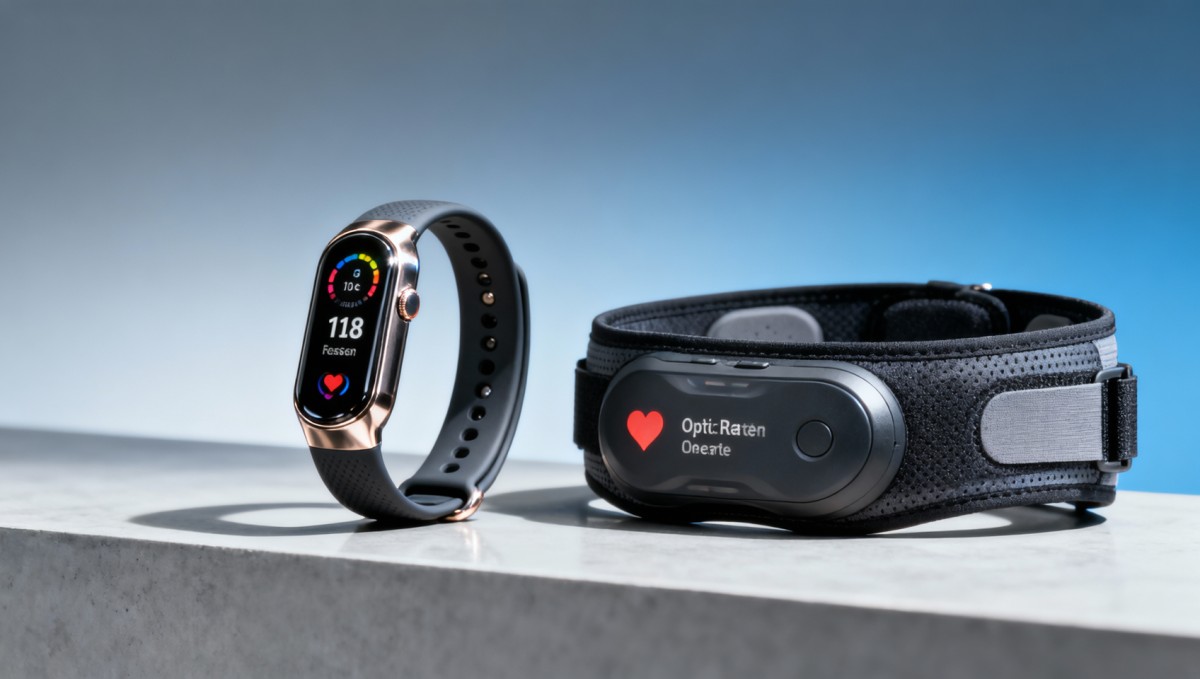
Most wearable fitness trackers estimate heart rate through optical sensing, commonly called photoplethysmography or PPG. LEDs shine light into the skin, and sensors detect changes in reflected light as blood volume shifts with each heartbeat. In many devices, green LEDs are used for routine activity because they offer a practical balance between signal strength and power consumption, while red or infrared channels may support sleep or advanced wellness features.
The method is convenient, but it is indirect. Unlike a chest strap that reads electrical cardiac signals, a wrist-based tracker interprets blood flow patterns and then applies filtering algorithms. That means performance depends on at least 5 variables: sensor quality, sampling frequency, firmware tuning, wrist placement, and the user’s movement level. A stable walking pace may produce usable readings, while interval training can create larger deviations in a matter of seconds.
For operators and buyers, it is important to separate three data layers. First is raw signal capture. Second is algorithmic smoothing, which reduces noise but may delay response by 3–10 seconds. Third is how the app displays or averages the information over 1-second, 5-second, or longer windows. Two trackers can show different numbers even if both are technically functioning as intended.
Why wrist position and fit matter
A tracker worn too loose can let ambient light leak in and increase motion artifacts. A unit worn too low on the wrist bone may also reduce contact stability. In practical testing, many vendors recommend positioning the device 1–2 finger widths above the wrist bone during exercise. That sounds minor, but it can materially change consistency during runs, cycling, or repetitive industrial movement.
Fit also affects user compliance. In enterprise wellness or workforce monitoring programs, a device that requires constant adjustment may lower adoption after 2–4 weeks. Procurement teams should therefore assess not only peak sensor performance, but also how repeatable the readings are when used by different body types over a 7-day or 30-day trial.
Common sensing limitations
Optical heart rate tracking can struggle under several known conditions. These include high sweat volume, cold weather that reduces peripheral blood flow, high-vibration activities, tattoos at the sensing site, and sudden interval intensity changes. The result may be under-reporting, over-smoothing, or delayed detection of fast transitions from 90 bpm to 150 bpm.
The table below summarizes the main sensing methods and what they mean for commercial and operational evaluation.
For most B2B buying decisions, wrist-based wearables are acceptable when the use case is trend monitoring, wellness engagement, or general workload awareness. They become less suitable when buyers expect near-clinical precision during rapid exertion or when safety thresholds require immediate, low-latency response.
When Heart Rate Accuracy Is Good Enough—and When It Is Not
The phrase “accurate enough” depends entirely on the application. For a consumer trying to estimate calorie burn or time spent in Zone 2 training, an average deviation of a few beats per minute may be acceptable. For an employer evaluating worker fatigue, duty readiness, or heat-stress response, tolerance for error is usually narrower and must be defined in advance. A useful procurement process starts by assigning the device to one of 3 categories: wellness, performance, or operational risk monitoring.
In everyday conditions such as resting, desk work, and steady walking, many wearable fitness trackers perform reasonably well. Accuracy often declines during activities with abrupt wrist motion, gripping, or repetitive arm acceleration. Examples include rowing, circuit training, racket sports, and some warehouse tasks. This is why a product can appear highly accurate in office demos but become inconsistent in real deployment.
Another issue is lag. A tracker may eventually align with actual heart rate but respond 5–15 seconds late. For general dashboards, that delay may be irrelevant. For interval coaching, fatigue alerts, or activity segmentation, it can weaken decision value. Financial approvers and project managers should therefore ask not only for average accuracy, but also for responsiveness during workload transitions.
Use-case thresholds for evaluation
A practical way to assess fitness tracker suitability is to tie expected accuracy to the business scenario. The matrix below can help distributors, quality teams, and procurement leaders separate acceptable consumer-grade performance from higher-risk use cases.
The key conclusion is that wearable heart rate data is usually strongest as a directional signal rather than a standalone medical or safety-grade source. Where duty-of-care decisions are involved, companies should validate whether secondary confirmation, such as chest strap benchmarking or spot checks, is required before scaling.
Typical buyer misconceptions
- Assuming one published lab result applies equally to office users, athletes, drivers, and manual operators.
- Treating resting accuracy as proof of high-intensity exercise accuracy.
- Ignoring data lag, sampling intervals, and app smoothing behavior.
- Overlooking strap material, wear comfort, and skin-contact stability during long shifts.
For B2B procurement, these misconceptions often cause mismatch between advertised capability and actual field performance. A better approach is to define acceptable use conditions before requesting samples or negotiating terms.
How to Test Wearable Fitness Trackers Before Procurement
A reliable evaluation process should combine controlled comparison with field realism. Testing only at a desk is not enough, and testing only in uncontrolled field conditions makes it hard to identify the source of errors. A balanced pilot usually lasts 2–6 weeks and includes at least 10–30 users if the organization expects broader deployment across departments or resale channels.
The best reference point is usually a trusted chest strap or equivalent comparative device worn at the same time. Reviewers should compare readings across rest, steady walking, moderate exercise, and short bursts of high-intensity effort. This reveals not just average alignment, but also whether the wearable tracker drops signal, spikes unexpectedly, or lags when heart rate changes quickly.
Quality and safety teams should also record contextual variables. Temperature, sweat level, sleeve friction, device tightness, and handedness can all affect readings. Without these notes, poor data may be mistaken for product failure when the actual problem is an avoidable wear condition.
A 5-step evaluation workflow
- Define the target use case: wellness, training, duty monitoring, resale, or bundled smart electronics offering.
- Set measurable criteria: acceptable variance, response lag, battery duration, app export format, and wear comfort.
- Run side-by-side comparison tests for at least 4 activity states: rest, walk, sustained effort, and interval change.
- Review data integrity: missing values, sync failures, firmware updates, and dashboard accessibility.
- Decide deployment scope: limited pilot, phased rollout in 2–3 teams, or full procurement after corrective adjustments.
Key metrics procurement teams should track
The table below outlines a practical scorecard. It is designed for business evaluators who need a structured comparison that covers commercial, operational, and technical factors at the same time.
A device that performs well in 3 out of 4 metrics may still be the right choice if the intended use is low risk and broad in scale. The goal is not perfect numbers in every environment, but a transparent fit between device capability and operational requirement.
Testing pitfalls to avoid
Do not evaluate only one user profile. A pilot should include variation in wrist size, skin tone, exercise style, and job role. Do not ignore firmware version differences between test batches. And do not rely solely on vendor screenshots; insist on exported records or dashboard views that can be reviewed over multiple sessions.
Selection Criteria for Buyers, Distributors, and Enterprise Teams
Choosing wearable fitness trackers for commercial use involves more than sensor claims. Buyers in smart electronics, healthcare-adjacent product lines, and channel distribution should assess device fit across at least 4 dimensions: measurement performance, user experience, integration readiness, and total operating cost. A tracker with strong optical hardware but weak software export options may create friction for enterprise dashboards or partner programs.
Battery life is a major differentiator. For everyday wellness use, many organizations prefer a recharge cycle of 5–10 days to reduce support overhead. For higher-frequency sensing or always-on features, actual battery duration may fall below marketing estimates. That gap should be tested under realistic usage, including notifications, continuous heart rate tracking, and periodic app sync.
Procurement teams should also review ecosystem maturity. Can the data be exported in common formats? Are firmware updates stable? Is multilingual support available for global teams? Does the distributor offer onboarding guidance, warranty handling, and replacement workflows within a defined service window such as 7 business days or 14 business days?
Practical procurement checklist
- Confirm whether the tracker is intended for wellness, training, or semi-structured workforce programs, not just generic consumer retail.
- Request side-by-side performance evidence in at least 3 scenarios relevant to your users.
- Check charging cycle, strap durability, and replacement accessory availability over 12 months.
- Assess data portability, app permissions, and administrative visibility for multi-user deployments.
- Review packaging, labeling, training assets, and support obligations if resale or regional distribution is planned.
Commercial comparison factors
The comparison below is especially useful for enterprise decision-makers and finance approvers balancing upfront cost with downstream service complexity.
In many cases, the best commercial choice is not the device with the highest advertised feature count, but the one that performs consistently across everyday conditions, has manageable service requirements, and fits the actual data needs of the organization.
Implementation Risks, FAQs, and Strategic Takeaways
Even after careful selection, rollout risks remain. User education is one of the most overlooked factors. If teams are not told how tightly to wear the tracker, where to place it, or when to expect delayed readings, support tickets can rise quickly within the first 14 days. For distributors and enterprise project leaders, a short onboarding guide often prevents more issues than another technical feature sheet.
Data interpretation is another risk. Heart rate from wearable fitness trackers should be framed as operationally useful, but context dependent. A reading that looks low during heavy wrist movement may reflect signal noise rather than actual recovery. This is why quality managers should create a simple exception policy defining when to repeat a measurement, when to check device fit, and when to escalate for manual review.
For organizations comparing wearable devices across broader smart technology portfolios, the strongest strategy is phased adoption. Start with a pilot, define acceptable performance in 3–4 core scenarios, and expand only after user compliance, data continuity, and support burden are proven manageable. That approach protects budget while generating evidence for finance and operations stakeholders.
FAQ: Are wearable heart rate readings reliable enough for procurement decisions?
Yes, if the decision is tied to a clearly defined use case. For wellness and engagement programs, wrist-based trackers are often reliable enough when tested under normal wear conditions. For faster-changing exercise analysis or safety-adjacent monitoring, they should be benchmarked against a stronger reference before approval.
FAQ: Which conditions reduce accuracy the most?
The most common disruptors are loose fit, high arm motion, sweat, cold-induced low blood flow, tattoos at the sensor site, and abrupt heart rate changes during intervals. In practical terms, running at a steady pace may produce better results than stop-start circuit work with constant wrist flexion.
FAQ: What should finance approvers ask before sign-off?
They should ask for 4 things: real-use battery duration, pilot performance summary, support or replacement workflow, and data accessibility. A lower unit price can become more expensive if devices need frequent charging, create high user abandonment, or lack a workable service channel.
Final decision guidance
Wearable fitness trackers can get heart rate right often enough to support many commercial and operational goals, but not in every condition and not to the same degree across all user groups. The most defensible buying decision comes from matching the device to the job: trend tracking for wellness, validated performance monitoring for training, and carefully controlled deployment for any higher-risk setting.
For procurement teams, distributors, and enterprise evaluators, the advantage lies in disciplined selection rather than broad assumptions. TradeNexus Pro helps decision-makers compare smart device categories through practical analysis, market intelligence, and deployment-focused evaluation. To assess wearable solutions in a more strategic way, contact us to explore tailored sourcing insight, product comparison support, and sector-specific recommendations.
Get weekly intelligence in your inbox.
No noise. No sponsored content. Pure intelligence.
 Apr 22, 2026China Leads Global Offshore Wind Installations for 5th YearChina Leads Global Offshore Wind Installations for 5th Year
 Apr 22, 2026China Launches National Mine Safety IoT Monitoring NetworkChina Launches National Mine Safety IoT Monitoring Network
 Apr 22, 2026Yinchuan Boiler Pure Water Solution Certified for Middle East ProjectsYinchuan Boiler Pure Water Solution Certified for Middle East Projects
 Apr 22, 2026China to Enforce Mandatory EV Battery Recycling Standards by 2026China to Enforce Mandatory EV Battery Recycling Standards by 2026
 Apr 22, 2026Vietnam Launches Anti-Circumvention Probe on Electronic ComponentsVietnam Launches Anti-Circumvention Probe on Electronic Components
 Apr 22, 20262026 Shanghai Fastener Show: Robotic Fasteners Drive Overseas Procurement2026 Shanghai Fastener Show: Robotic Fasteners Drive Overseas Procurement
 Apr 22, 2026US BIS Adds EV On-Board Charger Crypto Modules to EAR Appendix 7US BIS Adds EV On-Board Charger Crypto Modules to EAR Appendix 7
 Apr 22, 2026TÜV Rheinland Updates BESS Certification: Propagation Blocking Now MandatoryTÜV Rheinland Updates BESS Certification: Propagation Blocking Now Mandatory
 Apr 22, 2026Red Sea Crisis Escalates: Suez AI Speed Limits & Slot Review from Apr 19Red Sea Crisis Escalates: Suez AI Speed Limits & Slot Review from Apr 19
 Apr 22, 2026EU CBAM Carbon Tariff Takes Effect April 1, 2026EU CBAM Carbon Tariff Takes Effect April 1, 2026
 Apr 21, 2026When to Replace CT Scanner Parts Before Downtime StartsWhen to Replace CT Scanner Parts Before Downtime Starts
 Apr 21, 2026How to Cut Costs in Lathe Turning Without ReworkHow to Cut Costs in Lathe Turning Without Rework
 Apr 21, 2026Lathe Turning Tolerances: What Can You Expect?Lathe Turning Tolerances: What Can You Expect?
 Apr 21, 2026How to Avoid Risks in Solar Panels WholesaleHow to Avoid Risks in Solar Panels Wholesale
 Apr 21, 2026Solar Panels Wholesale: How to Compare SuppliersSolar Panels Wholesale: How to Compare Suppliers
 Apr 21, 2026Solar Mounting Cost Factors You Should KnowSolar Mounting Cost Factors You Should Know
 Apr 21, 2026Solar Mounting Options: Which One Fits Your Project?Solar Mounting Options: Which One Fits Your Project?
 Apr 21, 2026How to Pick USB C Docking Stations for Dual DisplaysHow to Pick USB C Docking Stations for Dual Displays
 Apr 21, 2026USB C Docking Stations: What Ports Do You Need?USB C Docking Stations: What Ports Do You Need?
 Apr 21, 2026What Affects Dental Milling Machine ROI in 2026?What Affects Dental Milling Machine ROI in 2026?
 Apr 21, 2026Dental Milling Machines: Wet or Dry for Your Lab?Dental Milling Machines: Wet or Dry for Your Lab?
 Apr 21, 2026How to Avoid Common Medical Refrigerator MistakesHow to Avoid Common Medical Refrigerator Mistakes
 Apr 21, 2026Medical Refrigerators: What Specs Matter Most?Medical Refrigerators: What Specs Matter Most?
 Apr 21, 2026Portable or Cart Vet Ultrasound: Which to Buy?Portable or Cart Vet Ultrasound: Which to Buy?
 Apr 21, 2026Vet Ultrasound Buying Guide for Small ClinicsVet Ultrasound Buying Guide for Small Clinics
 Apr 21, 2026Yard Management Systems: Key Features to CompareYard Management Systems: Key Features to Compare
 Apr 21, 2026How Yard Management Systems Improve Dock FlowHow Yard Management Systems Improve Dock Flow