How to Choose Zigbee Smart Plugs That Work Reliably
Choosing Zigbee smart plugs that work reliably is less about picking the cheapest device and more about verifying whether the plug will stay connected, switch consistently, report power data accurately, and fit the actual deployment environment. For procurement teams, technical evaluators, installers, and project managers, the best choice usually comes from checking protocol quality, hub compatibility, electrical safety, firmware support, and long-term supply stability before comparing convenience features. In smart electronics projects, a structured evaluation process reduces field failures, support costs, and replacement risk.
What actually makes a Zigbee smart plug reliable in real-world use?
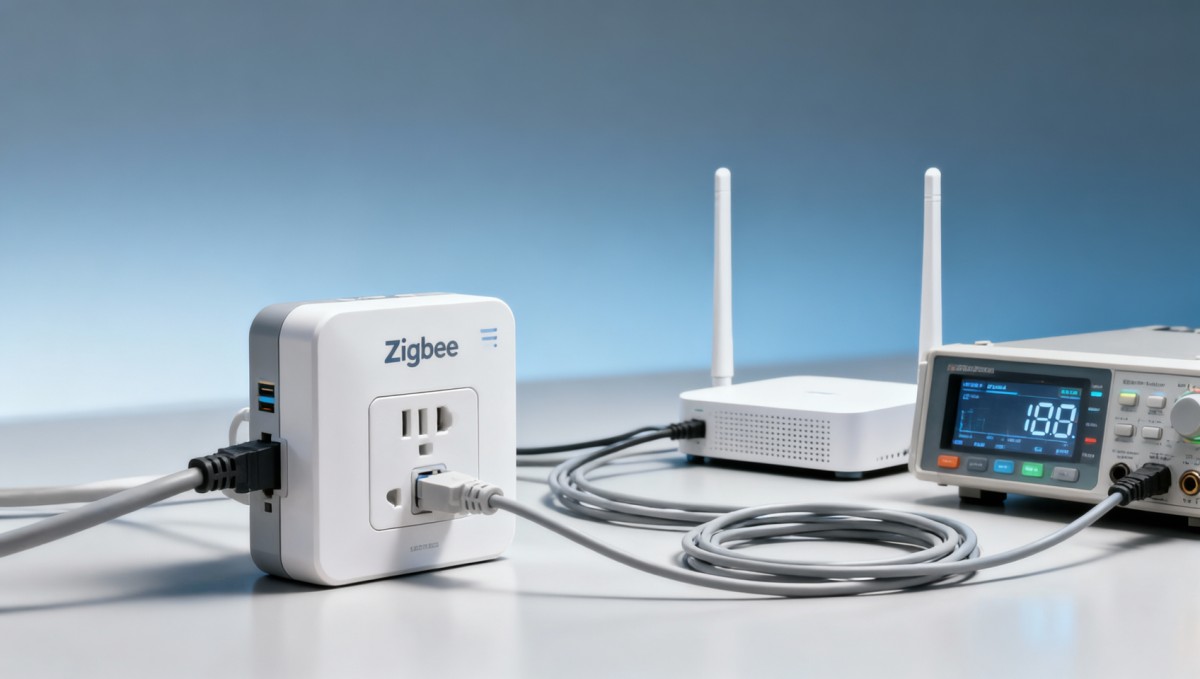
When buyers search for how to choose Zigbee smart plugs that work reliably, they are usually not looking for a generic feature list. They want to avoid common deployment problems: unstable connections, poor interoperability, overheating under load, inaccurate energy monitoring, or products that become difficult to support after purchase.
In practice, reliability comes down to five core factors:
- Zigbee network stability: The plug should join and remain on the network without frequent drop-offs.
- Compatibility with hubs and platforms: It should work smoothly with the Zigbee coordinator, gateway, or smart home platform already in use.
- Electrical performance: The rated load, surge tolerance, and internal component quality must match the target application.
- Firmware and security support: A reliable plug is not only stable today but maintainable over time.
- Supply and lifecycle consistency: Enterprise buyers need product continuity, technical documentation, and repeatable quality across batches.
For business evaluators, reliability should be defined as a mix of technical performance and operational predictability. A plug that looks good in a demo but causes service calls, compatibility issues, or sourcing disruption is not reliable in a commercial sense.
Which specifications should technical evaluators check before shortlisting products?
Technical teams should begin with the specifications that directly affect performance in the field. This is where many poor purchasing decisions can be avoided.
1. Zigbee version and protocol behavior
Check whether the device supports a widely adopted Zigbee implementation and whether it has been validated with major ecosystems. A plug may technically be Zigbee-compatible while still showing limited support for routing behavior, reporting intervals, or advanced cluster functionality on certain hubs.
Key questions include:
- Does it support stable pairing and rejoining?
- Is it certified or widely proven with common Zigbee gateways?
- Can it function as a router to strengthen mesh coverage?
- How well does it handle network congestion in dense device environments?
2. Load capacity and safety margin
Do not evaluate smart plugs only by nominal wattage. Review continuous load rating, voltage range, current handling, thermal protection, flame-retardant housing materials, and relay durability. If the plug will control heaters, pumps, power adapters, office electronics, or charging devices, safety margin matters.
For example, if the real application involves sustained high-load switching, choosing a plug rated only slightly above expected use increases failure risk. In enterprise or semi-commercial environments, conservative derating is usually the better decision.
3. Energy monitoring accuracy
If the project includes power consumption analysis, load optimization, or sustainability reporting, ask for energy metering accuracy data. Some Zigbee smart plugs offer basic consumption visibility but are not accurate enough for operational reporting or comparative benchmarking.
Important points to verify:
- Measurement tolerance under low and high loads
- Reporting frequency and data granularity
- Consistency across production batches
- Integration with dashboards or building management workflows
4. Physical design and deployment fit
Size, outlet orientation, button placement, LED behavior, and antenna design all affect usability. A plug that blocks adjacent sockets or performs poorly in metal-heavy environments may create avoidable issues. For distributors and installers, compact design with dependable RF performance is often more valuable than cosmetic styling.
How do you confirm compatibility before buying at scale?
Compatibility is one of the biggest reasons Zigbee smart plugs fail in actual projects. Many products work well in isolated tests but become problematic in mixed-brand deployments.
Before committing to volume orders, evaluate compatibility at three levels:
Hub and ecosystem compatibility
Confirm operation with the exact hub, gateway, or platform that will be used in deployment. “Works with Zigbee” is not enough. Verify support for:
- On/off control
- Energy reporting
- Automation triggers
- OTA firmware updates
- Status recovery after power loss
Mixed-device network behavior
If the environment includes sensors, switches, lighting products, or other smart electronics, test how the plug behaves as part of a full mesh rather than as a standalone node. Routing quality matters, especially when multiple device classes share the same network.
Regional and electrical compatibility
Check plug type, certification requirements, voltage standards, and local compliance expectations. This is especially important for importers, distributors, and cross-border sourcing teams that need to manage multiple market variants.
What procurement and business teams should ask suppliers before approving a product
For procurement directors, finance approvers, and business evaluators, technical reliability is only part of the decision. Supplier capability and commercial consistency also matter.
Ask suppliers these practical questions:
- Can they provide certification documents, test reports, and quality control records?
- Is the hardware platform stable, or does it change frequently between batches?
- What is the warranty policy and field failure response process?
- Are firmware updates available, and who manages them?
- What is the expected product lifecycle and replacement continuity?
- Can they support OEM, private label, or regional compliance customization if needed?
For B2B buyers, a reliable Zigbee smart plug supplier should be able to support documentation, traceability, and post-sale communication—not just shipment. This is particularly important for distributors, agents, and project-based integrators that may need repeat procurement over long cycles.
How should project teams test Zigbee smart plugs before full deployment?
A short pilot can reveal more than a long specification sheet. Before rollout, project managers and technical teams should test candidate products under realistic conditions.
A practical test plan should include:
- Pairing test: Measure setup speed and pairing success rate across multiple units.
- Network stability test: Observe offline events, latency, and rejoin behavior over several days or weeks.
- Load test: Run devices near expected working loads and monitor heat, switching accuracy, and power reporting.
- Power recovery test: Simulate outages and verify state restoration behavior.
- Interoperability test: Confirm operation in scenes, schedules, and automation logic with other devices.
- Batch consistency test: Evaluate samples from the same lot to identify quality variation.
This testing stage helps teams move from brochure-level claims to evidence-based selection. It also supports clearer approval decisions from finance and management stakeholders because risks become easier to quantify.
Which common mistakes lead to unreliable Zigbee smart plug purchases?
Several mistakes appear repeatedly in sourcing and deployment decisions:
- Choosing on price alone: Low-cost plugs may create higher lifetime costs through failures and support burden.
- Ignoring ecosystem fit: Assuming all Zigbee devices behave the same across all hubs leads to integration problems.
- Overlooking actual load conditions: A plug may pass basic tests but fail in sustained real-world use.
- Skipping pilot validation: Large orders without field trials increase operational risk.
- Neglecting firmware and security: Devices without update pathways can become long-term liabilities.
- Not checking supplier continuity: Inconsistent manufacturing or sudden model changes complicate maintenance and reorder planning.
These issues matter even more for organizations already managing broader sourcing portfolios across smart electronics, infrastructure components, and connected systems. A disciplined evaluation method helps standardize decision-making across categories.
How to make a confident final selection
If your goal is to choose Zigbee smart plugs that work reliably, prioritize proven network behavior, verified compatibility, safe electrical design, maintainable firmware support, and supplier consistency. For technical evaluators, the best product is the one that performs steadily under real conditions, not the one with the longest feature sheet. For commercial teams, the strongest option is the one that balances field reliability with lifecycle support and sourcing confidence.
A practical final selection framework is simple:
- Eliminate products with unclear compatibility or weak documentation.
- Shortlist models with solid electrical and network specifications.
- Run a pilot using real loads and real automation scenarios.
- Compare not just unit cost, but support cost, failure risk, and replacement continuity.
- Choose suppliers that can support repeat business and technical follow-through.
In short, a reliable Zigbee smart plug is not defined by branding or price point alone. It is defined by dependable operation, deployment fit, and low-friction support across the full product lifecycle. Buyers who assess those factors carefully are far more likely to achieve stable performance and better long-term value.
Get weekly intelligence in your inbox.
No noise. No sponsored content. Pure intelligence.
 Apr 22, 2026China Leads Global Offshore Wind Installations for 5th YearChina Leads Global Offshore Wind Installations for 5th Year
 Apr 22, 2026China Launches National Mine Safety IoT Monitoring NetworkChina Launches National Mine Safety IoT Monitoring Network
 Apr 22, 2026Yinchuan Boiler Pure Water Solution Certified for Middle East ProjectsYinchuan Boiler Pure Water Solution Certified for Middle East Projects
 Apr 22, 2026China to Enforce Mandatory EV Battery Recycling Standards by 2026China to Enforce Mandatory EV Battery Recycling Standards by 2026
 Apr 22, 2026Vietnam Launches Anti-Circumvention Probe on Electronic ComponentsVietnam Launches Anti-Circumvention Probe on Electronic Components
 Apr 22, 20262026 Shanghai Fastener Show: Robotic Fasteners Drive Overseas Procurement2026 Shanghai Fastener Show: Robotic Fasteners Drive Overseas Procurement
 Apr 22, 2026US BIS Adds EV On-Board Charger Crypto Modules to EAR Appendix 7US BIS Adds EV On-Board Charger Crypto Modules to EAR Appendix 7
 Apr 22, 2026TÜV Rheinland Updates BESS Certification: Propagation Blocking Now MandatoryTÜV Rheinland Updates BESS Certification: Propagation Blocking Now Mandatory
 Apr 22, 2026Red Sea Crisis Escalates: Suez AI Speed Limits & Slot Review from Apr 19Red Sea Crisis Escalates: Suez AI Speed Limits & Slot Review from Apr 19
 Apr 22, 2026EU CBAM Carbon Tariff Takes Effect April 1, 2026EU CBAM Carbon Tariff Takes Effect April 1, 2026
 Apr 21, 2026When to Replace CT Scanner Parts Before Downtime StartsWhen to Replace CT Scanner Parts Before Downtime Starts
 Apr 21, 2026How to Cut Costs in Lathe Turning Without ReworkHow to Cut Costs in Lathe Turning Without Rework
 Apr 21, 2026Lathe Turning Tolerances: What Can You Expect?Lathe Turning Tolerances: What Can You Expect?
 Apr 21, 2026How to Avoid Risks in Solar Panels WholesaleHow to Avoid Risks in Solar Panels Wholesale
 Apr 21, 2026Solar Panels Wholesale: How to Compare SuppliersSolar Panels Wholesale: How to Compare Suppliers
 Apr 21, 2026Solar Mounting Cost Factors You Should KnowSolar Mounting Cost Factors You Should Know
 Apr 21, 2026Solar Mounting Options: Which One Fits Your Project?Solar Mounting Options: Which One Fits Your Project?
 Apr 21, 2026How to Pick USB C Docking Stations for Dual DisplaysHow to Pick USB C Docking Stations for Dual Displays
 Apr 21, 2026USB C Docking Stations: What Ports Do You Need?USB C Docking Stations: What Ports Do You Need?
 Apr 21, 2026What Affects Dental Milling Machine ROI in 2026?What Affects Dental Milling Machine ROI in 2026?
 Apr 21, 2026Dental Milling Machines: Wet or Dry for Your Lab?Dental Milling Machines: Wet or Dry for Your Lab?
 Apr 21, 2026How to Avoid Common Medical Refrigerator MistakesHow to Avoid Common Medical Refrigerator Mistakes
 Apr 21, 2026Medical Refrigerators: What Specs Matter Most?Medical Refrigerators: What Specs Matter Most?
 Apr 21, 2026Portable or Cart Vet Ultrasound: Which to Buy?Portable or Cart Vet Ultrasound: Which to Buy?
 Apr 21, 2026Vet Ultrasound Buying Guide for Small ClinicsVet Ultrasound Buying Guide for Small Clinics
 Apr 21, 2026Yard Management Systems: Key Features to CompareYard Management Systems: Key Features to Compare
 Apr 21, 2026How Yard Management Systems Improve Dock FlowHow Yard Management Systems Improve Dock Flow