Hydrogen Energy Storage vs Batteries in Heavy Industry
As heavy industry accelerates energy management upgrades, the debate between hydrogen energy storage and batteries is becoming central to cost, resilience, and decarbonization. For procurement teams, operators, and decision-makers, understanding how hydrogen energy fits alongside energy monitoring, warehouse automation, and other industrial systems is essential to building scalable, future-ready operations.
For most heavy industrial sites, the practical answer is not “hydrogen or batteries” in absolute terms. It is usually a question of which technology fits which duty cycle, risk profile, and investment horizon. Batteries generally outperform for short-duration storage, fast response, and high round-trip efficiency. Hydrogen energy storage becomes more relevant when operations need long-duration energy shifting, backup resilience, multi-day storage, or a pathway to broader industrial decarbonization beyond electricity alone.
That distinction matters because steel plants, cement facilities, chemical processing sites, mining operations, ports, and large logistics complexes do not buy storage only for technical performance. They buy it to solve real business problems: unstable power costs, renewable integration, downtime risk, emissions targets, process continuity, and asset flexibility. The right decision depends less on headlines and more on load profile, space, safety management, infrastructure readiness, and total cost over time.
What heavy industry decision-makers really need to know first
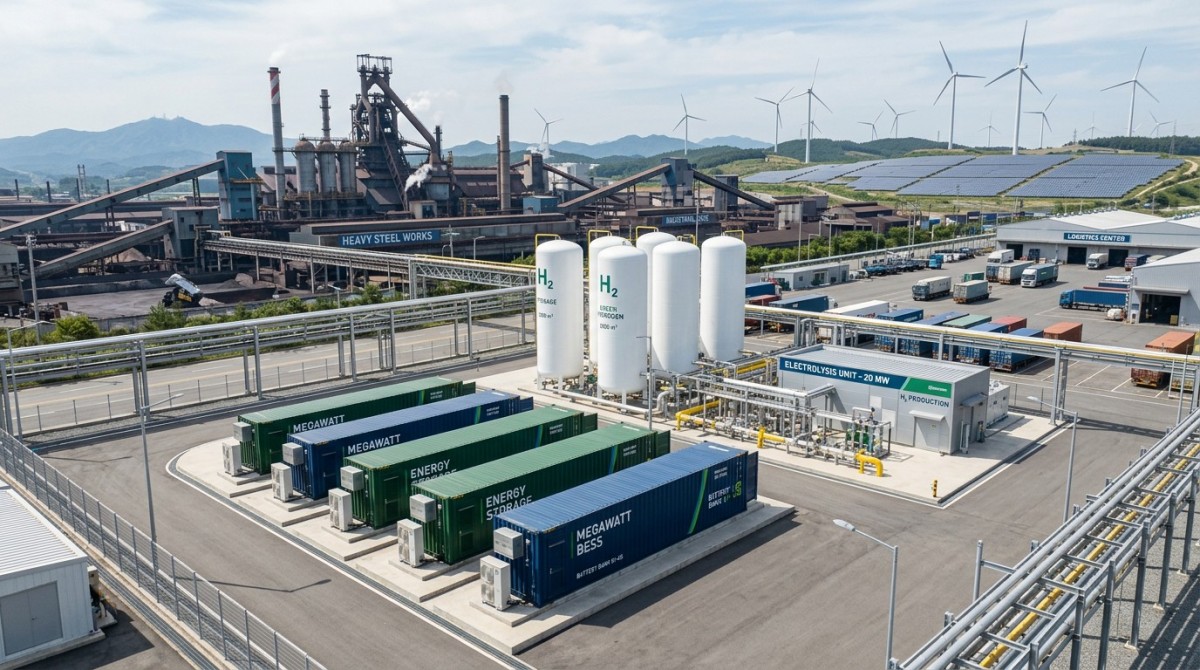
If your facility needs seconds-to-hours balancing, peak shaving, power quality support, or fast-response backup, batteries are usually the stronger choice. If your site needs hours-to-days storage, seasonal flexibility, fuel substitution potential, or integration with hydrogen-consuming processes, hydrogen energy storage deserves serious evaluation.
For procurement leaders and project owners, the key question is not which technology is more innovative. It is which one delivers the best combination of:
- Operational reliability
- Total lifecycle cost
- Safety and compliance fit
- Decarbonization impact
- Scalability across future production needs
In other words, batteries are typically best for electrical performance optimization, while hydrogen often makes more sense for energy system flexibility at industrial scale. In many facilities, the winning architecture is hybrid: batteries manage fast fluctuations, while hydrogen supports longer-duration resilience and process-level decarbonization.
Hydrogen energy storage vs batteries: the core differences that affect industrial operations
Heavy industry should evaluate these two storage options across business-critical dimensions rather than broad sustainability claims.
1. Duration of storage
Batteries are highly effective for short-duration applications, commonly from minutes to several hours. They are ideal when a plant must respond quickly to variable loads or electricity tariffs.
Hydrogen energy storage is better suited to long-duration storage. Excess electricity can be used for electrolysis, producing hydrogen that can be stored and later converted back to power or used directly as industrial fuel or feedstock. This makes hydrogen more attractive when facilities need storage beyond the practical economic range of many battery systems.
2. Efficiency
Batteries generally have much higher round-trip efficiency. That means more of the electricity put into the system can be recovered for use.
Hydrogen systems lose more energy across conversion steps such as electrolysis, compression, storage, and reconversion. If your main goal is efficient electricity arbitrage alone, batteries often win.
3. Scale and flexibility
Batteries scale well for many industrial sites, especially where grid services, peak management, and local backup are priorities.
Hydrogen becomes more compelling at larger scales where storage duration increases, where renewable overgeneration is available, or where the hydrogen can serve multiple functions beyond electricity storage. In heavy industry, that multi-use potential can materially improve project economics.
4. Footprint and siting
Battery energy storage systems can be compact, but scaling them for very long durations can require significant space and thermal management planning.
Hydrogen storage may involve tanks, compression systems, safety distances, ventilation requirements, and in some cases more complex site engineering. Feasibility depends heavily on the facility layout and regulatory environment.
5. Safety and risk management
Both technologies require rigorous safety controls, but their risks are different.
- Batteries require fire prevention, thermal runaway mitigation, monitoring, and emergency response planning.
- Hydrogen requires leak detection, ventilation, ignition control, pressure management, and operator training.
For quality, EHS, and plant safety teams, technology choice must be matched with the organization’s real ability to manage the associated risk profile.
When batteries are the better investment in heavy industry
Batteries are often the better option when the storage project is closely tied to power management rather than fuel strategy. Common high-value use cases include:
- Peak shaving to reduce demand charges
- Short-term backup for critical equipment
- Power quality stabilization for sensitive electronics or automated production lines
- Load shifting across tariff periods
- Integration with on-site solar or wind for same-day balancing
- Support for smart factory and warehouse automation systems that require fast-response reliability
For project managers and finance approvers, batteries are often easier to justify when:
- The return on investment depends on measurable electricity savings
- The site has limited tolerance for conversion losses
- The system must respond instantly
- The organization wants a more mature deployment pathway
In these scenarios, battery storage can usually provide faster implementation, clearer performance modeling, and a more straightforward business case.
When hydrogen energy storage makes more sense
Hydrogen energy storage becomes more attractive when a facility is solving a broader industrial energy problem, not just an electricity bill problem.
It is particularly relevant when the site needs:
- Long-duration or multi-day storage
- Energy resilience for variable renewable generation
- Potential replacement of fossil fuels in thermal processes
- Hydrogen supply for mobility, feedstock, or process use
- Decarbonization pathways aligned with long-term ESG or regulatory goals
In sectors such as refining, ammonia, steel, glass, chemicals, and heavy transport-linked industrial hubs, hydrogen may provide strategic value beyond storage alone. That is important because a hydrogen project can become more bankable when one infrastructure investment supports several outcomes:
- energy storage,
- fuel switching,
- emissions reduction,
- and future supply chain positioning.
For enterprise decision-makers, this is where hydrogen often shifts from being a lower-efficiency storage option to a higher-strategic-value platform investment.
How to compare total cost instead of just equipment price
One of the biggest mistakes in heavy industry is comparing hydrogen and batteries only on upfront capex. That approach misses the actual business impact.
A more useful evaluation framework should include:
Capital costs
- Core storage equipment
- Balance of plant
- Grid interconnection or electrical upgrades
- Compression, tanks, converters, cooling, ventilation, and controls
- Civil works and site adaptation
Operating costs
- Electricity input costs
- Maintenance and inspection
- Performance degradation over time
- Staff training and safety management
- Downtime risks and spare parts support
Value streams
- Demand charge reduction
- Avoided curtailment of renewable energy
- Backup power value
- Carbon cost reduction
- Production continuity benefits
- Potential fuel or feedstock substitution
If a battery project saves electricity but does not improve resilience enough for critical operations, the apparent low cost may be misleading. If a hydrogen project is less efficient but enables multiple industrial uses, its strategic return may be stronger than a narrow kWh comparison suggests.
Key procurement questions before selecting hydrogen or battery storage
Buyers and sourcing teams should ask suppliers and internal stakeholders a practical set of questions before moving into specification or tendering:
- What is the actual storage duration required: 30 minutes, 4 hours, 24 hours, or longer?
- Is the storage meant for electricity optimization, backup resilience, process decarbonization, or all three?
- How variable is the site load, and how critical is response speed?
- What are the site’s space constraints and permitting limitations?
- Can the facility safely manage hydrogen handling, or is battery integration more realistic?
- How will this system connect with energy monitoring platforms, SCADA, EMS, and plant automation?
- What is the expected asset life under the real operating profile?
- What service guarantees, warranties, and performance data can the vendor provide?
These questions help separate technically possible solutions from commercially sensible ones.
Integration with energy monitoring and digital industrial systems
Neither hydrogen nor batteries should be evaluated as standalone hardware. In modern heavy industry, storage value increasingly depends on digital coordination.
When integrated into energy monitoring and control environments, storage systems can support:
- real-time load forecasting,
- automated dispatch decisions,
- production-aware energy scheduling,
- predictive maintenance,
- and cross-functional visibility for operations, finance, and EHS teams.
For example, a battery system paired with plant-level monitoring may optimize demand peaks around robotic production cells or warehouse automation infrastructure. A hydrogen system may be scheduled around renewable generation windows, process heat demand, and backup requirements across larger industrial assets.
This is especially relevant for organizations investing in smarter, more connected facilities. The better the monitoring and control layer, the more accurately storage assets can capture value.
Common risks that delay industrial storage projects
Even when the technology fit is clear, projects often stall because of execution challenges rather than strategy. The most common issues include:
- Unclear use case definition
- Overly optimistic ROI assumptions
- Incomplete safety planning
- Poor coordination between operations, engineering, procurement, and finance
- Vendor selection based on price instead of lifecycle capability
- Underestimating integration complexity with existing infrastructure
For project leaders, early-stage alignment is essential. A technically advanced storage project can still fail internally if different departments are measuring success in different ways. Procurement may prioritize cost, operations may prioritize uptime, finance may prioritize payback, and EHS may prioritize risk containment. Strong projects reconcile these criteria early.
So which is better for heavy industry?
The short answer is:
- Choose batteries when you need fast response, high efficiency, and short-duration industrial power optimization.
- Choose hydrogen energy storage when you need long-duration flexibility, broader decarbonization potential, or a multi-use energy platform.
- Choose both when your facility needs layered resilience and expects energy complexity to grow over time.
For most heavy industrial companies, the best decision comes from mapping storage technology to operational reality, not from treating hydrogen and batteries as interchangeable competitors. Batteries are often the strongest tactical solution. Hydrogen is often the stronger strategic solution where storage, fuel transition, and long-term industrial transformation intersect.
As heavy industry moves toward lower-carbon, more digitized operations, the real advantage will go to companies that assess storage through a full business lens: technical fit, safety readiness, energy economics, and future system value. That is the approach most likely to deliver reliable returns and resilient industrial performance.
Get weekly intelligence in your inbox.
No noise. No sponsored content. Pure intelligence.
 Apr 22, 2026China Leads Global Offshore Wind Installations for 5th YearChina Leads Global Offshore Wind Installations for 5th Year
 Apr 22, 2026China Launches National Mine Safety IoT Monitoring NetworkChina Launches National Mine Safety IoT Monitoring Network
 Apr 22, 2026Yinchuan Boiler Pure Water Solution Certified for Middle East ProjectsYinchuan Boiler Pure Water Solution Certified for Middle East Projects
 Apr 22, 2026China to Enforce Mandatory EV Battery Recycling Standards by 2026China to Enforce Mandatory EV Battery Recycling Standards by 2026
 Apr 22, 2026Vietnam Launches Anti-Circumvention Probe on Electronic ComponentsVietnam Launches Anti-Circumvention Probe on Electronic Components
 Apr 22, 20262026 Shanghai Fastener Show: Robotic Fasteners Drive Overseas Procurement2026 Shanghai Fastener Show: Robotic Fasteners Drive Overseas Procurement
 Apr 22, 2026US BIS Adds EV On-Board Charger Crypto Modules to EAR Appendix 7US BIS Adds EV On-Board Charger Crypto Modules to EAR Appendix 7
 Apr 22, 2026TÜV Rheinland Updates BESS Certification: Propagation Blocking Now MandatoryTÜV Rheinland Updates BESS Certification: Propagation Blocking Now Mandatory
 Apr 22, 2026Red Sea Crisis Escalates: Suez AI Speed Limits & Slot Review from Apr 19Red Sea Crisis Escalates: Suez AI Speed Limits & Slot Review from Apr 19
 Apr 22, 2026EU CBAM Carbon Tariff Takes Effect April 1, 2026EU CBAM Carbon Tariff Takes Effect April 1, 2026
 Apr 21, 2026When to Replace CT Scanner Parts Before Downtime StartsWhen to Replace CT Scanner Parts Before Downtime Starts
 Apr 21, 2026How to Cut Costs in Lathe Turning Without ReworkHow to Cut Costs in Lathe Turning Without Rework
 Apr 21, 2026Lathe Turning Tolerances: What Can You Expect?Lathe Turning Tolerances: What Can You Expect?
 Apr 21, 2026How to Avoid Risks in Solar Panels WholesaleHow to Avoid Risks in Solar Panels Wholesale
 Apr 21, 2026Solar Panels Wholesale: How to Compare SuppliersSolar Panels Wholesale: How to Compare Suppliers
 Apr 21, 2026Solar Mounting Cost Factors You Should KnowSolar Mounting Cost Factors You Should Know
 Apr 21, 2026Solar Mounting Options: Which One Fits Your Project?Solar Mounting Options: Which One Fits Your Project?
 Apr 21, 2026How to Pick USB C Docking Stations for Dual DisplaysHow to Pick USB C Docking Stations for Dual Displays
 Apr 21, 2026USB C Docking Stations: What Ports Do You Need?USB C Docking Stations: What Ports Do You Need?
 Apr 21, 2026What Affects Dental Milling Machine ROI in 2026?What Affects Dental Milling Machine ROI in 2026?
 Apr 21, 2026Dental Milling Machines: Wet or Dry for Your Lab?Dental Milling Machines: Wet or Dry for Your Lab?
 Apr 21, 2026How to Avoid Common Medical Refrigerator MistakesHow to Avoid Common Medical Refrigerator Mistakes
 Apr 21, 2026Medical Refrigerators: What Specs Matter Most?Medical Refrigerators: What Specs Matter Most?
 Apr 21, 2026Portable or Cart Vet Ultrasound: Which to Buy?Portable or Cart Vet Ultrasound: Which to Buy?
 Apr 21, 2026Vet Ultrasound Buying Guide for Small ClinicsVet Ultrasound Buying Guide for Small Clinics
 Apr 21, 2026Yard Management Systems: Key Features to CompareYard Management Systems: Key Features to Compare
 Apr 21, 2026How Yard Management Systems Improve Dock FlowHow Yard Management Systems Improve Dock Flow


