Lithium Ion Batteries: How Long Do They Last in Real Use?
From wireless chargers and portable power stations to mobility scooters and solar battery systems, lithium ion batteries power critical devices across modern industries. But how long do they actually last in real use? This article examines lifespan, charging behavior, operating conditions, and performance degradation to help technical evaluators, buyers, and business decision-makers make smarter, safer, and more cost-effective battery choices.
What determines lithium ion battery life in real use?
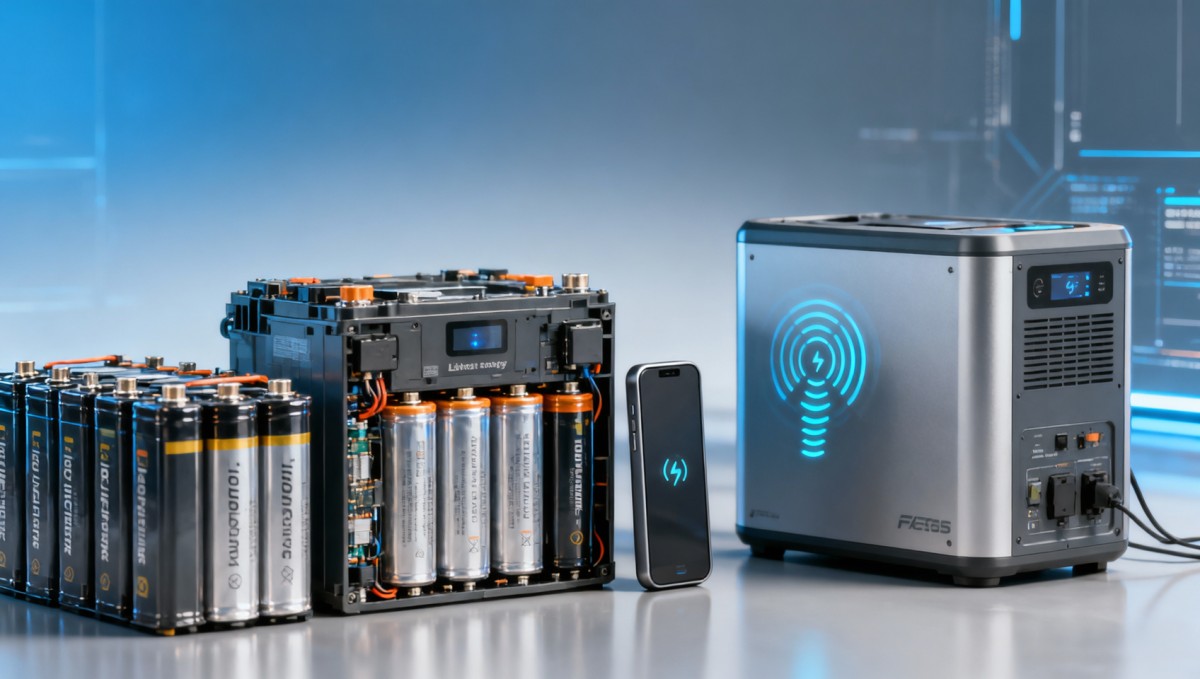
In real operating environments, lithium ion battery life is rarely defined by a single number. A pack may be rated for 500 to 2,000 cycles, yet actual service life depends on depth of discharge, charging rate, ambient temperature, standby time, and how often the battery sits at very high or very low state of charge. For procurement teams, that means nameplate cycle life alone is not enough for a reliable buying decision.
A battery used in a portable power station once a week behaves differently from one installed in a mobility device charged daily or a solar storage system cycling every evening. Even when two packs use the same chemistry, real-world lifetime can differ by 2 to 4 years because of heat, vibration, storage conditions, and battery management system quality. This is why technical evaluation should connect battery selection with actual duty cycle.
Across advanced manufacturing, green energy, smart electronics, healthcare technology, and supply chain equipment, decision-makers usually care about three practical questions: how long until usable capacity drops, how performance changes during use, and when replacement cost begins to affect total ownership economics. These are operational questions, not just lab questions, and they shape maintenance planning, warranty review, and safety management.
For information researchers and commercial evaluators, it is useful to separate battery life into calendar life and cycle life. Calendar life refers to aging over time, often 3 to 10 years depending on chemistry and storage condition. Cycle life refers to charge-discharge events until capacity falls to around 70% to 80% of original value, which is a common practical threshold for replacement decisions.
Calendar life vs cycle life: why both matter
A battery in backup service may complete relatively few cycles per year, but it still ages because of internal chemical reactions. In contrast, a battery in daily transportation or off-grid energy storage may reach cycle limits faster than calendar limits. Project managers should therefore estimate both annual cycles and expected years in service before selecting battery chemistry, pack design, and charging strategy.
For example, a system operating at 1 cycle per day can reach roughly 365 cycles per year. A pack rated at 1,000 cycles may still deliver several years of service, but if it also faces temperatures above 30°C and frequent full charging to 100%, usable life may shorten materially. A lower-stress charging window, such as 20% to 80% for some applications, often helps extend service life.
Key factors procurement teams should review
- Operating temperature range, especially whether the battery regularly sees below 0°C or above 35°C.
- Typical depth of discharge, such as shallow daily cycling versus frequent near-empty discharge.
- Charge method and rate, including standard charging versus repeated fast charging.
- Battery management system functions, such as cell balancing, overcharge protection, and temperature monitoring.
- Storage profile, including whether products remain warehoused for 3 to 12 months before deployment.
How long do lithium ion batteries last across common applications?
Real-use lifetime varies significantly by application because the load pattern is different. A wireless charger battery pack may spend much of its time in partial cycles, while a solar battery system may perform one deeper cycle per day. Mobility scooters, medical support devices, handheld equipment, and industrial electronics each create unique discharge profiles, vibration exposure, and charging habits that directly affect battery durability.
For distributors and enterprise buyers, application mapping is one of the fastest ways to improve battery selection. Instead of asking only how long lithium ion batteries last, ask how long they last under a specific usage window: daily cycle count, charge duration, operating temperature, expected standby period, and minimum acceptable remaining capacity. This converts vague lifespan claims into an actionable sourcing requirement.
The table below summarizes common real-use scenarios. The ranges are practical industry estimates rather than universal guarantees. They should be validated against product design, cell chemistry, pack assembly quality, and BMS strategy before commercial approval or project rollout.
Get weekly intelligence in your inbox.
No noise. No sponsored content. Pure intelligence.
 Apr 25, 2026Vietnam Enforces CN-EN Bilingual Safety Labels on Electronic Components from Apr 22, 2026Vietnam Enforces CN-EN Bilingual Safety Labels on Electronic Components from Apr 22, 2026
 Apr 25, 2026ANATEL Mandates Portuguese Offline Voice Assistants for Smart Home Devices in BrazilANATEL Mandates Portuguese Offline Voice Assistants for Smart Home Devices in Brazil
 Apr 25, 2026India BIS Mandates IS 13252:2025 for PLCs & HMIs by Oct 2026India BIS Mandates IS 13252:2025 for PLCs & HMIs by Oct 2026
 Apr 25, 2026SASO EV Charger Rules: Grid Compatibility & Sand Resistance RequiredSASO EV Charger Rules: Grid Compatibility & Sand Resistance Required
 Apr 25, 2026JIS T 0011:2026 Enforces IEC 62366-1:2024 for Rehab Devices in JapanJIS T 0011:2026 Enforces IEC 62366-1:2024 for Rehab Devices in Japan
 Apr 25, 2026THE Alliance Cuts Ningbo–Rotterdam Transit to 18 Days, +35% Spot RateTHE Alliance Cuts Ningbo–Rotterdam Transit to 18 Days, +35% Spot Rate
 Apr 25, 2026TÜV Rheinland Updates IoT EMC Standard: AI Edge Module Immunity Now MandatoryTÜV Rheinland Updates IoT EMC Standard: AI Edge Module Immunity Now Mandatory
 Apr 25, 2026USTR Launches Five-Year China Solar PV AD/CVD ReviewUSTR Launches Five-Year China Solar PV AD/CVD Review
 Apr 25, 2026EU New Battery Regulation Enters Force Apr 24, 2026EU New Battery Regulation Enters Force Apr 24, 2026
 Apr 25, 2026China Customs Launches RCEP Origin Smart Pre-Review for ASEAN机电 ExportsChina Customs Launches RCEP Origin Smart Pre-Review for ASEAN机电 Exports
 Apr 24, 2026India BIS Mandates IS 13252:2025 for PLCs & HMIs by Oct 2026India BIS Mandates IS 13252:2025 for PLCs & HMIs by Oct 2026
 Apr 24, 2026SASO EV Charger Regulation: Sand-Resistant Grid Compatibility Testing RequiredSASO EV Charger Regulation: Sand-Resistant Grid Compatibility Testing Required
 Apr 24, 2026Japan Updates JIS for Rehab Devices: IEC 62366-1:2024 Usability Compliance RequiredJapan Updates JIS for Rehab Devices: IEC 62366-1:2024 Usability Compliance Required
 Apr 24, 2026China Customs Launches RCEP Origin Smart Pre-Review SystemChina Customs Launches RCEP Origin Smart Pre-Review System
 Apr 24, 2026ANATEL Mandates Localized Voice Assistants for Smart Home Devices in BrazilANATEL Mandates Localized Voice Assistants for Smart Home Devices in Brazil
 Apr 24, 2026TÜV Rheinland Updates IoT EMC Standard with AI Edge抗扰度 RequirementTÜV Rheinland Updates IoT EMC Standard with AI Edge抗扰度 Requirement
 Apr 24, 20262M Alliance Shortens Ningbo–Rotterdam Route to 18 Days Amid 35% Slot Premium2M Alliance Shortens Ningbo–Rotterdam Route to 18 Days Amid 35% Slot Premium
 Apr 24, 2026Vietnam Enforces Bilingual Safety Labels for Imported Electronic Components from Apr 22, 2026Vietnam Enforces Bilingual Safety Labels for Imported Electronic Components from Apr 22, 2026
 Apr 24, 2026USTR Launches Sunset Review on China Solar PV AD/CVD DutiesUSTR Launches Sunset Review on China Solar PV AD/CVD Duties
 Apr 24, 2026EU New Battery Regulation Fully Effective Apr 24, 2026EU New Battery Regulation Fully Effective Apr 24, 2026
 Apr 23, 2026Taobao Factory Spark 3.0 Launches AI Workbench for SME Export FactoriesTaobao Factory Spark 3.0 Launches AI Workbench for SME Export Factories
 Apr 23, 2026TENENG Group Inspects IoT Safety Compliance at Jiangnan ChemicalTENENG Group Inspects IoT Safety Compliance at Jiangnan Chemical
 Apr 23, 2026China Launches First Embodied AI Open Data CommunityChina Launches First Embodied AI Open Data Community
 Apr 23, 2026PV Glass Prices Flat for 9 Weeks Amid Rising Integrated ProcurementPV Glass Prices Flat for 9 Weeks Amid Rising Integrated Procurement
 Apr 23, 20262984 NQI One-Stop Platforms Launched Nationwide2984 NQI One-Stop Platforms Launched Nationwide
 Apr 23, 2026China’s Green Smart Ship Tech Norms Accelerate BMS & Shore Power ExportChina’s Green Smart Ship Tech Norms Accelerate BMS & Shore Power Export
 Apr 23, 2026China Builds World's Largest Agri-Meteorological IoT NetworkChina Builds World's Largest Agri-Meteorological IoT Network