Solar Battery Sizing: How Much Storage Is Enough?
Choosing the right solar battery size is not just about having backup power for a few hours. For commercial buyers, project managers, and technical evaluators, battery sizing directly affects electricity savings, resilience, usable autonomy, system lifespan, and return on investment. In most cases, “enough storage” means enough usable capacity to cover your most valuable loads for the right duration without overspending on battery capacity that will sit underused. The correct answer depends on load profile, outage risk, time-of-use tariffs, solar production pattern, and whether the system is designed for backup, self-consumption, peak shaving, or hybrid renewable integration.
How Much Solar Battery Storage Is Usually Enough?
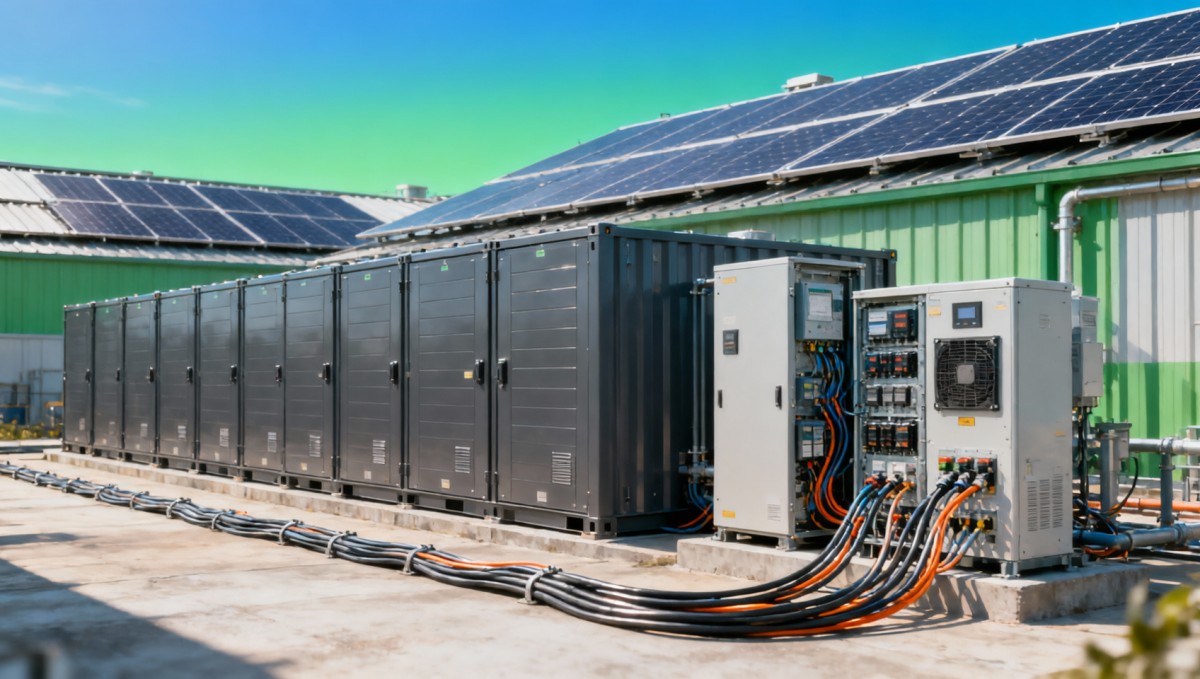
The short answer: enough storage is the amount that matches your real energy use during the hours when solar is unavailable or grid prices are highest. For residential and small commercial users, this is often not the same as “powering everything overnight.” For business users, the best battery size is usually the one that protects critical loads, reduces expensive peak imports, and works well with the solar array’s daily generation pattern.
A common mistake is sizing a solar battery by headline kWh alone. In practice, buyers should assess:
- Daily energy consumption in kWh
- Critical load requirements during outages
- Peak power demand in kW
- Desired backup duration in hours
- Battery usable depth of discharge
- Round-trip efficiency losses
- Future load growth, such as EV charging, cooling, process equipment, or digital infrastructure
In other words, a battery that is too small will underdeliver on resilience and savings, while one that is too large may weaken project economics. For many organizations, the optimal design is not maximum storage but right-sized storage.
What Decision-Makers Need to Know Before Choosing Battery Capacity
Different stakeholders look at solar battery sizing through different lenses, but their concerns usually converge around performance, risk, and cost justification.
Business and finance leaders typically ask:
- Will the battery materially reduce energy costs?
- How long is the payback period?
- Is the system oversized relative to actual usage?
- What happens if tariffs, load patterns, or operating hours change?
Technical evaluators and project engineers usually focus on:
- Usable capacity versus nominal capacity
- Power output limits and surge capability
- Battery chemistry, especially lithium ion batteries
- Integration with inverter, EMS, solar PV, and potentially a wind turbine or generator
- Cycle life, thermal management, and safety compliance
Operations and safety teams care about:
- Whether critical loads remain online during outages
- Installation conditions and fire protection requirements
- Maintenance complexity
- Monitoring, alarms, and operational reliability
This means an effective buying guide should not stop at a simple battery calculator. It should connect battery size to operational goals and financial outcomes.
Start With Load Profile, Not Battery Catalog Specs
The most reliable way to size solar storage is to begin with the actual load profile. This reveals when energy is used, how much is used, and which periods matter most.
At minimum, collect these inputs:
- Average daily energy use in kWh
- Hourly or 15-minute interval load data, if available
- Critical versus non-critical loads
- Peak demand in kW
- Outage frequency and duration
- Solar generation curve by season
- Utility tariff structure, including demand charges or time-of-use pricing
Why this matters: a site that consumes 100 kWh per day evenly is very different from a site that consumes the same 100 kWh in a short evening peak. One may need moderate storage capacity; the other may need stronger discharge power and smarter dispatch logic.
For example, if your goal is backup for essential equipment only, you may need a smaller battery than if your goal is full-site overnight autonomy. Likewise, if the main objective is time-of-use arbitrage, the right size may be based on the expensive tariff window rather than total daily consumption.
A Practical Solar Battery Sizing Formula
Battery sizing should account for both energy and power. A simplified energy-capacity formula is:
Required battery capacity (kWh) = Critical load energy demand (kWh) ÷ Usable depth of discharge ÷ Round-trip efficiency
If a facility needs 40 kWh of usable energy during the evening and outage window, and the battery system has:
- 90% usable depth of discharge
- 92% round-trip efficiency
Then:
Required nominal battery capacity = 40 ÷ 0.9 ÷ 0.92 ≈ 48.3 kWh
But this still is not enough on its own. You must also check power rating:
Required inverter/battery output (kW) = Sum of simultaneous running loads + startup surge margin
If your battery can store enough energy but cannot deliver sufficient power, important loads may still trip offline. This is especially relevant for motors, pumps, compressors, refrigeration, and process equipment.
How to Size for Different Use Cases
The right answer to “how much storage is enough” changes by application.
1. Backup power for critical loads
Prioritize autonomy hours and load selection. Do not size around the entire building unless business continuity truly requires it. Segmenting critical circuits often reduces project cost significantly while still protecting operations.
2. Self-consumption optimization
Size the battery to absorb excess midday solar generation and discharge during evening demand. In this case, a battery larger than the daily solar surplus may not provide additional value.
3. Demand charge reduction
Focus on discharge power and control strategy. A moderate-capacity battery with strong power output can sometimes outperform a larger battery if short peak events are driving utility costs.
4. Off-grid or weak-grid operation
Here, storage is typically larger because it must cover longer periods of low solar output and maintain reliability. Seasonal variability becomes a major design factor, and generator support may still be prudent.
5. Hybrid renewable systems with wind turbine support
When a battery works alongside solar and wind turbine generation, sizing can become more flexible because the system may receive charging input across different weather conditions. Still, variability modeling is essential. Wind may reduce nighttime deficits, but not all sites have a stable enough wind profile to justify smaller storage.
Lithium Ion Batteries vs Portable Power Stations: What Changes in Sizing?
Many buyers compare fixed solar battery systems with lithium ion batteries and portable power stations. While both store electricity, the sizing logic differs.
Stationary lithium ion battery systems are generally better for:
- Whole-site or circuit-level integration
- Higher cycle counts
- Energy bill optimization
- Scalable commercial projects
- Automated dispatch and monitoring
Portable power stations are usually better for:
- Temporary backup
- Mobile field use
- Light-duty applications
- Small loads and short-duration support
For enterprises, portable power stations rarely replace a properly engineered solar battery system. They can support niche use cases, but not sustained building-level energy management. If the goal is resilience, tariff optimization, or integration into a facility energy strategy, a fixed battery architecture is usually the correct path.
What Causes Oversizing or Undersizing?
Oversizing often happens when buyers use total monthly electricity bills as the main reference instead of interval load data. It also happens when systems are designed for rare worst-case scenarios without evaluating how often those scenarios occur.
Undersizing usually results from ignoring one or more of these:
- Battery degradation over time
- Winter or cloudy-season solar shortfall
- Load growth after electrification
- Power output limitations
- Efficiency losses
- Need for reserve margin during outages
A practical approach is to design around the top-value scenario rather than the absolute-maximum scenario. For example, many commercial facilities gain more value by protecting mission-critical loads and shaving demand peaks than by trying to achieve full-site autonomy for every possible outage.
How to Evaluate ROI Without Missing Operational Value
Not every battery project should be judged by simple payback alone. For enterprise buyers, the full value stack may include:
- Lower grid imports during high-price periods
- Reduced demand charges
- Improved backup resilience
- Reduced downtime risk
- Better power quality for sensitive equipment
- Support for ESG and decarbonization targets
- Future readiness for microgrid or fleet electrification
Financial approvers should ask not only “How much does the battery cost?” but also “What losses, disruptions, or missed savings does it prevent?” In sectors such as healthcare technology, advanced manufacturing, and smart electronics, even brief power instability can create disproportionate operational and quality costs.
Questions to Ask Suppliers Before Finalizing Battery Size
Before approving a system, buyers should request clear answers to these questions:
- What is the nominal capacity versus usable capacity?
- What loads were included in the sizing model?
- What assumptions were made about outage duration and solar yield?
- What is the guaranteed throughput or capacity retention over time?
- What is the continuous and peak power output?
- How does the system perform in high-temperature or cold environments?
- Can the battery integrate with generators, wind turbine assets, or future expansion?
- What safety certifications and fire mitigation measures are included?
- How is battery management, remote monitoring, and alarm handling implemented?
If a supplier cannot explain the sizing basis in operational terms, the proposal may not be robust enough for commercial decision-making.
Final Takeaway: Enough Storage Means Fit-for-Purpose Storage
The right solar battery size is rarely the biggest one you can afford. It is the one that aligns with your load profile, critical operations, solar generation pattern, and business case. For some buyers, enough storage means a few hours of backup for high-priority systems. For others, it means maximizing self-consumption, reducing peak charges, or supporting a broader renewable strategy that includes lithium ion batteries, solar PV, and even wind turbine integration.
The most reliable path is to size from real operating data, evaluate both kWh and kW requirements, account for usable capacity and efficiency, and test the economics against specific use cases. When done correctly, solar battery sizing becomes a strategic energy decision—not just a hardware purchase.
Get weekly intelligence in your inbox.
No noise. No sponsored content. Pure intelligence.
 Apr 21, 2026China Builds National Mine Safety Risk Monitoring 'Single Network'China Builds National Mine Safety Risk Monitoring 'Single Network'
 Apr 21, 2026MIIT Releases First List of AI+Manufacturing IncubatorsMIIT Releases First List of AI+Manufacturing Incubators
 Apr 21, 20262026 Shanghai Fastener Show: 1,423 Exhibitors, Robot-Specialized Fasteners in Focus2026 Shanghai Fastener Show: 1,423 Exhibitors, Robot-Specialized Fasteners in Focus
 Apr 21, 2026Vietnam Launches Anti-Circumvention Probe on Chinese-Assembled Electronic ComponentsVietnam Launches Anti-Circumvention Probe on Chinese-Assembled Electronic Components
 Apr 21, 2026China Academy Releases 2026 Digital Passport White PaperChina Academy Releases 2026 Digital Passport White Paper
 Apr 21, 2026Suez Canal AI Speed & Stowage Control Starts Apr 19, 2026Suez Canal AI Speed & Stowage Control Starts Apr 19, 2026
 Apr 21, 2026US BIS Adds EV Onboard Chargers with AES-256+ Encryption to Export ControlsUS BIS Adds EV Onboard Chargers with AES-256+ Encryption to Export Controls
 Apr 21, 2026TÜV Rheinland Updates BESS Certification: Thermal Cascade Protection Now MandatoryTÜV Rheinland Updates BESS Certification: Thermal Cascade Protection Now Mandatory
 Apr 21, 2026Shanghai Port Launches Green Clearance Channel for New Energy EquipmentShanghai Port Launches Green Clearance Channel for New Energy Equipment
 Apr 21, 2026IEC 63275:2026 Released: Global EMC Immunity Testing Standard for Warehouse RobotsIEC 63275:2026 Released: Global EMC Immunity Testing Standard for Warehouse Robots
 Apr 20, 2026How to Prioritize Energy Efficiency Projects in 2026How to Prioritize Energy Efficiency Projects in 2026
 Apr 20, 2026Energy Efficiency Upgrades That Cut Operating CostsEnergy Efficiency Upgrades That Cut Operating Costs
 Apr 20, 2026How to Avoid Common Solar Street Light FailuresHow to Avoid Common Solar Street Light Failures
 Apr 20, 2026Solar Street Lights: When Do They Really Pay Off?Solar Street Lights: When Do They Really Pay Off?
 Apr 20, 2026What Makes an Ultrasound Machine Worth the Cost?What Makes an Ultrasound Machine Worth the Cost?
 Apr 20, 2026Ultrasound Machines: New vs Refurbished in 2026Ultrasound Machines: New vs Refurbished in 2026
 Apr 20, 2026How to Evaluate Clean Energy ROI in 2026How to Evaluate Clean Energy ROI in 2026
 Apr 20, 2026Clean Energy Projects: Where Savings Really Come FromClean Energy Projects: Where Savings Really Come From
 Apr 20, 2026Air Quality Monitors: What to Check Before BuyingAir Quality Monitors: What to Check Before Buying
 Apr 20, 2026How Accurate Are Air Quality Monitors Indoors?How Accurate Are Air Quality Monitors Indoors?
 Apr 20, 2026Smart Door Lock Costs Beyond the HardwareSmart Door Lock Costs Beyond the Hardware
 Apr 20, 2026Smart Door Locks: Which Type Fits Your Property?Smart Door Locks: Which Type Fits Your Property?
 Apr 20, 2026How AR Glasses Improve Remote MaintenanceHow AR Glasses Improve Remote Maintenance
 Apr 20, 2026AR Glasses for Field Work: Worth It or Not?AR Glasses for Field Work: Worth It or Not?
 Apr 20, 2026Which AED Defibrillators Are Easiest to Use?Which AED Defibrillators Are Easiest to Use?
 Apr 20, 2026AED Defibrillators: What Buyers Often MissAED Defibrillators: What Buyers Often Miss
 Apr 20, 2026How to Compare 3PL Logistics Providers for GrowthHow to Compare 3PL Logistics Providers for Growth