What Causes Lithium Ion Batteries to Fail Early?
From wireless chargers and portable power stations to mobility scooters, wind turbine systems, and solar battery storage, lithium ion batteries power critical applications across modern industry. Yet many fail earlier than expected due to thermal stress, poor charging habits, weak battery management, or demanding operating environments. This guide explains the root causes of premature battery failure and what buyers, engineers, and decision-makers should evaluate to improve safety, lifespan, and ROI.
Lithium ion batteries rarely fail early for just one reason. In most real-world cases, premature failure comes from a combination of heat, charging stress, deep cycling, poor cell matching, inadequate battery management systems (BMS), mechanical damage, or operation outside the battery’s intended environment. For technical teams, that means failure analysis must go beyond cell chemistry alone. For procurement, quality, and business leaders, it means supplier selection, pack design, usage profile, and lifecycle cost matter as much as nameplate capacity.
If you are evaluating why a lithium ion battery is underperforming, the most useful question is not simply “What chemistry is this?” but “What conditions is this battery actually exposed to, and how well was it designed and managed for those conditions?” That is where early-life battery degradation usually begins.
Why do lithium ion batteries fail early in real applications?
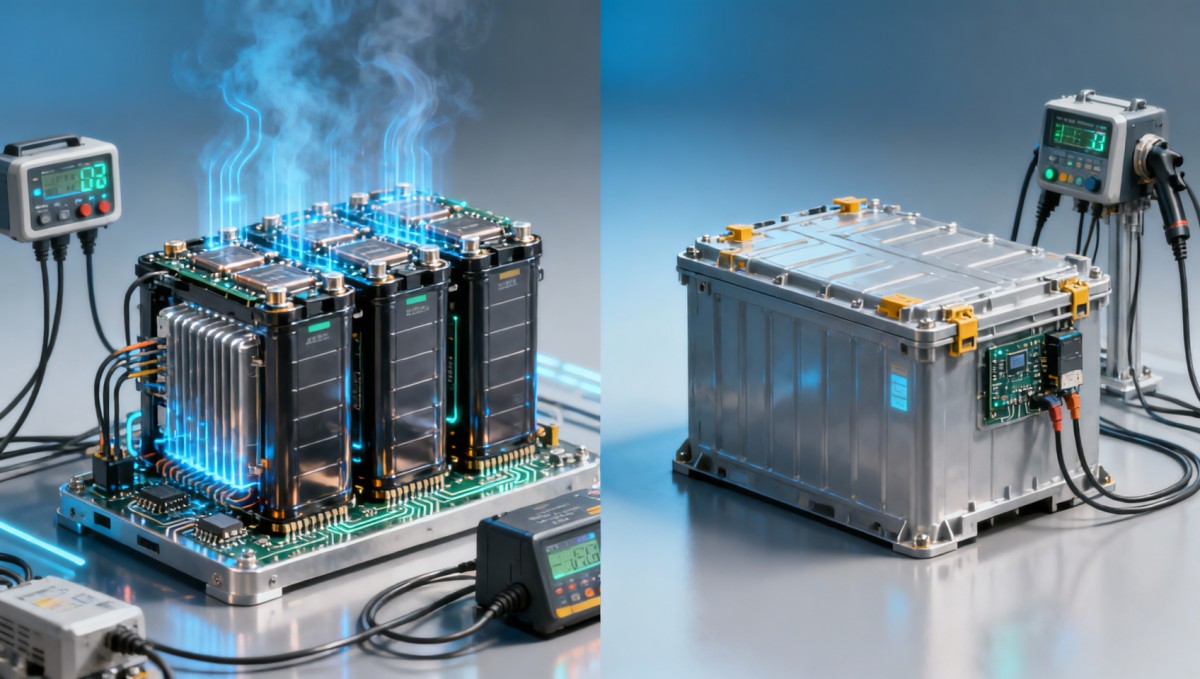
Early battery failure typically shows up as rapid capacity loss, swelling, overheating, voltage instability, slow charging, shortened runtime, or sudden shutdown under load. These symptoms can affect consumer devices, industrial tools, backup systems, e-mobility equipment, medical devices, and stationary energy storage alike.
The main causes of early lithium ion battery failure include:
- Excessive heat exposure during charging, discharging, storage, or enclosure operation
- Improper charging behavior, including overcharging, fast charging without thermal control, or using incompatible chargers
- Deep discharge and high cycle stress beyond the intended design window
- Weak or poorly calibrated BMS performance that fails to balance cells or protect against abuse conditions
- Inferior cell quality or inconsistent manufacturing
- Mechanical shock, vibration, puncture, or compression damage
- Operation in extreme environments such as high humidity, freezing temperatures, dust-heavy settings, or continuous peak loads
- Improper storage conditions, especially long-term storage at high state of charge or elevated temperatures
In business terms, these issues translate into warranty claims, unexpected replacement costs, reduced equipment uptime, safety incidents, logistics complications, and poor total cost of ownership.
How does heat accelerate lithium ion battery degradation?
Heat is one of the most common and damaging drivers of premature lithium ion battery failure. Elevated temperature speeds up unwanted chemical reactions inside the cell. Over time, those reactions consume active lithium, increase internal resistance, and reduce usable capacity.
When batteries operate hot for extended periods, several things can happen:
- The electrolyte degrades faster
- The solid electrolyte interphase (SEI) layer grows excessively
- Internal resistance rises, creating even more heat under load
- Cell aging becomes uneven across the pack
- Charging efficiency declines and cycle life shortens
This is especially important in enclosed products with poor ventilation, outdoor equipment exposed to direct sun, fast-charging systems, and high-power applications such as mobility devices, industrial equipment, and energy storage cabinets. Even when a battery does not fail catastrophically, chronic heat can quietly reduce service life far below the expected specification.
For buyers and technical evaluators, thermal design deserves as much attention as cell brand. Ask whether the battery pack has been validated for sustained operation at real ambient temperatures, not just lab conditions.
Can charging habits and charger quality cause batteries to fail sooner?
Yes. Charging-related stress is one of the most overlooked causes of early battery failure. A lithium ion battery depends on tightly controlled voltage, current, and temperature limits. When charging systems exceed those limits, battery aging speeds up substantially.
Common charging-related failure factors include:
- Overcharging, which can destabilize the cell and create safety risks
- Frequent fast charging, especially without effective thermal management
- Using non-matched chargers with incorrect voltage or current profiles
- Charging at very low temperatures, which can lead to lithium plating
- Keeping batteries at 100% state of charge for long periods
For operators, one practical takeaway is that “always fully charged” is not always best for lifespan. In many applications, maintaining a more moderate charge window can significantly extend service life. For enterprises managing fleets or stored equipment, charging policy can have a measurable impact on replacement cycles and maintenance budgets.
What role does the battery management system play in preventing early failure?
A battery management system is critical to battery reliability, especially in multi-cell packs. Even high-quality cells can fail early if the BMS is poorly designed, badly calibrated, or missing essential protections.
A capable BMS should manage:
- Overcharge protection
- Over-discharge protection
- Overcurrent protection
- Temperature monitoring
- Cell balancing
- State-of-charge and state-of-health estimation
- Fault detection and safe shutdown logic
Without proper balancing, some cells in a pack can become overstressed long before others. That imbalance reduces usable pack capacity and can create hotspots or voltage instability. In industrial and energy applications, weak BMS design often causes failures that are mistakenly blamed on cell chemistry alone.
For technical assessment teams, it is worth reviewing not just whether a BMS exists, but how sophisticated it is, what protections it includes, how it was validated, and whether field data supports its performance.
How do operating conditions and user behavior shorten battery life?
Many lithium ion batteries fail early because the real usage pattern does not match the original design assumptions. A battery built for light intermittent use may degrade quickly in high-load, high-cycle, or outdoor duty conditions.
Examples of stress-inducing use cases include:
- Frequent full discharge cycles
- Continuous high-current output
- Use in hot vehicles, rooftop enclosures, or uncooled cabinets
- Storage in a fully charged state for months
- Repeated operation in freezing environments
- Heavy vibration or shock in mobility and industrial settings
User behavior also matters. Improper handling, blocked cooling vents, non-approved chargers, physical drops, and inconsistent maintenance practices can all contribute to battery failure. In commercial environments, this means battery lifespan is not only a product issue but also a training and operating-procedure issue.
Does cell quality and supplier selection affect premature battery failure?
Absolutely. Not all lithium ion batteries with similar specifications perform the same in the field. Cell quality, pack assembly standards, traceability, and supplier process control have a direct impact on safety, consistency, and service life.
Higher-risk sourcing indicators may include:
- Unclear cell origin or brand substitution
- Limited testing documentation
- Poor consistency between batches
- Weak welding, insulation, or pack sealing quality
- Minimal certification support
- Lack of application-specific validation data
For procurement teams and decision-makers, the cheapest battery often becomes the most expensive when downtime, service labor, warranty replacement, or safety exposure is included. Supplier evaluation should cover more than price and capacity. It should include abuse testing, quality assurance systems, traceability, transport compliance, and proven performance in comparable applications.
What are the most important warning signs of an early failing lithium ion battery?
Spotting battery degradation early can prevent equipment disruption and reduce safety risk. The most important warning signs include:
- Noticeably shorter runtime or reduced backup duration
- Longer charging times or irregular charge completion
- Battery swelling or enclosure deformation
- Excessive heat during charging or discharge
- Voltage drop under normal load
- Device shutdown at unexpectedly high remaining charge levels
- Error codes from the BMS or connected equipment
- Unusual odor, leakage, or discoloration
Quality and safety teams should treat swelling, overheating, and repeated voltage instability as escalation events, not minor defects. In high-value or regulated environments, early diagnostic action is far less costly than incident response.
How can businesses reduce the risk of lithium ion battery failure and improve ROI?
If your goal is longer battery life, better reliability, and lower lifecycle cost, the strongest results usually come from a combination of product selection, system design, operating discipline, and supplier control.
Practical steps include:
- Select batteries based on actual duty cycle, temperature range, and load profile
- Verify BMS capability, balancing strategy, and thermal protection design
- Use compatible, validated chargers and charging protocols
- Avoid unnecessary full-charge storage and deep discharge conditions
- Implement temperature-aware charging and storage policies
- Train operators on handling, charging, and inspection procedures
- Monitor field performance data to detect abnormal degradation trends
- Qualify suppliers using lifecycle, safety, and consistency metrics rather than price alone
For enterprise buyers, a useful decision framework is to compare battery options by cost per effective service year, not just initial purchase cost. A battery with better thermal resilience, stronger BMS integration, and tighter manufacturing consistency may deliver much better ROI even at a higher upfront price.
What should buyers, engineers, and decision-makers ask before approving a battery solution?
Before selecting or approving a lithium ion battery for a product, fleet, or energy system, stakeholders should ask targeted questions that reveal likely failure risk:
- What cycle life is validated under the actual use case, not just standard lab conditions?
- What temperature range is supported for charging, discharge, and storage?
- How does the BMS protect against overcharge, deep discharge, thermal events, and imbalance?
- What certifications and transport compliance documents are available?
- What is the field failure rate in similar applications?
- How are cells sourced, matched, and traced?
- What preventive maintenance or monitoring is recommended?
- What warranty terms apply, and what usage conditions void them?
These questions help bridge the gap between technical performance and commercial risk. They also help teams distinguish between batteries that look similar on paper but perform very differently over time.
Conclusion: early lithium ion battery failure is usually preventable
What causes lithium ion batteries to fail early? Most often, it is not a mystery defect but a preventable mismatch between battery design, charging control, thermal management, supplier quality, and real operating conditions. Heat, poor charging practices, weak BMS design, harsh environments, and low manufacturing consistency are the biggest contributors to premature failure.
For operators, the priority is proper use, charging, and inspection. For engineers and project leaders, it is robust pack design and application-specific validation. For procurement, quality, and business decision-makers, it is choosing battery solutions based on lifecycle reliability, safety, and total ROI rather than headline specifications alone.
When these factors are evaluated together, businesses can reduce failure risk, improve uptime, strengthen safety performance, and extend the true value of every lithium ion battery investment.
Get weekly intelligence in your inbox.
No noise. No sponsored content. Pure intelligence.
 Apr 25, 2026Vietnam Enforces CN-EN Bilingual Safety Labels on Electronic Components from Apr 22, 2026Vietnam Enforces CN-EN Bilingual Safety Labels on Electronic Components from Apr 22, 2026
 Apr 25, 2026ANATEL Mandates Portuguese Offline Voice Assistants for Smart Home Devices in BrazilANATEL Mandates Portuguese Offline Voice Assistants for Smart Home Devices in Brazil
 Apr 25, 2026India BIS Mandates IS 13252:2025 for PLCs & HMIs by Oct 2026India BIS Mandates IS 13252:2025 for PLCs & HMIs by Oct 2026
 Apr 25, 2026SASO EV Charger Rules: Grid Compatibility & Sand Resistance RequiredSASO EV Charger Rules: Grid Compatibility & Sand Resistance Required
 Apr 25, 2026JIS T 0011:2026 Enforces IEC 62366-1:2024 for Rehab Devices in JapanJIS T 0011:2026 Enforces IEC 62366-1:2024 for Rehab Devices in Japan
 Apr 25, 2026THE Alliance Cuts Ningbo–Rotterdam Transit to 18 Days, +35% Spot RateTHE Alliance Cuts Ningbo–Rotterdam Transit to 18 Days, +35% Spot Rate
 Apr 25, 2026TÜV Rheinland Updates IoT EMC Standard: AI Edge Module Immunity Now MandatoryTÜV Rheinland Updates IoT EMC Standard: AI Edge Module Immunity Now Mandatory
 Apr 25, 2026USTR Launches Five-Year China Solar PV AD/CVD ReviewUSTR Launches Five-Year China Solar PV AD/CVD Review
 Apr 25, 2026EU New Battery Regulation Enters Force Apr 24, 2026EU New Battery Regulation Enters Force Apr 24, 2026
 Apr 25, 2026China Customs Launches RCEP Origin Smart Pre-Review for ASEAN机电 ExportsChina Customs Launches RCEP Origin Smart Pre-Review for ASEAN机电 Exports
 Apr 24, 2026India BIS Mandates IS 13252:2025 for PLCs & HMIs by Oct 2026India BIS Mandates IS 13252:2025 for PLCs & HMIs by Oct 2026
 Apr 24, 2026SASO EV Charger Regulation: Sand-Resistant Grid Compatibility Testing RequiredSASO EV Charger Regulation: Sand-Resistant Grid Compatibility Testing Required
 Apr 24, 2026Japan Updates JIS for Rehab Devices: IEC 62366-1:2024 Usability Compliance RequiredJapan Updates JIS for Rehab Devices: IEC 62366-1:2024 Usability Compliance Required
 Apr 24, 2026China Customs Launches RCEP Origin Smart Pre-Review SystemChina Customs Launches RCEP Origin Smart Pre-Review System
 Apr 24, 2026ANATEL Mandates Localized Voice Assistants for Smart Home Devices in BrazilANATEL Mandates Localized Voice Assistants for Smart Home Devices in Brazil
 Apr 24, 2026TÜV Rheinland Updates IoT EMC Standard with AI Edge抗扰度 RequirementTÜV Rheinland Updates IoT EMC Standard with AI Edge抗扰度 Requirement
 Apr 24, 20262M Alliance Shortens Ningbo–Rotterdam Route to 18 Days Amid 35% Slot Premium2M Alliance Shortens Ningbo–Rotterdam Route to 18 Days Amid 35% Slot Premium
 Apr 24, 2026Vietnam Enforces Bilingual Safety Labels for Imported Electronic Components from Apr 22, 2026Vietnam Enforces Bilingual Safety Labels for Imported Electronic Components from Apr 22, 2026
 Apr 24, 2026USTR Launches Sunset Review on China Solar PV AD/CVD DutiesUSTR Launches Sunset Review on China Solar PV AD/CVD Duties
 Apr 24, 2026EU New Battery Regulation Fully Effective Apr 24, 2026EU New Battery Regulation Fully Effective Apr 24, 2026
 Apr 23, 2026Taobao Factory Spark 3.0 Launches AI Workbench for SME Export FactoriesTaobao Factory Spark 3.0 Launches AI Workbench for SME Export Factories
 Apr 23, 2026TENENG Group Inspects IoT Safety Compliance at Jiangnan ChemicalTENENG Group Inspects IoT Safety Compliance at Jiangnan Chemical
 Apr 23, 2026China Launches First Embodied AI Open Data CommunityChina Launches First Embodied AI Open Data Community
 Apr 23, 2026PV Glass Prices Flat for 9 Weeks Amid Rising Integrated ProcurementPV Glass Prices Flat for 9 Weeks Amid Rising Integrated Procurement
 Apr 23, 20262984 NQI One-Stop Platforms Launched Nationwide2984 NQI One-Stop Platforms Launched Nationwide
 Apr 23, 2026China’s Green Smart Ship Tech Norms Accelerate BMS & Shore Power ExportChina’s Green Smart Ship Tech Norms Accelerate BMS & Shore Power Export
 Apr 23, 2026China Builds World's Largest Agri-Meteorological IoT NetworkChina Builds World's Largest Agri-Meteorological IoT Network