Is a Small Wind Turbine Worth It for Low-Wind Sites?
For low-wind locations, deciding whether a small wind turbine is worth the investment requires more than a simple payback estimate. Buyers comparing wind turbine options with solar battery systems, lithium ion batteries, and portable power stations must weigh energy yield, site conditions, maintenance, and long-term reliability. This guide helps technical and business decision-makers assess real-world feasibility, cost efficiency, and risk before moving forward.
How do you judge whether a small wind turbine makes sense at a low-wind site?
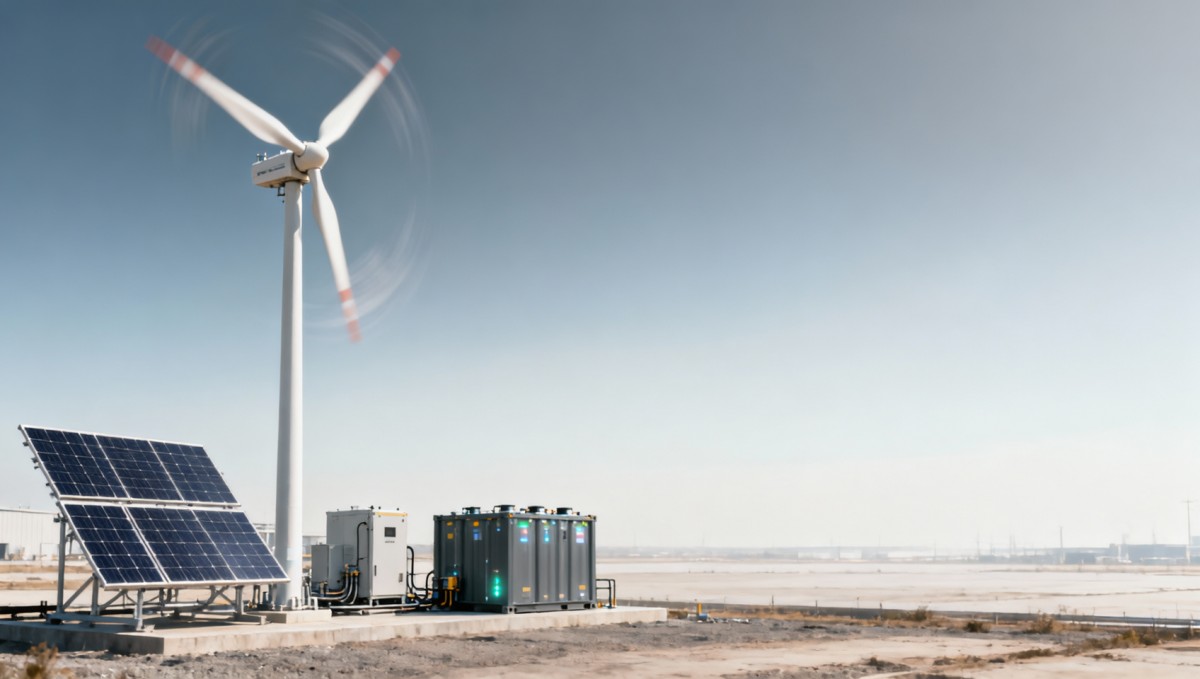
A small wind turbine can work in a low-wind site, but only under specific conditions. The key question is not whether the turbine can spin. The real question is whether the annual energy production is high enough to justify capital cost, tower installation, service intervals, and downtime risk over a 10–20 year ownership period.
For many procurement teams, low-wind means average wind speeds below roughly 5 m/s at the planned hub height. In that range, performance differences between turbine designs become more pronounced. A turbine with a low cut-in speed may begin generating earlier, but early start-up alone does not guarantee meaningful output if the site lacks sustained wind in the 6–10 m/s operating band.
Operators and project managers should also separate marketing claims from site reality. Rated power, such as 3 kW, 5 kW, or 10 kW, is usually measured at a much higher wind speed than low-wind locations normally experience. If your site spends most of the year below rated conditions, the practical output may be far lower than expected on a brochure.
From a B2B decision perspective, the value of a small wind turbine depends on four variables: wind resource quality, tower height, duty cycle of the connected load, and acceptable maintenance burden. TradeNexus Pro helps buyers look beyond headline specifications and compare how a wind project fits into a wider energy resilience strategy, especially where solar, batteries, or hybrid backup are also under review.
The 4 basic checks before any low-wind purchase
- Confirm at least 12 months of site-specific wind data, or a credible modeled estimate adjusted for terrain, roughness, and nearby obstacles.
- Check whether hub height can be increased by 6–18 meters, because a taller tower often changes project economics more than a larger rotor does.
- Review the load profile. Intermittent low loads, telecom backup, remote sensing, and hybrid off-grid use cases behave differently from continuous industrial demand.
- Estimate access and maintenance frequency. A turbine needing quarterly service at a hard-to-reach site may erase any energy cost advantage.
If one or more of these checks fail, a small wind turbine may still be technically feasible, but it may not be commercially sensible. That is why low-wind evaluation should begin with measurement quality and operating context, not with equipment catalog comparisons alone.
What technical factors matter most in low-wind performance?
Low-wind performance depends on more than cut-in speed. Rotor diameter, swept area, control strategy, generator efficiency, turbulence tolerance, and tower elevation all matter. For technical evaluators, the most useful approach is to compare expected annual energy production within the site’s actual wind distribution rather than focusing only on rated wattage.
In practical terms, a larger rotor on a modest generator can outperform a smaller high-rated machine at a low-wind site. That is because energy capture in light winds is strongly influenced by rotor area. A design optimized for gentle but frequent wind may produce more usable electricity over 12 months than a machine tuned for stronger gusts that rarely occur.
Turbulence is another underappreciated issue. Rooftops, tree lines, ridges, and nearby buildings can reduce output and increase fatigue loads. A site with average wind speeds of 4.8–5.2 m/s may look acceptable on paper, yet perform poorly if the airflow is unstable. This affects not only yield but also bearings, blades, braking systems, and inverter behavior.
Quality and safety teams should also examine electrical integration. Small wind systems often need compatible charge controllers, inverters, dump loads, battery management coordination, and over-speed protection. In hybrid systems using lithium ion batteries, poor control matching can reduce battery life or waste generated energy during variable production periods.
Technical parameters to review before procurement
The table below highlights the technical checks that are usually more important than headline rated power when evaluating a small wind turbine for low-wind conditions.
For engineering and commercial teams, this table supports a more realistic evaluation framework. In low-wind procurement, the winning option is often the one with better site-matched production and lower service burden, not the one with the highest advertised peak output.
Why hub height often changes the answer
More wind access
A tower increase from 12 meters to 18 meters can materially improve airflow depending on terrain and vegetation. In low-wind environments, even small gains in average wind speed can significantly affect annual production because wind power rises rapidly with wind speed.
Lower turbulence
Raising the rotor above buildings, containers, tree cover, or roof edges often improves wind quality. This can reduce vibration, improve control stability, and lower maintenance frequency over the life of the asset.
Different permitting implications
The trade-off is that taller towers may trigger local planning review, structural checks, or additional installation cost. Decision-makers should therefore model both energy uplift and permit complexity before approving a final configuration.
Small wind turbine vs solar battery system: which is the better low-wind investment?
In many low-wind sites, the better investment is not wind alone but a hybrid configuration or a solar-led system. Solar battery systems usually offer easier forecasting, fewer moving parts, and simpler maintenance. However, small wind turbines may still add value where winter solar yield is weak, night-time loads are important, or the site has seasonal wind patterns that complement solar generation.
For finance approvers, the key is resilience-adjusted value rather than equipment cost only. A portable power station may solve temporary needs for days or weeks. A lithium ion battery bank can stabilize solar energy and reduce diesel use. A small wind turbine becomes more attractive when it offsets generator runtime, supports remote infrastructure, or reduces energy risk in an off-grid location over multiple years.
The comparison also depends on duty cycle. If the application needs low but continuous power, such as telemetry, perimeter security, cathodic protection, or remote communications, small wind plus battery may perform well. If demand is daytime-heavy and installation simplicity matters most, solar plus battery often wins in low-wind territories.
Distributors and project developers should therefore compare not just energy devices, but full operating scenarios: capital cost, site work, expected service visits, battery replacement intervals, spare parts availability, and the cost of unplanned outage over 3–7 years.
Decision comparison for buyers and project teams
The table below outlines where a small wind turbine is more likely to be justified and where an alternative solution may be more practical.
For many low-wind projects, the strongest business case is hybridization. That approach can reduce oversizing, smooth seasonal variability, and limit the number of service trips. It also gives procurement teams more flexibility when battery chemistry, inverter selection, and reserve autonomy must match a specific operating profile.
When wind still has a clear role
- The site has stronger night-time or winter wind, complementing weak solar hours.
- Generator fuel logistics are expensive, slow, or exposed to supply disruption.
- The load is small but continuous, making round-the-clock trickle generation valuable.
- Battery cycling reduction improves lifecycle economics in a hybrid design.
These conditions do not guarantee success, but they often justify a deeper technical and commercial review instead of dismissing small wind too early.
What should procurement, finance, and engineering teams check before buying?
A small wind turbine purchase should be handled like an infrastructure decision, not a catalog transaction. Procurement teams need a cross-functional checklist that includes technical fit, supplier support, spare parts strategy, safety compliance, and total cost of ownership. In low-wind environments, due diligence is especially important because project underperformance usually appears after installation, not before.
Commercial reviewers should ask for annual energy estimates tied to the actual site, not generic output charts. Engineering reviewers should verify tower loading, anchoring requirements, electrical protection, and maintenance access. Finance stakeholders should examine service costs across 3 years, 5 years, and the intended asset life rather than relying only on simple payback.
Safety and quality teams should also confirm installation procedures, shutdown methods, and operating limitations. Small wind systems involve rotating equipment, electrical conversion, and structural exposure to weather. Even for compact units, emergency stop access, lightning protection, and routine inspection procedures are part of the procurement decision.
For global buyers and distributors, supplier evaluation should include delivery reliability and technical documentation. In cross-border projects, lead times can vary from 2–4 weeks for standard balance-of-system components to 8–16 weeks for specialized turbines, towers, or control equipment, depending on sourcing region and certification needs.
A practical 5-point pre-purchase checklist
- Validate the wind resource at hub height and account for obstacles within the surrounding area.
- Request model-specific performance curves, maintenance intervals, and recommended inspection schedules.
- Check compatibility with batteries, inverters, controllers, and dump loads in the planned electrical architecture.
- Assess installation access, lifting requirements, civil works, and expected commissioning time, often 1–3 days for small sites after preparation.
- Review spare parts availability, warranty scope, and who performs field service during years 1–5.
Common standards and compliance topics to review
Electrical and grid interface
If the turbine connects to batteries or the grid, buyers should confirm applicable electrical codes, grounding practice, disconnect requirements, and inverter compliance in the target market. Requirements vary by country, but the principle is the same: protection and documentation must match the installation environment.
Structural and installation safety
Tower design, anchors, guying systems, and wind loading assumptions should be documented clearly. Where local permitting applies, structural review may be required before installation begins. This is especially relevant in industrial compounds, healthcare backup sites, or logistics yards where safety controls are strict.
Operational procedures
Teams should confirm inspection frequency, shutdown instructions, maintenance lockout practices, and replacement intervals for wear components. A system that looks cost-effective at purchase can become expensive if service manuals, parts lists, or technical support are incomplete.
What are the most common mistakes and realistic use cases for low-wind projects?
The most common mistake is assuming that any windy-feeling site is suitable for a small wind turbine. Human perception is a poor substitute for measured data. Another frequent error is placing the turbine too low, too close to obstacles, or on a rooftop where airflow is highly turbulent. In low-wind settings, these mistakes have an outsized impact on yield and reliability.
A second mistake is comparing wind against grid electricity alone. Many low-wind projects are not trying to beat utility power prices. They are trying to reduce diesel dependence, support remote assets, improve energy resilience, or serve locations where trenching, cabling, and utility connection would be costly or delayed by months.
A third mistake is underestimating the value of system design. A small wind turbine connected to an undersized battery bank or poorly matched controller may deliver disappointing results even if the wind resource is adequate. Site design, battery sizing, and control logic are often as important as the turbine itself.
Realistic use cases do exist. Small wind can make sense for isolated monitoring equipment, rural communications, perimeter systems, remote pumping controls, environmental stations, and hybrid backup for distributed industrial assets. These are usually low-to-moderate demand applications where avoiding outages is more valuable than maximizing raw kWh.
FAQ for buyers comparing small wind turbine options
How low is too low for wind speed?
There is no single cutoff, but if average wind speed at hub height is below about 4–5 m/s, the business case often becomes difficult unless the load is small, the tower can be raised, and the value of resilience is high. Below that range, solar battery systems or hybrid options frequently outperform wind-only designs.
Is a rooftop small wind turbine a good idea for low-wind areas?
Often no, especially in built-up industrial or commercial sites. Rooftop turbulence can reduce output and increase fatigue loading. A freestanding tower with clear wind exposure is typically more effective and easier to evaluate than a roof-mounted installation in a marginal wind zone.
How often does a small wind turbine need maintenance?
Maintenance schedules vary by model and site conditions, but visual checks may be monthly or quarterly, while detailed inspection may occur annually. Remote or harsh environments can require more frequent service. Buyers should request a maintenance schedule in writing before project approval.
Can a small wind turbine work with lithium ion batteries?
Yes, but only with compatible controls, charging logic, and protection design. Wind generation is variable, so the battery system, charge controller, inverter, and dump load strategy must be engineered as one system. Compatibility details should be reviewed before procurement, not after installation.
Why work with TradeNexus Pro when evaluating low-wind energy options?
Low-wind small turbine decisions are rarely simple product purchases. They involve technical screening, supplier comparison, hybrid system evaluation, and risk management across energy, maintenance, and budget. TradeNexus Pro supports global B2B buyers by connecting these decisions to sector-specific intelligence in green energy, advanced manufacturing, smart electronics, healthcare technology, and supply chain SaaS.
For procurement directors and enterprise decision-makers, TNP helps shorten the gap between research and action. Instead of relying on isolated product claims, teams can use TNP to compare solution pathways, review market shifts, identify practical integration considerations, and prepare more informed conversations with suppliers, distributors, and project partners.
If you are assessing whether a small wind turbine is worth it for a low-wind site, the most useful next step is a structured review. That may include parameter confirmation, hybrid system comparison, expected delivery window, maintenance planning, and clarification of certification or documentation requirements for your region and application.
Contact TradeNexus Pro to discuss your project scope, target power range, site conditions, battery pairing questions, supplier screening criteria, or quotation planning. Whether you need support with low-wind feasibility, product selection, delivery lead-time benchmarking, compliance questions, or a tailored procurement short list, TNP provides a stronger basis for technical and commercial decisions.
Get weekly intelligence in your inbox.
No noise. No sponsored content. Pure intelligence.
 Apr 25, 2026Vietnam Enforces CN-EN Bilingual Safety Labels on Electronic Components from Apr 22, 2026Vietnam Enforces CN-EN Bilingual Safety Labels on Electronic Components from Apr 22, 2026
 Apr 25, 2026ANATEL Mandates Portuguese Offline Voice Assistants for Smart Home Devices in BrazilANATEL Mandates Portuguese Offline Voice Assistants for Smart Home Devices in Brazil
 Apr 25, 2026India BIS Mandates IS 13252:2025 for PLCs & HMIs by Oct 2026India BIS Mandates IS 13252:2025 for PLCs & HMIs by Oct 2026
 Apr 25, 2026SASO EV Charger Rules: Grid Compatibility & Sand Resistance RequiredSASO EV Charger Rules: Grid Compatibility & Sand Resistance Required
 Apr 25, 2026JIS T 0011:2026 Enforces IEC 62366-1:2024 for Rehab Devices in JapanJIS T 0011:2026 Enforces IEC 62366-1:2024 for Rehab Devices in Japan
 Apr 25, 2026THE Alliance Cuts Ningbo–Rotterdam Transit to 18 Days, +35% Spot RateTHE Alliance Cuts Ningbo–Rotterdam Transit to 18 Days, +35% Spot Rate
 Apr 25, 2026TÜV Rheinland Updates IoT EMC Standard: AI Edge Module Immunity Now MandatoryTÜV Rheinland Updates IoT EMC Standard: AI Edge Module Immunity Now Mandatory
 Apr 25, 2026USTR Launches Five-Year China Solar PV AD/CVD ReviewUSTR Launches Five-Year China Solar PV AD/CVD Review
 Apr 25, 2026EU New Battery Regulation Enters Force Apr 24, 2026EU New Battery Regulation Enters Force Apr 24, 2026
 Apr 25, 2026China Customs Launches RCEP Origin Smart Pre-Review for ASEAN机电 ExportsChina Customs Launches RCEP Origin Smart Pre-Review for ASEAN机电 Exports
 Apr 24, 2026India BIS Mandates IS 13252:2025 for PLCs & HMIs by Oct 2026India BIS Mandates IS 13252:2025 for PLCs & HMIs by Oct 2026
 Apr 24, 2026SASO EV Charger Regulation: Sand-Resistant Grid Compatibility Testing RequiredSASO EV Charger Regulation: Sand-Resistant Grid Compatibility Testing Required
 Apr 24, 2026Japan Updates JIS for Rehab Devices: IEC 62366-1:2024 Usability Compliance RequiredJapan Updates JIS for Rehab Devices: IEC 62366-1:2024 Usability Compliance Required
 Apr 24, 2026China Customs Launches RCEP Origin Smart Pre-Review SystemChina Customs Launches RCEP Origin Smart Pre-Review System
 Apr 24, 2026ANATEL Mandates Localized Voice Assistants for Smart Home Devices in BrazilANATEL Mandates Localized Voice Assistants for Smart Home Devices in Brazil
 Apr 24, 2026TÜV Rheinland Updates IoT EMC Standard with AI Edge抗扰度 RequirementTÜV Rheinland Updates IoT EMC Standard with AI Edge抗扰度 Requirement
 Apr 24, 20262M Alliance Shortens Ningbo–Rotterdam Route to 18 Days Amid 35% Slot Premium2M Alliance Shortens Ningbo–Rotterdam Route to 18 Days Amid 35% Slot Premium
 Apr 24, 2026Vietnam Enforces Bilingual Safety Labels for Imported Electronic Components from Apr 22, 2026Vietnam Enforces Bilingual Safety Labels for Imported Electronic Components from Apr 22, 2026
 Apr 24, 2026USTR Launches Sunset Review on China Solar PV AD/CVD DutiesUSTR Launches Sunset Review on China Solar PV AD/CVD Duties
 Apr 24, 2026EU New Battery Regulation Fully Effective Apr 24, 2026EU New Battery Regulation Fully Effective Apr 24, 2026
 Apr 23, 2026Taobao Factory Spark 3.0 Launches AI Workbench for SME Export FactoriesTaobao Factory Spark 3.0 Launches AI Workbench for SME Export Factories
 Apr 23, 2026TENENG Group Inspects IoT Safety Compliance at Jiangnan ChemicalTENENG Group Inspects IoT Safety Compliance at Jiangnan Chemical
 Apr 23, 2026China Launches First Embodied AI Open Data CommunityChina Launches First Embodied AI Open Data Community
 Apr 23, 2026PV Glass Prices Flat for 9 Weeks Amid Rising Integrated ProcurementPV Glass Prices Flat for 9 Weeks Amid Rising Integrated Procurement
 Apr 23, 20262984 NQI One-Stop Platforms Launched Nationwide2984 NQI One-Stop Platforms Launched Nationwide
 Apr 23, 2026China’s Green Smart Ship Tech Norms Accelerate BMS & Shore Power ExportChina’s Green Smart Ship Tech Norms Accelerate BMS & Shore Power Export
 Apr 23, 2026China Builds World's Largest Agri-Meteorological IoT NetworkChina Builds World's Largest Agri-Meteorological IoT Network