Wind Turbine Components That Fail Earlier Than Expected
Wind turbine components are engineered for durability, yet some fail far earlier than expected, creating costly downtime, safety risks, and maintenance uncertainty. For operators, project managers, and enterprise buyers, understanding which wind turbine components are most vulnerable is essential for smarter procurement, lifecycle planning, and performance control across modern energy systems shaped by evolving battery technology and the broader green industry.
Which Wind Turbine Components Usually Fail First in Real Operations?
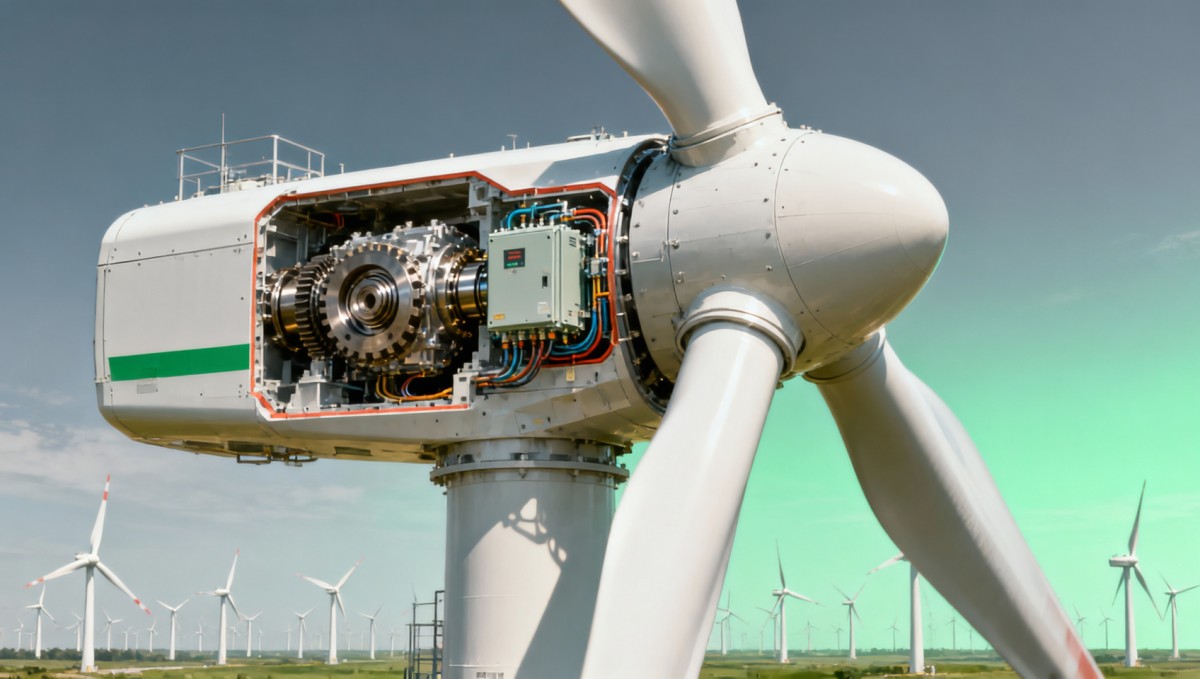
Early failure in wind turbine components rarely comes from one single cause. In most projects, the problem appears where mechanical stress, electrical load, environmental exposure, and maintenance gaps overlap. Across onshore and offshore fleets, operators often see trouble emerging within the first 2–7 years in specific subsystems, even when the nominal design life is 20–25 years.
The most exposed wind turbine components typically include gearbox bearings, pitch systems, blade surfaces, yaw drives, power converters, generators, control electronics, and lubrication systems. These parts work under variable loads rather than stable factory conditions. That difference matters for procurement teams evaluating lifecycle cost, spare-parts planning, and service contracts.
For finance approvers and project leads, the key issue is not simply whether a component can fail, but how early failure changes availability, repair windows, crane scheduling, and revenue loss. A converter outage may stop generation immediately. A blade crack may allow continued operation for a short period, but it raises safety exposure and can escalate repair cost if ignored for even 4–8 weeks.
The parts that deserve the closest attention
The table below summarizes common wind turbine components that tend to fail earlier than expected and explains why those failures matter to different decision-makers in a B2B setting.
A practical takeaway is that early-failure risk is concentrated in high-load and high-variation zones. Buyers who focus only on headline turbine capacity in MW often miss the components that determine uptime. For distributors and EPC-related stakeholders, this is also where aftersales differentiation and spare-parts revenue are created.
- Operators should monitor parts exposed to cyclic stress every month or every quarter, depending on load profile and site severity.
- Quality and safety managers should rank components by failure consequence, not only by replacement price.
- Enterprise buyers should ask whether the supplier provides 3 levels of support: diagnostics, replacement logistics, and root-cause analysis.
Why Do Some Wind Turbine Components Fail Earlier Than Design Expectations?
A design life printed in documentation does not guarantee field life. Wind turbine components operate under turbulence, start-stop cycles, seasonal temperature changes, grid fluctuations, and inconsistent maintenance execution. A turbine installed in a dry inland zone and another placed in a salty coastal environment may use similar components, yet their actual failure paths differ within 12–36 months.
One major driver is load mismatch. Some components are selected for rated conditions, while real operation includes gusts, partial-load running, curtailment cycles, and emergency stops. Bearings, converters, and pitch drives suffer most when the operating profile becomes more dynamic than the original assumptions used in procurement or project modeling.
Another cause is supply chain variation. In large fleets, even approved components may come from different production batches or tiered vendors. For business evaluation teams, this creates hidden differences in material consistency, sealing performance, thermal tolerance, or electronics reliability. These are not always visible during delivery acceptance but become obvious after 18–30 months of real service.
Root causes that procurement teams often underestimate
Early failure is often the result of several manageable factors rather than random bad luck. Teams that map these factors early reduce both maintenance cost and contractual disputes.
- Environmental stress: humidity, salt spray, dust, icing, and temperature swings such as -20°C to 40°C can degrade seals, coatings, and electronics faster than expected.
- Installation quality: alignment errors, torque deviations, and contamination during assembly may not trigger immediate alarms but can shorten component life significantly.
- Maintenance timing: oil analysis delayed by 1–2 service intervals, or missed bolt retorque checks, can turn minor wear into major faults.
- Control strategy changes: software updates, grid-code adjustments, and battery-related balancing systems may alter electrical and thermal stress on converters and controllers.
Why this matters beyond maintenance
For financial approvers, early failure affects insurance conversations, reserve planning, and long-term asset valuation. For project managers, it changes outage planning and technician allocation. For distributors and channel partners, it affects stocking strategy: too little inventory extends downtime, while too much inventory locks capital in slow-moving parts.
This is exactly where intelligence-led sourcing becomes valuable. TradeNexus Pro helps buyers and supply chain teams evaluate component risk not as isolated part numbers, but as a combination of technology maturity, supplier responsiveness, logistics resilience, and field-service practicality across the green energy ecosystem.
How Should Buyers Compare High-Risk Wind Turbine Components Before Purchase?
When a wind project enters procurement, many teams compare price, warranty period, and delivery lead time first. That is necessary, but not enough. High-risk wind turbine components should also be compared by failure mode visibility, serviceability, compatibility, and replacement logistics. A cheaper part with a 6-week lead time can become the costlier option if downtime losses accumulate daily.
A useful approach is to score each component across 4 dimensions: reliability under cyclic load, availability of spare units, maintenance complexity, and traceable quality documentation. This gives business evaluators and enterprise decision-makers a more realistic picture than unit price alone. In practice, a 5%–12% higher purchase price can be justified if field replacement time falls from 10 days to 3 days.
The comparison table below is designed for procurement review meetings, technical alignment sessions, and cross-functional approval workflows involving operations, quality, finance, and project teams.
The strongest procurement decisions connect technical risk with operational economics. A component with better traceability, shorter lead time, and simpler replacement often delivers superior total value, even if invoice price is higher. This is especially true for remote sites where technician travel, crane booking, and lost generation can exceed the component cost itself.
A practical checklist for cross-functional approval
Before approving a high-risk component, teams should validate at least 5 key points:
- Whether the component has documented compatibility with the existing turbine platform, software version, and service procedure.
- Whether the supplier can state a realistic lead-time window such as 2–4 weeks for stocked parts or 6–10 weeks for built-to-order items.
- Whether preventive monitoring is possible through vibration, oil sampling, thermal checks, or alarm trend analysis.
- Whether warranty coverage includes failure analysis, not just one-time replacement.
- Whether site conditions such as offshore corrosion, desert dust, or cold-weather icing require adapted materials or coatings.
What Maintenance, Compliance, and Replacement Strategy Reduces Early Failure Risk?
Reducing early failure in wind turbine components is not only about buying stronger parts. It depends on a workable maintenance and replacement strategy. In many fleets, the biggest improvement comes from combining condition monitoring, service interval discipline, and clear escalation rules. Waiting until a fault becomes a shutdown event is usually the most expensive path.
A practical plan usually includes 3 layers: routine inspection, condition-based diagnostics, and scheduled replacement for known wear components. Routine checks may run monthly or quarterly. Oil analysis and vibration reviews may follow a 3–6 month cycle. Major component assessment often aligns with annual service windows or planned seasonal shutdowns, depending on wind regime and access conditions.
Compliance also matters. While exact requirements vary by region and turbine platform, buyers should expect alignment with general electrical safety practices, mechanical integrity procedures, lockout-tagout discipline, and documented maintenance records. Quality and safety teams should confirm that replacement parts are traceable, installation steps are documented, and post-repair testing is clearly defined before return to service.
Suggested intervention priorities by component type
The table below helps project leaders and maintenance planners prioritize action based on failure consequence and response complexity.
This type of structured planning supports both operational reliability and budgeting discipline. It helps finance teams allocate reserves, assists safety managers with escalation thresholds, and enables procurement teams to secure long-lead parts before failure becomes critical. In high-availability projects, that planning difference can be more valuable than marginal upfront savings.
Common mistakes that increase replacement cost
Several avoidable mistakes continue to drive early failure and inflated repair budgets across wind portfolios:
- Treating all turbines in a fleet as identical, even when site exposure and duty cycles differ.
- Approving alternative parts without checking software, connector, or control-system compatibility.
- Delaying minor blade or seal repairs until the next annual campaign, allowing damage to propagate.
- Using procurement criteria that emphasize purchase price but ignore downtime cost, service access, and emergency logistics.
FAQ: What Do Decision-Makers Ask Before Replacing Vulnerable Wind Turbine Components?
How can we identify a wind turbine component that is likely to fail early?
Look for repeated alarms, rising vibration, oil contamination, abnormal temperature trends, or unexplained power quality events. In practice, combining 3 data sources—SCADA alarms, inspection findings, and maintenance history—gives a much stronger indication than relying on one signal alone. For high-risk parts, trend review every 30–90 days is often more useful than waiting for an annual audit.
Which wind turbine components should buyers prioritize for spare stock?
Priority usually goes to components with high failure consequence and manageable storage conditions, such as converter modules, control boards, pitch-related parts, selected sensors, and sealing kits. Full gearboxes or large generators are more capital intensive, so many operators instead secure framework supply agreements or regional access plans. The right balance depends on fleet size, site remoteness, and lead times.
Are aftermarket parts a safe option for vulnerable turbine components?
They can be, but only when compatibility, traceability, and installation procedure are fully verified. Buyers should confirm material equivalence, electrical fit, firmware alignment where relevant, and documentation quality. Aftermarket options may reduce cost or lead time, but not every part is suitable for substitution. Components tied closely to safety logic or control behavior require extra review from engineering and quality teams.
What is a reasonable lead time for replacement wind turbine components?
Lead times vary widely by component type and stock position. Small electrical parts may be available within 7–15 days. Converter modules or pitch subsystems may require 2–6 weeks. Large drivetrain components can take much longer if manufacturing slots, transport permits, or crane schedules are involved. Buyers should ask for both normal lead time and emergency lead time before final approval.
How does TradeNexus Pro support smarter decisions in this area?
TradeNexus Pro supports procurement directors, project owners, and channel partners by connecting component risk analysis with supply chain insight. Instead of reviewing wind turbine components as isolated spare parts, teams can evaluate sourcing resilience, technical fit, service implications, and emerging green energy trends in one decision framework. That is especially useful when projects also interact with battery systems, grid integration plans, or multi-country sourcing strategies.
Why Work With TradeNexus Pro When Evaluating Wind Turbine Component Risk?
Wind turbine component failure is no longer just a maintenance issue. It affects procurement planning, budget approval, risk control, supply continuity, and asset performance. TradeNexus Pro is built for teams that need sharper decision support across green energy and adjacent industrial sectors, not generic market noise. That includes operators, project managers, quality leaders, distributors, and enterprise buyers managing complex sourcing decisions.
If your team is reviewing vulnerable wind turbine components, we can help structure the next step around practical questions: Which parts deserve priority stocking? Which alternatives are realistic for your platform? How should you compare suppliers on lifecycle risk rather than unit price? What lead times are acceptable for critical replacements? Which compliance and documentation items should be checked before approval?
You can use TradeNexus Pro to support parameter confirmation, component selection, supplier comparison, delivery planning, certification review, sample discussion where relevant, and quotation alignment across multi-stakeholder purchasing workflows. This is especially valuable when your project requires coordination between technical teams, finance reviewers, and regional supply partners over a 2–8 week decision cycle.
For organizations navigating wind turbine maintenance, spare-parts strategy, or broader green energy procurement, the most effective move is to start with a structured assessment rather than a rushed replacement order. Engage with TradeNexus Pro to clarify component risk, procurement criteria, delivery constraints, and sourcing options before early failure turns into prolonged downtime.
Get weekly intelligence in your inbox.
No noise. No sponsored content. Pure intelligence.
 Apr 22, 2026China Leads Global Offshore Wind Installations for 5th YearChina Leads Global Offshore Wind Installations for 5th Year
 Apr 22, 2026China Launches National Mine Safety IoT Monitoring NetworkChina Launches National Mine Safety IoT Monitoring Network
 Apr 22, 2026Yinchuan Boiler Pure Water Solution Certified for Middle East ProjectsYinchuan Boiler Pure Water Solution Certified for Middle East Projects
 Apr 22, 2026China to Enforce Mandatory EV Battery Recycling Standards by 2026China to Enforce Mandatory EV Battery Recycling Standards by 2026
 Apr 22, 2026Vietnam Launches Anti-Circumvention Probe on Electronic ComponentsVietnam Launches Anti-Circumvention Probe on Electronic Components
 Apr 22, 20262026 Shanghai Fastener Show: Robotic Fasteners Drive Overseas Procurement2026 Shanghai Fastener Show: Robotic Fasteners Drive Overseas Procurement
 Apr 22, 2026US BIS Adds EV On-Board Charger Crypto Modules to EAR Appendix 7US BIS Adds EV On-Board Charger Crypto Modules to EAR Appendix 7
 Apr 22, 2026TÜV Rheinland Updates BESS Certification: Propagation Blocking Now MandatoryTÜV Rheinland Updates BESS Certification: Propagation Blocking Now Mandatory
 Apr 22, 2026Red Sea Crisis Escalates: Suez AI Speed Limits & Slot Review from Apr 19Red Sea Crisis Escalates: Suez AI Speed Limits & Slot Review from Apr 19
 Apr 22, 2026EU CBAM Carbon Tariff Takes Effect April 1, 2026EU CBAM Carbon Tariff Takes Effect April 1, 2026
 Apr 21, 2026When to Replace CT Scanner Parts Before Downtime StartsWhen to Replace CT Scanner Parts Before Downtime Starts
 Apr 21, 2026How to Cut Costs in Lathe Turning Without ReworkHow to Cut Costs in Lathe Turning Without Rework
 Apr 21, 2026Lathe Turning Tolerances: What Can You Expect?Lathe Turning Tolerances: What Can You Expect?
 Apr 21, 2026How to Avoid Risks in Solar Panels WholesaleHow to Avoid Risks in Solar Panels Wholesale
 Apr 21, 2026Solar Panels Wholesale: How to Compare SuppliersSolar Panels Wholesale: How to Compare Suppliers
 Apr 21, 2026Solar Mounting Cost Factors You Should KnowSolar Mounting Cost Factors You Should Know
 Apr 21, 2026Solar Mounting Options: Which One Fits Your Project?Solar Mounting Options: Which One Fits Your Project?
 Apr 21, 2026How to Pick USB C Docking Stations for Dual DisplaysHow to Pick USB C Docking Stations for Dual Displays
 Apr 21, 2026USB C Docking Stations: What Ports Do You Need?USB C Docking Stations: What Ports Do You Need?
 Apr 21, 2026What Affects Dental Milling Machine ROI in 2026?What Affects Dental Milling Machine ROI in 2026?
 Apr 21, 2026Dental Milling Machines: Wet or Dry for Your Lab?Dental Milling Machines: Wet or Dry for Your Lab?
 Apr 21, 2026How to Avoid Common Medical Refrigerator MistakesHow to Avoid Common Medical Refrigerator Mistakes
 Apr 21, 2026Medical Refrigerators: What Specs Matter Most?Medical Refrigerators: What Specs Matter Most?
 Apr 21, 2026Portable or Cart Vet Ultrasound: Which to Buy?Portable or Cart Vet Ultrasound: Which to Buy?
 Apr 21, 2026Vet Ultrasound Buying Guide for Small ClinicsVet Ultrasound Buying Guide for Small Clinics
 Apr 21, 2026Yard Management Systems: Key Features to CompareYard Management Systems: Key Features to Compare
 Apr 21, 2026How Yard Management Systems Improve Dock FlowHow Yard Management Systems Improve Dock Flow