Buying Mobility Scooters: What Safety Checks Come First?
Before buying mobility scooters, the first priority is safety—not price or style. For operators, technical reviewers, and business decision-makers, early checks on braking performance, battery reliability, stability, and compliance can prevent costly mistakes and user risks. This guide outlines the essential safety checks that should come first when evaluating mobility scooters for personal, commercial, or institutional use.
In B2B procurement, mobility scooters are rarely a simple consumer purchase. They may be deployed in healthcare facilities, retirement communities, airports, commercial campuses, rehabilitation programs, or public-access environments where uptime, user protection, maintenance planning, and regulatory fit all matter. A low upfront price can quickly become expensive if the scooter fails on ramps, loses battery range unexpectedly, or lacks the right documentation for safety review.
For technical evaluators, the first question is whether the scooter can operate safely under real load and surface conditions. For commercial reviewers, the concern is total cost across 12–36 months, including battery replacement, service response, spare parts availability, and operator training. For safety and quality teams, the priority is whether the equipment reduces incident exposure rather than introducing new risks.
A disciplined buying process should therefore begin with core safety checks in a logical sequence. Braking, stability, electrical reliability, user fit, and compliance should be reviewed before styling, accessories, or brand preference. The sections below break down what to inspect first and how to translate those checks into a practical procurement decision.
Start With the Non-Negotiables: Braking, Stability, and Load Safety
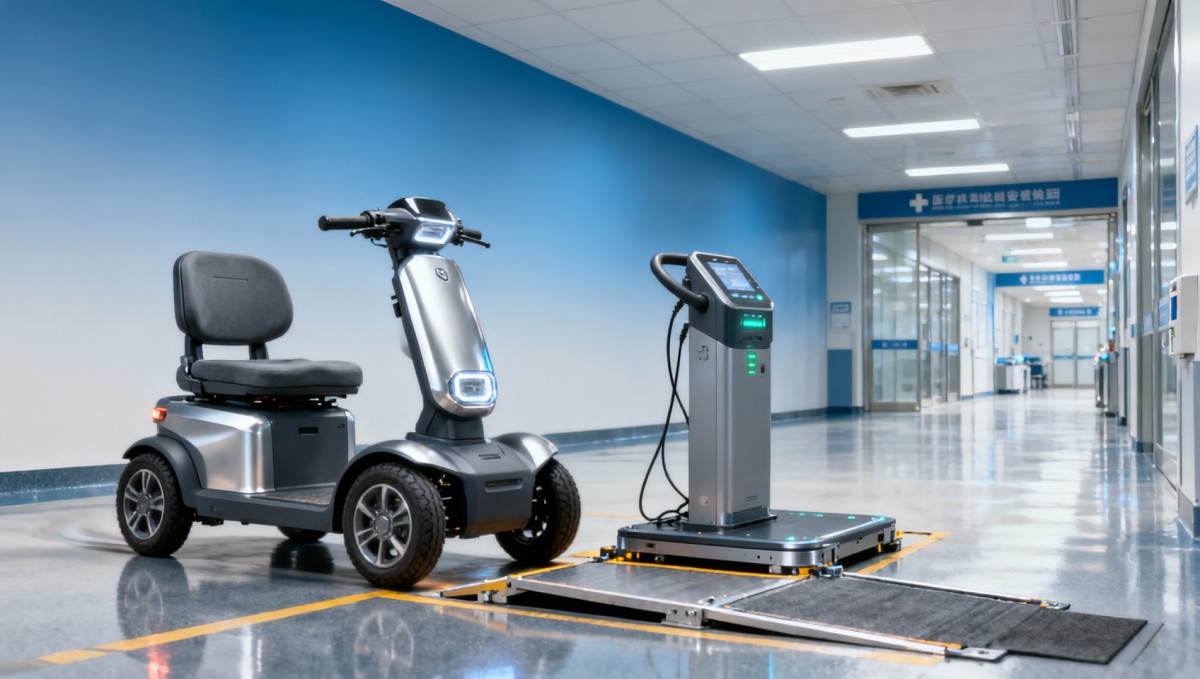
The first safety screen for any mobility scooter should focus on three operational fundamentals: stopping distance, resistance to tipping, and safe performance under rated load. These are the checks most likely to affect user injury risk within the first day of use. If a scooter is unstable on turns or inconsistent when braking on a slight incline, no amount of premium trim or extra features can compensate for that weakness.
In practical terms, buyers should review the scooter’s maximum user weight, turning behavior, wheelbase geometry, and braking response at both low and moderate travel speeds. Many common mobility scooters operate in the range of 4–8 mph, but safe behavior matters more than peak speed. A scooter carrying 120–160 kg must remain predictable when decelerating, especially on smooth indoor flooring, uneven pavement, and 6–10 degree ramps.
Stability is not just about whether a scooter can stand upright when parked. It also includes lateral balance during cornering, front-end tracking on rough surfaces, and resistance to weight shift when a user reaches sideways or transfers on and off the seat. Four-wheel models often offer more directional stability, while three-wheel units may provide tighter turning radii but require closer scrutiny in commercial or institutional settings where mixed surfaces are common.
Technical reviewers should insist on observing a live demonstration or test cycle rather than relying only on a catalog sheet. A 15–20 minute supervised test across flat surfaces, mild slopes, thresholds, and slow turns will reveal far more than static specifications. If possible, test with a load close to 80%–100% of rated capacity to verify real-world control.
What to check during the first ride test
- Brake engagement should feel immediate and even, without delayed grabbing, drifting, or sudden jerks.
- The scooter should remain planted during slow turns and not show visible body roll when changing direction.
- Incline starts should not trigger rollback beyond a minimal distance, especially on ramps used in care facilities or commercial buildings.
- Seat position, tiller reach, and foot platform clearance should support safe mounting and dismounting within 1–2 attempts.
The table below gives a practical first-stage safety review structure for procurement teams comparing multiple mobility scooters. It is useful when shortlisting 3–5 models for site testing.
The key takeaway is simple: if a mobility scooter cannot stop predictably, remain stable under realistic load, and support safe user transfer, it should not move past the first evaluation round. These checks should be completed before cost comparison discussions begin.
Battery Reliability and Electrical Safety Should Be Checked Early
After mechanical safety, the next priority is electrical reliability. Battery-related issues are among the most common causes of operational interruption in mobility scooters, especially in fleet, institutional, or high-frequency use cases. A scooter that advertises long range but delivers unstable voltage, slow charging recovery, or premature battery drop-off creates both safety and service risks.
Most buyers should review battery chemistry, charge cycle expectations, charging time, thermal behavior, and replacement availability. Depending on the model, a full charge may take around 6–12 hours, and a typical operating range may vary from 10 to 25 miles under normal conditions. However, actual range can decline materially when the scooter carries a heavier user, climbs repeated slopes, or operates on rough outdoor terrain.
Electrical safety review should also include wiring protection, connector sealing, charger compatibility, and battery enclosure integrity. In commercial and healthcare settings, charging may occur overnight or across shared charging bays. That means procurement teams must evaluate not only performance but also charging discipline, cable management, and whether staff can inspect battery status easily within daily operating routines.
A smart buying process asks what happens after 12 months, not just on day 1. If replacement batteries require long lead times of 4–8 weeks, or if only one service channel can provide compatible chargers, downtime risk rises. Buyers should favor solutions with documented battery maintenance guidance, clear state-of-charge indicators, and practical spare parts access.
Electrical questions worth asking the supplier
- What is the typical charging time from 20% to 100%, and under what ambient conditions was it measured?
- How does the displayed range change under maximum user load or repeated stop-start operation?
- Are replacement batteries and chargers stocked locally, regionally, or only made to order?
- What inspection interval is recommended for cables, terminals, and charger ports—monthly, quarterly, or by usage hours?
The following comparison table helps technical and commercial stakeholders align on battery safety and serviceability before approving a purchase.
For most organizations, the strongest buying position is to select a mobility scooter with transparent battery specifications, a realistic range profile, and a support model that limits downtime. Electrical safety is not a secondary feature; it is central to user protection and operating continuity.
Fit, Ergonomics, and Environment Matching Reduce Real-World Incidents
A mobility scooter can pass a technical checklist and still perform poorly if it does not match the user population or operating environment. Fit matters because many safety incidents happen during ordinary actions: getting on and off the scooter, reaching the controls, reversing in tight aisles, or crossing doorway thresholds. In institutional procurement, this is where operator feedback and site assessment should directly shape final selection.
Start with user dimensions and mobility profile. Seat width, armrest support, tiller adjustability, and step-through access should match the intended user group. A model designed for occasional personal use may not be suitable for a site where 10–20 different users interact with the unit across a week. Shared-use settings need simpler control layouts, forgiving steering response, and easier transfer geometry.
Environment matching is equally important. Indoor medical or residential settings may prioritize compact turning and low-noise operation. Outdoor or campus use may demand better suspension behavior, higher ground clearance, and more robust tires. If the route includes thresholds above 2–3 cm, rough paving, or repeated ramp transitions, those conditions should be included in testing rather than treated as exceptions.
For project managers and facility teams, a route map is often more useful than a brochure. Review the narrowest corridor width, tightest turn, longest daily travel segment, and steepest incline on the actual site. Even a 5-minute route audit can expose a mismatch between the selected scooter and the operating environment.
Environment-based selection priorities
Indoor-first deployment
For indoor-first use, buyers should prioritize a tighter turning radius, smooth low-speed modulation, and non-marking tire behavior. This profile often suits clinics, eldercare facilities, and terminal interiors where maneuverability matters more than long-distance range.
Outdoor or mixed-surface deployment
For outdoor or mixed-surface use, focus more on wheel stability, ground clearance, suspension response, and consistent braking over uneven terrain. This is especially relevant for campuses, public venues, or hospitality operations where route conditions can change daily.
The strongest procurement outcomes usually come from matching 4 variables together: user weight range, transfer ability, route conditions, and daily usage frequency. If one of these is missed, even a technically sound mobility scooter may deliver poor adoption or higher incident potential.
Compliance, Documentation, and Quality Control Should Not Be Deferred
Many buyers make a timing error by reviewing documents only after they like the product. In safety-led procurement, documentation should be checked early. This includes user manuals, maintenance instructions, warranty terms, spare parts documentation, testing records where available, and any product conformity information required by the local market. Even when a mobility scooter looks commercially attractive, weak documentation can delay approval or complicate internal risk sign-off.
Quality and safety teams should look for evidence that the supplier can support routine inspection and controlled deployment. A useful baseline is a pre-delivery inspection checklist, a commissioning process, and a maintenance schedule with intervals such as monthly visual checks, quarterly function review, and annual deeper servicing depending on use intensity. Documentation should be understandable by operators, not only engineers.
Commercial buyers should also ask whether packaging, transit protection, and incoming inspection standards are defined. Damage during shipment can affect steering alignment, body integrity, or battery health before the scooter ever reaches the end user. For international procurement, clear handover documentation becomes even more important because service responsibility may be split across importer, distributor, and local technician.
A disciplined compliance review helps prevent two common B2B failures: buying a product that cannot be easily approved for use, and buying one that cannot be maintained consistently after deployment. Both can turn a routine sourcing project into a costly corrective exercise.
Core documents to request before final approval
- Operator manual with safety warnings, charging instructions, and routine inspection steps.
- Maintenance guidance covering brakes, tires, battery system, and control interface checks.
- Warranty scope showing coverage period, exclusions, and service response pathway.
- Parts and service support information, including typical lead times for wear items and electrical components.
The operational value of documentation is straightforward: it shortens approval cycles, improves consistency in handover, and gives safety managers a clearer basis for ongoing control. In many organizations, this can reduce avoidable back-and-forth during procurement by 1–2 review rounds.
Build a Safer Procurement Workflow From Trial to Service Support
Once the basic safety checks are complete, the final decision should be made through a structured procurement workflow. This is especially important when mobility scooters will be purchased in more than one unit, deployed across multiple sites, or reviewed by technical, commercial, and financial stakeholders at the same time. A structured process reduces subjective decisions and makes supplier comparison easier.
A practical workflow often includes 5 stages: requirement definition, safety screening, on-site test, documentation review, and service confirmation. In many organizations, this sequence can be completed within 2–6 weeks depending on the number of stakeholders and whether demo units are available. Skipping the on-site test is usually the biggest mistake because it removes the only step that validates performance in real operating conditions.
Finance approvers should not review the purchase price in isolation. They should also consider service visits, battery replacement timing, training needs, and potential downtime. A slightly higher-priced unit with faster parts availability and lower incident risk may have the better 24-month cost profile. This matters even more in healthcare and facility operations where equipment availability directly affects service continuity.
For suppliers, the strongest proposals are those that present safety performance, operating fit, and service support in one package. For buyers, the strongest decisions come from documented scoring rather than informal preference. That approach creates a cleaner approval trail and a lower post-purchase risk burden.
Recommended evaluation workflow
This workflow highlights an important procurement principle: safety checks come first, but they must connect to service support and lifecycle planning. A mobility scooter is not only a product; it is an operating asset that needs reliable performance over time.
FAQ for buyers and evaluators
Which mobility scooter specification should be checked before all others?
Braking and stability should come before speed, styling, or accessories. If the scooter cannot stop predictably, remain stable under its rated load, and handle basic ramps or turns safely, it should not proceed to final review.
How long should a proper evaluation test take?
A useful first-pass test often takes 15–20 minutes and should include flat travel, low-speed turning, a mild incline, user transfer, and battery/status review. For institutional fleets, a longer 1–3 day supervised trial can provide better evidence.
Is advertised range enough for buying decisions?
No. Buyers should ask how range changes under higher user weight, uneven terrain, and repeated stop-start use. A stated 20-mile range in ideal conditions may perform very differently in mixed real-world operation.
What is the most common B2B buying mistake?
The most common mistake is prioritizing purchase price before checking stability, battery serviceability, environment fit, and support documentation. That often leads to higher costs later through incidents, downtime, or replacement.
Buying mobility scooters safely means asking the right questions in the right order. Start with braking, stability, load handling, battery reliability, and user fit. Then confirm documentation, service support, and lifecycle practicality. This approach helps operators stay safer, gives technical teams stronger approval confidence, and supports more defensible commercial decisions.
For organizations sourcing mobility equipment across healthcare, facilities, public access, or shared-use environments, a structured evaluation process delivers better outcomes than feature-led buying. To explore more decision frameworks, supplier intelligence, and category-level procurement insights, connect with TradeNexus Pro to get tailored guidance, compare sourcing options, and learn more solutions for safety-first mobility procurement.
Get weekly intelligence in your inbox.
No noise. No sponsored content. Pure intelligence.
 Apr 20, 2026China Academy of IMT Releases Digital Passport White Paper for Industrial MaterialsChina Academy of IMT Releases Digital Passport White Paper for Industrial Materials
 Apr 20, 2026Suez Canal AI Speed & Load Limits Effective Apr 19, 2026Suez Canal AI Speed & Load Limits Effective Apr 19, 2026
 Apr 20, 2026IEC 63275:2026 Published for Warehouse Robotics EMC TestingIEC 63275:2026 Published for Warehouse Robotics EMC Testing
 Apr 20, 20262026 Shanghai Fastener Show: 1427 Exhibitors, Robot-Specific Fasteners in Focus2026 Shanghai Fastener Show: 1427 Exhibitors, Robot-Specific Fasteners in Focus
 Apr 20, 2026US BIS Expands EV Infrastructure Export ControlsUS BIS Expands EV Infrastructure Export Controls
 Apr 20, 2026TÜV Rheinland Updates ESS Certification with Propagation Blocking RequirementTÜV Rheinland Updates ESS Certification with Propagation Blocking Requirement
 Apr 20, 2026Shanghai Port Launches Green Clearance Channel for PV InvertersShanghai Port Launches Green Clearance Channel for PV Inverters
 Apr 20, 2026Vietnam Launches Anti-Circumvention Probe on Chinese Electronic ComponentsVietnam Launches Anti-Circumvention Probe on Chinese Electronic Components
 Apr 20, 2026CPSC Urges Recall of China-Made Smart Plugs Over Firmware VulnerabilitiesCPSC Urges Recall of China-Made Smart Plugs Over Firmware Vulnerabilities
 Apr 20, 2026EU AI Act CE Compliance for IoT Devices Takes Effect Apr 18, 2026EU AI Act CE Compliance for IoT Devices Takes Effect Apr 18, 2026
 Apr 19, 20262026 Dongguan Whole-House Customization List Released2026 Dongguan Whole-House Customization List Released
 Apr 19, 2026Global Shipping Alliances Launch Green Slot Priority for Asia-Europe RoutesGlobal Shipping Alliances Launch Green Slot Priority for Asia-Europe Routes
 Apr 19, 2026Vietnam Imposes AD Duties on Chinese Electronic ComponentsVietnam Imposes AD Duties on Chinese Electronic Components
 Apr 19, 2026Dongguan Victor Tops Local Full-Home Customization ListDongguan Victor Tops Local Full-Home Customization List
 Apr 19, 2026Guosheng Zhike Launches High-Precision Mold Machine Project in TaizhouGuosheng Zhike Launches High-Precision Mold Machine Project in Taizhou
 Apr 19, 2026CRRC Changchun Wins Jiaxing Urban Rail EMU ProjectCRRC Changchun Wins Jiaxing Urban Rail EMU Project
 Apr 19, 2026China Releases Green Design Guidelines 2026 for Industrial ProductsChina Releases Green Design Guidelines 2026 for Industrial Products
 Apr 19, 2026CATL Establishes $3B Era Resources Group for Global Mineral ControlCATL Establishes $3B Era Resources Group for Global Mineral Control
 Apr 19, 2026Shanghai Electric Gas Turbine Backlog Extends to 2028Shanghai Electric Gas Turbine Backlog Extends to 2028
 Apr 19, 2026Hormuz Strait Reopens, China Fertilizer Export Quota Easing ExpectedHormuz Strait Reopens, China Fertilizer Export Quota Easing Expected
 Apr 18, 2026TradeNexus Pro Launches Global Compliance RadarTradeNexus Pro Launches Global Compliance Radar
 Apr 18, 2026JIS T 2304:2026 Takes Effect June 1, 2026 for IVD SoftwareJIS T 2304:2026 Takes Effect June 1, 2026 for IVD Software
 Pathway for Rehab Devices with AI Modules") Apr 18, 2026FDA Updates 510(k) Pathway for Rehab Devices with AI ModulesFDA Updates 510(k) Pathway for Rehab Devices with AI Modules
Apr 18, 2026FDA Updates 510(k) Pathway for Rehab Devices with AI ModulesFDA Updates 510(k) Pathway for Rehab Devices with AI Modules Apr 18, 2026India BIS Approves 3 Chinese IoT Labs for IS 16444:2026 CertificationIndia BIS Approves 3 Chinese IoT Labs for IS 16444:2026 Certification
 Apr 18, 2026THE Alliance Launches Green Slot Priority for China PortsTHE Alliance Launches Green Slot Priority for China Ports
 Apr 18, 2026TÜV Rheinland Releases Dual-Standard ESS Certification Guide for ChinaTÜV Rheinland Releases Dual-Standard ESS Certification Guide for China
 Apr 18, 2026Vietnam Imposes AD Duties on Chinese Electronic ComponentsVietnam Imposes AD Duties on Chinese Electronic Components