Mobility Scooters: What to Check Before You Buy One
Before investing in mobility scooters, buyers should assess far more than price and appearance. The right choice depends on who will use the scooter, where it will operate, how far it needs to travel, and what safety, maintenance, and compliance requirements apply. For individual users, distributors, and procurement teams evaluating mobility scooters alongside related powered products such as lithium ion batteries and portable power stations, the most important task is not finding the cheapest unit, but identifying the model that delivers safe operation, reliable range, manageable lifetime cost, and fit-for-purpose performance.
What should you check first before buying a mobility scooter?
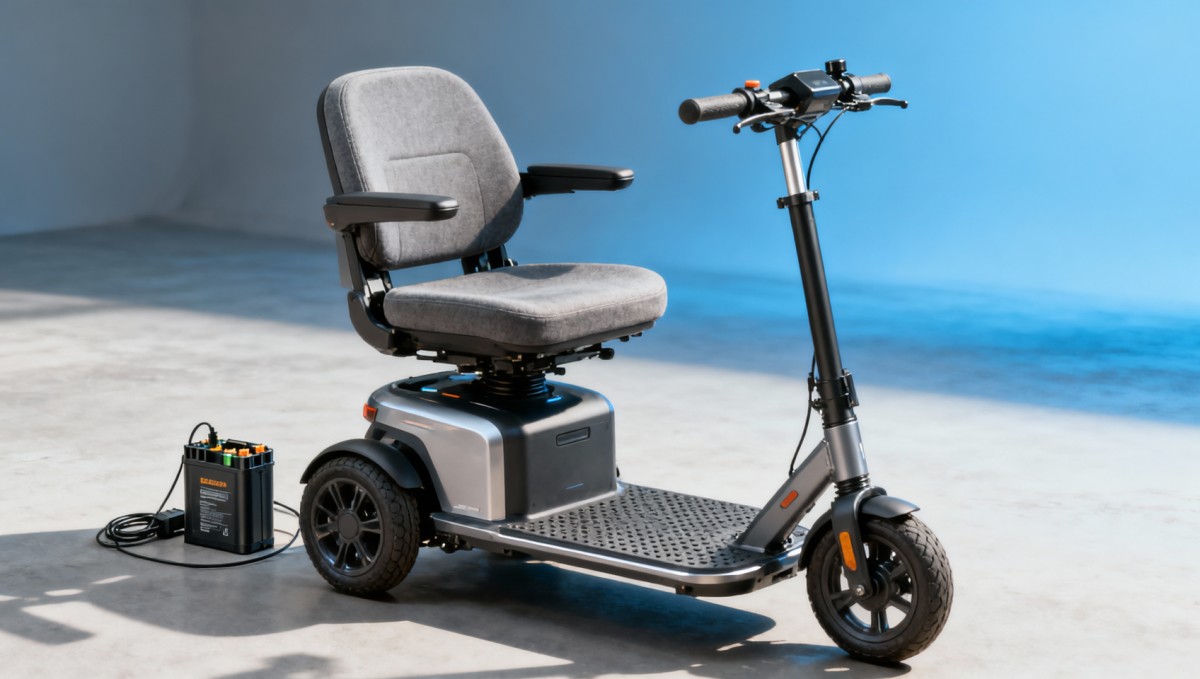
The first and most important check is simple: match the scooter to the real use case. Many buying mistakes happen because people compare specifications without asking how the scooter will actually be used day to day. A model that looks attractive on paper may underperform if the user needs longer travel range, better stability, easier transport, or operation on uneven outdoor surfaces.
Before comparing brands or prices, clarify these five questions:
- Who is the primary user? Consider weight, height, mobility limitations, upper-body strength, and ability to transfer on and off the scooter.
- Where will it be used most? Indoors, pavements, shopping areas, outdoor paths, ramps, or mixed terrain.
- How long will typical trips be? Range expectations directly affect battery size, charging needs, and operating convenience.
- Is portability important? Some buyers need a foldable or dismantlable model for car transport, while others need a heavier-duty unit for daily use.
- Are there safety, regulatory, or institutional requirements? This matters for care providers, distributors, and enterprise procurement teams.
Once these basics are clear, the buying process becomes much more accurate. Instead of chasing features that may never be used, buyers can focus on performance, user safety, service support, and total value.
How do you know whether a scooter fits the user and operating environment?
A mobility scooter should first fit the user physically and functionally. Comfort and control are not minor details; they are essential to safe use. A scooter that is too narrow, too high, too heavy to steer, or hard to mount can quickly become impractical.
Key fit and usability checks include:
- Seat dimensions and support: Check width, padding, swivel function, armrest adjustability, and back support.
- Weight capacity: Never treat this as a rough estimate. Buyers should keep a reasonable margin below the maximum rated load, especially if bags, oxygen equipment, or accessories will be carried.
- Legroom and tiller adjustment: Users should be able to sit naturally without cramped knees or overreaching for controls.
- Turning radius: Critical for indoor use, lifts, corridors, retail spaces, and residential environments.
- Ground clearance and wheel type: Especially important for outdoor paths, curbs, rough surfaces, and threshold transitions.
Environment fit is equally important. Three-wheel scooters may offer tighter turning and easier indoor maneuverability, but four-wheel scooters often provide better stability outdoors. For buyers supporting elderly users or institutional settings, this trade-off should be assessed carefully rather than assumed.
Why are battery range, charging, and power system checks so important?
Battery performance is one of the most misunderstood aspects of buying mobility scooters. Advertised range figures are often based on controlled conditions, not real-world use. Actual range can vary depending on rider weight, speed, stop frequency, temperature, terrain, incline, and battery age.
Buyers should verify:
- Rated range under typical load: Ask whether the quoted figure reflects ideal test conditions or realistic daily use.
- Battery type: Compare sealed lead-acid and lithium ion battery options where available. Lithium systems may offer lighter weight, faster charging, and longer cycle life, but can raise upfront cost.
- Charge time: Long charging periods can reduce operational convenience for frequent users.
- Battery replacement cost: A lower-priced scooter can become more expensive over time if replacement batteries are costly or hard to source.
- Charger compatibility and power requirements: Important for home users, fleet operators, and distributors in multiple markets.
For procurement teams and commercial evaluators, battery economics matter just as much as performance. A mobility scooter is not only a vehicle purchase; it is also an energy system decision. If operations involve remote locations, event support, emergency backup, or extended outdoor activity, buyers may also compare charging flexibility with related power solutions such as portable power stations. In these cases, compatibility, charging safety, and power management should be reviewed with technical caution.
Which safety features should never be overlooked?
Safety should be treated as a primary buying criterion, not a secondary feature list. For end users, poor safety design can lead to tipping, collision, loss of control, or operator fatigue. For distributors, care organizations, and business buyers, safety failures also create liability, reputation, and compliance risk.
Critical safety checks include:
- Anti-tip wheels or stabilizing design
- Reliable braking system, including automatic or electromagnetic braking
- Speed control settings suitable for user skill level and environment
- Lighting, reflectors, and horn for visibility and awareness
- Slip-resistant foot platform and stable entry/exit design
- Clear control layout that reduces user confusion
Safety is also about predictable behavior. Buyers should ask how the scooter performs on slopes, during sudden stops, on wet surfaces, and when turning at lower versus higher speed. If possible, a test drive should include realistic conditions rather than only smooth showroom flooring.
For quality control personnel and safety managers, reviewing product testing documentation, incident history, component traceability, and relevant certifications can provide far more value than relying on marketing claims.
What maintenance, service, and parts support should buyers evaluate?
A mobility scooter with limited after-sales support can create serious long-term problems even if the initial purchase seems attractive. Serviceability affects uptime, user satisfaction, and total cost of ownership.
Buyers should investigate:
- Availability of replacement parts: Batteries, tires, chargers, controllers, seats, and electronic modules should be obtainable without excessive delays.
- Local service network: Important for repairs, inspections, setup assistance, and warranty work.
- Warranty scope: Check whether coverage differs for the frame, drivetrain, electronics, and battery.
- Routine maintenance needs: Tire checks, battery care, cleaning, brake inspection, and storage requirements.
- Technical documentation: User manuals, troubleshooting guides, and spare parts documentation improve both operational and distributor-level support.
For distributors and commercial buyers, maintenance planning should include expected service intervals, technician training needs, and product return management. A scooter line that is easy to maintain and support can produce better business outcomes than a cheaper but harder-to-service product.
How should business buyers assess compliance, quality, and supplier reliability?
For enterprise buyers, resellers, and sourcing teams, the scooter itself is only part of the evaluation. Supplier capability and compliance discipline are equally important. If the product will be imported, distributed, or deployed in regulated settings, due diligence should extend beyond brochures and price sheets.
Review these areas carefully:
- Product certifications and applicable market compliance
- Quality management systems and inspection consistency
- Battery transport and storage compliance
- Factory audit data or third-party verification
- Lead times, MOQ flexibility, and supply continuity
- Claims handling and after-sales responsiveness
Commercial evaluators should also ask whether the supplier can support private labeling, documentation localization, spare parts stocking, and training materials. For many distributors, a technically acceptable product becomes commercially unworkable if documentation, warranty administration, or logistics support is weak.
Where mobility scooters are compared with adjacent powered mobility or battery-based product categories, quality teams should also examine battery cell sourcing, battery management system reliability, and transport packaging standards.
How do you compare price against long-term value?
The best buying decision is rarely based on upfront price alone. A lower-cost mobility scooter may be acceptable for occasional, light-duty use, but it may deliver poor value if battery life is short, service is limited, or the unit does not match the user’s real environment.
To evaluate value properly, consider the full cost picture:
- Purchase price
- Battery replacement cycle and cost
- Expected maintenance and repair expense
- Operational downtime risk
- User comfort and safety outcomes
- Residual value or redeployment potential
For financial approvers and enterprise decision-makers, the practical question is not “Which scooter is cheapest?” but “Which option best balances risk, supportability, safety, and useful life for the intended application?” That is the more accurate ROI framework.
A practical pre-purchase checklist for mobility scooters
Before finalizing a purchase, use this checklist:
- Confirm the user profile, body dimensions, and mobility needs
- Define primary use environment and terrain conditions
- Verify real-world battery range and charging time
- Check weight capacity with safety margin
- Assess turning radius, stability, and ease of transfer
- Review braking, anti-tip, lighting, and visibility features
- Inspect warranty terms and replacement part availability
- Validate certifications and applicable compliance documents
- Request a live demo or test drive where possible
- Compare total cost of ownership, not just list price
For trade buyers and distributors, add supplier audit questions, spare parts strategy, logistics terms, and after-sales process review before signing any order.
Buying a mobility scooter is ultimately a fit, safety, and lifecycle decision. The most reliable choice is the one that matches the user’s physical needs, operates confidently in the intended environment, provides dependable battery performance, and is backed by credible service and compliance support. Whether you are an end user, evaluator, distributor, or enterprise buyer, checking these factors before purchase will help you avoid costly mismatches and select a mobility scooter that delivers real long-term value.
Get weekly intelligence in your inbox.
No noise. No sponsored content. Pure intelligence.
 Apr 25, 2026Vietnam Enforces CN-EN Bilingual Safety Labels on Electronic Components from Apr 22, 2026Vietnam Enforces CN-EN Bilingual Safety Labels on Electronic Components from Apr 22, 2026
 Apr 25, 2026ANATEL Mandates Portuguese Offline Voice Assistants for Smart Home Devices in BrazilANATEL Mandates Portuguese Offline Voice Assistants for Smart Home Devices in Brazil
 Apr 25, 2026India BIS Mandates IS 13252:2025 for PLCs & HMIs by Oct 2026India BIS Mandates IS 13252:2025 for PLCs & HMIs by Oct 2026
 Apr 25, 2026SASO EV Charger Rules: Grid Compatibility & Sand Resistance RequiredSASO EV Charger Rules: Grid Compatibility & Sand Resistance Required
 Apr 25, 2026JIS T 0011:2026 Enforces IEC 62366-1:2024 for Rehab Devices in JapanJIS T 0011:2026 Enforces IEC 62366-1:2024 for Rehab Devices in Japan
 Apr 25, 2026THE Alliance Cuts Ningbo–Rotterdam Transit to 18 Days, +35% Spot RateTHE Alliance Cuts Ningbo–Rotterdam Transit to 18 Days, +35% Spot Rate
 Apr 25, 2026TÜV Rheinland Updates IoT EMC Standard: AI Edge Module Immunity Now MandatoryTÜV Rheinland Updates IoT EMC Standard: AI Edge Module Immunity Now Mandatory
 Apr 25, 2026USTR Launches Five-Year China Solar PV AD/CVD ReviewUSTR Launches Five-Year China Solar PV AD/CVD Review
 Apr 25, 2026EU New Battery Regulation Enters Force Apr 24, 2026EU New Battery Regulation Enters Force Apr 24, 2026
 Apr 25, 2026China Customs Launches RCEP Origin Smart Pre-Review for ASEAN机电 ExportsChina Customs Launches RCEP Origin Smart Pre-Review for ASEAN机电 Exports
 Apr 24, 2026India BIS Mandates IS 13252:2025 for PLCs & HMIs by Oct 2026India BIS Mandates IS 13252:2025 for PLCs & HMIs by Oct 2026
 Apr 24, 2026SASO EV Charger Regulation: Sand-Resistant Grid Compatibility Testing RequiredSASO EV Charger Regulation: Sand-Resistant Grid Compatibility Testing Required
 Apr 24, 2026Japan Updates JIS for Rehab Devices: IEC 62366-1:2024 Usability Compliance RequiredJapan Updates JIS for Rehab Devices: IEC 62366-1:2024 Usability Compliance Required
 Apr 24, 2026China Customs Launches RCEP Origin Smart Pre-Review SystemChina Customs Launches RCEP Origin Smart Pre-Review System
 Apr 24, 2026ANATEL Mandates Localized Voice Assistants for Smart Home Devices in BrazilANATEL Mandates Localized Voice Assistants for Smart Home Devices in Brazil
 Apr 24, 2026TÜV Rheinland Updates IoT EMC Standard with AI Edge抗扰度 RequirementTÜV Rheinland Updates IoT EMC Standard with AI Edge抗扰度 Requirement
 Apr 24, 20262M Alliance Shortens Ningbo–Rotterdam Route to 18 Days Amid 35% Slot Premium2M Alliance Shortens Ningbo–Rotterdam Route to 18 Days Amid 35% Slot Premium
 Apr 24, 2026Vietnam Enforces Bilingual Safety Labels for Imported Electronic Components from Apr 22, 2026Vietnam Enforces Bilingual Safety Labels for Imported Electronic Components from Apr 22, 2026
 Apr 24, 2026USTR Launches Sunset Review on China Solar PV AD/CVD DutiesUSTR Launches Sunset Review on China Solar PV AD/CVD Duties
 Apr 24, 2026EU New Battery Regulation Fully Effective Apr 24, 2026EU New Battery Regulation Fully Effective Apr 24, 2026
 Apr 23, 2026Taobao Factory Spark 3.0 Launches AI Workbench for SME Export FactoriesTaobao Factory Spark 3.0 Launches AI Workbench for SME Export Factories
 Apr 23, 2026TENENG Group Inspects IoT Safety Compliance at Jiangnan ChemicalTENENG Group Inspects IoT Safety Compliance at Jiangnan Chemical
 Apr 23, 2026China Launches First Embodied AI Open Data CommunityChina Launches First Embodied AI Open Data Community
 Apr 23, 2026PV Glass Prices Flat for 9 Weeks Amid Rising Integrated ProcurementPV Glass Prices Flat for 9 Weeks Amid Rising Integrated Procurement
 Apr 23, 20262984 NQI One-Stop Platforms Launched Nationwide2984 NQI One-Stop Platforms Launched Nationwide
 Apr 23, 2026China’s Green Smart Ship Tech Norms Accelerate BMS & Shore Power ExportChina’s Green Smart Ship Tech Norms Accelerate BMS & Shore Power Export
 Apr 23, 2026China Builds World's Largest Agri-Meteorological IoT NetworkChina Builds World's Largest Agri-Meteorological IoT Network