TENS Units for Recovery: What Works and What to Avoid?
TENS units are increasingly used in recovery routines, but not every device, setting, or claim delivers real value. For buyers, evaluators, and operational teams comparing tens units across healthcare technology supply chains, understanding what works—and what to avoid—is essential for safety, performance, and ROI. This guide outlines practical selection criteria, common mistakes, and evidence-based considerations for more informed decisions.
In B2B healthcare technology environments, a TENS unit is not just a consumer wellness gadget. It can be a clinical support device, a rehabilitation tool, or part of a broader recovery workflow used in sports medicine, outpatient care, occupational health, and home-based therapy programs. That means procurement teams need to look beyond marketing language and focus on output consistency, user safety, training requirements, and lifecycle cost.
For technical evaluators and project stakeholders, the challenge is often practical: which TENS units actually support recovery objectives, which specifications matter most, and where do buyers lose value through poor selection? The answers usually depend on treatment context, patient profile, compliance expectations, and service support over a 12–36 month usage horizon.
What TENS Units Can Realistically Do in Recovery Programs
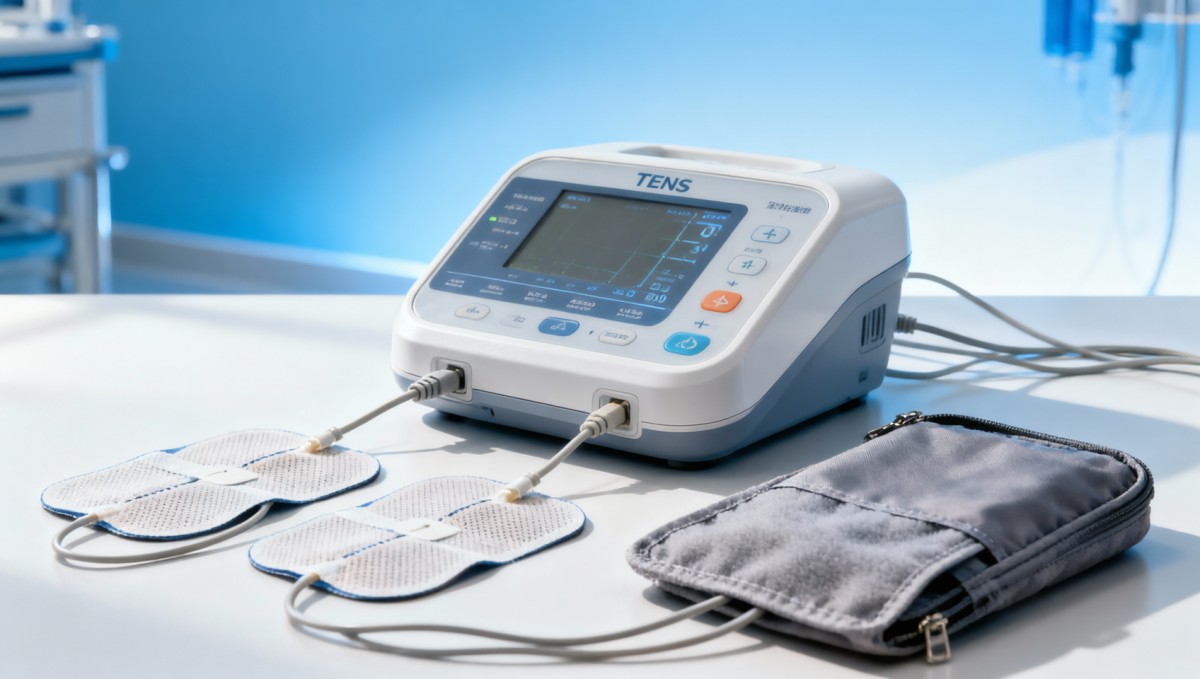
TENS, or transcutaneous electrical nerve stimulation, is commonly used to support pain management during recovery. In many rehabilitation settings, its primary role is not to heal tissue directly but to help reduce discomfort, improve treatment tolerance, and support patient participation in movement or therapy sessions lasting 15–45 minutes. This distinction matters because inflated product claims often confuse pain modulation with full recovery outcomes.
In practical terms, TENS units may be useful after musculoskeletal strain, post-exercise soreness, some chronic pain presentations, and selected post-procedure rehabilitation pathways when approved by the relevant care team. They are less reliable as a stand-alone solution for structural injury, severe inflammation, or cases where diagnosis is unclear. Buyers should therefore assess intended use against realistic care pathways rather than broad advertising promises.
For enterprise users, the most valuable recovery benefit often comes from workflow integration. A TENS unit that reduces pain enough for a worker, athlete, or patient to complete a supervised exercise plan may create more operational value than a device with dozens of modes but weak usability. In many deployment settings, 3 factors drive actual value: session adherence, ease of setup, and stable output over repeated cycles.
The table below outlines where TENS units typically add value and where expectations should be limited.
The key takeaway is simple: what works is targeted pain support within a defined recovery plan. What to avoid is purchasing TENS units on the assumption that more modes, more intensity, or broader claims automatically produce better recovery outcomes.
Why B2B buyers should separate symptom relief from clinical outcome
This separation helps teams build more accurate ROI models. A TENS unit may justify investment if it reduces missed therapy sessions, supports return-to-function programs, or lowers the need for escalating non-invasive pain interventions. It should not be evaluated as a universal substitute for diagnostics, exercise therapy, or clinician-led rehabilitation planning.
Selection Criteria That Matter More Than Marketing Claims
When comparing TENS units, procurement teams should start with output characteristics and usability, not cosmetic design. In many healthcare technology purchasing reviews, buyers focus on screen size or app branding while underweighting waveform stability, intensity range, channel control, and electrode compatibility. For recovery use, those technical details directly affect patient comfort and repeatable performance.
A practical evaluation often includes 4 dimensions: electrical performance, safety controls, operational simplicity, and supply continuity. For example, a unit with 2 independent channels, adjustable pulse width, and a session timer may be more useful across multiple recovery protocols than a device offering 20 preset programs but limited manual control. The best choice is usually the one that gives staff enough flexibility without introducing unnecessary complexity.
Battery type, consumables, and replacement planning also matter. If a TENS unit depends on proprietary electrodes with unstable regional supply, the hidden cost over 12 months may exceed the initial equipment savings. This is especially relevant for cross-border buyers managing multiple clinics, sports facilities, or distributor networks across more than 1 market.
Before purchase approval, technical teams should align specifications with the expected user group. A self-managed home-use workflow, for example, needs clearer labeling and simpler controls than a supervised therapy department where trained staff can fine-tune settings.
Core evaluation points for TENS unit procurement
- Intensity control should be gradual and predictable, avoiding sudden jumps that reduce user confidence.
- Session timers in the 15–60 minute range are useful for standardized recovery routines and compliance tracking.
- At least 2 channels can support broader placement options and more flexible protocol design.
- Electrode connectors, cable quality, and pad replacement frequency should be reviewed for ongoing operating cost.
- Instructions for use should be clear enough for operators, technicians, and non-clinical stakeholders to verify safe deployment.
A practical specification comparison framework
The table below can help evaluation teams compare devices using procurement-relevant criteria instead of broad promotional language.
For most B2B buyers, a durable, understandable, and serviceable TENS unit outperforms a feature-heavy device that complicates training and replenishment. The best procurement decisions usually reduce variability, not increase it.
What to Avoid: Common Mistakes in Evaluation, Deployment, and Use
One of the most frequent mistakes is equating higher intensity with better recovery. In reality, comfort-tolerable stimulation is usually more relevant than maximum output. If users experience sharp discomfort, adherence often drops within the first 3–5 sessions. For facilities managing multiple users, that directly affects utilization rate and perceived value.
Another mistake is ignoring contraindications and risk controls. TENS units may be unsuitable in some cases involving implanted electrical devices, certain cardiac conditions, specific pregnancy-related situations, broken skin, or poorly assessed neurological symptoms. Quality and safety managers should ensure that screening steps are built into onboarding and not left to informal judgment.
Buyers also lose value when they underestimate training. Even a well-designed TENS unit can fail operationally if staff do not understand pad placement, session frequency, cleaning procedures, and escalation criteria. In many deployments, 60–90 minutes of initial training plus a short competency checklist can prevent repeated setup errors and unnecessary support tickets.
Finally, many teams fail to plan for accessory wear. Electrodes, leads, and batteries often degrade before the core device does. If procurement budgets only cover hardware and ignore 6–12 months of consumables, service continuity suffers.
Operational risks that should be flagged early
- Using default presets for all users without adjusting to indication, tolerance, and body site.
- Applying electrodes inconsistently, making performance comparisons unreliable across teams or facilities.
- Skipping contraindication checks during intake or device handover.
- Purchasing low-cost units with poor cable durability, leading to frequent downtime after 3–6 months.
- Assuming app connectivity adds value when the real need is simple repeatable operation.
How to reduce avoidable failures
A structured deployment plan should include user screening, protocol definition, operator training, and resupply management. These 4 controls often produce more value than marginal differences in product aesthetics or promotional claims.
In B2B environments, avoid treating TENS procurement as a one-time purchase. It is better understood as a managed recovery tool category that requires service logic, not just unit delivery.
Implementation, Quality Control, and ROI Considerations
A TENS unit creates measurable value when it fits into a controlled implementation pathway. For enterprise buyers, that often means a 5-step model: use-case definition, sample evaluation, limited pilot, staff training, and monitored rollout. A pilot phase of 2–4 weeks is often enough to validate usability, output consistency, and accessory consumption under real operating conditions.
Quality control teams should document at least 3 categories of checks: device condition, output behavior, and user handling. Device condition covers cables, casing, connector integrity, and battery status. Output behavior includes whether intensity adjustment is smooth and whether timers function as expected. User handling focuses on correct placement, cleaning routines, and safe storage after use.
From a finance perspective, total cost of ownership matters more than unit price alone. A lower-cost TENS unit may look attractive until higher replacement rates, longer support time, or consumable lock-in are included. Over 12 months, a device with fewer failures and easier sourcing may provide stronger ROI even if the initial purchase price is 15%–25% higher.
The table below shows a practical framework for linking procurement decisions to operational outcomes.
For project managers, the most effective implementation metric is not how many TENS units were purchased, but how consistently they are used within approved recovery protocols. Adoption quality matters more than deployment volume.
Recommended rollout sequence
- Define 2–3 priority recovery scenarios, such as outpatient rehab, workforce pain support, or sports recovery.
- Run a controlled trial with a limited user group and document session frequency, tolerance, and accessory consumption.
- Train operators and create a simple escalation path for contraindications or poor response.
- Set review checkpoints at 30, 60, and 90 days to assess usage, replacement rates, and support needs.
FAQ for Buyers, Evaluators, and Operations Teams
Because TENS units sit at the intersection of healthcare technology, user safety, and procurement efficiency, buyers often ask the same operational questions during sourcing and pilot stages. The answers below are designed to support real purchasing and implementation decisions.
How should buyers compare TENS units for recovery use?
Start with intended use, not brand messaging. Review channel count, control precision, timer range, accessory availability, and user documentation. For most recovery programs, a device with 2 channels, straightforward controls, and repeatable 15–45 minute session capability is more practical than a unit built around excessive presets.
Are more programs and higher intensity always better?
No. In real use, too many programs can confuse operators, and higher intensity can reduce comfort and adherence. What works better is a device that supports controlled adjustment, clear session timing, and consistent user response across repeated sessions.
What delivery and service factors should procurement teams review?
Look beyond hardware lead time. Review electrode replenishment cycles, replacement cable availability, battery or charging requirements, and support response expectations. In many B2B purchasing environments, consumables planning every 30–60 days is just as important as the initial shipment.
Which teams should be involved in TENS unit approval?
A sound review process usually includes clinical or therapy leadership, technical evaluators, procurement, quality or safety personnel, and finance stakeholders. This cross-functional review reduces the risk of buying a device that looks cost-effective on paper but creates operational friction after rollout.
TENS units can deliver real recovery value when they are selected for the right use case, deployed with clear controls, and supported through reliable supply and training. What works is targeted symptom management, practical usability, and lifecycle planning. What to avoid is overbuying features, underestimating training, or treating TENS as a universal recovery solution.
For organizations evaluating recovery devices across healthcare technology supply chains, disciplined selection improves safety, consistency, and ROI. If your team is comparing options, validating suppliers, or planning a pilot program, now is the right time to align technical fit with operational value.
Contact TradeNexus Pro to explore deeper market intelligence, compare sourcing strategies, and get tailored support for smarter TENS unit evaluation and procurement decisions.
Get weekly intelligence in your inbox.
No noise. No sponsored content. Pure intelligence.
 Apr 20, 2026China Academy of IMT Releases Digital Passport White Paper for Industrial MaterialsChina Academy of IMT Releases Digital Passport White Paper for Industrial Materials
 Apr 20, 2026Suez Canal AI Speed & Load Limits Effective Apr 19, 2026Suez Canal AI Speed & Load Limits Effective Apr 19, 2026
 Apr 20, 2026IEC 63275:2026 Published for Warehouse Robotics EMC TestingIEC 63275:2026 Published for Warehouse Robotics EMC Testing
 Apr 20, 20262026 Shanghai Fastener Show: 1427 Exhibitors, Robot-Specific Fasteners in Focus2026 Shanghai Fastener Show: 1427 Exhibitors, Robot-Specific Fasteners in Focus
 Apr 20, 2026US BIS Expands EV Infrastructure Export ControlsUS BIS Expands EV Infrastructure Export Controls
 Apr 20, 2026TÜV Rheinland Updates ESS Certification with Propagation Blocking RequirementTÜV Rheinland Updates ESS Certification with Propagation Blocking Requirement
 Apr 20, 2026Shanghai Port Launches Green Clearance Channel for PV InvertersShanghai Port Launches Green Clearance Channel for PV Inverters
 Apr 20, 2026Vietnam Launches Anti-Circumvention Probe on Chinese Electronic ComponentsVietnam Launches Anti-Circumvention Probe on Chinese Electronic Components
 Apr 20, 2026CPSC Urges Recall of China-Made Smart Plugs Over Firmware VulnerabilitiesCPSC Urges Recall of China-Made Smart Plugs Over Firmware Vulnerabilities
 Apr 20, 2026EU AI Act CE Compliance for IoT Devices Takes Effect Apr 18, 2026EU AI Act CE Compliance for IoT Devices Takes Effect Apr 18, 2026
 Apr 19, 20262026 Dongguan Whole-House Customization List Released2026 Dongguan Whole-House Customization List Released
 Apr 19, 2026Global Shipping Alliances Launch Green Slot Priority for Asia-Europe RoutesGlobal Shipping Alliances Launch Green Slot Priority for Asia-Europe Routes
 Apr 19, 2026Vietnam Imposes AD Duties on Chinese Electronic ComponentsVietnam Imposes AD Duties on Chinese Electronic Components
 Apr 19, 2026Dongguan Victor Tops Local Full-Home Customization ListDongguan Victor Tops Local Full-Home Customization List
 Apr 19, 2026Guosheng Zhike Launches High-Precision Mold Machine Project in TaizhouGuosheng Zhike Launches High-Precision Mold Machine Project in Taizhou
 Apr 19, 2026CRRC Changchun Wins Jiaxing Urban Rail EMU ProjectCRRC Changchun Wins Jiaxing Urban Rail EMU Project
 Apr 19, 2026China Releases Green Design Guidelines 2026 for Industrial ProductsChina Releases Green Design Guidelines 2026 for Industrial Products
 Apr 19, 2026CATL Establishes $3B Era Resources Group for Global Mineral ControlCATL Establishes $3B Era Resources Group for Global Mineral Control
 Apr 19, 2026Shanghai Electric Gas Turbine Backlog Extends to 2028Shanghai Electric Gas Turbine Backlog Extends to 2028
 Apr 19, 2026Hormuz Strait Reopens, China Fertilizer Export Quota Easing ExpectedHormuz Strait Reopens, China Fertilizer Export Quota Easing Expected
 Apr 18, 2026TradeNexus Pro Launches Global Compliance RadarTradeNexus Pro Launches Global Compliance Radar
 Apr 18, 2026JIS T 2304:2026 Takes Effect June 1, 2026 for IVD SoftwareJIS T 2304:2026 Takes Effect June 1, 2026 for IVD Software
 Pathway for Rehab Devices with AI Modules") Apr 18, 2026FDA Updates 510(k) Pathway for Rehab Devices with AI ModulesFDA Updates 510(k) Pathway for Rehab Devices with AI Modules
Apr 18, 2026FDA Updates 510(k) Pathway for Rehab Devices with AI ModulesFDA Updates 510(k) Pathway for Rehab Devices with AI Modules Apr 18, 2026India BIS Approves 3 Chinese IoT Labs for IS 16444:2026 CertificationIndia BIS Approves 3 Chinese IoT Labs for IS 16444:2026 Certification
 Apr 18, 2026THE Alliance Launches Green Slot Priority for China PortsTHE Alliance Launches Green Slot Priority for China Ports
 Apr 18, 2026TÜV Rheinland Releases Dual-Standard ESS Certification Guide for ChinaTÜV Rheinland Releases Dual-Standard ESS Certification Guide for China
 Apr 18, 2026Vietnam Imposes AD Duties on Chinese Electronic ComponentsVietnam Imposes AD Duties on Chinese Electronic Components