Titanium medical implants and the hidden cost of surface finish
In the world of titanium medical implants, surface finish is far more than a cosmetic detail—it directly affects biocompatibility, wear resistance, sterilization performance, and long-term cost. For procurement teams, engineers, and healthcare technology decision-makers, understanding these hidden trade-offs is essential when evaluating suppliers, quality standards, and the total lifecycle value of implant components.
In practical sourcing and qualification work, surface finish often appears late in the discussion, after alloy grade, geometry, and machining capability. That sequence can be expensive. A titanium part with the right material but the wrong surface profile may increase polishing time, delay validation by 2–4 weeks, or trigger rework during cleaning, passivation, coating, and packaging stages. For implant buyers, these downstream effects shape total landed cost more than the unit price alone.
This article examines how surface finish influences implant performance, manufacturing economics, supplier selection, and risk control. It is designed for technical evaluators, procurement teams, quality managers, financial approvers, and project leaders who need a clearer framework for comparing vendors and making defensible B2B decisions in healthcare technology supply chains.
Why surface finish matters beyond appearance
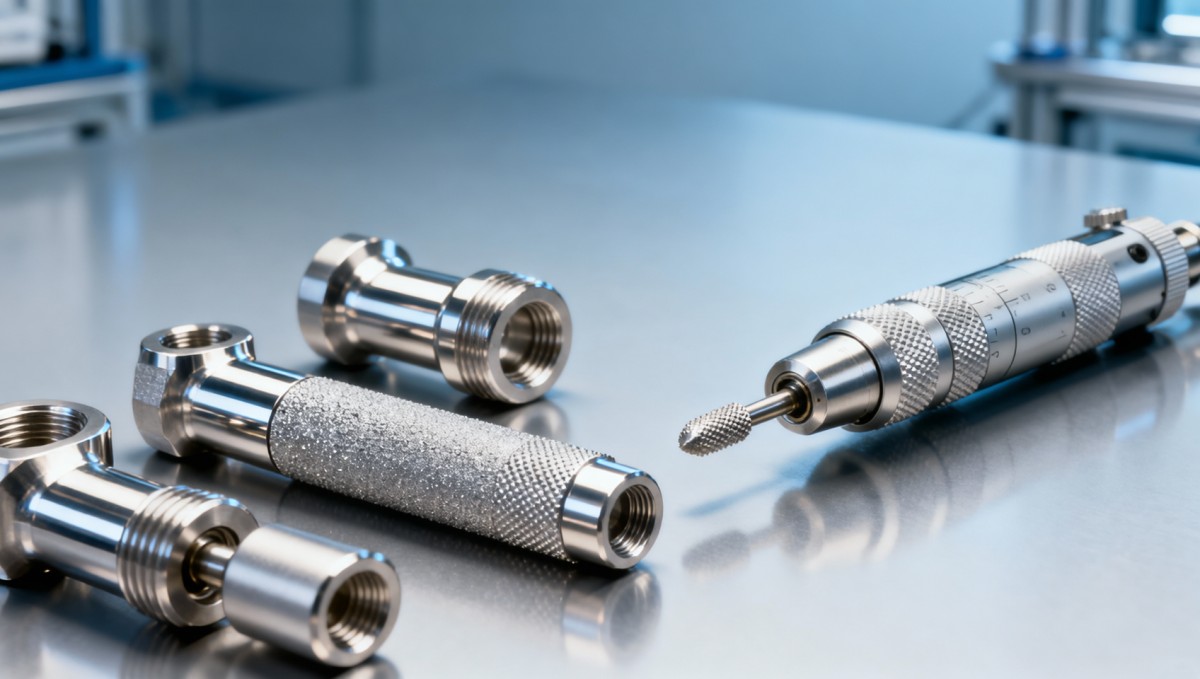
For titanium medical implants, surface finish directly shapes the interaction between the device and the biological environment. Surface roughness, waviness, and residual contamination can affect cell response, bacterial adhesion, friction behavior, and even how reliably the part survives cleaning and sterilization cycles. In orthopedic and dental applications, the difference between a smoother machined finish and a controlled roughened finish is not aesthetic; it is functional.
A critical distinction is that “better” finish does not always mean “lower Ra.” In some implant categories, a roughness range such as Ra 1.0–2.5 µm may support osseointegration, while articulating or sealing surfaces may require Ra below 0.2 µm to reduce wear, friction, and debris generation. Procurement teams that ask only for “polished titanium” may unintentionally invite supplier interpretation gaps, price variation, and inconsistent quality outcomes across batches.
Surface finish also influences process validation. A part with micro-crevices, burrs, embedded abrasives, or inconsistent blasting patterns may be harder to clean and inspect. That can increase incoming quality checks from a sample basis to a 100% critical-feature review on selected lots, raising labor cost and slowing release. For regulated supply chains, this hidden inspection burden can exceed the apparent savings of a low-cost quote.
From a commercial perspective, surface finish is where machining, secondary processing, quality control, and compliance intersect. If a supplier misses the finish requirement by even 0.1–0.3 µm on a high-precision feature, the consequence may be re-polishing, dimensional drift, scrap, or delayed packaging. In high-mix, low-volume implant programs, such disruptions can materially affect project profitability and launch timing.
The four operational impacts buyers should evaluate
- Biological response: surface texture can influence tissue attachment, wear particle generation, and contamination retention.
- Manufacturing efficiency: tighter finish targets may add 1–3 secondary operations such as vibratory finishing, hand polishing, electropolishing, or passivation.
- Inspection cost: finer specifications often require profilometry, microscopy, and more detailed lot documentation.
- Supplier consistency: the same nominal finish value may be reached through different processes, with different repeatability and risk profiles.
Common finish categories in implant production
In sourcing discussions, implant manufacturers usually encounter machined finishes, polished finishes, blasted textures, chemically treated surfaces, and combinations of these. Each route changes not just roughness but also edge integrity, residual stress, and contamination risk. Buyers should request both the target finish range and the finishing method, because two suppliers quoting the same Ra can still deliver very different functional outcomes.
The table below highlights how different finish strategies can affect implant performance and sourcing complexity. These are general industry ranges used for evaluation and planning, not a substitute for device-specific engineering requirements.
The key takeaway is that surface finish must be aligned with functional zones. A single implant may require two or three different finish strategies across contact, fixation, and cosmetic surfaces. Treating the part as one finish specification is a frequent source of cost leakage and supplier misunderstanding.
Where the hidden cost actually comes from
The most visible cost of surface finish is the quoted price for polishing, blasting, or chemical treatment. The less visible cost appears later: longer cycle time, higher scrap risk, more difficult inspection, and additional supplier coordination. In many implant programs, a tighter finish requirement can add 15%–40% to the total manufacturing effort of a precision titanium component, even if the material cost remains unchanged.
Secondary finishing processes are labor-intensive and often skill-dependent. Manual polishing can vary from operator to operator, especially on complex geometries, thin walls, or internal features. If the original machining strategy leaves tool marks too deep for the final requirement, the supplier may need extra polishing passes, which can alter dimensions, round edges, or reduce repeatability across lots of 50–500 parts.
Inspection is another underestimated expense. Roughness verification may require contact profilometers, optical systems, or replica techniques depending on geometry. If a supplier lacks in-process control, measurement shifts to end-of-line inspection, which increases rejection risk. A buyer may then face added incoming inspection time, more nonconformance reviews, and delayed line release at the medical device assembly stage.
Surface finish also affects packaging and sterilization readiness. Residual compounds from polishing media, blast particles, or handling marks can trigger extra cleaning validation steps. In regulated environments, one cleaning deviation can force investigation, lot segregation, or document updates. The cost is not just technical; it can tie up working capital for 2–6 weeks if product release is paused.
Cost drivers that often escape RFQ comparison
Many RFQs compare unit price but omit process burden. A robust B2B evaluation should separate direct finishing cost from quality and delay exposure. The table below provides a practical framework for procurement, engineering, and finance reviewers during supplier comparison.
For financial approvers, this means a lower quoted part price can still produce a higher total cost of ownership. A supplier with stronger process capability may price 8%–12% higher on paper yet reduce quality events, expedite charges, and line stoppages enough to create a better annual cost position.
A practical cost-screening checklist
- Ask whether the quoted finish is achieved by machining alone, post-polishing, blasting, chemical treatment, or a hybrid route.
- Request process capability evidence on critical finish zones, not only a single first-article result.
- Confirm the expected lead time impact. A finish upgrade can extend delivery from 3 weeks to 5–6 weeks.
- Check whether cleaning, passivation, and packaging are included or billed as separate operations.
When buyers turn these items into RFQ line items, supplier comparisons become clearer and less vulnerable to hidden add-ons after technical review.
How to specify titanium implant surface finish correctly
A strong specification should define not only the target roughness but also location, measurement method, directionality if relevant, and post-process cleanliness expectations. In implants, a drawing note that simply states “surface finish Ra 0.8 µm” is often insufficient. It leaves open questions about whether the requirement applies to all surfaces, only functional regions, or excludes hidden non-contact areas.
Engineering and sourcing teams should divide the implant into functional zones. For example, bone-contact regions, articulation zones, threaded interfaces, and instrument-contact features may each need different finish requirements. Zone-based specifications reduce over-processing. If only 20% of the component needs ultra-fine finishing, the supplier can avoid expensive secondary work on non-critical surfaces and improve cost control.
Measurement method matters as much as the number itself. Contact profilometry, optical inspection, and visual acceptance criteria do not produce interchangeable results. Buyers should also state sampling frequency, such as first article plus per-lot verification, and whether any features require 100% inspection. Clear verification rules reduce disputes during qualification and commercial acceptance.
Surface chemistry should not be ignored. Titanium finishing can include passivation, acid etching, or electropolishing depending on the application. Each method changes oxide behavior, cleanliness profile, and documentation needs. Procurement specifications should therefore connect finish requirements with cleaning, residue limits, and packaging conditions instead of treating them as separate departments’ concerns.
What a complete supplier-ready specification should contain
- Surface zone map with at least 2–4 distinct functional areas on the drawing or quality plan.
- Target finish value or range, such as Ra 0.1–0.2 µm for contact surfaces and Ra 1.5–3.0 µm for fixation surfaces.
- Approved process route, for example machined plus electropolish, or blast plus cleaning and passivation.
- Inspection method, sampling rule, and acceptance criteria for rework or cosmetic deviations.
- Cleaning and packaging conditions to avoid post-finish contamination.
Specification errors that increase cost
Three common mistakes repeatedly drive cost overruns. First, applying a premium finish requirement to the entire part rather than critical zones. Second, specifying roughness without naming the process or inspection method. Third, changing finish expectations after first article approval. Each issue can trigger retooling, new validation work, or inventory write-offs.
For project managers, the best preventive step is a cross-functional review before RFQ release. A 30–60 minute technical-commercial review involving engineering, quality, sourcing, and regulatory stakeholders can eliminate weeks of clarification later in the supplier onboarding cycle.
Supplier evaluation: capability, consistency, and risk control
Selecting a titanium implant supplier should go beyond roughness claims and sample appearance. The real question is whether the supplier can produce the required surface finish consistently across geometry variation, lot sizes, and schedule pressure. A polished sample is easy to show once; stable process capability over 12 months is much harder to achieve.
Buyers should examine how the supplier controls upstream machining before finishing begins. Poor toolpath strategy, excessive heat input, and unstable fixturing create deeper marks and surface damage that polishing may hide visually but not remove functionally. Process capability should therefore be evaluated from machining through final cleaning, not only at the finishing station.
Quality teams should also review contamination controls. Titanium implant finishing can introduce abrasive residue, handling marks, embedded media, and inconsistent oxide conditions. Suppliers that separate blasting, polishing, cleaning, and packaging areas typically offer stronger contamination control than those using general-purpose metal finishing cells for all product types.
Commercially, buyers should ask how the supplier handles deviations. A mature partner can define rework limits, reinspection rules, and lot traceability within 24–48 hours. A weak partner often responds with broad assurances but limited documented control. For distributors and OEM sourcing teams, that difference affects not only cost but also reputation and customer confidence.
A practical supplier scorecard for implant finish capability
The following scorecard categories help technical and commercial teams align on supplier qualification. They are especially useful when comparing 2–3 shortlisted vendors with similar pricing but different process maturity.
This scorecard helps teams avoid choosing a supplier solely on sample aesthetics or headline price. In implant supply chains, consistent documentation and contamination discipline are often worth more than minor unit-cost differences.
Questions buyers should ask during audits or technical reviews
- Which finishing steps are manual, semi-automated, or fully controlled?
- How is the surface protected between finishing, cleaning, and packaging?
- What is the standard lead time for first article, pilot lot, and production lot?
- How are deviations documented when roughness is in range but visual texture varies?
These questions often reveal more practical risk than a simple specification compliance statement.
Implementation, lifecycle value, and procurement strategy
A smarter procurement strategy treats surface finish as a lifecycle decision rather than a purchase-line attribute. The objective is to secure an implant component that meets performance requirements at the lowest total operational burden. That means aligning specification, supplier capability, validation effort, and long-term field reliability before the first production order is placed.
For new programs, a phased sourcing model usually works best. Phase 1 covers design-for-manufacturing review and sample finish trials. Phase 2 covers pilot lots and cleaning validation. Phase 3 confirms full production controls, packaging consistency, and deviation handling. This 3-stage model typically reduces late-stage rework compared with launching directly into volume supply after only a cosmetic sample approval.
Distributors, OEM buyers, and project leaders should also map finish requirements against annual demand and inventory policy. For example, if a premium polished finish adds 10 days to supply but cuts post-receipt inspection by 50%, the trade-off may favor the more capable supplier, especially when the program supports high-value surgical products with strict release windows.
Market conditions also matter. In periods of machining congestion or constrained medical-grade subcontracting capacity, suppliers may extend lead times on labor-heavy finishing processes first. Companies that define functional finish zones clearly and prequalify two capable vendors are better positioned to manage continuity, pricing, and regulatory documentation without disrupting downstream delivery.
FAQ for sourcing and technical evaluation teams
How should buyers compare two suppliers quoting the same Ra value?
Compare process route, measurement method, lot consistency, cleaning controls, and lead time impact. Two suppliers can both quote Ra 0.2 µm, but one may achieve it with stable electropolishing and documented inspection, while the other relies on manual polishing with higher variation risk. The same nominal result can carry very different quality and schedule exposure.
Does a smoother finish always improve implant performance?
No. Very smooth surfaces can be desirable for articulating, sealing, or wear-sensitive zones, but fixation-related surfaces may need controlled roughness for tissue integration. The correct target depends on the implant function, contact mode, cleaning method, and validation pathway.
What lead time effect should teams expect from tighter finish requirements?
A moderate upgrade in finish requirement can add 5–10 working days, while complex geometry or additional cleaning validation may extend the schedule by 2–4 weeks. The exact impact depends on batch size, geometry, manual labor content, and whether the supplier has in-house finishing capacity.
What should finance and approval teams look at besides unit cost?
Review yield loss, incoming inspection burden, deviation frequency, expedite charges, and release delays. These indirect costs often decide whether a cheaper quote is actually more expensive over 6–12 months of production.
For organizations operating across advanced manufacturing and healthcare technology supply chains, surface finish decisions should be treated as strategic. They influence supplier risk, validation effort, product quality, and commercial resilience at the same time. A disciplined specification and evaluation process helps procurement, engineering, and quality teams avoid hidden cost traps while strengthening long-term implant reliability.
TradeNexus Pro supports decision-makers who need deeper visibility into supplier capability, manufacturing trade-offs, and market-facing sourcing strategy. If you are evaluating titanium medical implant partners, refining RFQ criteria, or comparing lifecycle cost scenarios, contact us to discuss your requirements, request a tailored sourcing framework, or explore more healthcare technology supply chain insights.
Get weekly intelligence in your inbox.
No noise. No sponsored content. Pure intelligence.
 Apr 25, 2026Vietnam Enforces CN-EN Bilingual Safety Labels on Electronic Components from Apr 22, 2026Vietnam Enforces CN-EN Bilingual Safety Labels on Electronic Components from Apr 22, 2026
 Apr 25, 2026ANATEL Mandates Portuguese Offline Voice Assistants for Smart Home Devices in BrazilANATEL Mandates Portuguese Offline Voice Assistants for Smart Home Devices in Brazil
 Apr 25, 2026India BIS Mandates IS 13252:2025 for PLCs & HMIs by Oct 2026India BIS Mandates IS 13252:2025 for PLCs & HMIs by Oct 2026
 Apr 25, 2026SASO EV Charger Rules: Grid Compatibility & Sand Resistance RequiredSASO EV Charger Rules: Grid Compatibility & Sand Resistance Required
 Apr 25, 2026JIS T 0011:2026 Enforces IEC 62366-1:2024 for Rehab Devices in JapanJIS T 0011:2026 Enforces IEC 62366-1:2024 for Rehab Devices in Japan
 Apr 25, 2026THE Alliance Cuts Ningbo–Rotterdam Transit to 18 Days, +35% Spot RateTHE Alliance Cuts Ningbo–Rotterdam Transit to 18 Days, +35% Spot Rate
 Apr 25, 2026TÜV Rheinland Updates IoT EMC Standard: AI Edge Module Immunity Now MandatoryTÜV Rheinland Updates IoT EMC Standard: AI Edge Module Immunity Now Mandatory
 Apr 25, 2026USTR Launches Five-Year China Solar PV AD/CVD ReviewUSTR Launches Five-Year China Solar PV AD/CVD Review
 Apr 25, 2026EU New Battery Regulation Enters Force Apr 24, 2026EU New Battery Regulation Enters Force Apr 24, 2026
 Apr 25, 2026China Customs Launches RCEP Origin Smart Pre-Review for ASEAN机电 ExportsChina Customs Launches RCEP Origin Smart Pre-Review for ASEAN机电 Exports
 Apr 24, 2026India BIS Mandates IS 13252:2025 for PLCs & HMIs by Oct 2026India BIS Mandates IS 13252:2025 for PLCs & HMIs by Oct 2026
 Apr 24, 2026SASO EV Charger Regulation: Sand-Resistant Grid Compatibility Testing RequiredSASO EV Charger Regulation: Sand-Resistant Grid Compatibility Testing Required
 Apr 24, 2026Japan Updates JIS for Rehab Devices: IEC 62366-1:2024 Usability Compliance RequiredJapan Updates JIS for Rehab Devices: IEC 62366-1:2024 Usability Compliance Required
 Apr 24, 2026China Customs Launches RCEP Origin Smart Pre-Review SystemChina Customs Launches RCEP Origin Smart Pre-Review System
 Apr 24, 2026ANATEL Mandates Localized Voice Assistants for Smart Home Devices in BrazilANATEL Mandates Localized Voice Assistants for Smart Home Devices in Brazil
 Apr 24, 2026TÜV Rheinland Updates IoT EMC Standard with AI Edge抗扰度 RequirementTÜV Rheinland Updates IoT EMC Standard with AI Edge抗扰度 Requirement
 Apr 24, 20262M Alliance Shortens Ningbo–Rotterdam Route to 18 Days Amid 35% Slot Premium2M Alliance Shortens Ningbo–Rotterdam Route to 18 Days Amid 35% Slot Premium
 Apr 24, 2026Vietnam Enforces Bilingual Safety Labels for Imported Electronic Components from Apr 22, 2026Vietnam Enforces Bilingual Safety Labels for Imported Electronic Components from Apr 22, 2026
 Apr 24, 2026USTR Launches Sunset Review on China Solar PV AD/CVD DutiesUSTR Launches Sunset Review on China Solar PV AD/CVD Duties
 Apr 24, 2026EU New Battery Regulation Fully Effective Apr 24, 2026EU New Battery Regulation Fully Effective Apr 24, 2026
 Apr 23, 2026Taobao Factory Spark 3.0 Launches AI Workbench for SME Export FactoriesTaobao Factory Spark 3.0 Launches AI Workbench for SME Export Factories
 Apr 23, 2026TENENG Group Inspects IoT Safety Compliance at Jiangnan ChemicalTENENG Group Inspects IoT Safety Compliance at Jiangnan Chemical
 Apr 23, 2026China Launches First Embodied AI Open Data CommunityChina Launches First Embodied AI Open Data Community
 Apr 23, 2026PV Glass Prices Flat for 9 Weeks Amid Rising Integrated ProcurementPV Glass Prices Flat for 9 Weeks Amid Rising Integrated Procurement
 Apr 23, 20262984 NQI One-Stop Platforms Launched Nationwide2984 NQI One-Stop Platforms Launched Nationwide
 Apr 23, 2026China’s Green Smart Ship Tech Norms Accelerate BMS & Shore Power ExportChina’s Green Smart Ship Tech Norms Accelerate BMS & Shore Power Export
 Apr 23, 2026China Builds World's Largest Agri-Meteorological IoT NetworkChina Builds World's Largest Agri-Meteorological IoT Network