Why titanium medical implants still face compatibility questions
Titanium medical implants are trusted for strength, corrosion resistance, and long-term clinical use, yet compatibility questions still shape procurement, safety review, and investment decisions. For buyers, engineers, and healthcare technology leaders evaluating titanium medical implants alongside robotic surgical systems and broader device supply chains, understanding the causes of biological response, design risk, and regulatory scrutiny is essential before making high-stakes sourcing or adoption choices.
Why do titanium medical implants still raise compatibility concerns in real clinical and procurement settings?
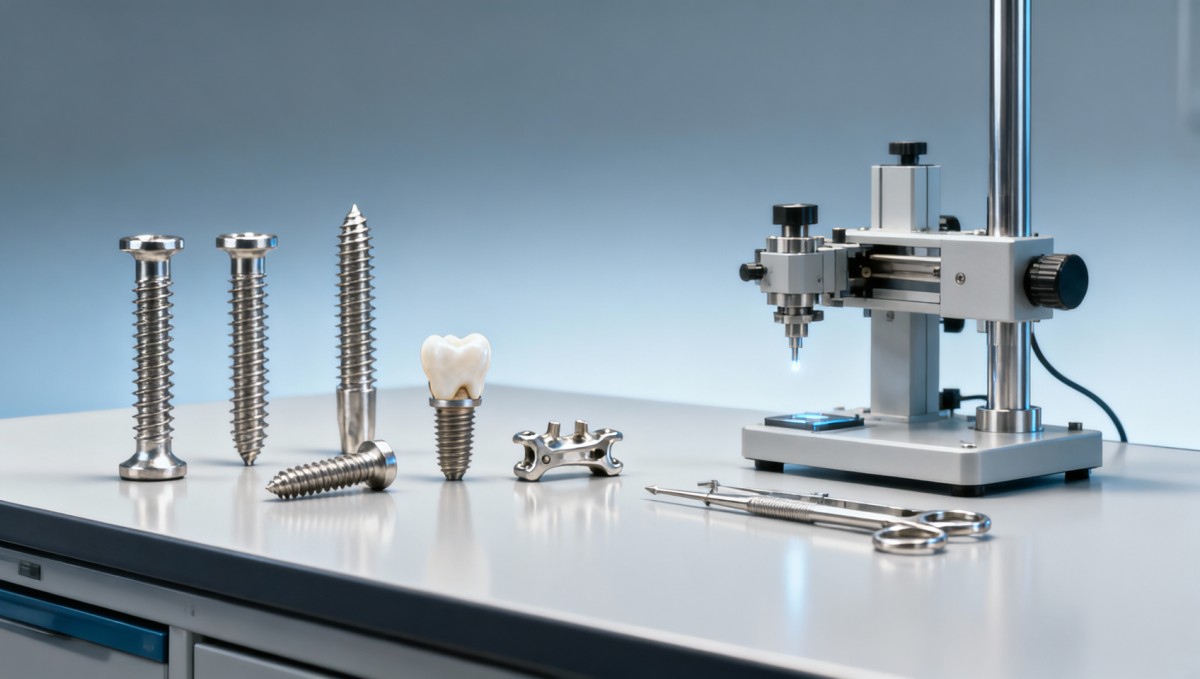
Titanium medical implants are widely selected because they combine high strength-to-weight ratio, corrosion resistance, and long service life. In orthopedic, dental, spinal, and trauma applications, titanium alloys often remain a default material choice. Yet compatibility questions persist because “biocompatible” does not mean “risk-free” in every patient, device design, or surgical workflow.
For technical evaluators and procurement teams, the issue is rarely the titanium element alone. Questions usually arise from 3 linked areas: alloy composition, surface condition, and application-specific loading. A titanium implant placed under cyclic stress for 5–15 years faces a very different risk profile from a temporary fixation device used for 6–12 months.
Compatibility also depends on how the implant interacts with bone, soft tissue, fluids, coatings, and adjacent device materials. In mixed-material systems, galvanic behavior, wear debris, and micromotion can influence local tissue response. That is why quality teams and safety managers increasingly evaluate the full implant system rather than treating titanium as a standalone guarantee.
In a broader B2B context, these questions affect supplier qualification, risk allocation, approval timelines, and total cost of ownership. A lower unit price may look attractive during sourcing, but if documentation gaps add 2–4 weeks to validation or trigger post-market review, the procurement decision becomes more expensive than expected.
Where compatibility doubts usually come from
- Surface wear, fretting, or machining residue that increases local irritation risk after implantation.
- Alloying elements, coating layers, or contaminants introduced during production, sterilization, or packaging.
- Poor implant geometry or fixation design, which can create micromotion, stress shielding, or abnormal load transfer.
- Mismatch between implant use case and patient condition, especially in high-load, revision, or long-duration applications.
This is why titanium medical implants should be evaluated through a material-plus-design-plus-process lens. For enterprise buyers, compatibility is not just a clinical matter. It is also a supplier governance issue that affects launch timing, complaint rates, inventory planning, and legal exposure across the healthcare technology supply chain.
What technical factors influence compatibility most when selecting titanium medical implants?
When evaluating titanium medical implants, decision-makers should separate primary material advantages from secondary risk drivers. In practice, compatibility is often shaped by oxide layer stability, roughness profile, fatigue performance, corrosion behavior in body fluids, and the cleanliness of final processing. These factors are measurable and should appear in supplier documentation, validation records, and incoming quality review.
A common mistake is to compare implants only by base alloy label, such as commercially pure titanium versus titanium alloy. That comparison matters, but it is incomplete. Surface treatment, porosity design, and contact mechanics often determine whether the implant integrates well, generates wear particles, or creates long-term revision risk after repeated motion cycles.
For procurement teams working across global supply chains, the practical question is simple: what should be checked before approval? The answer usually falls into 5 core dimensions: material traceability, manufacturing consistency, surface finish control, sterilization compatibility, and application-fit validation. If one of these dimensions is weak, compatibility confidence falls quickly.
The table below summarizes the most relevant technical evaluation points for titanium medical implants in sourcing and technical review. It is especially useful for cross-functional teams that need alignment among engineering, quality, compliance, and finance within a 2-stage or 3-stage approval process.
For many healthcare technology programs, this table is more actionable than a generic material brochure. It turns compatibility questions into review checkpoints. That helps project managers shorten supplier comparison cycles from several rounds of unstructured discussion to a more disciplined 4-step review: specification check, documentation review, sample evaluation, and approval decision.
How surface and design choices change the risk picture
A polished titanium surface may reduce friction in one application but offer less mechanical interlock in another. A porous or roughened surface may support bone integration, yet it also requires tighter control of cleaning, contamination, and process repeatability. In other words, the same surface feature can be a benefit or a risk depending on the clinical and mechanical context.
Three design questions teams should ask
- Is the implant intended for static fixation, dynamic loading, or high-motion articulation over a multi-year period?
- Will titanium contact other metals, polymers, cements, or coatings that may alter wear or corrosion behavior?
- Does the supplier provide clear use boundaries, such as size range, expected load condition, or revision limitations?
These questions matter because compatibility problems often begin as design-management problems. Buyers that ask them early reduce downstream delays, especially when several suppliers, robotic surgical workflows, and sterilization partners are involved in the same product program.
How should buyers compare titanium medical implants with alternatives and mixed-material solutions?
Titanium remains a leading choice, but it is not the only option. Depending on the application, procurement teams may compare titanium medical implants with stainless steel, cobalt-chromium systems, or polymer-based alternatives such as PEEK in certain structural components. The right comparison is not “best material in general,” but “best material for this indication, load profile, imaging need, and regulatory pathway.”
This comparison matters for finance approvers as well. A titanium implant may cost more per unit, yet reduce corrosion concerns, lower revision risk in some use cases, or align better with imaging and long-term performance goals. In contrast, another material may offer lower upfront cost but require tighter monitoring, different tooling, or a narrower application range.
Mixed-material assemblies add another layer of decision complexity. Once a titanium component is paired with another metal, polymer interface, coating system, or robotic instrumentation workflow, the evaluation should include joint mechanics, wear interfaces, and cleaning compatibility. This is especially important when supply chains span 2–3 countries and process control varies between subcontractors.
The table below offers a practical comparison framework for commercial and technical teams reviewing material routes for implant programs, pilot production, or distributor portfolio planning.
This comparison does not replace engineering validation, but it improves early-stage screening. For distributors and sourcing managers, it can also support portfolio decisions by clarifying which implant categories fit high-volume procurement, niche specialist demand, or tender-driven hospital channels.
Cost should be measured beyond unit price
In B2B healthcare procurement, direct unit cost is only 1 layer of the decision. Other cost elements include qualification time, documentation review hours, sample approval rounds, packaging validation, complaint handling, and inventory risk. A supplier with a 5% lower quoted price may become less competitive if it adds one extra validation cycle or raises nonconformance handling frequency.
A practical cost review should examine at least 4 categories: purchase price, validation cost, delivery predictability, and post-market support burden. This broader view is often where well-documented titanium medical implants outperform cheaper but less transparent alternatives.
What standards, compliance checks, and supplier controls matter before approval?
Compatibility concerns often become visible during compliance review rather than during commercial negotiation. Buyers should therefore check not only material claims, but also whether the supplier can support the documentation package required for design transfer, quality review, and market access. In many programs, delays come from missing records, inconsistent validation language, or weak change control.
For titanium medical implants, procurement and quality teams usually look for evidence linked to material standards, biological evaluation strategy, process validation, sterilization compatibility, and traceability. The exact document set depends on the device class and region, but the operating logic is similar across global markets: prove consistency, define intended use, and control risk throughout the supply chain.
A robust review process commonly follows 4 checkpoints over 2–6 weeks: supplier prequalification, technical dossier review, sample or pilot evaluation, and final approval with change-management conditions. Skipping any checkpoint may save time at the start, but it usually increases exposure during audit, complaint handling, or cross-border distribution.
The following checklist helps teams evaluate whether a titanium implant supplier is ready for serious commercial engagement rather than just quotation-stage discussion.
A practical approval checklist for titanium medical implants
- Material documentation is complete, including lot traceability and alloy designation consistency across certificates and batch records.
- Manufacturing flow is defined, including machining, cleaning, passivation or surface treatment, inspection, and packaging controls.
- Biological and chemical risk evaluation is linked to intended use, contact duration, and implant location rather than presented as generic marketing language.
- Sterilization and packaging compatibility are documented for the expected shelf-life window and transport conditions.
- Change control terms are clear, especially for raw material source shifts, tooling updates, subcontractor changes, or surface process modifications.
Why cross-functional review is essential
Technical teams often focus on design and performance, while finance focuses on budget and procurement focuses on delivery. Titanium medical implant compatibility questions cut across all three. If engineering approves a supplier without reviewing long-term documentation support, the organization may face additional qualification cost 3–6 months later.
This is where an intelligence-led platform becomes useful. TradeNexus Pro helps enterprise teams move beyond fragmented sourcing conversations by connecting material trends, supplier signals, regulatory context, and market movement across healthcare technology and adjacent advanced manufacturing networks. That broader visibility supports smarter qualification decisions before contracts are locked in.
Which procurement mistakes create the biggest compatibility and cost risks?
One common mistake is assuming clinical familiarity equals procurement safety. Because titanium medical implants have a long history, some buyers reduce technical scrutiny and focus mainly on price, lead time, or packaging format. That shortcut can fail when the supplier changes subcontractors, adjusts surface treatment, or cannot support the validation depth required by a hospital system or OEM partner.
Another mistake is treating sample success as proof of production reliability. A sample may perform well, but if the supplier lacks stable process control across small batch, medium batch, and scaled production, compatibility and consistency can drift. In implant sourcing, reproducibility matters as much as initial performance, especially when production ramps over 3 phases.
Teams also underestimate the risk of mixed-device ecosystems. Titanium implants may be deployed with robotic surgical systems, navigation tools, sterilization partners, and distributor-managed inventory. A problem in labeling, packaging, or instrumentation compatibility can disrupt the whole adoption program even when the implant material itself is acceptable.
The strongest buyers therefore use a structured decision model instead of a single-price negotiation. They review compatibility, compliance, supply continuity, and lifecycle support together. This approach is slower by a few days at the beginning, but often prevents weeks of disruption later.
FAQ: the questions buyers and evaluators ask most often
Are titanium medical implants generally safe for long-term use?
They are widely used for long-term implantation, but long-term safety depends on more than the word “titanium.” Implant geometry, surface condition, wear behavior, and patient-specific factors all matter. For procurement review, the safer question is whether the specific implant system has appropriate documentation, process consistency, and intended-use alignment.
Why do some patients or reviewers still question compatibility?
Concerns often relate to inflammatory response, debris generation, alloy constituents, hypersensitivity discussion, or failures caused by design and wear rather than pure material chemistry. In sourcing terms, compatibility concerns rise when a supplier cannot clearly explain the relationship between material, processing, and actual application boundaries.
What should procurement teams ask before requesting a quote?
Ask for 5 things early: alloy and traceability details, surface treatment description, intended-use range, sterilization and packaging compatibility, and typical lead time for sample plus production. Even a basic first-round screen using these items can reduce wasted evaluation cycles and clarify whether the supplier fits your technical and commercial threshold.
How long does supplier approval usually take?
For an organized team, initial screening may take 3–7 business days, dossier review 1–2 weeks, and sample or pilot assessment another 1–3 weeks. Complex projects involving multi-site distribution, robotic workflow integration, or region-specific regulatory requirements can take longer. Clear documentation usually shortens the cycle more than aggressive price negotiation does.
Why work with a market intelligence partner before making a titanium implant sourcing decision?
Titanium medical implant decisions are rarely isolated purchases. They connect to broader questions about healthcare technology sourcing, contract manufacturing resilience, quality system maturity, and future demand planning. That is why many enterprise teams need more than supplier lists. They need filtered intelligence that links material choices to business risk, delivery timing, and market direction.
TradeNexus Pro supports that need by focusing on deep B2B insight across healthcare technology, advanced manufacturing, smart electronics, and supply chain software environments. For procurement directors, project leaders, and distributors, this means access to structured market interpretation instead of fragmented signals. The result is faster comparison, clearer risk framing, and stronger internal decision support.
If your team is reviewing titanium medical implants, you can use TNP to clarify supplier positioning, compare technical routes, understand likely qualification bottlenecks, and align sourcing discussions with commercial realities. This is especially valuable when the decision involves multi-region supply, custom specifications, or a strategic product launch window within the next 1–2 quarters.
Contact TradeNexus Pro to discuss the issues that actually influence approval and adoption: parameter confirmation, titanium medical implants selection logic, expected lead times, sample support pathways, compliance document expectations, custom sourcing scenarios, and quotation benchmarking. For teams making high-stakes healthcare technology decisions, sharper intelligence at the start often prevents expensive corrections later.
Get weekly intelligence in your inbox.
No noise. No sponsored content. Pure intelligence.
 Apr 25, 2026Vietnam Enforces CN-EN Bilingual Safety Labels on Electronic Components from Apr 22, 2026Vietnam Enforces CN-EN Bilingual Safety Labels on Electronic Components from Apr 22, 2026
 Apr 25, 2026ANATEL Mandates Portuguese Offline Voice Assistants for Smart Home Devices in BrazilANATEL Mandates Portuguese Offline Voice Assistants for Smart Home Devices in Brazil
 Apr 25, 2026India BIS Mandates IS 13252:2025 for PLCs & HMIs by Oct 2026India BIS Mandates IS 13252:2025 for PLCs & HMIs by Oct 2026
 Apr 25, 2026SASO EV Charger Rules: Grid Compatibility & Sand Resistance RequiredSASO EV Charger Rules: Grid Compatibility & Sand Resistance Required
 Apr 25, 2026JIS T 0011:2026 Enforces IEC 62366-1:2024 for Rehab Devices in JapanJIS T 0011:2026 Enforces IEC 62366-1:2024 for Rehab Devices in Japan
 Apr 25, 2026THE Alliance Cuts Ningbo–Rotterdam Transit to 18 Days, +35% Spot RateTHE Alliance Cuts Ningbo–Rotterdam Transit to 18 Days, +35% Spot Rate
 Apr 25, 2026TÜV Rheinland Updates IoT EMC Standard: AI Edge Module Immunity Now MandatoryTÜV Rheinland Updates IoT EMC Standard: AI Edge Module Immunity Now Mandatory
 Apr 25, 2026USTR Launches Five-Year China Solar PV AD/CVD ReviewUSTR Launches Five-Year China Solar PV AD/CVD Review
 Apr 25, 2026EU New Battery Regulation Enters Force Apr 24, 2026EU New Battery Regulation Enters Force Apr 24, 2026
 Apr 25, 2026China Customs Launches RCEP Origin Smart Pre-Review for ASEAN机电 ExportsChina Customs Launches RCEP Origin Smart Pre-Review for ASEAN机电 Exports
 Apr 24, 2026India BIS Mandates IS 13252:2025 for PLCs & HMIs by Oct 2026India BIS Mandates IS 13252:2025 for PLCs & HMIs by Oct 2026
 Apr 24, 2026SASO EV Charger Regulation: Sand-Resistant Grid Compatibility Testing RequiredSASO EV Charger Regulation: Sand-Resistant Grid Compatibility Testing Required
 Apr 24, 2026Japan Updates JIS for Rehab Devices: IEC 62366-1:2024 Usability Compliance RequiredJapan Updates JIS for Rehab Devices: IEC 62366-1:2024 Usability Compliance Required
 Apr 24, 2026China Customs Launches RCEP Origin Smart Pre-Review SystemChina Customs Launches RCEP Origin Smart Pre-Review System
 Apr 24, 2026ANATEL Mandates Localized Voice Assistants for Smart Home Devices in BrazilANATEL Mandates Localized Voice Assistants for Smart Home Devices in Brazil
 Apr 24, 2026TÜV Rheinland Updates IoT EMC Standard with AI Edge抗扰度 RequirementTÜV Rheinland Updates IoT EMC Standard with AI Edge抗扰度 Requirement
 Apr 24, 20262M Alliance Shortens Ningbo–Rotterdam Route to 18 Days Amid 35% Slot Premium2M Alliance Shortens Ningbo–Rotterdam Route to 18 Days Amid 35% Slot Premium
 Apr 24, 2026Vietnam Enforces Bilingual Safety Labels for Imported Electronic Components from Apr 22, 2026Vietnam Enforces Bilingual Safety Labels for Imported Electronic Components from Apr 22, 2026
 Apr 24, 2026USTR Launches Sunset Review on China Solar PV AD/CVD DutiesUSTR Launches Sunset Review on China Solar PV AD/CVD Duties
 Apr 24, 2026EU New Battery Regulation Fully Effective Apr 24, 2026EU New Battery Regulation Fully Effective Apr 24, 2026
 Apr 23, 2026Taobao Factory Spark 3.0 Launches AI Workbench for SME Export FactoriesTaobao Factory Spark 3.0 Launches AI Workbench for SME Export Factories
 Apr 23, 2026TENENG Group Inspects IoT Safety Compliance at Jiangnan ChemicalTENENG Group Inspects IoT Safety Compliance at Jiangnan Chemical
 Apr 23, 2026China Launches First Embodied AI Open Data CommunityChina Launches First Embodied AI Open Data Community
 Apr 23, 2026PV Glass Prices Flat for 9 Weeks Amid Rising Integrated ProcurementPV Glass Prices Flat for 9 Weeks Amid Rising Integrated Procurement
 Apr 23, 20262984 NQI One-Stop Platforms Launched Nationwide2984 NQI One-Stop Platforms Launched Nationwide
 Apr 23, 2026China’s Green Smart Ship Tech Norms Accelerate BMS & Shore Power ExportChina’s Green Smart Ship Tech Norms Accelerate BMS & Shore Power Export
 Apr 23, 2026China Builds World's Largest Agri-Meteorological IoT NetworkChina Builds World's Largest Agri-Meteorological IoT Network