CNC turning centers and the hidden cost of idle spindle time
In modern manufacturing, CNC turning centers can look busy on the shop floor while hidden idle spindle time silently drains margin, stretches lead times, and reduces schedule reliability. For sourcing teams, plant managers, engineers, and financial decision-makers comparing laser cutting services, custom sheet metal fabrication, micro machining, additive manufacturing services, and industrial 3D printing, the key takeaway is simple: idle spindle time is not just a machine-utilization issue. It is a cost, capacity, quoting, and competitiveness issue that directly affects total manufacturing performance.
For most buyers and operators, the real question is not whether spindle idle time exists, but how much it costs, what causes it, and which actions actually reduce it without creating quality or safety risks. In practice, the largest gains often come from better process flow, setup reduction, programming improvements, tooling discipline, and smarter production planning rather than from buying another machine too early.
Why idle spindle time matters more than many teams realize
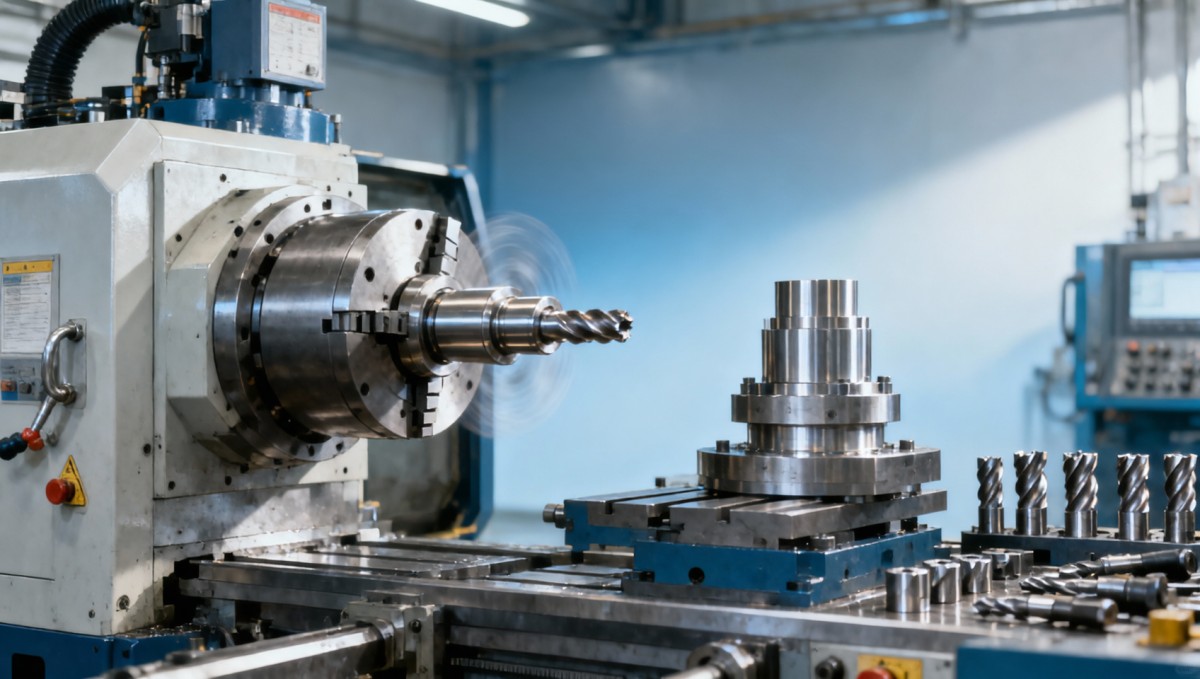
When a CNC turning center spindle is not cutting, the machine may still be consuming labor, floor space, depreciation, energy, overhead, and production attention. That means “non-cutting time” is not neutral time. It is paid time with limited value creation.
Idle spindle time typically includes:
- Waiting for loading and unloading
- Excessive setup and changeover
- Program prove-out and adjustment
- Tool changes and tool-related interruptions
- Material shortages or poor staging
- Inspection delays
- Operator waiting time between jobs
- Machine stoppages caused by maintenance issues
For enterprise decision-makers, the hidden cost appears in three places at once: lower throughput, higher cost per part, and weaker on-time delivery performance. For operators and production engineers, it shows up as schedule pressure, rework risk, and frequent firefighting. For procurement and sourcing teams, it can distort supplier comparisons because a vendor with lower quoted hourly rates may still have poor effective productivity.
In short, CNC turning centers should be evaluated by productive spindle utilization and stable process output, not by whether the machine is powered on or nominally available.
What idle spindle time actually costs a business
The financial impact is often underestimated because many companies only track direct machining rates. But the real cost of spindle idle time extends beyond machine hourly cost.
Key cost layers include:
- Lost capacity: fewer parts produced per shift, week, or month
- Higher part cost: overhead and labor spread across lower output
- Delayed shipments: missed milestones, expediting fees, and customer dissatisfaction
- Capital inefficiency: machines underperforming despite high investment
- Planning distortion: inaccurate assumptions about available machining capacity
- Quality exposure: rushed recovery efforts can increase defects and inconsistency
A simple example illustrates the issue. If a turning center is scheduled for 10 hours and the spindle is cutting for only 4.5 hours, the remaining 5.5 hours are not free. Even if some of that time is necessary, unmanaged idle time inflates the cost structure of every finished part. Across multiple machines, multiple shifts, and frequent product changeovers, the annual impact can become substantial.
For finance approvers, this is where the business case becomes clear. Before approving additional machine purchases, it is often worth asking whether current CNC turning centers are losing too much time to setup, handling, waiting, or process instability. Recovering hidden capacity from existing assets may produce faster ROI than expanding equipment footprints.
Where hidden spindle idle time usually comes from
The most common sources are rarely mysterious. They are often embedded in daily operations and accepted as normal until someone measures them carefully.
1. Long setup and changeover cycles
High-mix environments often suffer from repeated fixture changes, manual offset entry, first-piece adjustments, and trial cuts. If setup practices are inconsistent, spindle downtime expands quickly.
2. Inefficient material flow
If raw material, collets, jaws, inserts, gauges, or job packets are not staged in advance, operators spend valuable time searching and waiting instead of machining.
3. Programming and process planning gaps
Poorly optimized toolpaths, unnecessary dwell, conservative feeds, avoidable repositioning, or weak setup documentation all create avoidable non-cutting time.
4. Tooling issues
Unexpected tool wear, unstable tool life, missing spare tools, and manual tool-setting delays can interrupt production repeatedly.
5. Inspection bottlenecks
When parts wait too long for first-article approval or in-process inspection, the spindle often waits too. This is especially common in tight-tolerance work such as micro machining and precision components.
6. Maintenance and machine condition
Minor recurring faults, lubrication issues, coolant problems, chip evacuation issues, or spindle warm-up concerns can create frequent interruptions that never appear dramatic individually but add up significantly over time.
7. Scheduling mismatch
If job release, labor assignment, and machine availability are not coordinated, even a capable CNC turning center can sit idle between jobs.
How to measure idle spindle time in a way that supports better decisions
Many organizations know they have downtime, but not enough classify it clearly. Better measurement leads to better action.
Useful metrics include:
- Spindle utilization rate: actual cutting time as a percentage of planned machine time
- Setup time per job: from previous completion to first good part approval
- Overall equipment effectiveness (OEE): availability, performance, and quality
- Parts per shift: actual output versus standard output
- Changeover frequency and duration: especially in mixed-production environments
- Reason-code tracking: setup, waiting for material, inspection hold, tooling issue, maintenance, program adjustment, operator absence
For technical evaluators and project leaders, the most useful approach is to separate unavoidable non-cutting time from preventable idle time. Not every pause is waste. Safety checks, necessary inspection, and required setup activity are part of controlled production. The goal is to identify where variation, delay, and poor coordination are consuming productive capacity.
For sourcing teams assessing suppliers, a practical sign of maturity is whether a supplier can explain its machining utilization, changeover control, process capability, and bottleneck management with confidence and evidence.
How operators and engineers can reduce idle spindle time without hurting quality
The best improvements usually come from disciplined process engineering rather than aggressive speed increases alone.
Standardize setup procedures
Use setup sheets, pre-qualified tooling lists, fixture presets, and repeatable offset practices. Reducing variation in setup execution is one of the fastest ways to recover machine time.
Prepare jobs offline
Pre-stage tools, material, workholding, programs, and inspection instruments before machine release. Offline preparation prevents the spindle from waiting on administrative or logistical tasks.
Optimize program efficiency
Review cycle structure for unnecessary moves, excessive approach distances, long dwell periods, and conservative parameters that no longer match actual process capability.
Improve tool management
Track tool life systematically, keep critical replacements ready, and use predictable tool-change rules for stable production. Unexpected tool failure often creates downtime plus scrap risk.
Integrate inspection into flow
Where possible, reduce inspection bottlenecks with in-process gauging, faster first-article response, and clearer quality checkpoints. Quality control should support spindle productivity, not unintentionally block it.
Apply SMED-style thinking
Single-Minute Exchange of Die principles are relevant well beyond stamping. Internal setup tasks should be minimized, and as many activities as possible should move outside machine stop time.
Use machine data realistically
Basic monitoring can reveal whether downtime stems from operators, planning, quality holds, tool changes, or equipment condition. Even simple dashboards often expose recurring loss patterns.
When idle spindle time changes sourcing and investment decisions
This issue matters not only inside machine shops but also in external supplier evaluation and broader manufacturing strategy.
If a company is comparing CNC turning with laser cutting services, custom sheet metal fabrication, additive manufacturing services, industrial 3D printing, or micro machining providers, idle-time economics affect which process is truly cost-effective at different volumes and complexity levels.
For example:
- If turning centers experience frequent setups for low-volume parts, additive manufacturing may be more competitive for selected geometries or early prototypes.
- If precision turned parts require multiple secondary steps and queue delays, a different sourcing model or integrated supplier may reduce total lead time.
- If internal machining assets have low effective utilization, outsourcing peak-load parts may outperform immediate capital expansion.
- If supplier quotes appear attractive but depend on unstable shop-floor performance, total supply risk may be higher than expected.
For decision-makers, the right question is not simply “What is the machine hourly rate?” but “What is the delivered cost, lead time reliability, and quality consistency after real utilization losses are considered?”
What buyers, quality teams, and managers should ask before approving action
Whether the decision involves supplier selection, process improvement, or equipment investment, these questions help expose the real economics:
- What percentage of planned machine time is actual cutting time?
- How long do average setup and first-article approval take?
- What are the top three causes of idle spindle time?
- How is downtime classified and tracked?
- Is lost time primarily operational, technical, quality-related, or planning-related?
- Can existing machines recover capacity through process improvement?
- What ROI comes from setup reduction versus new equipment purchase?
- Will proposed changes affect part quality, process capability, or operator safety?
Quality and safety managers should also verify that attempts to reduce downtime do not remove necessary inspections, bypass warm-up controls, or push unsafe operator behavior. Efficient CNC turning centers should be both productive and controlled.
Conclusion: idle spindle time is a strategic metric, not a minor shop-floor detail
The hidden cost of idle spindle time on CNC turning centers reaches far beyond machine utilization charts. It affects quoting accuracy, throughput, margins, customer service, capital efficiency, and sourcing strategy. For operators, it creates daily friction. For engineers, it signals process weaknesses. For business leaders, it often reveals untapped capacity that can be converted into profit and competitiveness.
The most effective response is usually practical and measurable: classify downtime, identify its largest causes, reduce setup and waiting losses, stabilize tooling and inspection flow, and compare improvement ROI against expansion spending. In many cases, the fastest path to better manufacturing performance is not adding more spindle capacity, but unlocking the capacity that already exists.
Get weekly intelligence in your inbox.
No noise. No sponsored content. Pure intelligence.
 Apr 20, 2026China Academy of IMT Releases Digital Passport White Paper for Industrial MaterialsChina Academy of IMT Releases Digital Passport White Paper for Industrial Materials
 Apr 20, 2026Suez Canal AI Speed & Load Limits Effective Apr 19, 2026Suez Canal AI Speed & Load Limits Effective Apr 19, 2026
 Apr 20, 2026IEC 63275:2026 Published for Warehouse Robotics EMC TestingIEC 63275:2026 Published for Warehouse Robotics EMC Testing
 Apr 20, 20262026 Shanghai Fastener Show: 1427 Exhibitors, Robot-Specific Fasteners in Focus2026 Shanghai Fastener Show: 1427 Exhibitors, Robot-Specific Fasteners in Focus
 Apr 20, 2026US BIS Expands EV Infrastructure Export ControlsUS BIS Expands EV Infrastructure Export Controls
 Apr 20, 2026TÜV Rheinland Updates ESS Certification with Propagation Blocking RequirementTÜV Rheinland Updates ESS Certification with Propagation Blocking Requirement
 Apr 20, 2026Shanghai Port Launches Green Clearance Channel for PV InvertersShanghai Port Launches Green Clearance Channel for PV Inverters
 Apr 20, 2026Vietnam Launches Anti-Circumvention Probe on Chinese Electronic ComponentsVietnam Launches Anti-Circumvention Probe on Chinese Electronic Components
 Apr 20, 2026CPSC Urges Recall of China-Made Smart Plugs Over Firmware VulnerabilitiesCPSC Urges Recall of China-Made Smart Plugs Over Firmware Vulnerabilities
 Apr 20, 2026EU AI Act CE Compliance for IoT Devices Takes Effect Apr 18, 2026EU AI Act CE Compliance for IoT Devices Takes Effect Apr 18, 2026
 Apr 19, 20262026 Dongguan Whole-House Customization List Released2026 Dongguan Whole-House Customization List Released
 Apr 19, 2026Global Shipping Alliances Launch Green Slot Priority for Asia-Europe RoutesGlobal Shipping Alliances Launch Green Slot Priority for Asia-Europe Routes
 Apr 19, 2026Vietnam Imposes AD Duties on Chinese Electronic ComponentsVietnam Imposes AD Duties on Chinese Electronic Components
 Apr 19, 2026Dongguan Victor Tops Local Full-Home Customization ListDongguan Victor Tops Local Full-Home Customization List
 Apr 19, 2026Guosheng Zhike Launches High-Precision Mold Machine Project in TaizhouGuosheng Zhike Launches High-Precision Mold Machine Project in Taizhou
 Apr 19, 2026CRRC Changchun Wins Jiaxing Urban Rail EMU ProjectCRRC Changchun Wins Jiaxing Urban Rail EMU Project
 Apr 19, 2026China Releases Green Design Guidelines 2026 for Industrial ProductsChina Releases Green Design Guidelines 2026 for Industrial Products
 Apr 19, 2026CATL Establishes $3B Era Resources Group for Global Mineral ControlCATL Establishes $3B Era Resources Group for Global Mineral Control
 Apr 19, 2026Shanghai Electric Gas Turbine Backlog Extends to 2028Shanghai Electric Gas Turbine Backlog Extends to 2028
 Apr 19, 2026Hormuz Strait Reopens, China Fertilizer Export Quota Easing ExpectedHormuz Strait Reopens, China Fertilizer Export Quota Easing Expected
 Apr 18, 2026TradeNexus Pro Launches Global Compliance RadarTradeNexus Pro Launches Global Compliance Radar
 Apr 18, 2026JIS T 2304:2026 Takes Effect June 1, 2026 for IVD SoftwareJIS T 2304:2026 Takes Effect June 1, 2026 for IVD Software
 Pathway for Rehab Devices with AI Modules") Apr 18, 2026FDA Updates 510(k) Pathway for Rehab Devices with AI ModulesFDA Updates 510(k) Pathway for Rehab Devices with AI Modules
Apr 18, 2026FDA Updates 510(k) Pathway for Rehab Devices with AI ModulesFDA Updates 510(k) Pathway for Rehab Devices with AI Modules Apr 18, 2026India BIS Approves 3 Chinese IoT Labs for IS 16444:2026 CertificationIndia BIS Approves 3 Chinese IoT Labs for IS 16444:2026 Certification
 Apr 18, 2026THE Alliance Launches Green Slot Priority for China PortsTHE Alliance Launches Green Slot Priority for China Ports
 Apr 18, 2026TÜV Rheinland Releases Dual-Standard ESS Certification Guide for ChinaTÜV Rheinland Releases Dual-Standard ESS Certification Guide for China
 Apr 18, 2026Vietnam Imposes AD Duties on Chinese Electronic ComponentsVietnam Imposes AD Duties on Chinese Electronic Components