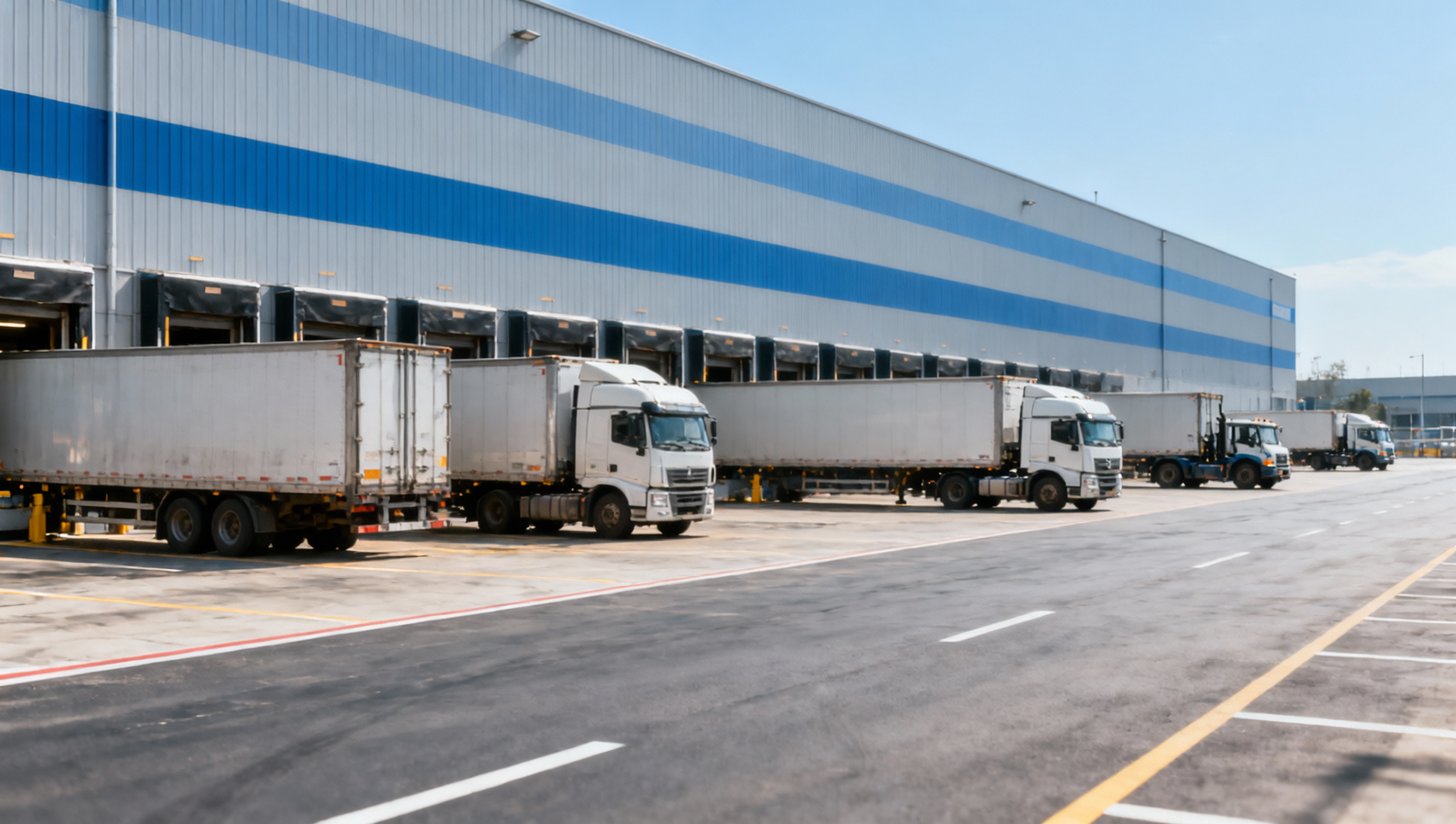
Stretch Wrapping Machines: Manual or Automatic for Throughput?
For operations teams and enterprise buyers weighing throughput, labor, and load consistency, choosing between manual and automatic stretch wrapping machines is more than a packaging decision. In today’s data-driven supply chains—where shipping rates, safety standards, and uptime directly affect margins—the right system can improve efficiency, reduce film waste, and support scalable warehouse performance.
If the core question is “Which option supports higher throughput with better total cost control?” the short answer is this: manual stretch wrapping is usually suitable for low-volume, variable operations with tight capital budgets, while automatic stretch wrapping machines are typically the better choice once consistency, labor efficiency, safety, and daily output become strategic priorities. The right decision depends less on preference and more on shipment volume, labor cost, load profile, space, and the cost of inconsistency.
How should buyers think about manual vs automatic stretch wrapping machines for throughput?
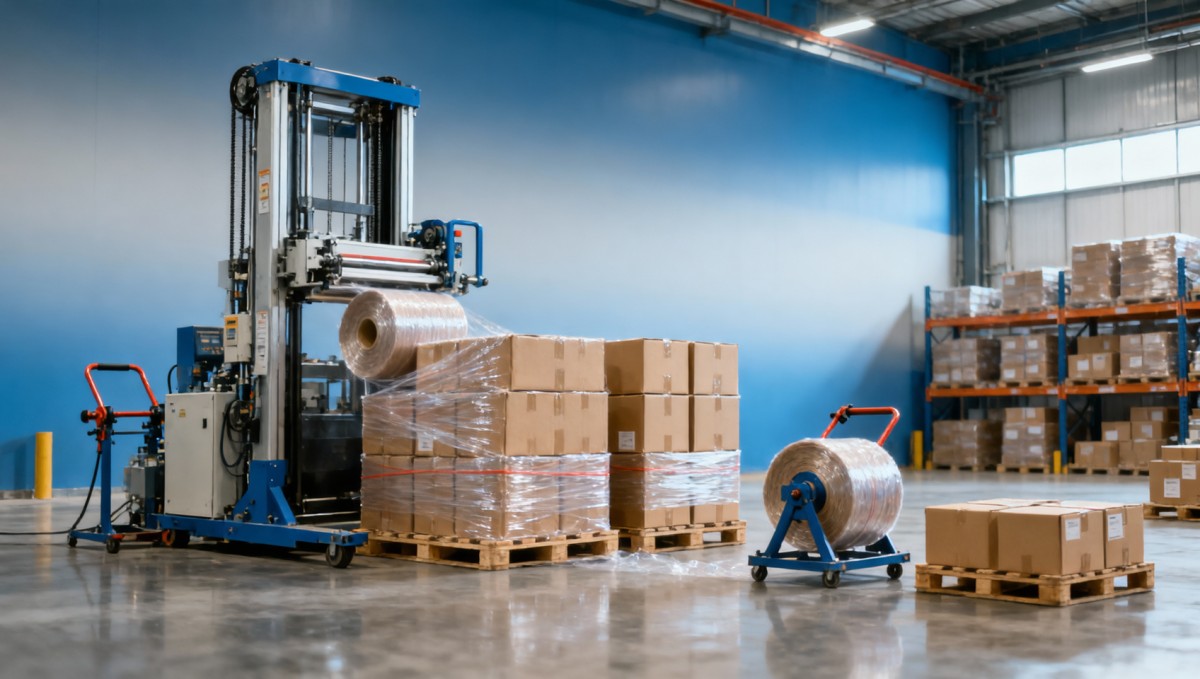
The main search intent behind this topic is commercial and evaluative. Readers are not just looking for a definition of stretch wrapping equipment—they want a practical framework for deciding which machine type fits their operation. For most businesses, throughput is only one part of the equation. The real decision usually combines these factors:
- How many pallets need to be wrapped per shift or per day
- How much labor time is consumed per load
- How consistent the wrapped load must be for transport and storage
- How much film waste is currently being generated
- Whether worker safety and ergonomics are becoming cost or compliance issues
- How likely the operation is to scale over the next 12–36 months
For procurement managers and decision-makers, the most useful way to compare a manual stretch wrapper approach against an automatic stretch wrapping machine is to evaluate throughput together with total operational impact. A lower upfront cost does not always mean a lower total cost. Likewise, a higher-capex automatic system is not always justified if pallet flow is limited and load profiles are highly irregular.
When is manual stretch wrapping still the right choice?
Manual stretch wrapping remains a viable option in many facilities, especially where pallet volumes are modest and packaging requirements are not highly standardized. This approach often works best in the following conditions:
- Low daily pallet counts
- Small warehouses or satellite distribution points
- Businesses with limited capital budgets
- Operations with frequent SKU variation and inconsistent load shapes
- Temporary or seasonal packaging needs
The biggest advantage is flexibility and low initial investment. Teams can start wrapping immediately with minimal equipment cost. For some distributors, pilot operations, or smaller exporters, that simplicity matters.
However, the throughput ceiling appears quickly. Manual wrapping depends heavily on operator stamina, technique, and shift conditions. Two workers can wrap the same pallet in very different ways, resulting in inconsistent containment force, unstable loads, excess film usage, and avoidable transit damage. Over time, those hidden costs may outweigh the savings from avoiding machinery investment.
From a safety perspective, manual wrapping also introduces ergonomic strain. Repetitive bending, walking, and film tension handling can increase injury risk, especially in facilities with sustained volume. For safety managers and quality teams, this is often a major trigger for considering automation.
When does an automatic stretch wrapping machine make better business sense?
An automatic stretch wrapping machine becomes increasingly attractive when throughput, repeatability, and labor efficiency start to affect service levels or profit margins. This is particularly true in medium- to high-volume operations where wrapping is no longer an occasional task but a core part of outbound flow.
Automatic systems are often the stronger fit when a business needs:
- Higher pallets-per-hour performance
- More consistent wrap quality across shifts
- Better film pre-stretch control and lower material waste
- Reduced manual labor dependency
- Safer packaging workflows
- Integration with conveyors, warehouse automation, or end-of-line systems
The key advantage is repeatability. Automated wrapping applies standardized settings for turntable speed, carriage speed, film tension, overlap, and top/bottom wraps. That creates more predictable load containment and usually improves transport stability. For quality assurance teams, fewer wrapping variations often translate into fewer damaged shipments and fewer disputes.
For financial approvers, the case for automation becomes stronger when labor costs are rising, hiring is difficult, or outbound volume is increasing. In those environments, automation is not just a packaging upgrade—it is a throughput protection strategy.
What throughput differences matter in real operations?
Many buyers focus on nominal machine speed, but real throughput should be evaluated at the process level. The right question is not just “How fast can the wrapper run?” but “How many stable, shipment-ready pallets can we process per hour without creating bottlenecks?”
In practice, actual throughput depends on:
- Pallet arrival frequency
- Load size and height variation
- Operator availability
- Film roll change frequency
- Forklift traffic coordination
- Need for top sheets, labels, or special wrap patterns
Manual wrapping may appear adequate at lower volumes, but it often slows down once outbound peaks begin. Automatic stretch wrapping machines generally deliver more predictable cycle times, which helps warehouse supervisors plan labor and truck loading schedules more accurately.
For project managers and engineering leads, this is important: throughput should be modeled across the entire line. If wrapping delays are causing staging congestion, missed dispatch windows, or forklift idle time, the cost of under-capacity can be substantial even before damage and labor inefficiency are added in.
How do labor, film savings, and load consistency affect ROI?
This is where many buying decisions become clear. The return on investment for stretch wrapping machines is usually driven by three measurable areas:
- Labor reduction: Automated systems reduce operator handling time and free labor for higher-value warehouse tasks.
- Film optimization: Better pre-stretch control often lowers film consumption per pallet.
- Damage reduction: Consistent wrapping can improve load stability and reduce in-transit failures.
A buyer evaluating manual or automatic options should calculate:
- Current labor minutes per wrapped pallet
- Hourly labor cost including burden
- Film cost per pallet under current method
- Damage, rework, and claims associated with poor load containment
- Planned shipment growth
In many facilities, film savings alone do not justify automation. But when combined with labor reduction and better shipment integrity, the business case can become compelling. This is especially relevant for exporters, manufacturers, and distribution centers shipping mixed or high-value loads where consistency directly affects customer satisfaction and claim exposure.
What risks should companies consider before choosing either option?
Both manual and automatic stretch wrapping approaches come with trade-offs, and decision-makers should assess risks before committing.
Manual wrapping risks:
- Higher operator variability
- Inconsistent load retention
- Greater ergonomic and safety concerns
- Limited scalability during volume growth
- Potentially higher film usage
Automatic wrapping risks:
- Higher upfront capital investment
- Need for maintenance planning and operator training
- Possible underutilization if volume is too low
- Space and layout constraints in existing facilities
For enterprise buyers, the most common mistake is choosing based only on purchase price. For operations teams, the most common mistake is choosing based only on speed claims. A sound evaluation should include ownership cost, process fit, service support, spare parts availability, and flexibility for future packaging requirements.
Which type of stretch wrapping machine fits different business scenarios?
A scenario-based view helps different stakeholders align faster:
Manual stretch wrapping is usually better for:
- Small businesses with low pallet throughput
- Warehouses with highly irregular or occasional wrapping needs
- Operations where capital expenditure must remain minimal
Semi-automatic or automatic stretch wrapping machines are usually better for:
- Manufacturers shipping pallets daily across multiple shifts
- Distribution centers needing predictable output
- Businesses facing labor shortages or rising labor costs
- Operations with recurring issues in load consistency or transport damage
- Facilities planning end-of-line automation or process scaling
For distributors, agents, and channel partners advising customers, the best recommendation is often based on pallet volume bands, load uniformity, and expected growth. A solution that matches today’s demand but cannot support next year’s throughput may create avoidable replacement costs.
What should buyers ask suppliers before making a final decision?
To move from broad comparison to a decision-ready shortlist, buyers should ask suppliers practical questions such as:
- What is the realistic pallets-per-hour rate in our load conditions?
- What film pre-stretch ratio can the machine deliver?
- How does it handle unstable, tall, or lightweight loads?
- What training is required for operators and maintenance staff?
- What is the typical maintenance schedule and spare parts lead time?
- Can the system integrate with conveyors or warehouse software later?
- What KPIs should we track after installation to validate ROI?
These questions help buyers compare stretch wrapping machines on operational fit rather than brochure specifications alone. For larger organizations, a site trial or packaged load test is often the fastest way to confirm whether automation will improve throughput without compromising packaging quality.
Conclusion: manual or automatic for throughput?
If your operation wraps relatively few pallets and values low initial cost over speed and consistency, manual stretch wrapping may still be the practical choice. But if throughput, labor efficiency, safety, and shipment consistency are becoming material business issues, an automatic stretch wrapping machine is usually the stronger long-term investment.
The most effective decision comes from evaluating throughput together with labor use, film consumption, load stability, safety exposure, and growth plans. In other words, the best wrapping solution is not the one with the lowest entry price—it is the one that supports reliable output at the lowest total operational cost.
For procurement leaders, plant managers, and financial approvers, that is the real benchmark: not just how pallets get wrapped, but how packaging performance contributes to scalable, resilient, and cost-controlled operations.
Get weekly intelligence in your inbox.
No noise. No sponsored content. Pure intelligence.
 Apr 22, 2026China Leads Global Offshore Wind Installations for 5th YearChina Leads Global Offshore Wind Installations for 5th Year
 Apr 22, 2026China Launches National Mine Safety IoT Monitoring NetworkChina Launches National Mine Safety IoT Monitoring Network
 Apr 22, 2026Yinchuan Boiler Pure Water Solution Certified for Middle East ProjectsYinchuan Boiler Pure Water Solution Certified for Middle East Projects
 Apr 22, 2026China to Enforce Mandatory EV Battery Recycling Standards by 2026China to Enforce Mandatory EV Battery Recycling Standards by 2026
 Apr 22, 2026Vietnam Launches Anti-Circumvention Probe on Electronic ComponentsVietnam Launches Anti-Circumvention Probe on Electronic Components
 Apr 22, 20262026 Shanghai Fastener Show: Robotic Fasteners Drive Overseas Procurement2026 Shanghai Fastener Show: Robotic Fasteners Drive Overseas Procurement
 Apr 22, 2026US BIS Adds EV On-Board Charger Crypto Modules to EAR Appendix 7US BIS Adds EV On-Board Charger Crypto Modules to EAR Appendix 7
 Apr 22, 2026TÜV Rheinland Updates BESS Certification: Propagation Blocking Now MandatoryTÜV Rheinland Updates BESS Certification: Propagation Blocking Now Mandatory
 Apr 22, 2026Red Sea Crisis Escalates: Suez AI Speed Limits & Slot Review from Apr 19Red Sea Crisis Escalates: Suez AI Speed Limits & Slot Review from Apr 19
 Apr 22, 2026EU CBAM Carbon Tariff Takes Effect April 1, 2026EU CBAM Carbon Tariff Takes Effect April 1, 2026
 Apr 21, 2026When to Replace CT Scanner Parts Before Downtime StartsWhen to Replace CT Scanner Parts Before Downtime Starts
 Apr 21, 2026How to Cut Costs in Lathe Turning Without ReworkHow to Cut Costs in Lathe Turning Without Rework
 Apr 21, 2026Lathe Turning Tolerances: What Can You Expect?Lathe Turning Tolerances: What Can You Expect?
 Apr 21, 2026How to Avoid Risks in Solar Panels WholesaleHow to Avoid Risks in Solar Panels Wholesale
 Apr 21, 2026Solar Panels Wholesale: How to Compare SuppliersSolar Panels Wholesale: How to Compare Suppliers
 Apr 21, 2026Solar Mounting Cost Factors You Should KnowSolar Mounting Cost Factors You Should Know
 Apr 21, 2026Solar Mounting Options: Which One Fits Your Project?Solar Mounting Options: Which One Fits Your Project?
 Apr 21, 2026How to Pick USB C Docking Stations for Dual DisplaysHow to Pick USB C Docking Stations for Dual Displays
 Apr 21, 2026USB C Docking Stations: What Ports Do You Need?USB C Docking Stations: What Ports Do You Need?
 Apr 21, 2026What Affects Dental Milling Machine ROI in 2026?What Affects Dental Milling Machine ROI in 2026?
 Apr 21, 2026Dental Milling Machines: Wet or Dry for Your Lab?Dental Milling Machines: Wet or Dry for Your Lab?
 Apr 21, 2026How to Avoid Common Medical Refrigerator MistakesHow to Avoid Common Medical Refrigerator Mistakes
 Apr 21, 2026Medical Refrigerators: What Specs Matter Most?Medical Refrigerators: What Specs Matter Most?
 Apr 21, 2026Portable or Cart Vet Ultrasound: Which to Buy?Portable or Cart Vet Ultrasound: Which to Buy?
 Apr 21, 2026Vet Ultrasound Buying Guide for Small ClinicsVet Ultrasound Buying Guide for Small Clinics
 Apr 21, 2026Yard Management Systems: Key Features to CompareYard Management Systems: Key Features to Compare
 Apr 21, 2026How Yard Management Systems Improve Dock FlowHow Yard Management Systems Improve Dock Flow