What causes chatter on CNC turning centers at higher speeds
Chatter on CNC turning centers at higher speeds is rarely caused by a single factor; it usually stems from the interaction of tooling, workpiece rigidity, spindle dynamics, and cutting parameters. For teams evaluating laser cutting services, custom sheet metal fabrication, micro machining, additive manufacturing services, or industrial 3d printing, understanding chatter is essential to improving surface finish, dimensional stability, and overall process reliability.
Why does chatter increase when CNC turning centers run at higher speeds?
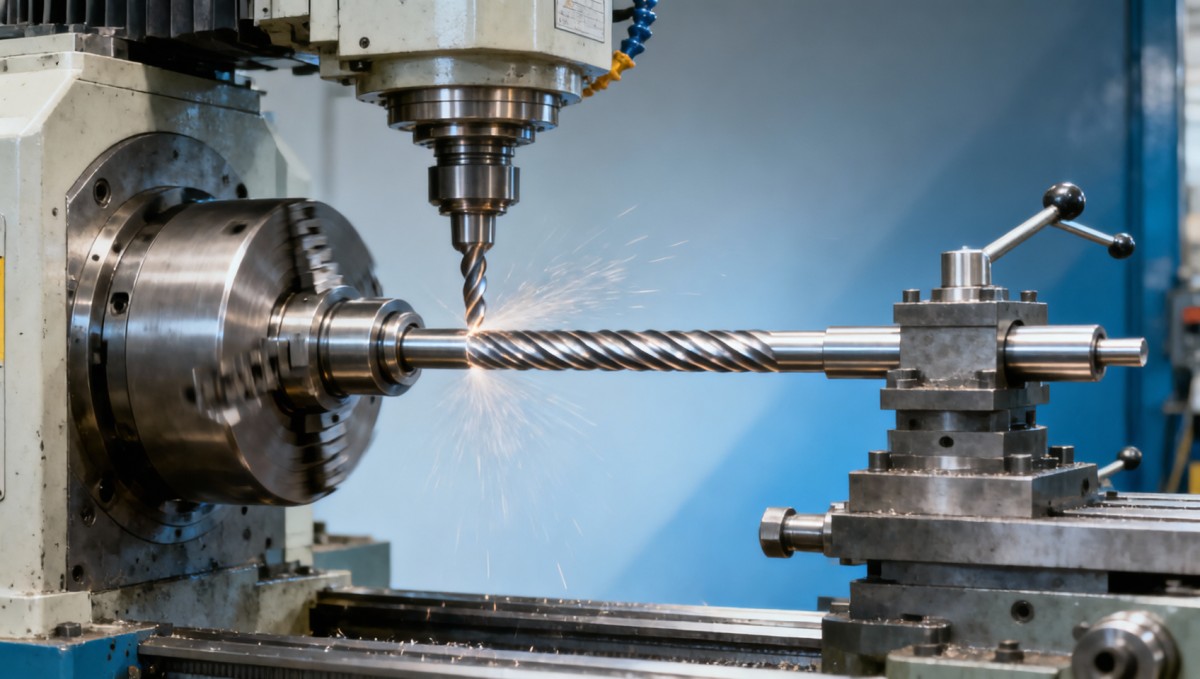
At low spindle speeds, many turning operations remain below the machine-tool-workpiece system’s unstable vibration range. Once speed increases, dynamic forces rise, tool engagement becomes more sensitive, and small weaknesses in setup can trigger self-excited vibration. That is why chatter on CNC turning centers at higher speeds often appears suddenly rather than gradually.
In practical shop conditions, chatter is usually linked to 4 core variables: machine rigidity, workpiece support, toolholder stability, and cutting parameter matching. Operators may first notice a repeating noise, visible waviness on the surface, or shortened insert life after only a few passes. For procurement and technical evaluation teams, these symptoms point to process instability rather than a simple tooling issue.
A common mistake is to assume that higher speed automatically means higher productivity. In turning, productivity depends on the balance between spindle speed, feed rate, depth of cut, and overhang. If one variable is pushed beyond the stable range, cycle time can actually worsen because of rework, tool breakage, or quality rejection. In many production cells, avoiding 1 unstable setup can save more time than increasing spindle speed by 10%–15%.
For information researchers and decision-makers comparing machining with laser cutting services, custom sheet metal fabrication, micro machining, or additive manufacturing services, chatter matters because it directly affects total delivered quality. A part that meets nominal dimensions but shows vibration marks, poor roundness, or edge inconsistency may still fail downstream assembly, coating, or inspection requirements.
The vibration loop behind high-speed chatter
Chatter often forms as a feedback loop. The cutting tool leaves a waviness pattern on the rotating workpiece, the next revolution re-cuts that uneven surface, and the dynamic force grows. This regenerative effect can develop within a few seconds, especially during slender-part turning, interrupted cuts, or long-reach boring operations.
- Tool overhang that exceeds a stable range increases bending and reduces damping.
- Workpieces with a high length-to-diameter ratio are more likely to deflect under cutting load.
- Wear on spindle bearings, turret interfaces, or workholding components can amplify vibration at specific RPM bands.
- Insert geometry that is too aggressive for the material may raise cutting force instead of stabilizing the cut.
In sourcing and supplier assessment, this is important because chatter is not only a machine problem. It can reflect broader capability gaps such as weak process engineering, inconsistent setup control, or poor maintenance discipline. Those factors influence whether a supplier can reliably support medium-volume or tight-tolerance work over 2–4 week production windows.
What are the most common technical causes of chatter in turning operations?
When teams investigate chatter on CNC turning centers at higher speeds, the most useful approach is to separate root causes into machine, tooling, workpiece, and parameter categories. This prevents random trial-and-error changes and helps operators, quality staff, and project managers focus on what can be verified quickly on the shop floor.
The table below summarizes the most common causes, typical shop-floor signs, and the first corrective action to review. It is designed for cross-functional use, so a machine operator, process engineer, procurement specialist, or distributor can discuss the same issue using shared evaluation criteria.
The main takeaway is that chatter correction should follow a sequence. First identify whether the instability comes from rigidity, excitation, or wear. Then adjust 1 variable at a time over a short test cycle of 3–5 parts. This approach is far more reliable than making simultaneous changes to RPM, feed, insert, and clamping.
How tooling and workholding interact
A rigid machine can still chatter if the chucking force is inconsistent or the jaws do not support the part correctly. Soft jaws, collets, tailstocks, and steady rests each create different damping behavior. In high-speed turning, even a minor mismatch between clamping force and material wall thickness can create deformation first and chatter second.
Tool geometry also matters. A larger nose radius may improve finish in stable conditions, but on low-rigidity setups it can increase radial cutting force. Likewise, a positive rake insert may reduce force in some materials, while an overly sharp edge may become less stable in interrupted or scale-bearing cuts. Process planning has to consider material, rigidity, and finish target together.
Typical shop-floor checkpoints
- Confirm whether chatter appears during roughing, semi-finishing, or finishing. The corrective logic is different in each stage.
- Record the RPM window, feed value, and depth of cut where the sound begins. A 200–500 RPM shift can sometimes move the process out of resonance.
- Inspect inserts after 5–10 parts in unstable runs. If edge wear escalates rapidly, tool degradation may be driving vibration.
- Measure actual runout, grip length, and unsupported length instead of relying only on setup assumptions.
For quality and safety personnel, these checkpoints also help distinguish chatter from spindle defects, coolant issues, or programming errors. That distinction matters when deciding whether to stop a line immediately, adjust a process window, or escalate to maintenance.
How should buyers and engineers evaluate anti-chatter capability before selecting a supplier or process?
For B2B buyers, chatter is not only a machining symptom; it is a capability signal. If a supplier cannot explain how they control vibration, maintain finish consistency, and manage process windows across different materials, the risk extends to scrap cost, delayed delivery, and quality escapes. This is especially relevant when sourcing precision turned parts alongside laser cutting services, custom sheet metal fabrication, or micro machining.
TradeNexus Pro helps procurement directors, technical evaluators, and project leaders compare suppliers using decision-ready intelligence instead of surface-level claims. A useful review framework should cover machine condition, tooling strategy, process validation, inspection discipline, and production repeatability. These five dimensions often reveal more about chatter control than spindle speed specifications alone.
The table below is a practical procurement guide for evaluating whether a machining partner can handle high-speed turning with stable output. It can also be used by distributors and agents when screening manufacturing partners for long-term programs.
This evaluation method is useful across sectors such as advanced manufacturing, smart electronics, healthcare technology, and supply chain SaaS-enabled sourcing programs. It turns a technical symptom into a commercial decision tool, helping finance approvers and enterprise buyers weigh total operational risk rather than unit price alone.
Three decision scenarios that change the answer
The right anti-chatter strategy depends on volume, tolerance, and geometry. A prototype program may accept slower cutting and manual tuning, while a repeat order of 5,000 parts usually needs a documented stable process window and predictable insert life. That is why purchasing teams should match technical expectations to commercial volume from the start.
- Prototype or pilot lots: prioritize fast feedback, setup flexibility, and process notes over absolute cycle time.
- Medium-volume programs: ask for parameter repeatability, inspection frequency, and a corrective-action path within 24–72 hours.
- Tight-tolerance or regulated applications: verify how the supplier prevents chatter-related finish variation before final inspection catches it.
For companies evaluating alternative production methods, this framework also clarifies when a turned part should remain a turning application and when a redesign toward sheet metal, laser-based profiling, or additive manufacturing may reduce total risk.
What process changes reduce chatter without sacrificing delivery or cost control?
The fastest fix is not always the cheapest fix, and the cheapest fix is not always robust enough for recurring production. In most shops, chatter reduction starts with parameter adjustment because it can be implemented within minutes. However, if instability comes from poor rigidity, parameter changes alone may only hide the problem temporarily.
A practical correction sequence usually follows 4 steps: identify the unstable speed band, reduce overhang or improve support, retune feed and depth of cut, and then validate surface finish across a short run. For many applications, moving spindle speed outside the resonance band and reducing unsupported length delivers a bigger improvement than changing insert brand.
Cost control should also include hidden losses. Chatter can increase inspection time, consume inserts faster, trigger customer complaints, and create downstream fit issues. Even if the direct machining cost per part rises slightly due to a more stable setup, the total cost per accepted part may fall over a weekly or monthly production cycle.
Common corrective actions and when to use them
- Adjust spindle speed by a controlled interval rather than making extreme changes. A moderate shift can move the cut away from a natural vibration frequency.
- Reduce tool overhang and verify holder contact surfaces. This is often the first corrective action for boring, internal grooving, and slender external turning.
- Add tailstock or steady-rest support for long shafts. This is especially useful when the unsupported length grows during staged machining.
- Review insert geometry, nose radius, and edge condition. The goal is lower and more stable cutting force, not only sharper cutting.
- Use staged roughing and finishing passes instead of one aggressive pass when dimensional stability matters more than headline cycle time.
When alternative processes may be worth comparing
Some parts repeatedly suffer from chatter because the geometry is simply unfriendly to turning at the required production rate. Thin-walled sleeves, long unsupported shafts, miniature precision components, and complex internal features may benefit from another route. In such cases, buyers should compare the full process chain, not just the machining step.
Laser cutting services and custom sheet metal fabrication may replace turned components when the design can be converted into folded or assembled geometry. Micro machining may perform better for very small features where conventional turning loses stability. Additive manufacturing services or industrial 3d printing can also support low-volume, complex, or lightweight parts before a final hybrid machining step.
This is where data-driven market and supplier intelligence becomes valuable. TradeNexus Pro helps teams compare process fit, lead time expectations, sourcing options, and technical risk across sectors instead of evaluating each supplier in isolation. That is particularly useful for project managers balancing launch deadlines of 2–6 weeks with strict quality gates.
FAQ: what should different stakeholders know about chatter risk?
Different stakeholders look at chatter from different angles. Operators want a stable cut, quality teams want repeatable finish, buyers want supplier reliability, and finance teams want fewer hidden costs. The questions below address the issues that most often influence sourcing, process validation, and production control.
How can I tell whether chatter is caused by speed or rigidity?
If vibration appears only within a narrow RPM range and improves after a moderate speed change, the issue is often linked to resonance. If chatter persists across multiple speed settings and worsens with longer overhang or weaker support, rigidity is usually the bigger factor. A quick test over 3 speed bands with the same feed and depth of cut can help separate the two causes.
Does chatter always mean the machine is in poor condition?
No. A healthy machine can still chatter if the toolholder is too long, the part is too flexible, the insert geometry is unsuitable, or the process window has not been validated. However, recurring chatter across different jobs may justify checking spindle runout, turret repeatability, and maintenance history at monthly or quarterly intervals.
What should buyers request from suppliers before approving a precision turning order?
Request evidence of setup control, tooling approach, inspection frequency, and parameter validation for similar materials or geometries. Useful documents include process sheets, first article reports, sampling plans, and a defined nonconformance response path. For medium-risk parts, it is reasonable to ask how the supplier handles finish deviations, insert wear trends, and startup adjustments during the first 10–30 pieces.
When is process redesign better than endless chatter correction?
If a part repeatedly fails to meet finish or stability requirements despite fixture changes, speed tuning, and tooling updates, redesign may be the better business decision. This is common when geometry creates extreme length-to-diameter ratios, thin unsupported walls, or unnecessary internal features. Comparing turning with laser cutting services, custom sheet metal fabrication, micro machining, or additive manufacturing services can reduce rework risk and compress launch time.
Why work with TradeNexus Pro when evaluating machining risk, sourcing options, and next-step decisions?
TradeNexus Pro supports global B2B teams that need more than generic manufacturing content. Our focus on advanced manufacturing, smart electronics, healthcare technology, green energy, and supply chain SaaS gives buyers and technical stakeholders a structured view of how process capability, supplier readiness, and sourcing risk connect. That matters when chatter on CNC turning centers at higher speeds becomes part of a larger procurement or production decision.
If you are comparing turning with laser cutting services, custom sheet metal fabrication, micro machining, additive manufacturing services, or industrial 3d printing, we help clarify which process is likely to deliver the best combination of dimensional control, lead time, and commercial fit. This is especially useful for teams managing RFQ screening, supplier discovery, project ramp-up, or cross-border sourcing.
You can contact TradeNexus Pro for practical support on parameter review, supplier shortlisting, manufacturing process comparison, delivery cycle expectations, sample planning, and quote-stage technical clarification. If your team needs to assess chatter-related risk before approving a supplier or changing a production route, we can help you frame the right questions and narrow the options faster.
A productive next step is to prepare 4 items for discussion: part geometry, material type, expected volume range, and the quality issue you are seeing or trying to prevent. With that baseline, conversations about process selection, tolerance feasibility, inspection needs, and lead-time tradeoffs become more precise and more commercially useful.
Get weekly intelligence in your inbox.
No noise. No sponsored content. Pure intelligence.
 Apr 20, 2026China Academy of IMT Releases Digital Passport White Paper for Industrial MaterialsChina Academy of IMT Releases Digital Passport White Paper for Industrial Materials
 Apr 20, 2026Suez Canal AI Speed & Load Limits Effective Apr 19, 2026Suez Canal AI Speed & Load Limits Effective Apr 19, 2026
 Apr 20, 2026IEC 63275:2026 Published for Warehouse Robotics EMC TestingIEC 63275:2026 Published for Warehouse Robotics EMC Testing
 Apr 20, 20262026 Shanghai Fastener Show: 1427 Exhibitors, Robot-Specific Fasteners in Focus2026 Shanghai Fastener Show: 1427 Exhibitors, Robot-Specific Fasteners in Focus
 Apr 20, 2026US BIS Expands EV Infrastructure Export ControlsUS BIS Expands EV Infrastructure Export Controls
 Apr 20, 2026TÜV Rheinland Updates ESS Certification with Propagation Blocking RequirementTÜV Rheinland Updates ESS Certification with Propagation Blocking Requirement
 Apr 20, 2026Shanghai Port Launches Green Clearance Channel for PV InvertersShanghai Port Launches Green Clearance Channel for PV Inverters
 Apr 20, 2026Vietnam Launches Anti-Circumvention Probe on Chinese Electronic ComponentsVietnam Launches Anti-Circumvention Probe on Chinese Electronic Components
 Apr 20, 2026CPSC Urges Recall of China-Made Smart Plugs Over Firmware VulnerabilitiesCPSC Urges Recall of China-Made Smart Plugs Over Firmware Vulnerabilities
 Apr 20, 2026EU AI Act CE Compliance for IoT Devices Takes Effect Apr 18, 2026EU AI Act CE Compliance for IoT Devices Takes Effect Apr 18, 2026
 Apr 19, 20262026 Dongguan Whole-House Customization List Released2026 Dongguan Whole-House Customization List Released
 Apr 19, 2026Global Shipping Alliances Launch Green Slot Priority for Asia-Europe RoutesGlobal Shipping Alliances Launch Green Slot Priority for Asia-Europe Routes
 Apr 19, 2026Vietnam Imposes AD Duties on Chinese Electronic ComponentsVietnam Imposes AD Duties on Chinese Electronic Components
 Apr 19, 2026Dongguan Victor Tops Local Full-Home Customization ListDongguan Victor Tops Local Full-Home Customization List
 Apr 19, 2026Guosheng Zhike Launches High-Precision Mold Machine Project in TaizhouGuosheng Zhike Launches High-Precision Mold Machine Project in Taizhou
 Apr 19, 2026CRRC Changchun Wins Jiaxing Urban Rail EMU ProjectCRRC Changchun Wins Jiaxing Urban Rail EMU Project
 Apr 19, 2026China Releases Green Design Guidelines 2026 for Industrial ProductsChina Releases Green Design Guidelines 2026 for Industrial Products
 Apr 19, 2026CATL Establishes $3B Era Resources Group for Global Mineral ControlCATL Establishes $3B Era Resources Group for Global Mineral Control
 Apr 19, 2026Shanghai Electric Gas Turbine Backlog Extends to 2028Shanghai Electric Gas Turbine Backlog Extends to 2028
 Apr 19, 2026Hormuz Strait Reopens, China Fertilizer Export Quota Easing ExpectedHormuz Strait Reopens, China Fertilizer Export Quota Easing Expected
 Apr 18, 2026TradeNexus Pro Launches Global Compliance RadarTradeNexus Pro Launches Global Compliance Radar
 Apr 18, 2026JIS T 2304:2026 Takes Effect June 1, 2026 for IVD SoftwareJIS T 2304:2026 Takes Effect June 1, 2026 for IVD Software
 Pathway for Rehab Devices with AI Modules") Apr 18, 2026FDA Updates 510(k) Pathway for Rehab Devices with AI ModulesFDA Updates 510(k) Pathway for Rehab Devices with AI Modules
Apr 18, 2026FDA Updates 510(k) Pathway for Rehab Devices with AI ModulesFDA Updates 510(k) Pathway for Rehab Devices with AI Modules Apr 18, 2026India BIS Approves 3 Chinese IoT Labs for IS 16444:2026 CertificationIndia BIS Approves 3 Chinese IoT Labs for IS 16444:2026 Certification
 Apr 18, 2026THE Alliance Launches Green Slot Priority for China PortsTHE Alliance Launches Green Slot Priority for China Ports
 Apr 18, 2026TÜV Rheinland Releases Dual-Standard ESS Certification Guide for ChinaTÜV Rheinland Releases Dual-Standard ESS Certification Guide for China
 Apr 18, 2026Vietnam Imposes AD Duties on Chinese Electronic ComponentsVietnam Imposes AD Duties on Chinese Electronic Components