Additive manufacturing services that make sense beyond prototypes
Additive manufacturing services are no longer limited to prototypes. For teams comparing industrial 3D printing, laser cutting services, custom sheet metal fabrication, micro machining, and CNC turning centers, the real question is where each process creates measurable value in cost, speed, quality, and supply resilience. The short answer is this: additive manufacturing makes sense beyond prototyping when it reduces assembly steps, enables geometry that conventional methods cannot produce efficiently, shortens lead times for low-to-medium volumes, or strengthens supply continuity for critical parts. For buyers, engineers, and approval stakeholders, the decision is rarely about technology alone. It is about whether a part, program, or supply strategy improves total business performance.
That is why the best evaluation framework is not “3D printing versus machining” in the abstract. It is “which manufacturing route delivers the required function, compliance, repeatability, lead time, and margin at the right production stage?” In many cases, additive manufacturing services create the most value when used selectively alongside CNC turning centers, micro machining, laser cutting services, and custom sheet metal fabrication rather than as a full replacement.
When do additive manufacturing services make business sense beyond prototypes?
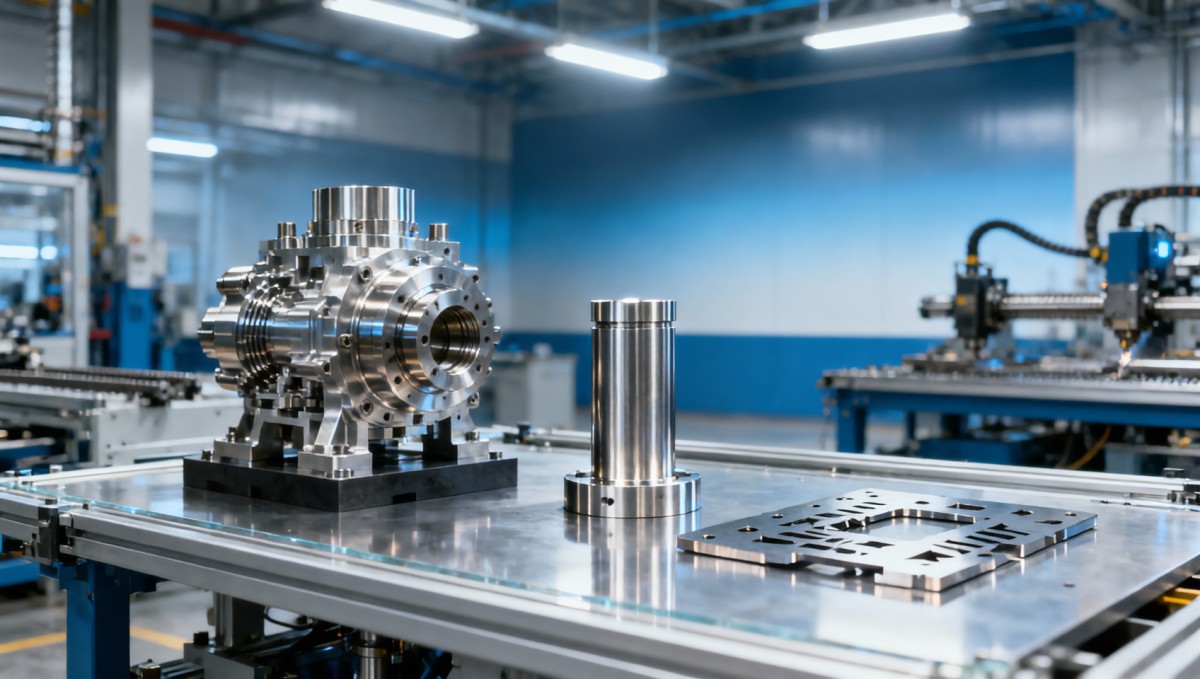
For most industrial buyers and technical evaluators, the key question is not whether additive manufacturing is innovative. It is whether it creates measurable operational and financial value. In practice, additive manufacturing services are most compelling in five situations:
- Complex parts with high machining burden: If a component requires multiple setups, extensive tooling, internal channels, lattice structures, or weight reduction, industrial 3D printing can lower process complexity.
- Low-volume or bridge production: When tooling investment is hard to justify, additive can support pilot runs, spare parts, and limited production quantities.
- Fast design changes: For products still evolving, additive avoids the delay and sunk cost of modifying hard tools.
- Part consolidation: Combining several components into one printed part can reduce assembly labor, inspection points, inventory lines, and failure risk.
- Supply chain resilience: Distributed or on-demand production can reduce dependence on long overseas lead times for certain categories of parts.
That said, additive manufacturing services do not automatically outperform conventional fabrication. If a part is geometrically simple, high-volume, tightly cost-optimized, and already stable in design, CNC turning centers, laser cutting services, or custom sheet metal fabrication will often remain the more economical route. This is especially true where cycle time, material cost, and established process capability are already well controlled.
How should buyers compare additive manufacturing with CNC machining, sheet metal, laser cutting, and micro machining?
Decision-makers often lose time because they compare technologies at a surface level. A more useful method is to evaluate the part against six factors: geometry, volume, tolerance, material, post-processing needs, and supply risk.
Additive manufacturing services are typically strongest where geometry is complex and volume is low to medium. They can deliver clear value for lightweight structures, internal flow paths, customized components, and fast design iteration. However, the economics can worsen if the part needs extensive finishing, support removal, heat treatment, or secondary machining.
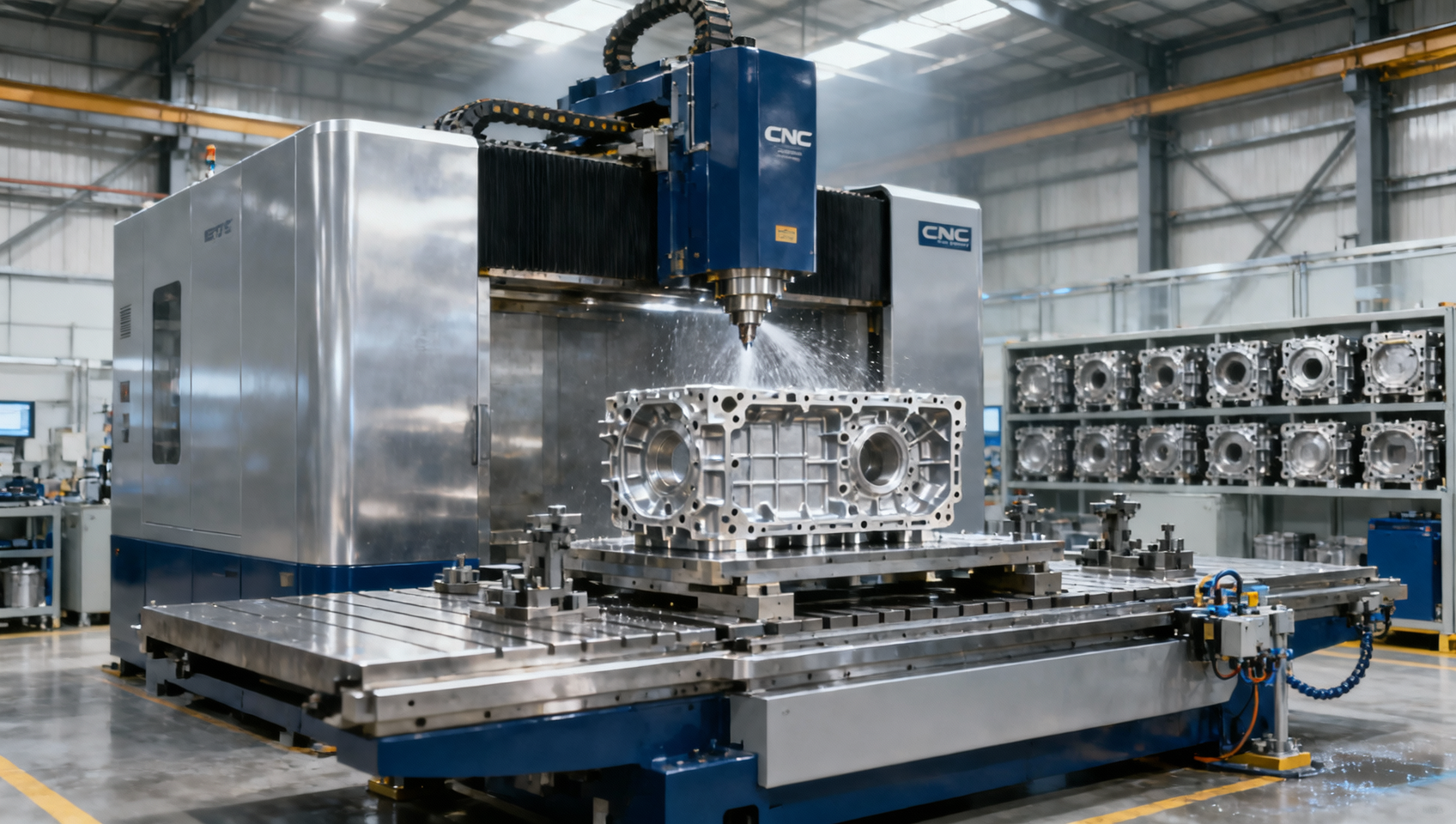
CNC turning centers are ideal for rotational parts with demanding dimensional control, predictable repeatability, and efficient production economics. For shafts, bushings, fittings, and precision cylindrical components, CNC turning remains a strong benchmark in both quality and cost.
Micro machining becomes essential when very small features, fine tolerances, and specialized materials are involved. In sectors such as healthcare technology, smart electronics, and advanced manufacturing, it may outperform additive where surface integrity, miniaturization, or precise edge quality are critical.
Laser cutting services are highly effective for fast, repeatable processing of flat materials, especially when paired with downstream bending, welding, or assembly. They remain difficult to beat for speed and unit economics in many enclosure, bracket, panel, and structural sheet applications.
Custom sheet metal fabrication is generally the logical choice for products built around formed metal geometries, production scalability, and established fabrication workflows. It also fits well where buyers need a mature supplier base and straightforward quality inspection criteria.
The strategic takeaway is simple: additive manufacturing services win when they eliminate complexity that conventional methods would otherwise absorb through tooling, labor, assembly, or logistics. Conventional methods win when geometry is simple, volumes are higher, and process stability is already optimized.
What applications are actually production-ready for industrial 3D printing?
Many organizations understand the theory of industrial 3D printing but still want proof of practical use. The strongest production-ready applications usually fall into focused, high-value categories rather than mass-market commodity parts.
- Jigs, fixtures, and tooling aids: These are among the most common and effective production uses because they deliver quick lead times and direct labor savings.
- End-use parts for low-volume systems: Specialized equipment, aftermarket products, and configurable systems often benefit from additive production.
- Lightweight structural components: Especially where weight reduction improves performance, shipping cost, or energy efficiency.
- Fluid management components: Designs with internal channels, manifolds, and optimized flow paths can be more feasible with additive methods.
- Spare parts and legacy part replacement: When original tooling is unavailable or demand is intermittent, additive can keep service operations running.
- Medical and high-customization applications: Where personalization or complex fit requirements matter, additive can unlock design and delivery advantages.
For enterprise buyers, the best candidates are not simply “parts that can be printed.” They are parts where printing changes the business case. If a printed part reduces assembly from six components to one, cuts lead time from eight weeks to ten days, or removes tooling costs from a low-volume program, the value becomes much easier to defend internally.
What do technical evaluators and quality teams need to verify before approval?
This is where many promising projects either advance or stall. Production use of additive manufacturing services must be validated with the same discipline applied to any critical manufacturing route. Technical evaluation should cover more than printed geometry alone.
- Material suitability: Confirm mechanical, thermal, chemical, and regulatory fit for the intended operating environment.
- Tolerance capability: Evaluate whether the process can repeatedly meet dimensional requirements with realistic post-processing assumptions.
- Surface finish and secondary operations: Some parts will need machining, polishing, coating, or heat treatment to meet final specifications.
- Repeatability and process control: Understand batch consistency, machine qualification, traceability, and documented quality systems.
- Inspection method: Ensure there is a workable plan for metrology, CT scanning, first article inspection, and critical feature validation where needed.
- Compliance and certification: In regulated sectors, documentation and validation can outweigh the printing step itself.
Quality and safety stakeholders often worry about variability, hidden defects, and long-term performance. These concerns are valid. The solution is not to dismiss additive manufacturing services, but to define which part classes are suitable, which acceptance criteria apply, and which suppliers can demonstrate mature process control. A credible additive partner should be able to discuss build orientation, support strategy, parameter control, finishing routes, and inspection evidence in operational terms, not just marketing language.
How should finance and project leaders assess ROI and total cost?
One of the biggest mistakes in sourcing decisions is comparing only the piece price. For additive manufacturing services, a better analysis includes total cost of ownership and program impact.
Finance approvers and project managers should look at:
- Tooling avoidance: Is the printed route eliminating molds, dies, fixtures, or setup-intensive tooling?
- Lead-time compression: Does faster delivery reduce launch delay, downtime, or missed revenue?
- Inventory reduction: Can parts be produced on demand rather than stocked in large quantities?
- Assembly savings: Does part consolidation reduce labor, handling, inspection, and procurement complexity?
- Failure and warranty risk: Does the new design improve reliability, or does it introduce process uncertainty that requires mitigation?
- Supply continuity: Does additive reduce single-source dependence or support regional manufacturing flexibility?
In other words, the strongest ROI cases usually come from system-level savings rather than part-level comparisons. A printed part may look more expensive than a machined part on a quote sheet, yet still be the better business choice if it removes tooling cost, shortens delivery dramatically, and simplifies the BOM. This is especially relevant for advanced manufacturing, healthcare technology, and smart electronics programs where design speed and availability often carry premium value.
What sourcing strategy works best in real-world manufacturing programs?
For most organizations, the answer is not to shift everything to one process. The most resilient sourcing strategy is hybrid. Use additive manufacturing services where they create a structural advantage, and rely on conventional methods where they remain economically dominant.
A practical sourcing model often looks like this:
- Use industrial 3D printing for bridge production, tooling, legacy spares, high-complexity parts, and customization.
- Use CNC turning centers for precision rotational parts and predictable repeat production.
- Use micro machining for miniature or high-precision features that exceed additive capability.
- Use laser cutting services and custom sheet metal fabrication for flat-pattern and formed metal assemblies at scalable cost.
This hybrid approach improves both commercial and operational decision-making. It also helps procurement teams build a supplier portfolio that matches part families to the right production process instead of forcing one technology to fit every need. For global B2B organizations, this can also improve risk distribution across regions, lead-time profiles, and manufacturing competencies.
How can decision-makers identify the right parts to move into additive manufacturing services?
If your team is evaluating adoption, start with a structured shortlist rather than a broad technology push. The best candidates usually have several of the following traits:
- Low to medium annual volume
- High geometric complexity
- Frequent design revisions
- Long conventional lead times
- Multi-part assemblies that could be consolidated
- Expensive or impractical tooling requirements
- Supply chain vulnerability or obsolete sourcing pathways
Then pressure-test each candidate with three simple questions:
- Will additive improve business outcomes, not just design freedom?
- Can the required quality and compliance be validated reliably?
- Does the total cost case still hold after finishing, inspection, and qualification are included?
If the answer is yes across all three, additive manufacturing services likely deserve serious consideration. If not, traditional processes may remain the smarter choice for now.
Conclusion: additive manufacturing is most valuable when it solves a business problem, not just a manufacturing challenge
Additive manufacturing services make sense beyond prototypes when they deliver measurable advantages in complexity, speed, flexibility, and supply resilience. They are not a blanket replacement for CNC turning centers, micro machining, laser cutting services, or custom sheet metal fabrication. Instead, they are a strategic production option that becomes highly valuable in the right applications.
For technical evaluators, the right decision comes from matching process capability to part requirements and validation standards. For enterprise decision-makers and finance stakeholders, the real test is total program value: lead time, tooling avoidance, assembly reduction, inventory impact, and supply continuity. Organizations that evaluate additive this way are far more likely to find production use cases that are not only technically feasible, but commercially sound.
In today’s global manufacturing environment, the smartest strategy is not choosing one process over another. It is building a manufacturing mix that delivers the best balance of cost, quality, agility, and resilience. That is where additive manufacturing services move beyond prototypes and begin to make real business sense.
Get weekly intelligence in your inbox.
No noise. No sponsored content. Pure intelligence.
 Apr 20, 2026China Academy of IMT Releases Digital Passport White Paper for Industrial MaterialsChina Academy of IMT Releases Digital Passport White Paper for Industrial Materials
 Apr 20, 2026Suez Canal AI Speed & Load Limits Effective Apr 19, 2026Suez Canal AI Speed & Load Limits Effective Apr 19, 2026
 Apr 20, 2026IEC 63275:2026 Published for Warehouse Robotics EMC TestingIEC 63275:2026 Published for Warehouse Robotics EMC Testing
 Apr 20, 20262026 Shanghai Fastener Show: 1427 Exhibitors, Robot-Specific Fasteners in Focus2026 Shanghai Fastener Show: 1427 Exhibitors, Robot-Specific Fasteners in Focus
 Apr 20, 2026US BIS Expands EV Infrastructure Export ControlsUS BIS Expands EV Infrastructure Export Controls
 Apr 20, 2026TÜV Rheinland Updates ESS Certification with Propagation Blocking RequirementTÜV Rheinland Updates ESS Certification with Propagation Blocking Requirement
 Apr 20, 2026Shanghai Port Launches Green Clearance Channel for PV InvertersShanghai Port Launches Green Clearance Channel for PV Inverters
 Apr 20, 2026Vietnam Launches Anti-Circumvention Probe on Chinese Electronic ComponentsVietnam Launches Anti-Circumvention Probe on Chinese Electronic Components
 Apr 20, 2026CPSC Urges Recall of China-Made Smart Plugs Over Firmware VulnerabilitiesCPSC Urges Recall of China-Made Smart Plugs Over Firmware Vulnerabilities
 Apr 20, 2026EU AI Act CE Compliance for IoT Devices Takes Effect Apr 18, 2026EU AI Act CE Compliance for IoT Devices Takes Effect Apr 18, 2026
 Apr 19, 20262026 Dongguan Whole-House Customization List Released2026 Dongguan Whole-House Customization List Released
 Apr 19, 2026Global Shipping Alliances Launch Green Slot Priority for Asia-Europe RoutesGlobal Shipping Alliances Launch Green Slot Priority for Asia-Europe Routes
 Apr 19, 2026Vietnam Imposes AD Duties on Chinese Electronic ComponentsVietnam Imposes AD Duties on Chinese Electronic Components
 Apr 19, 2026Dongguan Victor Tops Local Full-Home Customization ListDongguan Victor Tops Local Full-Home Customization List
 Apr 19, 2026Guosheng Zhike Launches High-Precision Mold Machine Project in TaizhouGuosheng Zhike Launches High-Precision Mold Machine Project in Taizhou
 Apr 19, 2026CRRC Changchun Wins Jiaxing Urban Rail EMU ProjectCRRC Changchun Wins Jiaxing Urban Rail EMU Project
 Apr 19, 2026China Releases Green Design Guidelines 2026 for Industrial ProductsChina Releases Green Design Guidelines 2026 for Industrial Products
 Apr 19, 2026CATL Establishes $3B Era Resources Group for Global Mineral ControlCATL Establishes $3B Era Resources Group for Global Mineral Control
 Apr 19, 2026Shanghai Electric Gas Turbine Backlog Extends to 2028Shanghai Electric Gas Turbine Backlog Extends to 2028
 Apr 19, 2026Hormuz Strait Reopens, China Fertilizer Export Quota Easing ExpectedHormuz Strait Reopens, China Fertilizer Export Quota Easing Expected
 Apr 18, 2026TradeNexus Pro Launches Global Compliance RadarTradeNexus Pro Launches Global Compliance Radar
 Apr 18, 2026JIS T 2304:2026 Takes Effect June 1, 2026 for IVD SoftwareJIS T 2304:2026 Takes Effect June 1, 2026 for IVD Software
 Pathway for Rehab Devices with AI Modules") Apr 18, 2026FDA Updates 510(k) Pathway for Rehab Devices with AI ModulesFDA Updates 510(k) Pathway for Rehab Devices with AI Modules
Apr 18, 2026FDA Updates 510(k) Pathway for Rehab Devices with AI ModulesFDA Updates 510(k) Pathway for Rehab Devices with AI Modules Apr 18, 2026India BIS Approves 3 Chinese IoT Labs for IS 16444:2026 CertificationIndia BIS Approves 3 Chinese IoT Labs for IS 16444:2026 Certification
 Apr 18, 2026THE Alliance Launches Green Slot Priority for China PortsTHE Alliance Launches Green Slot Priority for China Ports
 Apr 18, 2026TÜV Rheinland Releases Dual-Standard ESS Certification Guide for ChinaTÜV Rheinland Releases Dual-Standard ESS Certification Guide for China
 Apr 18, 2026Vietnam Imposes AD Duties on Chinese Electronic ComponentsVietnam Imposes AD Duties on Chinese Electronic Components