Custom sheet metal fabrication mistakes that delay assembly
Assembly delays in custom sheet metal fabrication often start long before production—at the design, quoting, or tolerance stage. From mismatched drawings and poor DFM planning to overlooked laser cutting services, micro machining needs, and cnc turning centers capacity, small errors can ripple across timelines. This guide highlights the most common mistakes, helping technical teams and decision-makers reduce rework, control costs, and keep projects moving.
For procurement teams, manufacturing engineers, quality managers, and project owners, the real challenge is not only finding a supplier that can cut, bend, weld, and finish metal parts. It is making sure every upstream decision supports downstream assembly. In multi-part assemblies, a 0.3 mm hole shift, a missed bend relief, or an unrealistic lead-time assumption can turn a planned 10-day fabrication window into a 3-week recovery cycle.
In sectors such as advanced manufacturing, smart electronics, healthcare technology, and clean-energy equipment, sheet metal components often interface with machined parts, fasteners, enclosures, cable routes, and thermal systems. That means design errors are rarely isolated. They affect fit-up, operator time, quality escapes, and budget approval. The most reliable way to prevent assembly delays is to identify the common failure points before release to production.
Where assembly delays usually begin
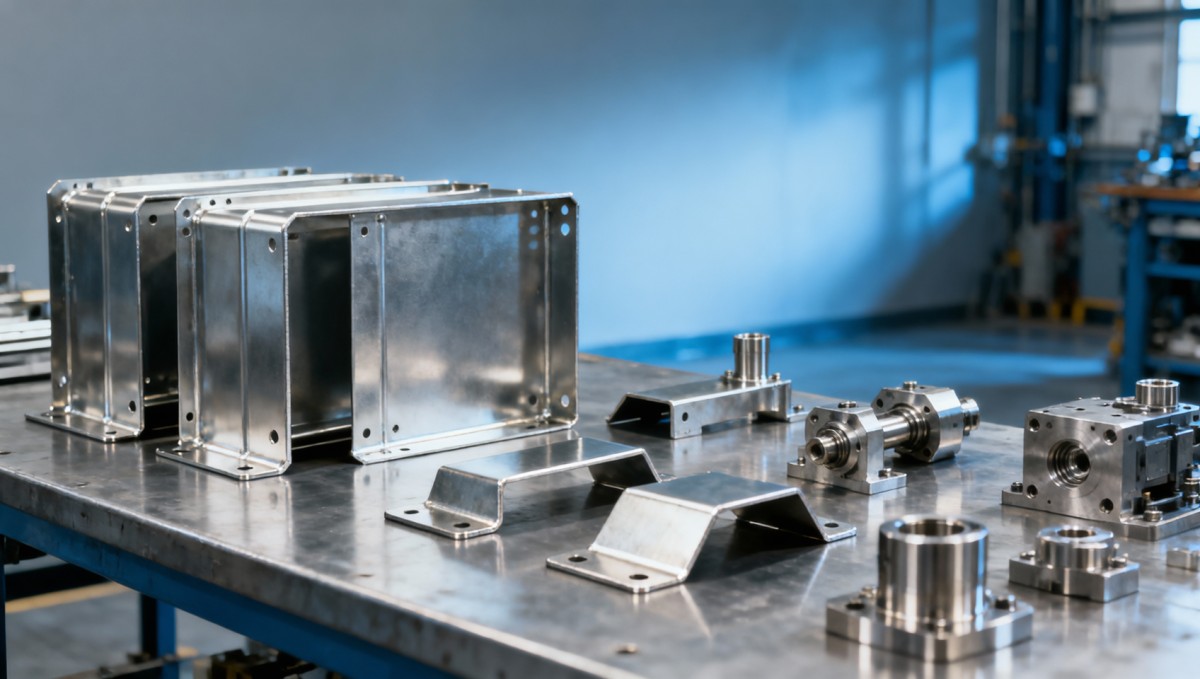
Many assembly issues are created in the first 2 stages of a project: design definition and supplier quotation. If the RFQ package includes an outdated drawing revision, unclear material callout, or incomplete hardware list, the supplier may price one condition while the assembly team expects another. Even a 24-hour quoting shortcut can create a 7- to 14-day delay later when parts arrive incomplete or incompatible.
Another common problem is treating custom sheet metal fabrication as a standalone process. In reality, sheet metal parts frequently depend on laser cutting services, tapping, PEM insertion, surface treatment, and secondary machining. If a bracket also needs micro machining for alignment features, or if a shaft interface depends on cnc turning centers, those linked processes must be planned together rather than added after release.
Assemblies become especially vulnerable when tolerances are copied from machined-part standards and applied to formed metal without process review. A flatness requirement of 0.1 mm across a long bent panel may be possible in theory, but difficult in volume production without added fixturing, inspection time, and cost. When specifications exceed process capability, lead times expand and first-pass yield falls.
Cross-functional review is often missing. Engineering may focus on geometry, purchasing on unit price, and operations on build sequence. If no one checks how a panel nests, bends, stacks, ships, and installs, preventable delays appear during kitting and final assembly. A 5-step internal review before PO release can eliminate many of these late surprises.
Early warning signs in RFQs and drawing packages
- Missing bend direction, grain direction, or finish masking notes on parts with cosmetic surfaces.
- Conflicting dimensions between 2D drawings, 3D models, and BOM entries.
- Threaded features specified too close to bends, edges, or embossed zones.
- Assemblies requiring both formed parts and turned components without synchronized capacity planning.
- Lead-time targets below typical ranges, such as asking for complex fabricated assemblies in 3 to 5 days without approved tooling or samples.
Typical upstream causes versus downstream impact
The table below shows how early-stage mistakes in custom sheet metal fabrication translate into specific assembly disruptions. This is useful for technical evaluators and project managers building supplier review checklists.
The key takeaway is that most assembly delays do not begin on the shop floor. They begin when technical assumptions are not converted into manufacturable, inspectable, and schedulable requirements. Procurement teams that insist on revision discipline and pre-production review often reduce corrective loops by 1 to 2 full cycles.
Design and DFM mistakes that create rework
Poor design-for-manufacturing decisions remain one of the biggest reasons custom sheet metal fabrication misses assembly dates. Engineers may optimize for compactness or appearance, but if the design ignores bend radius, tool access, or fastener installation space, the part may be technically correct and still impractical to produce. This often shows up in prototype-to-production transitions, especially when quantities move from 5 pieces to 500 pieces.
A classic mistake is placing holes or slots too close to bend lines. On thin-gauge stainless or aluminum, that can distort geometry after forming and shift mating positions by 0.2 mm to 0.8 mm. In enclosures for smart electronics or medical support equipment, this may affect connector alignment, sealing surfaces, or cover installation. Rework then moves from a simple deburr task to redrilling, shimming, or complete remake.
Another issue is failing to consider process sequence. If powder coating is applied before certain press-fit hardware is inserted, finish damage can occur. If welding is performed before precision cutouts are checked, heat distortion can compromise critical features. A robust DFM review should map at least 4 process points: cutting, forming, joining, and finishing.
Teams also underestimate the interaction between sheet metal and other fabrication methods. A housing may require standard bends, but its alignment pocket may need micro machining, and its mating shaft may depend on cnc turning centers running at separate capacity limits. Without integrated production planning, one bottleneck can idle the whole assembly cell.
High-risk DFM oversights
- Bend relief not defined, increasing the chance of tearing or corner deformation.
- Specified tolerances tighter than process need, such as ±0.05 mm where ±0.2 mm would be functional.
- Insufficient clearance for tools, rivet heads, inserted nuts, or cable routing during assembly.
- No datums tied to actual inspection method, making first article approval inconsistent.
- Ignoring grain direction on cosmetic brushed parts, creating visual mismatch in final assemblies.
Practical DFM checkpoints before release
Before approving drawings for production, companies can use a short but structured checkpoint list. The goal is not to slow engineering down, but to prevent 2 weeks of avoidable supplier back-and-forth after order placement.
When these checkpoints are reviewed early, technical teams can align performance, cost, and lead time more realistically. In many B2B programs, one 30-minute DFM review saves more time than an expedited shipment later.
Tolerance, finishing, and process-capacity issues
Tolerance stack-up is one of the most underestimated causes of assembly delay in custom sheet metal fabrication. A single part may pass inspection, yet the full assembly can still fail if cumulative variation across 6 to 12 parts exceeds the available clearance. This is especially common in cabinets, frames, battery housings, and equipment covers where sheet metal interfaces with seals, hinges, brackets, and machined inserts.
Finishing creates another layer of risk. Powder coating, plating, anodizing, and passivation can add thickness, alter hole fit, or affect grounding points. If the design requires conductive contact surfaces, masking must be defined clearly. If not, assembly teams may remove finish manually, which adds labor and introduces quality variation. A finish thickness range of 60–100 microns can be small visually but very significant in threaded or tightly nested features.
Capacity planning matters just as much as dimensional control. Buyers sometimes confirm a supplier based on laser cutting services availability but fail to check brake press load, welding queue, or cnc turning centers support for companion parts. A shop may cut 1,000 blanks in 2 days, yet need another 7 days for formed parts and 5 days more for machined inserts if capacity was not reserved at the same time.
The safest approach is to classify dimensions into three levels: critical-to-fit, critical-to-function, and standard. That allows quality resources to focus on what truly affects assembly, while suppliers avoid over-inspecting low-risk features. For many fabricated assemblies, only 10% to 20% of dimensions need tight control, but those features must be identified precisely.
Capacity and process questions buyers should ask
- What is the normal lead time for laser cutting, forming, welding, and finishing at the current load level?
- Can secondary operations such as tapping, countersinking, or micro machining be completed in-house within the same schedule window?
- Are companion turned parts dependent on internal cnc turning centers or external subcontractors?
- What batch size causes scheduling changes: 20 units, 200 units, or 2,000 units?
- Which dimensions are measured 100% and which are sample-based under the inspection plan?
Typical control ranges to discuss before PO approval
The values below are not universal design rules, but they are useful discussion ranges for procurement and engineering teams reviewing manufacturability, finish impact, and assembly risk before releasing a custom fabrication order.
The main lesson is that schedule promises must be tied to actual process capability. A supplier with strong cutting speed but weak finishing coordination may still delay assembly. Decision-makers should evaluate the full value stream, not just one machine group.
How procurement and project teams can reduce delay risk
Avoiding assembly delay is not only an engineering task. Procurement, quality, finance, and project management all influence whether a custom sheet metal fabrication program runs smoothly. The purchasing team defines commercial expectations, but if those expectations ignore technical complexity, the supplier relationship becomes reactive. Low quoted price can quickly be offset by rework, premium freight, line stoppage, or late-launch penalties.
A better model is to evaluate suppliers using a balanced scorecard across 4 dimensions: manufacturability support, schedule reliability, quality control, and secondary-process integration. This is particularly important in sectors where sheet metal assemblies support electronics, medical carts, charging systems, or industrial automation modules. These programs often have high change frequency and tight launch windows, making communication discipline as important as machine capability.
Project owners should also define escalation points early. For example, any revision affecting hole patterns, mating interfaces, material substitutions, or finish changes should trigger formal confirmation before production proceeds. A simple rule such as “no unapproved substitution on critical features” can prevent hidden deviations that surface only during installation.
Financial approvers benefit from this structured approach because it reduces hidden cost. A part that is 6% cheaper at quotation but causes one failed pilot build can become the more expensive option. Evaluating total delivery performance over the first 2 or 3 orders often gives a more accurate supplier picture than unit price alone.
A practical 6-point supplier review framework
- Confirm revision control method for drawings, BOMs, and sample approval records.
- Review DFM feedback turnaround time, ideally within 24 to 72 hours for active RFQs.
- Verify in-house versus outsourced operations for laser cutting services, forming, welding, finishing, and turning support.
- Request a clear inspection approach for critical dimensions, cosmetic criteria, and packaging protection.
- Ask how production capacity changes when order volume rises by 2x or 3x.
- Define nonconformance handling time, corrective action flow, and replacement lead time.
Implementation workflow for lower-risk launches
Teams that follow a structured launch path typically see fewer surprises. The sequence below is effective for both new product introduction and dual-source qualification.
Step 1 is RFQ alignment: confirm drawings, revisions, materials, finish, quantities, and assembly-critical features. Step 2 is DFM review: close any gap related to bends, hardware, machining, or finish masking. Step 3 is prototype validation: inspect fit, stack-up, and operator assembly time. Step 4 is pilot run: verify repeatability at planned batch size, such as 50 to 200 units. Step 5 is controlled production release with an agreed communication and quality response plan.
For organizations sourcing globally, this workflow is also a strong way to compare suppliers beyond price. It reveals whether a vendor can support real production conditions, not just sample parts. That distinction matters when assembly windows are fixed and field deployment dates cannot move.
FAQ: common questions about custom sheet metal fabrication delays
How long should custom sheet metal fabrication take for prototype and production orders?
For moderate-complexity parts, prototype lead times often fall in the 5–10 working day range, while production may take 2–4 weeks depending on quantity, finish, and secondary operations. Assemblies that require welding, hardware insertion, micro machining, or companion turned parts usually need additional planning time. If a supplier promises unusually short lead times, buyers should confirm whether all linked processes are included.
What specifications should be reviewed first to avoid assembly rework?
Start with 4 items: drawing revision, material and thickness, tolerance classification, and finish requirements. Then review assembly-critical hole locations, hardware callouts, and any feature near bends or weld zones. If the part interfaces with bearings, shafts, sensors, or sealed covers, verify whether standard sheet metal tolerances are enough or whether selected features need secondary machining.
When do laser cutting services and cnc turning centers become schedule risks?
They become risks when buyers treat them as independent resources rather than linked production stages. Laser cutting services may be available immediately, but if the same project also depends on turned spacers, bushings, or shafts from limited cnc turning centers capacity, assembly can still be delayed. This is common in electromechanical products where fabricated panels and precision round parts must arrive together.
How can quality teams reduce incoming inspection delays?
Agree on an inspection plan before production. Identify critical-to-fit dimensions, cosmetic standards, acceptable finish variation, and packaging requirements. For repeat orders, using first-article approval plus defined sample inspection on later lots can shorten receiving time while maintaining control. Clear acceptance criteria usually reduce disputes and speed line-side release.
Assembly delays in custom sheet metal fabrication are rarely caused by one dramatic failure. More often, they result from a chain of manageable mistakes: weak RFQ data, incomplete DFM review, unrealistic tolerances, unplanned secondary operations, and poor coordination across suppliers. Companies that align design, sourcing, quality, and scheduling early are far more likely to protect launch dates and total project cost.
For B2B teams evaluating fabrication partners or benchmarking sourcing risk across advanced manufacturing supply chains, a structured review process delivers measurable value. If you need help assessing supplier readiness, comparing fabrication workflows, or identifying delay risks in complex assemblies, contact TradeNexus Pro to get tailored insights, sourcing guidance, and practical solutions for your next program.
Get weekly intelligence in your inbox.
No noise. No sponsored content. Pure intelligence.
 Apr 20, 2026China Academy of IMT Releases Digital Passport White Paper for Industrial MaterialsChina Academy of IMT Releases Digital Passport White Paper for Industrial Materials
 Apr 20, 2026Suez Canal AI Speed & Load Limits Effective Apr 19, 2026Suez Canal AI Speed & Load Limits Effective Apr 19, 2026
 Apr 20, 2026IEC 63275:2026 Published for Warehouse Robotics EMC TestingIEC 63275:2026 Published for Warehouse Robotics EMC Testing
 Apr 20, 20262026 Shanghai Fastener Show: 1427 Exhibitors, Robot-Specific Fasteners in Focus2026 Shanghai Fastener Show: 1427 Exhibitors, Robot-Specific Fasteners in Focus
 Apr 20, 2026US BIS Expands EV Infrastructure Export ControlsUS BIS Expands EV Infrastructure Export Controls
 Apr 20, 2026TÜV Rheinland Updates ESS Certification with Propagation Blocking RequirementTÜV Rheinland Updates ESS Certification with Propagation Blocking Requirement
 Apr 20, 2026Shanghai Port Launches Green Clearance Channel for PV InvertersShanghai Port Launches Green Clearance Channel for PV Inverters
 Apr 20, 2026Vietnam Launches Anti-Circumvention Probe on Chinese Electronic ComponentsVietnam Launches Anti-Circumvention Probe on Chinese Electronic Components
 Apr 20, 2026CPSC Urges Recall of China-Made Smart Plugs Over Firmware VulnerabilitiesCPSC Urges Recall of China-Made Smart Plugs Over Firmware Vulnerabilities
 Apr 20, 2026EU AI Act CE Compliance for IoT Devices Takes Effect Apr 18, 2026EU AI Act CE Compliance for IoT Devices Takes Effect Apr 18, 2026
 Apr 19, 20262026 Dongguan Whole-House Customization List Released2026 Dongguan Whole-House Customization List Released
 Apr 19, 2026Global Shipping Alliances Launch Green Slot Priority for Asia-Europe RoutesGlobal Shipping Alliances Launch Green Slot Priority for Asia-Europe Routes
 Apr 19, 2026Vietnam Imposes AD Duties on Chinese Electronic ComponentsVietnam Imposes AD Duties on Chinese Electronic Components
 Apr 19, 2026Dongguan Victor Tops Local Full-Home Customization ListDongguan Victor Tops Local Full-Home Customization List
 Apr 19, 2026Guosheng Zhike Launches High-Precision Mold Machine Project in TaizhouGuosheng Zhike Launches High-Precision Mold Machine Project in Taizhou
 Apr 19, 2026CRRC Changchun Wins Jiaxing Urban Rail EMU ProjectCRRC Changchun Wins Jiaxing Urban Rail EMU Project
 Apr 19, 2026China Releases Green Design Guidelines 2026 for Industrial ProductsChina Releases Green Design Guidelines 2026 for Industrial Products
 Apr 19, 2026CATL Establishes $3B Era Resources Group for Global Mineral ControlCATL Establishes $3B Era Resources Group for Global Mineral Control
 Apr 19, 2026Shanghai Electric Gas Turbine Backlog Extends to 2028Shanghai Electric Gas Turbine Backlog Extends to 2028
 Apr 19, 2026Hormuz Strait Reopens, China Fertilizer Export Quota Easing ExpectedHormuz Strait Reopens, China Fertilizer Export Quota Easing Expected
 Apr 18, 2026TradeNexus Pro Launches Global Compliance RadarTradeNexus Pro Launches Global Compliance Radar
 Apr 18, 2026JIS T 2304:2026 Takes Effect June 1, 2026 for IVD SoftwareJIS T 2304:2026 Takes Effect June 1, 2026 for IVD Software
 Pathway for Rehab Devices with AI Modules") Apr 18, 2026FDA Updates 510(k) Pathway for Rehab Devices with AI ModulesFDA Updates 510(k) Pathway for Rehab Devices with AI Modules
Apr 18, 2026FDA Updates 510(k) Pathway for Rehab Devices with AI ModulesFDA Updates 510(k) Pathway for Rehab Devices with AI Modules Apr 18, 2026India BIS Approves 3 Chinese IoT Labs for IS 16444:2026 CertificationIndia BIS Approves 3 Chinese IoT Labs for IS 16444:2026 Certification
 Apr 18, 2026THE Alliance Launches Green Slot Priority for China PortsTHE Alliance Launches Green Slot Priority for China Ports
 Apr 18, 2026TÜV Rheinland Releases Dual-Standard ESS Certification Guide for ChinaTÜV Rheinland Releases Dual-Standard ESS Certification Guide for China
 Apr 18, 2026Vietnam Imposes AD Duties on Chinese Electronic ComponentsVietnam Imposes AD Duties on Chinese Electronic Components