How Material Choice Affects Wind Turbine Components Life
Material selection directly shapes the durability, efficiency, and maintenance cycle of wind turbine components, making it a critical factor for operators, engineers, and business decision-makers alike. From fatigue resistance to corrosion protection, the right materials can reduce lifecycle costs, improve safety, and strengthen long-term performance in demanding energy environments.
For procurement teams, project managers, quality leaders, and financial approvers, material choice is not a narrow engineering detail. It affects service intervals, spare-part budgets, transport limits, downtime risk, and even insurance exposure over a turbine’s 20–25 year design life. In utility-scale and distributed wind projects alike, selecting the wrong alloy, composite, coating, or bearing steel can turn a sound asset plan into a recurring maintenance problem.
This article examines how material choice affects the life of major wind turbine components, what trade-offs matter most in real operating conditions, and how B2B buyers can evaluate suppliers and specifications with greater confidence.
Why Material Choice Matters Across the Wind Turbine Lifecycle
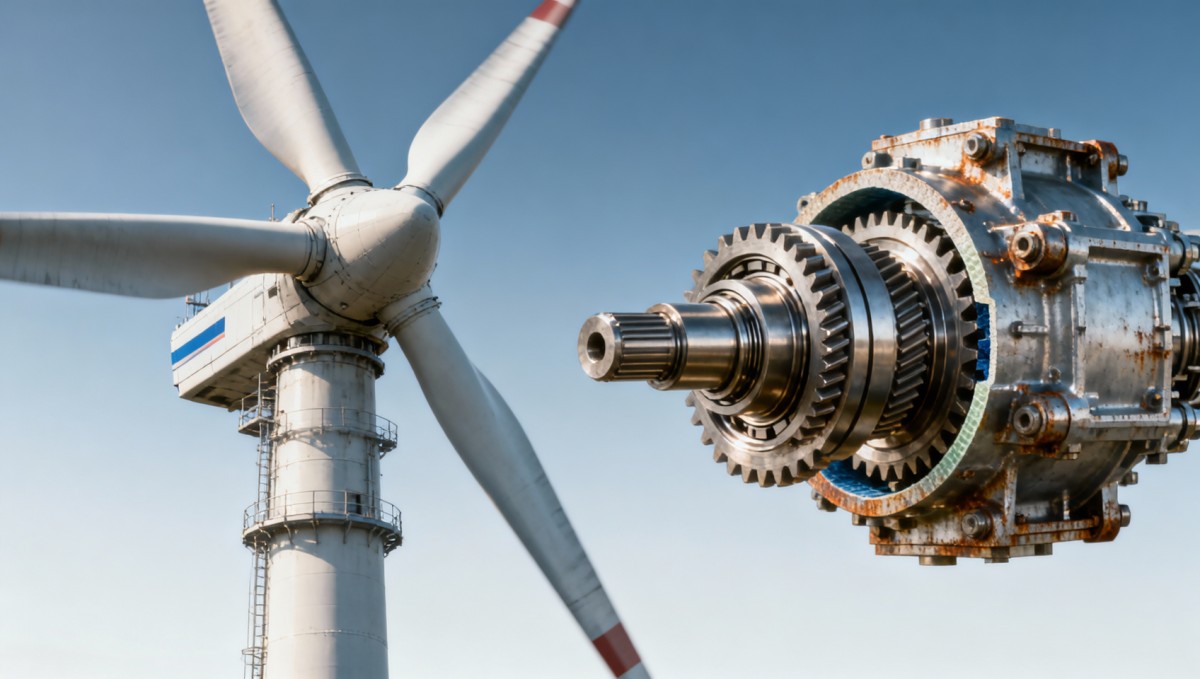
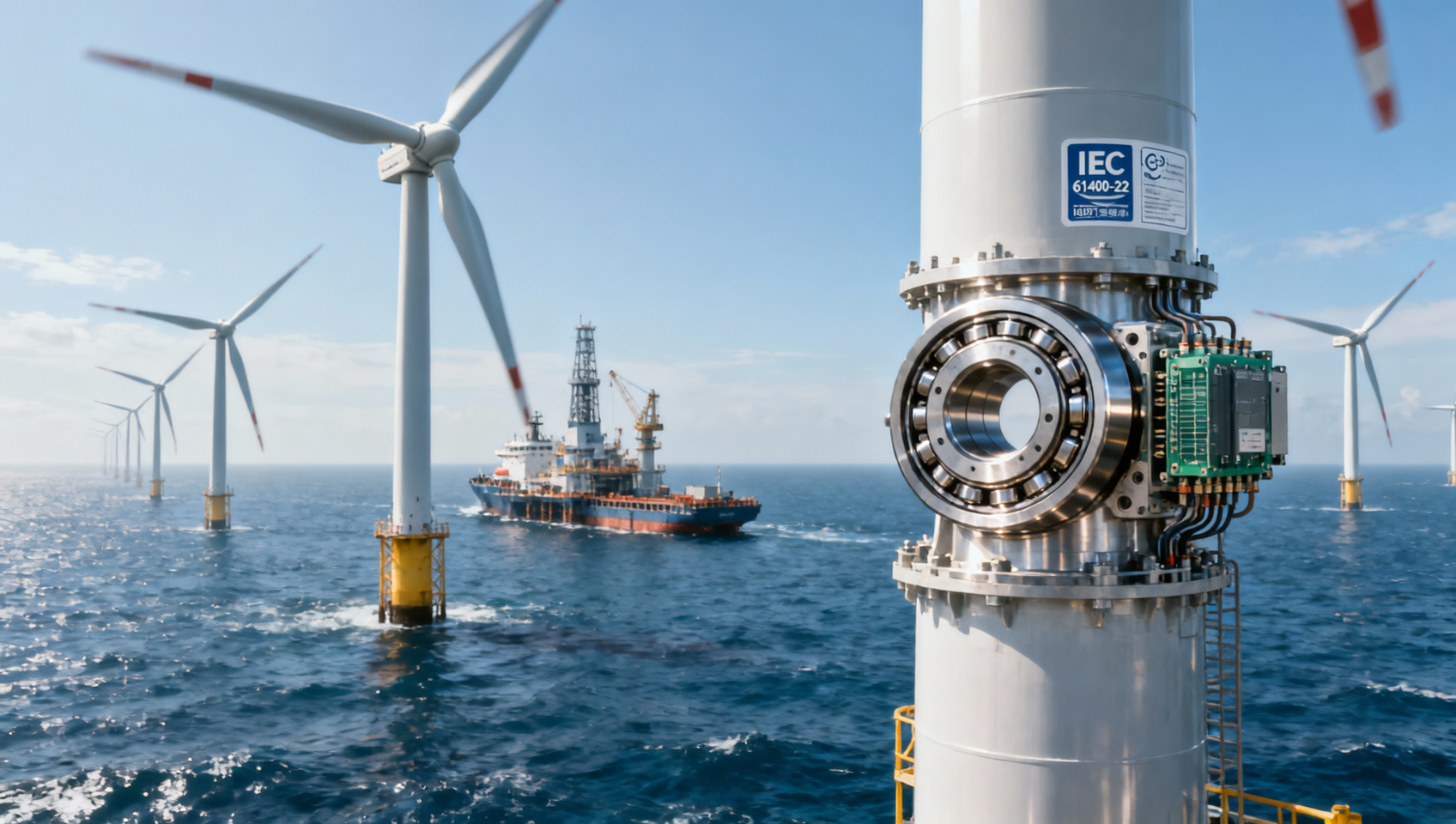
A wind turbine is exposed to cyclic loading, temperature fluctuation, UV radiation, moisture, salt spray, dust, and vibration for thousands of operating hours every year. In many wind farms, rotating components may see 107 to 108 fatigue cycles over their service life. Because of this, material performance cannot be judged only by initial strength. Fatigue resistance, fracture toughness, corrosion behavior, and dimensional stability are equally important.
The practical impact is substantial. A material that reduces blade erosion or gearbox wear may extend inspection intervals from 6 months to 12 months in moderate operating conditions. In offshore or high-humidity sites, better corrosion control can prevent premature replacement of towers, fasteners, and internal housings. For operators, that means fewer unplanned crane mobilizations and lower lost-generation costs.
Material selection also influences efficiency. Lighter blade laminates reduce inertia and may improve start-up behavior at lower wind speeds. More stable magnetic and conductive materials inside generators can reduce thermal losses. Even a small improvement in structural stiffness or wear resistance can protect alignment, lower vibration, and preserve output consistency over 15–20 years.
From a commercial standpoint, buyers should compare not only purchase price but total ownership cost across 4 key dimensions: expected life, maintenance frequency, replacement complexity, and failure consequence. A lower-cost material may appear attractive during tendering, but if it raises service labor by 15%–25% or shortens replacement cycles by 3–5 years, the economics often reverse.
Main stress factors that drive material degradation
- Repeated fatigue loading from variable wind speed, yaw movement, and start-stop cycles.
- Corrosion from rain, humidity, salt-laden air, industrial pollution, or condensation inside nacelles.
- Abrasion and erosion caused by airborne particles, hail, and leading-edge impacts on blades.
- Thermal stress in generators, power electronics housings, and braking systems operating across wide temperature ranges.
- Tribological wear in bearings, shafts, and gear teeth where lubrication quality may vary over time.
A practical lifecycle view
For engineering and sourcing teams, the best material is rarely the one with the highest nominal strength. It is the one that remains reliable under the specific site profile, logistics model, and maintenance strategy of the project. A turbine in an inland low-corrosion zone can accept different material trade-offs than one installed offshore, in a desert, or in a cold-climate mountain corridor.
How Material Performance Differs by Major Wind Turbine Component
Each wind turbine component faces a different failure mechanism, so material choice should be component-specific rather than generalized. Blades prioritize stiffness-to-weight ratio and surface durability. Towers need structural strength, weldability, and corrosion protection. Bearings and gearboxes depend on hardness, fatigue endurance, and lubrication compatibility. Electrical systems must manage conductivity, thermal cycling, and environmental sealing.
The following comparison helps decision-makers connect material categories with service-life outcomes. It is especially useful during supplier evaluation, retrofit planning, and cost-justification reviews where technical and commercial teams need a shared framework.
The table shows that a single “high-strength” strategy is not enough. For example, switching from standard glass fiber layouts to selective carbon reinforcement may improve blade stiffness and lower mass, but it can also increase material cost and process sensitivity. Likewise, harder gearbox steels may improve wear resistance, yet poor surface finish or lubrication mismatch can still shorten bearing life.
In practice, blades often become the most visible case for material trade-offs. A longer blade may deliver better energy capture, but if the laminate system lacks sufficient fatigue performance, crack initiation risk rises under repeated gust loading. Offshore operators often favor more advanced coatings and resins because access windows may be limited to 24–72 hours depending on weather and vessel availability.
Component-specific decision points
When evaluating turbine components, technical teams should align material choice with the dominant failure mode rather than the most visible specification. For rotating parts, surface condition and fatigue endurance often matter more than static tensile numbers. For external structures, corrosion resistance and coating maintainability can dominate lifetime cost.
- For blades: compare erosion resistance, resin toughness, and repairability over 12–18 month maintenance cycles.
- For towers: assess coating systems by expected exposure class, recoating interval, and transport damage tolerance.
- For bearings and gears: review hardness depth, surface finish, cleanliness level, and lubricant interaction.
- For electrical systems: verify thermal class, insulation aging behavior, and moisture protection at enclosure level.
Key Material Selection Criteria for Buyers, Engineers, and Quality Teams
A strong wind turbine material strategy starts with a cross-functional review. Operators care about uptime. Finance teams look at payback and replacement timing. Quality and safety managers focus on compliance, failure prevention, and traceability. Procurement teams need stable supply and predictable lead times. The best sourcing process links these priorities through measurable criteria instead of isolated vendor claims.
At minimum, material evaluation should cover 5 screening layers: mechanical performance, environmental durability, manufacturability, serviceability, and supply risk. If any one of these is missed, lifecycle forecasts can become unreliable. For example, an excellent corrosion-resistant alloy may be difficult to machine or slow to source, which may delay outage recovery by 6–10 weeks when replacement parts are needed.
The next table can support technical-commercial alignment during RFQ review, supplier prequalification, or internal capital approval. It helps teams compare options beyond headline price and identify where additional validation is required.
A recurring procurement mistake is to compare materials only through a unit-cost lens. In wind projects, a 5% saving on material cost can be offset by a single unplanned outage if crane access, vessel hire, or specialist labor is required. This is especially true for gearbox, bearing, and blade repairs, where logistics costs may exceed the value of the replacement material itself.
Quality teams should also insist on process consistency, not just nominal material grade. Heat treatment variation, resin mix control, fiber placement accuracy, and coating surface preparation all affect how the chosen material performs in service. In other words, material specification and manufacturing execution must be reviewed together.
A practical 4-step supplier review approach
- Define the operating profile: inland, coastal, offshore, desert, cold climate, or mixed conditions.
- Rank failure consequences by cost and safety impact, from cosmetic degradation to critical drivetrain damage.
- Request evidence on fatigue, corrosion, coating life, and field repairability, not only datasheets.
- Model total lifecycle cost over 10, 15, and 20 years to compare alternatives under realistic maintenance assumptions.
Where distributors and agents add value
Distributors, regional agents, and channel partners can improve material selection outcomes by shortening replacement lead times and supporting local service inventories. For customers managing multi-site fleets, that can be as important as the original material specification, especially when downtime penalties are high.
Common Material Trade-Offs in Onshore, Offshore, and Harsh Environments
The same component may need a different material strategy depending on location. Onshore projects often optimize for cost, transport efficiency, and accessible maintenance. Offshore projects prioritize corrosion protection, sealing integrity, and reduced intervention frequency because access may be limited by wind, wave height, and vessel scheduling. Desert and cold-climate installations add their own constraints, including abrasive dust, thermal cycling, and ice-related loading.
These operating differences explain why one material choice cannot be treated as universally optimal. Buyers should ask whether the proposed material has been selected for the site reality or simply carried over from a standard platform configuration. A coating system that performs adequately in a dry inland zone may underperform rapidly in coastal air with persistent salt deposition.
Scenario-based material priorities
- Onshore standard sites: balance cost and durability; focus on fatigue, coating quality, and accessible repair methods.
- Offshore or coastal sites: prioritize corrosion-resistant systems, sealed housings, higher-grade fasteners, and more robust surface protection.
- Desert and dusty regions: emphasize blade leading-edge protection, filter durability, and abrasion-resistant external finishes.
- Cold climates: check low-temperature toughness, ice exposure behavior, and thermal cycling performance in composites and metals.
In many offshore projects, higher-performance materials are justified even when acquisition cost rises by 8%–15%, because intervention costs are much higher than on land. Conversely, in accessible onshore fleets with standardized maintenance crews, it may be more economical to use robust but more serviceable materials that enable fast repair rather than maximum premium specification in every part.
Another trade-off concerns weight. Lighter materials can reduce loads and improve transport efficiency, but they may require stricter manufacturing control or more complex repair methods. This matters to project owners and EPC teams that must balance installation deadlines, local labor capability, and spare-part strategy across multiple turbines or phases.
Risk signals that buyers should not ignore
If a supplier provides only static strength data, avoids discussion of coating life, or cannot explain repair procedures and traceability, that is a warning sign. For wind turbine components, material quality is verified through service relevance, not just laboratory claims. Buyers should also check whether the supply chain can support replacement parts within realistic windows such as 2–6 weeks for standard items or 8–16 weeks for specialized fabricated parts.
Implementation, Inspection, and Long-Term Asset Planning
Selecting the right material is only the first step. Long component life depends on how materials are processed, inspected, installed, and monitored after commissioning. A well-chosen composite can still fail early if curing control is poor. A corrosion-resistant steel system can underperform if coating application, edge sealing, or bolted-joint protection is inconsistent during installation.
For asset owners and project managers, a disciplined implementation plan should include incoming inspection, site handling controls, and scheduled condition monitoring. Typical review points may include pre-install visual checks, torque verification, coating thickness checks, lubrication sampling, and periodic vibration analysis. For high-value drivetrain parts, early-stage monitoring during the first 3–6 months can reveal alignment or material-processing issues before larger failures develop.
A practical maintenance framework often combines time-based and condition-based methods. For example, blade surface inspections may occur every 6–12 months, while bearing health may be tracked through temperature, vibration, and oil debris indicators. The more critical the component and the higher the intervention cost, the stronger the case for predictive monitoring tied to material-sensitive failure modes.
Recommended control points after material selection
- Confirm material certificates, batch traceability, and processing records before release to assembly.
- Verify storage and transport conditions, especially for coated parts, resins, seals, and insulated electrical components.
- Use installation checklists that include torque, alignment, surface protection, and environmental sealing items.
- Set component-specific inspection intervals based on site severity and failure consequence.
- Capture field data to refine future sourcing decisions and standardize best-performing material configurations.
FAQ: What decision-makers often ask
How long can better materials extend component life?
There is no single multiplier for every part, but better fatigue, wear, and corrosion resistance can materially reduce early-life failures and extend replacement cycles by several years in demanding conditions. The greatest gains usually appear where maintenance access is difficult or where standard materials were previously close to their performance limits.
Is premium material always the best choice?
No. The right choice depends on site severity, repair access, budget constraints, and the cost of downtime. A premium material makes sense when failure consequences are high, but in some onshore applications a well-controlled standard material with predictable local support can deliver better overall value.
What should finance teams ask before approving higher-cost materials?
They should ask for a lifecycle comparison covering acquisition cost, maintenance frequency, expected outage duration, replacement logistics, and remaining value over 10–20 years. If a higher-cost material reduces even one major unplanned intervention, the business case may be stronger than the purchase price suggests.
Material choice affects far more than engineering performance. It shapes maintenance planning, working capital, service risk, and long-term project returns across the full wind turbine lifecycle. For operators, quality teams, distributors, and enterprise decision-makers, the most effective approach is to evaluate materials by real operating conditions, failure consequences, and supportability rather than by upfront cost alone.
At TradeNexus Pro, decision-makers can use deep sector insight to compare sourcing strategies, assess technology shifts, and identify more resilient supply options across green energy and advanced manufacturing ecosystems. If you are reviewing wind turbine components, planning a retrofit, or refining supplier qualification standards, contact us to explore tailored intelligence, product visibility opportunities, and more informed procurement pathways.
Get weekly intelligence in your inbox.
No noise. No sponsored content. Pure intelligence.
 Apr 22, 2026China Leads Global Offshore Wind Installations for 5th YearChina Leads Global Offshore Wind Installations for 5th Year
 Apr 22, 2026China Launches National Mine Safety IoT Monitoring NetworkChina Launches National Mine Safety IoT Monitoring Network
 Apr 22, 2026Yinchuan Boiler Pure Water Solution Certified for Middle East ProjectsYinchuan Boiler Pure Water Solution Certified for Middle East Projects
 Apr 22, 2026China to Enforce Mandatory EV Battery Recycling Standards by 2026China to Enforce Mandatory EV Battery Recycling Standards by 2026
 Apr 22, 2026Vietnam Launches Anti-Circumvention Probe on Electronic ComponentsVietnam Launches Anti-Circumvention Probe on Electronic Components
 Apr 22, 20262026 Shanghai Fastener Show: Robotic Fasteners Drive Overseas Procurement2026 Shanghai Fastener Show: Robotic Fasteners Drive Overseas Procurement
 Apr 22, 2026US BIS Adds EV On-Board Charger Crypto Modules to EAR Appendix 7US BIS Adds EV On-Board Charger Crypto Modules to EAR Appendix 7
 Apr 22, 2026TÜV Rheinland Updates BESS Certification: Propagation Blocking Now MandatoryTÜV Rheinland Updates BESS Certification: Propagation Blocking Now Mandatory
 Apr 22, 2026Red Sea Crisis Escalates: Suez AI Speed Limits & Slot Review from Apr 19Red Sea Crisis Escalates: Suez AI Speed Limits & Slot Review from Apr 19
 Apr 22, 2026EU CBAM Carbon Tariff Takes Effect April 1, 2026EU CBAM Carbon Tariff Takes Effect April 1, 2026
 Apr 21, 2026When to Replace CT Scanner Parts Before Downtime StartsWhen to Replace CT Scanner Parts Before Downtime Starts
 Apr 21, 2026How to Cut Costs in Lathe Turning Without ReworkHow to Cut Costs in Lathe Turning Without Rework
 Apr 21, 2026Lathe Turning Tolerances: What Can You Expect?Lathe Turning Tolerances: What Can You Expect?
 Apr 21, 2026How to Avoid Risks in Solar Panels WholesaleHow to Avoid Risks in Solar Panels Wholesale
 Apr 21, 2026Solar Panels Wholesale: How to Compare SuppliersSolar Panels Wholesale: How to Compare Suppliers
 Apr 21, 2026Solar Mounting Cost Factors You Should KnowSolar Mounting Cost Factors You Should Know
 Apr 21, 2026Solar Mounting Options: Which One Fits Your Project?Solar Mounting Options: Which One Fits Your Project?
 Apr 21, 2026How to Pick USB C Docking Stations for Dual DisplaysHow to Pick USB C Docking Stations for Dual Displays
 Apr 21, 2026USB C Docking Stations: What Ports Do You Need?USB C Docking Stations: What Ports Do You Need?
 Apr 21, 2026What Affects Dental Milling Machine ROI in 2026?What Affects Dental Milling Machine ROI in 2026?
 Apr 21, 2026Dental Milling Machines: Wet or Dry for Your Lab?Dental Milling Machines: Wet or Dry for Your Lab?
 Apr 21, 2026How to Avoid Common Medical Refrigerator MistakesHow to Avoid Common Medical Refrigerator Mistakes
 Apr 21, 2026Medical Refrigerators: What Specs Matter Most?Medical Refrigerators: What Specs Matter Most?
 Apr 21, 2026Portable or Cart Vet Ultrasound: Which to Buy?Portable or Cart Vet Ultrasound: Which to Buy?
 Apr 21, 2026Vet Ultrasound Buying Guide for Small ClinicsVet Ultrasound Buying Guide for Small Clinics
 Apr 21, 2026Yard Management Systems: Key Features to CompareYard Management Systems: Key Features to Compare
 Apr 21, 2026How Yard Management Systems Improve Dock FlowHow Yard Management Systems Improve Dock Flow