Is industrial 3D printing ready for short-run production
As industrial 3d printing moves from prototyping to short-run production, buyers and engineers are rethinking where additive manufacturing services fit beside laser cutting services, custom sheet metal fabrication, micro machining, and cnc turning centers. This article examines cost, quality, speed, and scalability so decision-makers can judge when industrial 3d printing is truly production-ready.
For procurement teams, production engineers, quality managers, and finance approvers, the key question is no longer whether additive manufacturing works. The real question is where it creates measurable value in batches of 10, 50, 200, or 1,000 units, and where conventional methods still win on cost, consistency, or throughput.
In cross-industry B2B supply chains, short-run production often appears during pilot launches, bridge manufacturing, spare parts fulfillment, customized assemblies, and low-volume high-mix programs. In these situations, industrial 3D printing can reduce tooling delays, compress engineering cycles, and support faster market response, but only if process choice, material behavior, and post-processing are understood clearly.
Where industrial 3D printing fits in short-run manufacturing
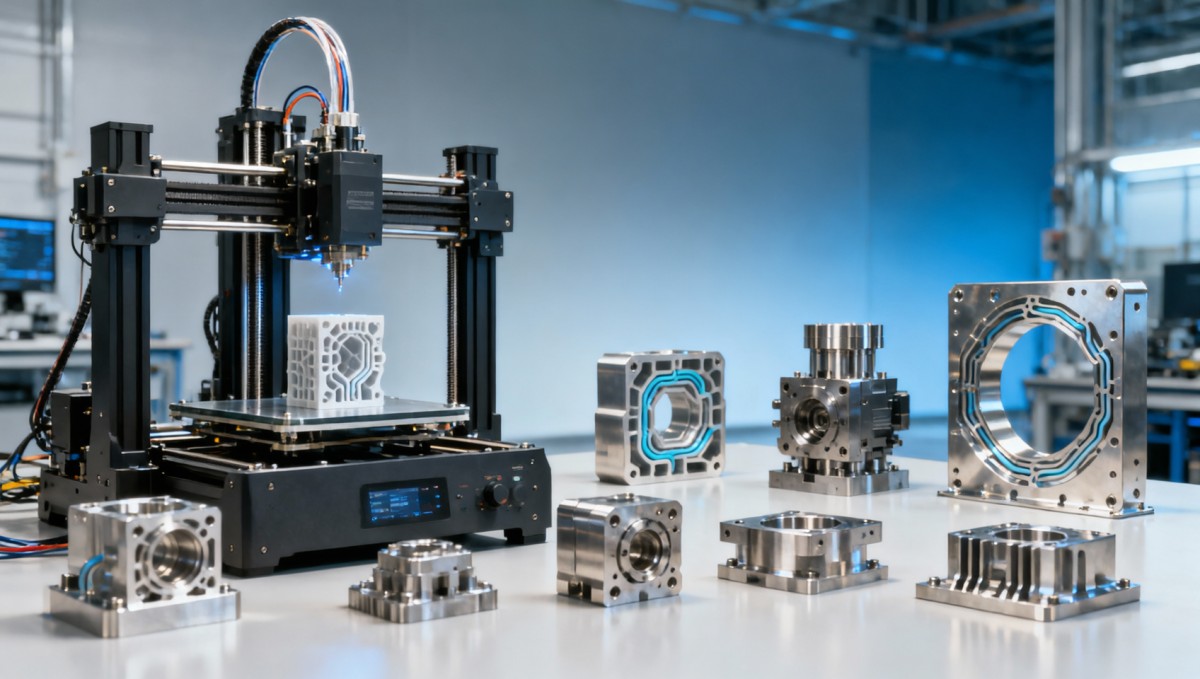
Short-run production typically sits between one-off prototyping and full-scale mass production. In many B2B environments, that means quantities from 5 to 500 parts, although some polymer applications can extend beyond 1,000 pieces if geometry is stable and demand remains fragmented. This is the zone where tooling cost, lead time, and design flexibility matter more than pure unit economics.
Industrial 3D printing is strongest when part complexity is high, change frequency is high, and tooling would otherwise delay launch by 2 to 8 weeks. It is less attractive when the part is simple, flat, or rotationally symmetric and can be produced quickly through laser cutting, sheet metal fabrication, or cnc turning with predictable repeatability.
Decision-makers should separate “possible to print” from “ready for production.” A part may be printable in nylon, resin, or metal powder, yet still fail to meet tolerance, surface, regulatory, or cost requirements. Production readiness depends on a stable workflow that includes build preparation, machine calibration, post-processing, inspection, and documented acceptance criteria.
The comparison below helps teams decide where additive manufacturing services outperform conventional fabrication routes in short-run scenarios.
The practical takeaway is that industrial 3D printing is not a blanket replacement for subtractive or formative processes. It is a targeted production tool. The more a part benefits from design freedom and the less it benefits from dedicated tooling, the more likely additive manufacturing becomes commercially sensible.
Short-run production scenarios with the highest fit
- Bridge manufacturing while injection molds, dies, or fixtures are still under development for 3 to 6 weeks.
- Service parts or legacy components where annual demand is below 200 units and stocking risk is high.
- Customized components for healthcare technology, smart electronics, or industrial automation systems.
- Pilot builds where engineering revisions may occur every 1 to 2 production cycles.
Cost, speed, and batch economics: what buyers should actually compare
Short-run production decisions often fail because buyers compare only piece price. In reality, total landed cost should include engineering preparation, tooling, setup, post-processing, inspection, scrap risk, and schedule impact. A part that costs 20% more per unit may still be the better option if it saves 3 weeks of launch delay or avoids a tooling charge of several thousand dollars.
Industrial 3D printing usually offers its strongest cost position at low and moderate volumes, especially from 1 to 100 parts for metal and from 10 to 500 parts for industrial polymers. Once geometry stabilizes and annual demand rises, conventional manufacturing often overtakes additive methods. The crossover point varies by material, size, surface requirement, and labor intensity in finishing.
Lead time is another major differentiator. A short-run printed polymer part may ship in 3 to 7 business days, while a comparable machined or fabricated assembly could require 7 to 15 days if fixtures, supplier queues, or multiple operations are involved. For metal additive, the timing may stretch to 1 to 3 weeks depending on heat treatment and finishing.
The table below gives a realistic framework for evaluating batch economics rather than relying on assumptions.
For finance teams, the most useful model is often a 4-part comparison: upfront cost, cost per usable part, delivery time, and revision flexibility. When these four metrics are reviewed together, the economic role of short-run additive manufacturing becomes much easier to justify or reject.
A practical sourcing checklist
- Estimate batch size for the next 3, 6, and 12 months rather than using a single forecast.
- Separate tooling cost from unit cost to avoid distorted comparisons.
- Include post-processing, inspection, packaging, and rework in the quote analysis.
- Price at least one fallback option such as CNC machining or sheet metal fabrication.
Quality, tolerances, and risk control for production use
Quality is often the deciding factor between a successful short-run additive project and a costly trial. Industrial 3D printing can produce production-grade parts, but consistency depends heavily on process discipline. Factors such as build orientation, wall thickness, powder condition, support strategy, and thermal stress can all affect dimensional performance and mechanical behavior.
Tolerance expectations must be realistic. Many industrial polymer printing workflows may achieve around ±0.2 mm to ±0.5 mm depending on part size and geometry, while some metal processes can support tighter control after machining of critical surfaces. If a component requires tight bores, precision mating features, or highly cosmetic surfaces, hybrid manufacturing is often the better answer.
That hybrid model is increasingly common. Teams print the complex base geometry, then machine selected faces, drill critical holes, or add inserts. This reduces machining time while preserving the design advantages of additive manufacturing. For quality managers, this blended workflow often provides a more dependable path than forcing every feature into a print-only strategy.
Production readiness should also include documented inspection checkpoints. At minimum, many B2B buyers should ask for first article inspection, material traceability where applicable, visual acceptance standards, and dimensional sampling frequency based on batch size.
Key quality control points
- Build orientation review to reduce warping, support marks, and weakness on load-bearing axes.
- Critical-to-quality feature mapping so only essential dimensions receive tight inspection plans.
- Post-processing validation including depowdering, curing, heat treatment, bead blasting, or machining.
- Batch documentation for 10, 50, or 100-part runs to monitor drift and recurring defects.
Common production risks
Three risks appear repeatedly in short-run programs. First, teams assume prototype success guarantees production repeatability. Second, they ignore post-processing time, which can represent 20% to 50% of total labor depending on the technology. Third, they specify surface or tolerance requirements that are better served by machining, sheet metal, or molding.
A disciplined supplier review should therefore focus on process controls, not only machine brand. Ask how the provider handles nesting, machine utilization, powder or resin management, inspection records, and rework decisions. These operational details matter more than marketing language when parts are moving into paid production orders.
How to choose the right process, material, and supplier model
No single additive process fits every short-run requirement. Polymer powder bed fusion, material extrusion, vat photopolymerization, binder jetting, and metal powder bed fusion each have different strengths. Buyers should first define the part by function, not by process label. Mechanical load, temperature exposure, chemical contact, tolerance demand, and regulatory environment should guide selection.
For example, a lightweight industrial cover in batches of 25 to 150 units may suit a polymer process with moderate finishing. A heat-exposed fixture component may require reinforced polymer or metal. A medical-adjacent enclosure, electronics bracket, or smart device housing may also need closer review of surface finish, cleaning, and repeatability requirements before a final sourcing decision is made.
Supplier choice matters just as much as machine choice. Some vendors excel at quick-turn prototypes but struggle with lot control, revision management, and quality documentation. Others are designed for repeat industrial orders and can support rolling forecasts, staged deliveries, and mixed manufacturing strategies that combine printing with machining or fabricated subassemblies.
The table below summarizes a practical screening model for procurement and technical evaluation teams.
A useful rule for enterprise buyers is to approve short-run 3D printing first on parts with one or more of these traits: expensive tooling avoidance, frequent revision risk, low annual volume, or geometry that would require multiple conventional operations. If none of these are present, additive may not be the best production route.
Four selection criteria that should not be skipped
- Functional requirement: load, heat, wear, sealing, or electrical constraints.
- Volume range: pilot lots under 20 units, recurring runs of 20–200, or bridge demand above 200.
- Finishing burden: sanding, machining, coating, cleaning, or assembly steps.
- Supply continuity: backup capacity, second-source options, and digital file control.
Implementation roadmap, common mistakes, and FAQ for decision-makers
Organizations that succeed with short-run additive manufacturing usually treat it as a controlled production program rather than a one-time experiment. The transition works best through a staged approach: part screening, design adjustment, pilot batch, qualification review, and repeat order control. In many cases, this can be completed in 2 to 6 weeks depending on complexity and the number of stakeholders involved.
A pilot lot should not be too small to learn from. For many applications, a first batch of 10 to 30 units is enough to evaluate fit, finish, assembly interaction, packaging behavior, and field feedback. If the part passes these checks, the next run can move to 50 or 100 units with a defined acceptance plan and cost review.
The most common mistake is using industrial 3D printing simply because it is available, not because it solves a specific operational problem. Another is failing to redesign the part for additive methods. When engineers copy a machined part directly into a print workflow without reducing supports, consolidating features, or adjusting wall sections, they often miss both cost and quality benefits.
For B2B teams managing multi-supplier sourcing, it is also wise to compare additive not only against machining, but against the complete supply chain scenario. A slightly higher unit price may still reduce inventory exposure, decrease obsolescence, and allow regional production closer to end use.
Recommended implementation steps
- Screen 5 to 10 candidate parts by annual volume, complexity, and tooling sensitivity.
- Run design-for-additive review with engineering and quality teams.
- Order a pilot batch and document critical dimensions, assembly results, and finishing time.
- Approve a control plan for repeat orders, revision handling, and inspection frequency.
- Review the cost crossover point every quarter as demand patterns change.
FAQ: Is industrial 3D printing suitable for 100 to 500 units?
Often yes, especially for complex polymer parts or specialized metal components, but only when finishing labor and machine capacity are controlled. Above 200 to 500 units, buyers should compare against CNC, sheet metal, casting, or tooling-based methods because the unit cost advantage may shift quickly.
FAQ: What delivery time should buyers expect?
For industrial polymer parts, 3 to 7 business days is common for straightforward short runs, while more complex or finished builds may take 7 to 15 days. Metal additive projects often require 1 to 3 weeks once support removal, stress relief, machining, and inspection are included.
FAQ: Which indicators matter most during supplier evaluation?
The most useful indicators are repeatable tolerance range, material options, post-processing capability, documented inspection workflow, and the ability to support phased orders. A supplier that can quote, build, finish, and quality-check within one coordinated process usually creates less risk than a fragmented chain of subcontractors.
Industrial 3D printing is ready for short-run production in the right conditions: low to moderate volumes, complex geometry, high revision pressure, and a need to reduce tooling delay. It is not automatically the best route for every part, but it is increasingly a practical production option when buyers evaluate total cost, lead time, quality control, and hybrid finishing requirements with discipline.
For procurement leaders, engineers, and project owners navigating advanced manufacturing choices, the smartest path is a structured comparison rather than a technology-first decision. If you are assessing additive manufacturing services against laser cutting, custom sheet metal fabrication, micro machining, or CNC turning for a real short-run program, now is the time to request a part-specific review, obtain a tailored sourcing plan, and explore the most suitable production route for your supply chain.
Get weekly intelligence in your inbox.
No noise. No sponsored content. Pure intelligence.
 Apr 20, 2026China Academy of IMT Releases Digital Passport White Paper for Industrial MaterialsChina Academy of IMT Releases Digital Passport White Paper for Industrial Materials
 Apr 20, 2026Suez Canal AI Speed & Load Limits Effective Apr 19, 2026Suez Canal AI Speed & Load Limits Effective Apr 19, 2026
 Apr 20, 2026IEC 63275:2026 Published for Warehouse Robotics EMC TestingIEC 63275:2026 Published for Warehouse Robotics EMC Testing
 Apr 20, 20262026 Shanghai Fastener Show: 1427 Exhibitors, Robot-Specific Fasteners in Focus2026 Shanghai Fastener Show: 1427 Exhibitors, Robot-Specific Fasteners in Focus
 Apr 20, 2026US BIS Expands EV Infrastructure Export ControlsUS BIS Expands EV Infrastructure Export Controls
 Apr 20, 2026TÜV Rheinland Updates ESS Certification with Propagation Blocking RequirementTÜV Rheinland Updates ESS Certification with Propagation Blocking Requirement
 Apr 20, 2026Shanghai Port Launches Green Clearance Channel for PV InvertersShanghai Port Launches Green Clearance Channel for PV Inverters
 Apr 20, 2026Vietnam Launches Anti-Circumvention Probe on Chinese Electronic ComponentsVietnam Launches Anti-Circumvention Probe on Chinese Electronic Components
 Apr 20, 2026CPSC Urges Recall of China-Made Smart Plugs Over Firmware VulnerabilitiesCPSC Urges Recall of China-Made Smart Plugs Over Firmware Vulnerabilities
 Apr 20, 2026EU AI Act CE Compliance for IoT Devices Takes Effect Apr 18, 2026EU AI Act CE Compliance for IoT Devices Takes Effect Apr 18, 2026
 Apr 19, 20262026 Dongguan Whole-House Customization List Released2026 Dongguan Whole-House Customization List Released
 Apr 19, 2026Global Shipping Alliances Launch Green Slot Priority for Asia-Europe RoutesGlobal Shipping Alliances Launch Green Slot Priority for Asia-Europe Routes
 Apr 19, 2026Vietnam Imposes AD Duties on Chinese Electronic ComponentsVietnam Imposes AD Duties on Chinese Electronic Components
 Apr 19, 2026Dongguan Victor Tops Local Full-Home Customization ListDongguan Victor Tops Local Full-Home Customization List
 Apr 19, 2026Guosheng Zhike Launches High-Precision Mold Machine Project in TaizhouGuosheng Zhike Launches High-Precision Mold Machine Project in Taizhou
 Apr 19, 2026CRRC Changchun Wins Jiaxing Urban Rail EMU ProjectCRRC Changchun Wins Jiaxing Urban Rail EMU Project
 Apr 19, 2026China Releases Green Design Guidelines 2026 for Industrial ProductsChina Releases Green Design Guidelines 2026 for Industrial Products
 Apr 19, 2026CATL Establishes $3B Era Resources Group for Global Mineral ControlCATL Establishes $3B Era Resources Group for Global Mineral Control
 Apr 19, 2026Shanghai Electric Gas Turbine Backlog Extends to 2028Shanghai Electric Gas Turbine Backlog Extends to 2028
 Apr 19, 2026Hormuz Strait Reopens, China Fertilizer Export Quota Easing ExpectedHormuz Strait Reopens, China Fertilizer Export Quota Easing Expected
 Apr 18, 2026TradeNexus Pro Launches Global Compliance RadarTradeNexus Pro Launches Global Compliance Radar
 Apr 18, 2026JIS T 2304:2026 Takes Effect June 1, 2026 for IVD SoftwareJIS T 2304:2026 Takes Effect June 1, 2026 for IVD Software
 Pathway for Rehab Devices with AI Modules") Apr 18, 2026FDA Updates 510(k) Pathway for Rehab Devices with AI ModulesFDA Updates 510(k) Pathway for Rehab Devices with AI Modules
Apr 18, 2026FDA Updates 510(k) Pathway for Rehab Devices with AI ModulesFDA Updates 510(k) Pathway for Rehab Devices with AI Modules Apr 18, 2026India BIS Approves 3 Chinese IoT Labs for IS 16444:2026 CertificationIndia BIS Approves 3 Chinese IoT Labs for IS 16444:2026 Certification
 Apr 18, 2026THE Alliance Launches Green Slot Priority for China PortsTHE Alliance Launches Green Slot Priority for China Ports
 Apr 18, 2026TÜV Rheinland Releases Dual-Standard ESS Certification Guide for ChinaTÜV Rheinland Releases Dual-Standard ESS Certification Guide for China
 Apr 18, 2026Vietnam Imposes AD Duties on Chinese Electronic ComponentsVietnam Imposes AD Duties on Chinese Electronic Components