Where additive manufacturing services struggle in regulated parts
Additive manufacturing services can be highly effective for jigs, fixtures, prototypes, complex low-volume geometries, and selected end-use components. But when the part is regulated, safety-critical, patient-contacting, flight-relevant, or tied to formal quality documentation, the main constraint is rarely geometry alone. It is whether the supplier can prove process stability, material traceability, inspection discipline, and repeatable conformance over time. That is why many engineering and sourcing teams still compare industrial 3D printing against laser cutting services, custom sheet metal fabrication, micro machining, and CNC turning centers before making a release decision. In regulated parts, the question is not “Can this be printed?” but “Can this be validated, audited, and defended?”
For procurement leaders, engineers, quality managers, and project owners, the practical answer is clear: additive manufacturing is strongest where design advantage outweighs validation burden, and it struggles where repeatability, documentation depth, and downstream compliance expectations are unforgiving. Understanding those limits early prevents expensive qualification delays, failed PPAP-style submissions, audit findings, and field risk.
Why additive manufacturing services become difficult when parts enter regulated use
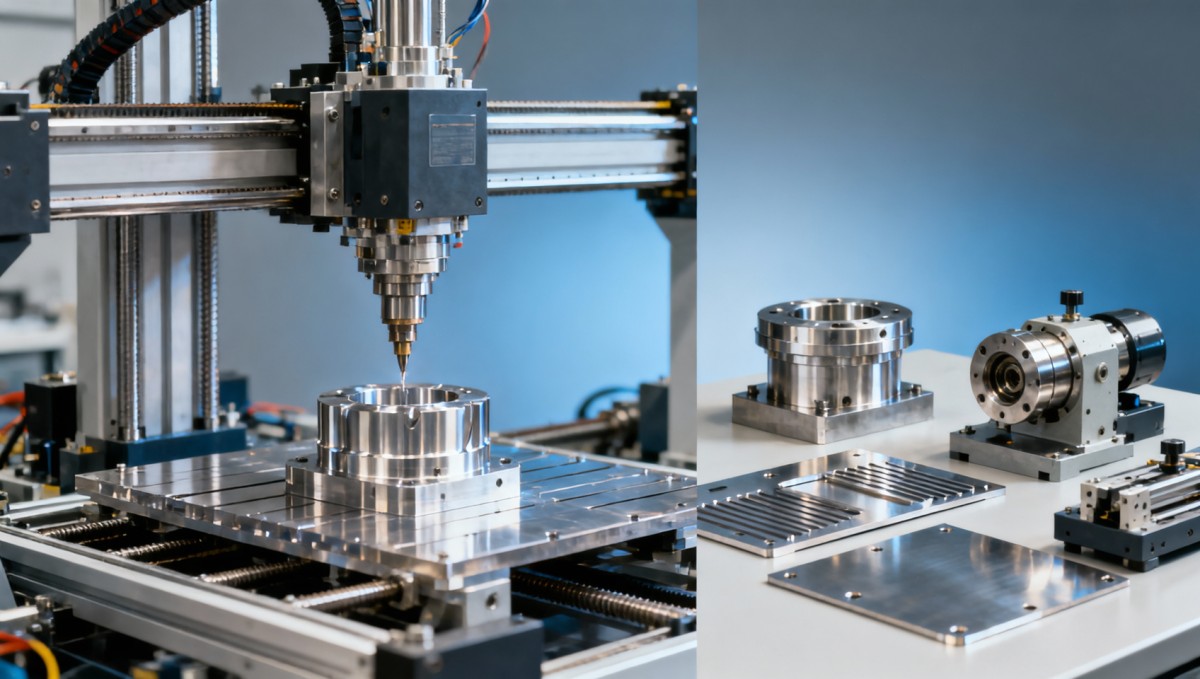
In unregulated or lightly controlled applications, additive manufacturing services are often chosen for speed, part consolidation, lightweighting, and the ability to produce shapes that are difficult or impossible with subtractive methods. In regulated environments, however, every claimed advantage must survive a much stricter test:
- Can the material batch be traced completely?
- Can the machine, build parameters, and post-processing route be locked and reproduced?
- Can inspection methods reliably detect internal and surface defects relevant to the application?
- Can the supplier show stable output across lots, operators, machines, and time?
- Can the documentation satisfy customer, industry, and auditor requirements?
This is where the gap appears. Many additive manufacturing workflows are technically capable, but not always qualification-ready. A printed part may pass functional testing once, yet still fail as a regulated production choice if the service provider cannot control or document the full chain from powder or resin through build, heat treatment, finishing, inspection, packaging, and change management.
For regulated parts, quality is not just a final measurement. It is a controlled system.
Where the biggest compliance gaps usually appear
Teams evaluating industrial 3D printing for regulated components should focus less on headline machine capability and more on the weak points that commonly slow approval.
1. Material traceability is harder than many buyers expect
In machining, sheet metal fabrication, or CNC turning centers, material traceability is usually straightforward: heat numbers, mill certificates, incoming inspection, and defined stock forms. In additive manufacturing, traceability can become more complex because the final part quality depends not only on feedstock certification but also on powder reuse strategy, storage control, contamination risk, moisture exposure, handling discipline, and batch segregation.
That means a supplier may offer certified material, but still struggle to prove that the exact build used compliant feedstock under controlled conditions. In regulated sectors, that distinction matters.
2. Process validation is more complicated than “same machine, same file”
Many buyers assume repeatability comes from using the same CAD model and printer. In reality, build orientation, support strategy, chamber conditions, parameter set, machine calibration status, recoater behavior, thermal history, nesting density, and post-processing steps can all affect the outcome.
For regulated parts, process validation must account for this chain. If one variable changes, the impact may require requalification, partial revalidation, or at minimum documented engineering review. Suppliers that cannot define their process window clearly create compliance risk even when sample parts look acceptable.
3. Inspection may not capture all relevant defects economically
Traditional processes such as micro machining or custom sheet metal fabrication usually produce defect modes that are familiar, visible, and easier to inspect dimensionally. Additive parts can introduce porosity, lack of fusion, anisotropy, internal stress effects, and surface-connected flaws that are more difficult to detect with routine inspection alone.
Computed tomography, metallography, coupon testing, destructive validation, and advanced NDT may be needed. These methods add cost, lead time, and complexity. For low-volume critical parts, that may still be justified. For broader production, it can weaken the business case.
4. Post-processing is often the hidden source of variation
The printed geometry is only part of the manufacturing route. Heat treatment, HIP, support removal, machining, blasting, polishing, passivation, coating, cleaning, and sterilization-related preparation can all influence final compliance. In many real-world failures, the problem is not the print itself but inconsistent downstream handling.
If the additive manufacturing service provider does not control or tightly qualify these post-processes, the part may become difficult to release as a regulated product.
5. Change control can be weaker than in mature conventional supply chains
Regulated production depends on controlled change. A parameter update, software revision, alternate powder supplier, machine replacement, or finishing subcontractor change may all matter. Established machining and laser cutting services often have more mature documentation norms for such changes because their industrial quality systems have been refined over decades. Some additive suppliers are excellent here, but others are still building maturity.
For buyers, the risk is not just nonconformance. It is undocumented change that invalidates prior assumptions.
How additive compares with laser cutting, sheet metal fabrication, micro machining, and CNC turning centers
Decision-makers rarely evaluate additive manufacturing services in isolation. They compare it against proven alternatives that may offer lower compliance friction.
Additive manufacturing services
- Best for complex geometry, part consolidation, lightweight structures, and low-volume customization
- Struggles when documentation burden is high and process variation is not fully controlled
- Often valuable for bridge production, specialized medical or aerospace applications, and design-driven performance gains
Laser cutting services
- Better suited to flat or near-flat geometries with established material and process control
- Often easier to validate dimensionally and operationally
- Less suitable when complex internal geometry is required
Custom sheet metal fabrication
- Strong for enclosures, brackets, housings, and repeatable formed parts
- Typically easier to cost, inspect, and scale under quality-controlled production
- Limited when topology optimization or internal channels create a real performance need
Micro machining
- Preferred for extremely tight tolerances, fine features, and mature process control
- Often easier to justify in regulated applications requiring precision and known surface behavior
- Less efficient for highly organic forms or consolidated assemblies
CNC turning centers
- Well suited to rotational parts, excellent repeatability, and strong traceability practices
- Often favored for regulated cylindrical or precision-machined components
- Less useful where geometric freedom is the main value driver
The practical takeaway is that additive is not automatically the riskier choice, but it usually demands stronger supplier discipline to become the compliant choice.
What quality, safety, and procurement teams should ask before approving a supplier
If your organization is comparing additive manufacturing services for regulated parts, the fastest way to reduce risk is to ask for evidence, not promises. Key questions include:
- What quality management system is in place? Ask beyond certification headlines and review process-level controls.
- How is feedstock tracked, stored, reused, and segregated?
- Are build parameters frozen for production, and how are deviations handled?
- How does the supplier qualify machines, operators, and post-processing routes?
- What inspection methods are standard, and what defects can they realistically detect?
- Can they provide validation records, first article support, and lot-level traceability?
- How is change control documented and communicated?
- Which steps are performed in-house versus outsourced?
- What happens when a build partially fails or a nonconformance is found?
- Have they supported similar regulated applications before?
For financial approvers, these questions also matter because weak controls often turn a supposedly faster process into a more expensive one. Rebuilds, extra testing, qualification delays, and audit-driven rework can erase any initial cost advantage.
When additive manufacturing is still the right choice for regulated parts
Despite its challenges, additive manufacturing services can absolutely be the right answer in regulated markets when the application justifies the effort. Typical high-value scenarios include:
- Parts that need internal channels, lattice structures, or weight reduction not feasible with conventional methods
- Patient-specific or application-specific low-volume components
- Assemblies where part consolidation reduces failure points, inventory burden, or service complexity
- Legacy or spare parts where tooling for traditional methods is uneconomic
- Products where performance gain clearly offsets qualification cost
In these cases, success usually depends on treating additive not as a shortcut, but as a full industrial process requiring design-for-additive rules, validation planning, supplier qualification, and realistic regulatory documentation from the start.
A practical decision framework for regulated part sourcing
For project managers, engineers, and sourcing teams, a simple evaluation framework helps:
- Define the regulatory burden. Is the part safety-critical, patient-contacting, pressure-bearing, electrically sensitive, or audit-exposed?
- Identify the true performance benefit. Does additive deliver measurable value beyond novelty?
- Compare against mature alternatives. Benchmark against laser cutting services, custom sheet metal fabrication, micro machining, and CNC turning centers.
- Assess validation effort. Estimate the cost and time of process qualification, testing, and documentation.
- Audit supplier maturity. Review not only machine capability, but quality culture and change control.
- Pilot before full release. Use phased qualification with representative builds, inspection plans, and post-processing verification.
- Plan for scale and continuity. Confirm what happens if volume grows, a machine goes down, or a material source changes.
This approach helps teams avoid a common mistake: selecting additive because it solves a design problem, while overlooking the compliance system needed to support that design in production.
Conclusion: the real limit is not printing capability, but proof
Where additive manufacturing services struggle in regulated parts is not primarily in making the geometry. The real struggle is proving repeatability, traceability, inspection adequacy, and controlled change in a way that satisfies engineering, quality, procurement, and regulatory expectations at the same time.
For some parts, industrial 3D printing will be the best strategic option and worth every qualification step. For others, conventional methods such as laser cutting services, custom sheet metal fabrication, micro machining, or CNC turning centers will offer a faster path to compliance with lower operational risk. The strongest sourcing decisions come from recognizing this early, asking the right validation questions, and choosing the process that can be defended not just technically, but commercially and regulatorily.
In regulated manufacturing, innovation matters. But documented control matters more.
Get weekly intelligence in your inbox.
No noise. No sponsored content. Pure intelligence.
 Apr 20, 2026China Academy of IMT Releases Digital Passport White Paper for Industrial MaterialsChina Academy of IMT Releases Digital Passport White Paper for Industrial Materials
 Apr 20, 2026Suez Canal AI Speed & Load Limits Effective Apr 19, 2026Suez Canal AI Speed & Load Limits Effective Apr 19, 2026
 Apr 20, 2026IEC 63275:2026 Published for Warehouse Robotics EMC TestingIEC 63275:2026 Published for Warehouse Robotics EMC Testing
 Apr 20, 20262026 Shanghai Fastener Show: 1427 Exhibitors, Robot-Specific Fasteners in Focus2026 Shanghai Fastener Show: 1427 Exhibitors, Robot-Specific Fasteners in Focus
 Apr 20, 2026US BIS Expands EV Infrastructure Export ControlsUS BIS Expands EV Infrastructure Export Controls
 Apr 20, 2026TÜV Rheinland Updates ESS Certification with Propagation Blocking RequirementTÜV Rheinland Updates ESS Certification with Propagation Blocking Requirement
 Apr 20, 2026Shanghai Port Launches Green Clearance Channel for PV InvertersShanghai Port Launches Green Clearance Channel for PV Inverters
 Apr 20, 2026Vietnam Launches Anti-Circumvention Probe on Chinese Electronic ComponentsVietnam Launches Anti-Circumvention Probe on Chinese Electronic Components
 Apr 20, 2026CPSC Urges Recall of China-Made Smart Plugs Over Firmware VulnerabilitiesCPSC Urges Recall of China-Made Smart Plugs Over Firmware Vulnerabilities
 Apr 20, 2026EU AI Act CE Compliance for IoT Devices Takes Effect Apr 18, 2026EU AI Act CE Compliance for IoT Devices Takes Effect Apr 18, 2026
 Apr 19, 20262026 Dongguan Whole-House Customization List Released2026 Dongguan Whole-House Customization List Released
 Apr 19, 2026Global Shipping Alliances Launch Green Slot Priority for Asia-Europe RoutesGlobal Shipping Alliances Launch Green Slot Priority for Asia-Europe Routes
 Apr 19, 2026Vietnam Imposes AD Duties on Chinese Electronic ComponentsVietnam Imposes AD Duties on Chinese Electronic Components
 Apr 19, 2026Dongguan Victor Tops Local Full-Home Customization ListDongguan Victor Tops Local Full-Home Customization List
 Apr 19, 2026Guosheng Zhike Launches High-Precision Mold Machine Project in TaizhouGuosheng Zhike Launches High-Precision Mold Machine Project in Taizhou
 Apr 19, 2026CRRC Changchun Wins Jiaxing Urban Rail EMU ProjectCRRC Changchun Wins Jiaxing Urban Rail EMU Project
 Apr 19, 2026China Releases Green Design Guidelines 2026 for Industrial ProductsChina Releases Green Design Guidelines 2026 for Industrial Products
 Apr 19, 2026CATL Establishes $3B Era Resources Group for Global Mineral ControlCATL Establishes $3B Era Resources Group for Global Mineral Control
 Apr 19, 2026Shanghai Electric Gas Turbine Backlog Extends to 2028Shanghai Electric Gas Turbine Backlog Extends to 2028
 Apr 19, 2026Hormuz Strait Reopens, China Fertilizer Export Quota Easing ExpectedHormuz Strait Reopens, China Fertilizer Export Quota Easing Expected
 Apr 18, 2026TradeNexus Pro Launches Global Compliance RadarTradeNexus Pro Launches Global Compliance Radar
 Apr 18, 2026JIS T 2304:2026 Takes Effect June 1, 2026 for IVD SoftwareJIS T 2304:2026 Takes Effect June 1, 2026 for IVD Software
 Pathway for Rehab Devices with AI Modules") Apr 18, 2026FDA Updates 510(k) Pathway for Rehab Devices with AI ModulesFDA Updates 510(k) Pathway for Rehab Devices with AI Modules
Apr 18, 2026FDA Updates 510(k) Pathway for Rehab Devices with AI ModulesFDA Updates 510(k) Pathway for Rehab Devices with AI Modules Apr 18, 2026India BIS Approves 3 Chinese IoT Labs for IS 16444:2026 CertificationIndia BIS Approves 3 Chinese IoT Labs for IS 16444:2026 Certification
 Apr 18, 2026THE Alliance Launches Green Slot Priority for China PortsTHE Alliance Launches Green Slot Priority for China Ports
 Apr 18, 2026TÜV Rheinland Releases Dual-Standard ESS Certification Guide for ChinaTÜV Rheinland Releases Dual-Standard ESS Certification Guide for China
 Apr 18, 2026Vietnam Imposes AD Duties on Chinese Electronic ComponentsVietnam Imposes AD Duties on Chinese Electronic Components