How to tell when sortation systems are sized too small
When sortation systems are sized too small, the problem rarely starts with a dramatic shutdown. It usually shows up earlier in more expensive ways: rising mis-sorts, growing labor intervention, missed throughput targets, congestion at merge points, and increasing friction with surrounding automation such as reverse logistics software and automated guided carts. For buyers, engineers, operations leaders, and financial approvers, the key question is not simply whether a system is “busy,” but whether it is structurally undersized for current and future demand. In most facilities, the answer becomes clear when demand variability, SKU complexity, peak-hour accumulation, and manual exception handling begin to outpace the system’s designed capacity.
An undersized sortation system does more than slow parcels or cartons. It can reduce order accuracy, inflate cost per unit handled, weaken service-level performance, and shorten the practical useful life of upstream and downstream automation investments. The right assessment therefore combines operational symptoms, measurable capacity indicators, and business impact. This article explains how to identify the warning signs early, what metrics matter most, and how decision-makers can distinguish a temporary imbalance from a true design shortfall.
What are the earliest signs that a sortation system is too small?
The clearest early warning sign is persistent performance stress during normal peaks, not only during extreme seasonal surges. If a system routinely falls behind during expected volume windows, that often indicates inadequate sortation capacity rather than poor day-to-day execution.
Common symptoms include:
- Throughput ceilings appearing too early in the shift: the sorter reaches its practical limit well before the highest inbound wave is complete.
- Growing recirculation or re-handling: cartons, totes, or parcels make extra passes because discharge points cannot clear fast enough.
- Frequent manual intervention: staff are regularly added to clear jams, scan exceptions, re-sort products, or support overflow lanes.
- Higher mis-sort rates: not necessarily because of control logic failure, but because congestion and rushed handling increase operational error.
- Lane saturation at specific destinations: some chutes, spurs, or palletizing points back up long before the rest of the system.
- Upstream starvation and downstream blocking: induction points pause because the sorter is full, while packing, dispatch, or returns areas become unevenly loaded.
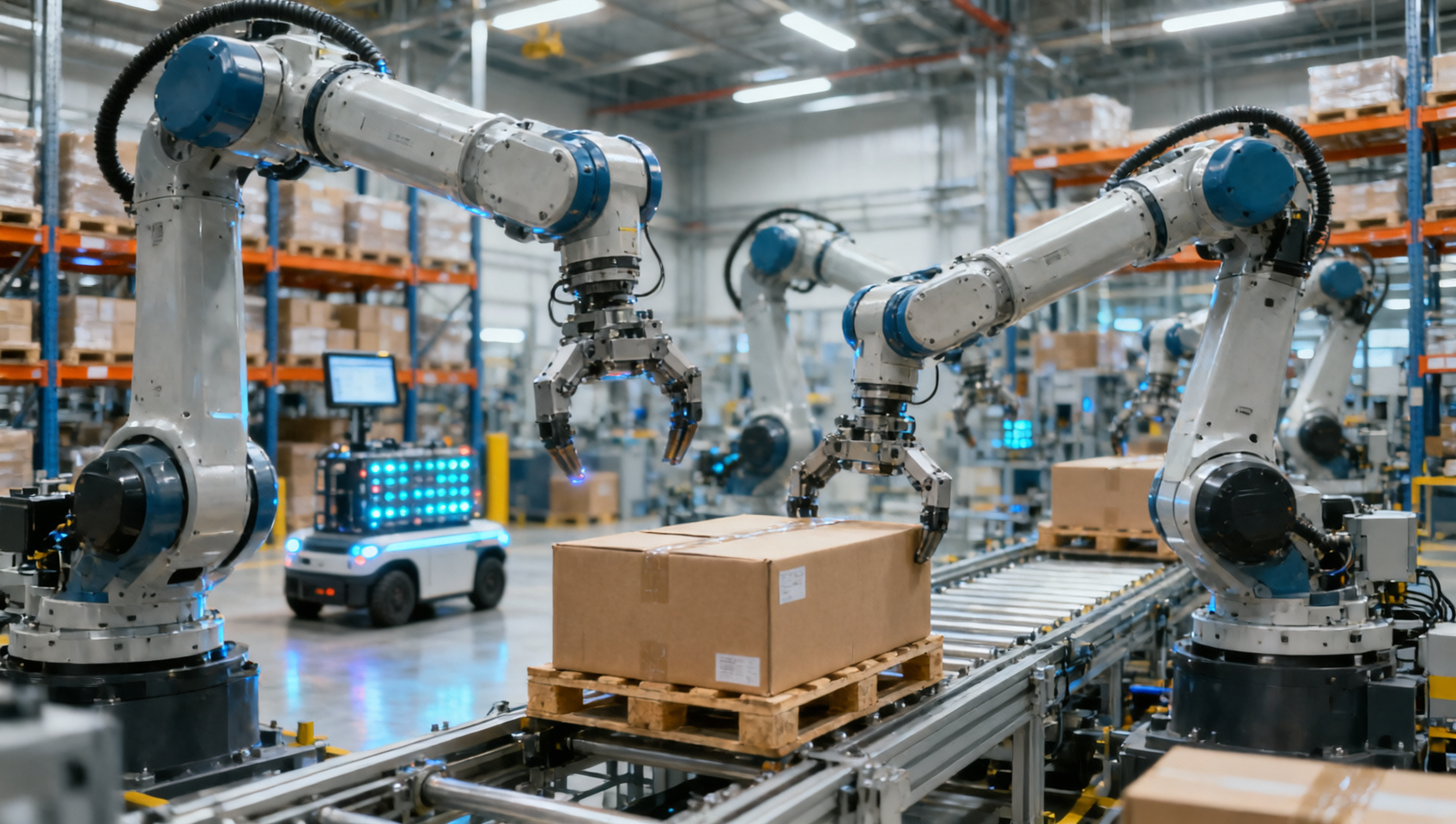
- Automation conflicts: AGCs, AMRs, conveyor merges, print-and-apply stations, or reverse logistics workflows spend more time waiting for sorter availability.
In practice, a sortation system sized too small rarely fails uniformly. It creates localized stress first. A facility may still meet daily volume by extending labor hours or slowing other processes, but that is already a warning that the system is buying output with inefficiency.
How can you tell the difference between a temporary bottleneck and a true sizing problem?
Not every bottleneck means the sorter was undersized. Some issues come from poor slotting, uneven release timing, weak controls tuning, packaging inconsistency, or staffing gaps. The difference is pattern consistency.
A temporary bottleneck usually has one or more of these characteristics:
- It is linked to a specific operational event, such as a promotion, inbound delay, or labor shortage.
- It disappears after process balancing or controls adjustments.
- It occurs in one isolated zone rather than across the system.
- The sorter still has measurable spare capacity outside that event.
A true sizing problem is more structural. It tends to show up when:
- Average peak demand approaches practical capacity too often.
- Buffering and manual recovery become part of the standard operating model.
- Volume growth, SKU proliferation, and order profile complexity keep increasing while cycle times deteriorate.
- Operational fixes improve symptoms briefly but do not restore stable headroom.
For procurement and project stakeholders, this distinction matters. If the problem is process-related, replacing the sorter may be premature. If the issue is design-related, delaying action can waste capital by forcing labor-heavy workarounds while surrounding systems continue to scale around a weak core.
Which metrics actually prove a sorter is undersized?
Decision-makers should avoid relying on nameplate capacity alone. Vendors often quote idealized rates based on standard product mix, perfect induction, and minimal exceptions. Real-world capacity is lower and should be evaluated against the facility’s actual operating profile.
The most useful indicators include:
- Peak-hour utilization: if the system regularly operates near its practical ceiling for extended periods, resilience is low.
- Sustained throughput vs. designed throughput: compare actual sustained rates, not short bursts.
- Queue length and dwell time: rising accumulation before induction or at discharge points shows downstream inability to absorb flow.
- Recirculation rate: repeated passes indicate destination congestion or insufficient discharge timing.
- Exception rate: manual scans, no-reads, irregular dimensions, damaged labels, and rejected items consume hidden capacity.
- Labor hours per 1,000 units: if labor climbs as volume rises, automation may be losing scale efficiency.
- Service-level attainment: missed cut-off times, delayed waves, and late dispatch are business-facing proof of insufficient capacity.
- System recovery time: after a disruption or peak burst, an adequately sized system should recover within a predictable window.
A practical rule is this: if the sorter cannot process normal peak volume with enough margin to handle product variation, exception handling, and moderate future growth, it is likely too small even if daily totals still appear acceptable.
Why do undersized sortation systems become more expensive over time?
Many facilities tolerate undersized sortation systems because they still “work.” But the hidden cost structure becomes worse as demand grows.
Typical cost impacts include:
- Higher labor dependency: more operators are needed for induction support, exception handling, and overflow management.
- Lower order accuracy: congestion and rushed handling can raise rework, claims, and customer dissatisfaction.
- Reduced ROI on adjacent automation: conveyors, warehouse software, robotic picking, AGVs, and returns management tools cannot deliver full value if the sorter constrains flow.
- Increased maintenance pressure: systems near capacity for long periods often experience faster wear and more frequent stoppages.
- Expansion complexity: retrofitting a too-small sorter into a mature operation is often more disruptive and costly than sizing correctly earlier.
For finance and executive stakeholders, the issue is not only equipment performance. It is total operating economics. A sorter that looked affordable during procurement can become costly if it drives recurring labor, service penalties, and constrained revenue capacity.
What operational conditions most often cause a system to be sized too small?
Undersizing usually comes from planning assumptions that are too narrow. The most common causes include:
- Using average daily volume instead of peak-hour volume
- Ignoring SKU and order-line complexity
- Underestimating future channel growth, especially e-commerce or omnichannel variability
- Assuming ideal carton quality, barcode readability, and product dimensions
- Overlooking reverse logistics and returns sorting loads
- Failing to model merge logic, destination imbalance, and carrier cut-off timing
- Not accounting for integration delays with WMS, WCS, AGCs, AMRs, or print systems
In B2B and industrial environments, one additional risk is mixed flow. Facilities often handle a combination of standard cartons, irregular items, replenishment units, returns, and special handling orders. A sorter that performs well under clean test conditions may prove insufficient when these mixed operational realities are introduced.
How should buyers and engineers evaluate sortation capacity before approving upgrades or replacement?
A solid evaluation should move beyond vendor brochures and focus on operational fit. The best approach combines engineering analysis with business-case review.
Key steps include:
- Map current and future flow profiles. Assess inbound waves, outbound cut-offs, destination mix, returns volume, and exception rates.
- Measure practical peak demand. Use 15-minute and hourly intervals, not only daily totals.
- Identify the true constraint point. The sorter may be the bottleneck, but induction, lane takeaway, scanning, or software orchestration may also limit output.
- Model realistic growth scenarios. Include product mix changes, customer growth, seasonal peaks, and service-level commitments.
- Calculate total cost of ownership. Include labor, downtime, maintenance, retrofits, floor-space impact, and service-risk costs.
- Assess integration readiness. Ensure the upgraded solution can coordinate with reverse logistics software, warehouse control systems, and guided cart or mobile automation flows.
- Validate headroom. The right system should provide enough buffer for growth and variability, not only today’s average performance.
For procurement leaders, the most useful vendor discussions are evidence-based: what throughput is sustainable with your item profile, what recovery time is expected after disruption, what exception load is assumed, and what expansion path exists if demand rises faster than forecast.
When is it time to expand, retrofit, or replace the system?
The answer depends on whether the shortfall is localized or systemic.
Expand or optimize if the sorter is fundamentally adequate but limited by induction design, takeaway capacity, software logic, divert configuration, or lane balancing. In these cases, controls updates, recirculation reduction, better destination planning, or added discharge capacity may restore acceptable headroom.
Retrofit if the core sorter remains viable but demand growth requires targeted improvements, such as additional destinations, better scanning, improved singulation, or stronger integration with upstream and downstream automation.
Replace when the system’s base architecture cannot support required throughput, product diversity, redundancy, or growth economics. Replacement is often justified when labor dependence keeps rising, service levels remain exposed, and incremental fixes no longer produce durable gains.
A useful threshold for executive teams is this: if maintaining service levels requires ongoing labor additions, repeated workaround spending, and operational concessions that will continue into future growth cycles, the facility is likely past optimization and into redesign territory.
Final assessment: what should decision-makers remember?
A sortation system is sized too small when it can no longer handle real operating peaks with enough margin for variability, exceptions, and growth. The warning signs are usually visible before a major breakdown: recurring congestion, manual recovery, mis-sorts, unstable throughput, and friction across connected automation systems. For technical evaluators and enterprise buyers, the right decision comes from looking beyond headline speed and focusing on practical capacity, recovery ability, labor impact, and long-term scalability.
In other words, the question is not whether the sorter still runs. It is whether it still supports the business model efficiently, accurately, and with room to grow. If the answer is increasingly no, the system is not just busy—it is undersized.
Get weekly intelligence in your inbox.
No noise. No sponsored content. Pure intelligence.
 Apr 25, 2026Vietnam Enforces CN-EN Bilingual Safety Labels on Electronic Components from Apr 22, 2026Vietnam Enforces CN-EN Bilingual Safety Labels on Electronic Components from Apr 22, 2026
 Apr 25, 2026ANATEL Mandates Portuguese Offline Voice Assistants for Smart Home Devices in BrazilANATEL Mandates Portuguese Offline Voice Assistants for Smart Home Devices in Brazil
 Apr 25, 2026India BIS Mandates IS 13252:2025 for PLCs & HMIs by Oct 2026India BIS Mandates IS 13252:2025 for PLCs & HMIs by Oct 2026
 Apr 25, 2026SASO EV Charger Rules: Grid Compatibility & Sand Resistance RequiredSASO EV Charger Rules: Grid Compatibility & Sand Resistance Required
 Apr 25, 2026JIS T 0011:2026 Enforces IEC 62366-1:2024 for Rehab Devices in JapanJIS T 0011:2026 Enforces IEC 62366-1:2024 for Rehab Devices in Japan
 Apr 25, 2026THE Alliance Cuts Ningbo–Rotterdam Transit to 18 Days, +35% Spot RateTHE Alliance Cuts Ningbo–Rotterdam Transit to 18 Days, +35% Spot Rate
 Apr 25, 2026TÜV Rheinland Updates IoT EMC Standard: AI Edge Module Immunity Now MandatoryTÜV Rheinland Updates IoT EMC Standard: AI Edge Module Immunity Now Mandatory
 Apr 25, 2026USTR Launches Five-Year China Solar PV AD/CVD ReviewUSTR Launches Five-Year China Solar PV AD/CVD Review
 Apr 25, 2026EU New Battery Regulation Enters Force Apr 24, 2026EU New Battery Regulation Enters Force Apr 24, 2026
 Apr 25, 2026China Customs Launches RCEP Origin Smart Pre-Review for ASEAN机电 ExportsChina Customs Launches RCEP Origin Smart Pre-Review for ASEAN机电 Exports
 Apr 24, 2026India BIS Mandates IS 13252:2025 for PLCs & HMIs by Oct 2026India BIS Mandates IS 13252:2025 for PLCs & HMIs by Oct 2026
 Apr 24, 2026SASO EV Charger Regulation: Sand-Resistant Grid Compatibility Testing RequiredSASO EV Charger Regulation: Sand-Resistant Grid Compatibility Testing Required
 Apr 24, 2026Japan Updates JIS for Rehab Devices: IEC 62366-1:2024 Usability Compliance RequiredJapan Updates JIS for Rehab Devices: IEC 62366-1:2024 Usability Compliance Required
 Apr 24, 2026China Customs Launches RCEP Origin Smart Pre-Review SystemChina Customs Launches RCEP Origin Smart Pre-Review System
 Apr 24, 2026ANATEL Mandates Localized Voice Assistants for Smart Home Devices in BrazilANATEL Mandates Localized Voice Assistants for Smart Home Devices in Brazil
 Apr 24, 2026TÜV Rheinland Updates IoT EMC Standard with AI Edge抗扰度 RequirementTÜV Rheinland Updates IoT EMC Standard with AI Edge抗扰度 Requirement
 Apr 24, 20262M Alliance Shortens Ningbo–Rotterdam Route to 18 Days Amid 35% Slot Premium2M Alliance Shortens Ningbo–Rotterdam Route to 18 Days Amid 35% Slot Premium
 Apr 24, 2026Vietnam Enforces Bilingual Safety Labels for Imported Electronic Components from Apr 22, 2026Vietnam Enforces Bilingual Safety Labels for Imported Electronic Components from Apr 22, 2026
 Apr 24, 2026USTR Launches Sunset Review on China Solar PV AD/CVD DutiesUSTR Launches Sunset Review on China Solar PV AD/CVD Duties
 Apr 24, 2026EU New Battery Regulation Fully Effective Apr 24, 2026EU New Battery Regulation Fully Effective Apr 24, 2026
 Apr 23, 2026Taobao Factory Spark 3.0 Launches AI Workbench for SME Export FactoriesTaobao Factory Spark 3.0 Launches AI Workbench for SME Export Factories
 Apr 23, 2026TENENG Group Inspects IoT Safety Compliance at Jiangnan ChemicalTENENG Group Inspects IoT Safety Compliance at Jiangnan Chemical
 Apr 23, 2026China Launches First Embodied AI Open Data CommunityChina Launches First Embodied AI Open Data Community
 Apr 23, 2026PV Glass Prices Flat for 9 Weeks Amid Rising Integrated ProcurementPV Glass Prices Flat for 9 Weeks Amid Rising Integrated Procurement
 Apr 23, 20262984 NQI One-Stop Platforms Launched Nationwide2984 NQI One-Stop Platforms Launched Nationwide
 Apr 23, 2026China’s Green Smart Ship Tech Norms Accelerate BMS & Shore Power ExportChina’s Green Smart Ship Tech Norms Accelerate BMS & Shore Power Export
 Apr 23, 2026China Builds World's Largest Agri-Meteorological IoT NetworkChina Builds World's Largest Agri-Meteorological IoT Network