Reverse logistics software that reduces returns without slowing refunds
Reverse logistics software only creates value if it solves a difficult tradeoff: reducing avoidable returns without making refunds slower, riskier, or more expensive to manage. For enterprise buyers, the best platforms do not treat returns as a back-office afterthought. They connect return policy controls, product intelligence, warehouse workflows, sortation systems, handheld RFID readers, and refund automation into one decision layer. The result is lower return volume, faster disposition, better fraud control, and a customer experience that protects revenue instead of draining it.
What decision-makers should look for first in reverse logistics software
Most enterprise teams searching for reverse logistics software are not looking for a basic returns portal. They want to know whether a platform can reduce return rates, keep refund SLAs intact, and fit into existing supply chain operations without creating more manual work.
That means the first evaluation question is not “Does it process returns?” It is “How does it prevent unnecessary returns while accelerating valid ones?”
The strongest platforms usually deliver value in five areas:
- Return reduction: They identify patterns behind avoidable returns such as wrong item selection, duplicate shipments, damaged goods, poor product content, or channel-specific quality issues.
- Fast refund orchestration: They support rules-based refund approvals, inspection thresholds, and early refund logic for low-risk cases.
- Operational visibility: They track items from customer initiation to receipt, inspection, disposition, and final financial reconciliation.
- Warehouse and automation integration: They connect with WMS, ERP, sortation systems, automated guided carts, barcode infrastructure, and RFID workflows.
- Policy and fraud control: They distinguish between legitimate returns, abuse patterns, warranty cases, and resale recovery opportunities.
For procurement leaders and finance approvers, this is the practical lens: reverse logistics software should reduce cost-to-serve per return while preserving customer trust. If it only improves portal aesthetics but leaves inspection bottlenecks, disconnected refund approvals, and poor root-cause data untouched, its business impact will be limited.
How reverse logistics software reduces returns without slowing refunds
The phrase sounds contradictory at first. Reducing returns often suggests tighter controls, while fast refunds suggest looser ones. In reality, modern platforms achieve both by making return decisions more precise.
Here is how that works in practice:
- Pre-return intelligence: The system asks structured questions before approving a return. If a customer selected the wrong SKU, the workflow may recommend replacement, setup guidance, spare parts, or technical support instead of a full return.
- Rules-based routing: Not every item should come back to the same location. Software can route products to regional hubs, repair centers, liquidation partners, quarantine zones, or vendor return channels based on value, defect type, and compliance requirements.
- Risk-tiered refund logic: Low-risk returns can be refunded quickly, even before full inspection in some cases. High-risk or high-value items can require validation steps without slowing the entire operation.
- Root-cause analytics: If return spikes are linked to a supplier lot, packaging failure, listing error, or distributor handling issue, the software surfaces the pattern so teams can fix the problem upstream.
- Automated communication: Customers, channel partners, and internal teams receive status updates automatically, reducing inquiry volume and manual intervention.
This matters particularly in B2B and cross-border operations, where returns can involve serialized products, regulated items, warranty validation, or multiple handoff points. Fast refunds do not come from skipping controls. They come from applying the right controls only where needed.
Why integration with sortation, RFID, and material-handling workflows matters
For companies operating complex warehouses or multi-node distribution networks, reverse logistics software cannot be evaluated in isolation. Its value depends heavily on how well it connects to physical operations.
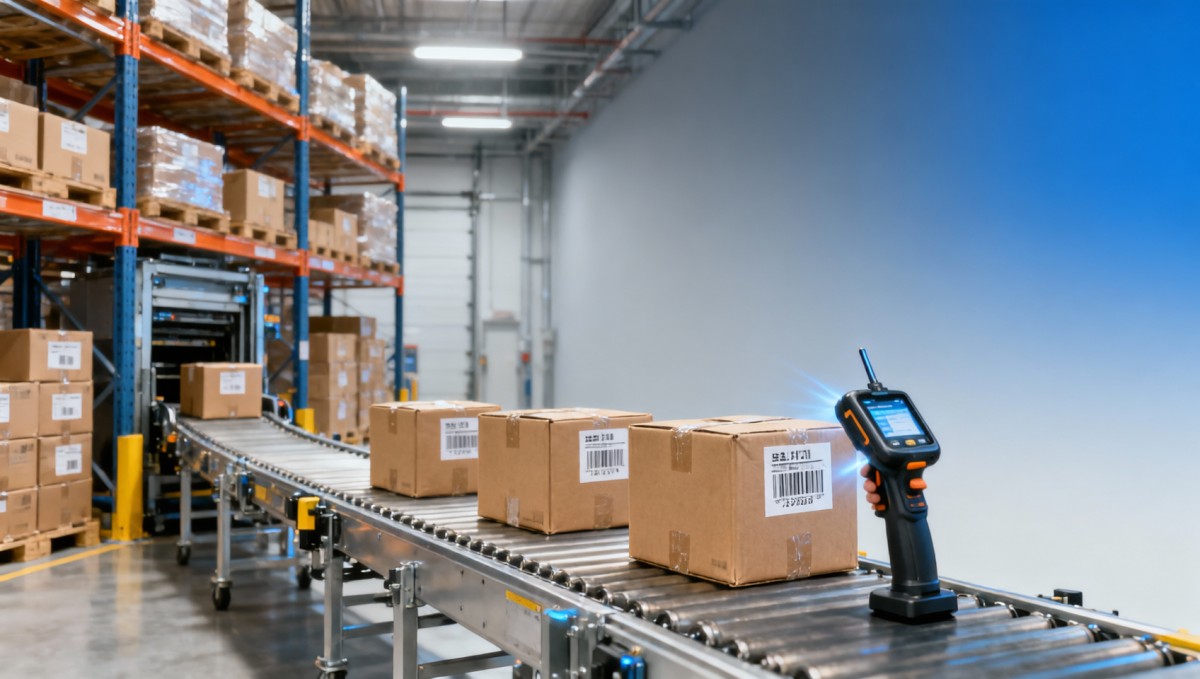
If your return flow involves sortation systems, automated guided carts, handheld RFID readers, or other warehouse automation tools, integration quality becomes a major ROI factor.
Key integration priorities include:
- Sortation system connectivity: Returned items should be automatically directed to the correct lane for inspection, restocking, repair, quarantine, or liquidation.
- RFID and barcode support: Faster identification reduces scan errors, shortens receiving time, and improves chain-of-custody accuracy for serialized or regulated goods.
- ERP and finance synchronization: Refunds, credits, inventory status, vendor claims, and write-offs must reconcile cleanly across systems.
- WMS and TMS integration: Teams need a single view of inbound return movement, dock scheduling, inventory availability, and final disposition.
- Quality and compliance data exchange: Inspection results, defect codes, safety incidents, and nonconformance records should feed quality systems in near real time.
Without these connections, software may still digitize the front end of returns but leave warehouses dependent on spreadsheets, manual scans, and disconnected refund approvals. That often creates the very slowdown buyers want to avoid.
Which business metrics actually prove the software is working
Enterprise decision-makers need clearer success measures than “better customer experience.” A reverse logistics platform should be judged on operational and financial outcomes that can be tracked before and after implementation.
The most useful metrics include:
- Return rate by product, supplier, channel, and region
- Refund cycle time
- Cost per return processed
- Percentage of returns restocked, repaired, resold, or liquidated
- No-fault-found rate
- Warranty claim accuracy
- Return fraud or abuse detection rate
- Inventory recovery value
- Manual touches per return
- Customer or partner dispute volume related to returns and refunds
For finance stakeholders, the most convincing signal is usually a combination of lower processing cost, faster credit issuance, and higher asset recovery. For operations teams, the priorities are less congestion, fewer exceptions, and better disposition accuracy. For commercial teams, the win is reduced churn from poor post-sale service.
Questions procurement and project teams should ask vendors before buying
A platform may appear strong in demos yet struggle in live environments. Buyers should push beyond feature checklists and test whether the vendor understands operational complexity.
Useful evaluation questions include:
- How does the system reduce avoidable returns at the point of initiation?
- Can refund workflows be tiered by customer type, item value, defect code, or fraud risk?
- How does the software integrate with our ERP, WMS, CRM, sortation equipment, and scanning infrastructure?
- Can it support serialized products, warranty claims, lot traceability, and regulated categories?
- What analytics are available for root-cause detection by supplier, factory, packaging format, or sales channel?
- How are inspection rules configured, and can they be changed without heavy custom development?
- What is the implementation model across regions, warehouses, or business units?
- What measurable results have similar enterprise customers achieved?
- How does the platform handle returnless refunds, exchanges, repairs, and secondary-market recovery?
- What controls exist for return fraud, duplicate claims, and policy abuse?
These questions help technical evaluators, procurement teams, and project leaders separate workflow software from true reverse logistics decision infrastructure.
Where reverse logistics software creates the most value across sectors
Because TradeNexus Pro serves multiple strategic industries, it is important to recognize that reverse logistics value drivers vary by sector.
- Advanced Manufacturing: Returns often involve parts validation, warranty claims, field failure analysis, and supplier accountability. Software should support serialized tracking and defect categorization.
- Green Energy: Components may require compliance documentation, safe handling, refurbishment, or special routing for high-value assets such as batteries and control modules.
- Smart Electronics: Fast refunds matter, but so do testing workflows, no-fault-found reduction, accessory completeness checks, and resale recovery.
- Healthcare Technology: Quality controls, traceability, quarantine logic, and regulatory documentation are critical. Refund speed cannot compromise compliance integrity.
- Supply Chain SaaS environments: Buyers often seek orchestration layers that unify multiple sites, carriers, 3PLs, and partner workflows with stronger analytics and automation.
Across all sectors, the same principle holds: the right reverse logistics software does not simply move returns faster. It helps enterprises make better decisions about whether an item should be returned, where it should go, how quickly it should be refunded, and how the underlying cause can be prevented.
Final takeaway: the best platforms balance customer speed with operational control
Reverse logistics software that reduces returns without slowing refunds is not a niche convenience tool. It is a strategic layer for protecting margin, preserving customer confidence, and improving supply chain intelligence.
For enterprise buyers, the smartest approach is to evaluate platforms against three outcomes: fewer avoidable returns, faster low-friction refunds, and stronger operational control from initiation to final disposition. If a vendor can support those outcomes while integrating with warehouse automation, RFID-enabled tracking, and enterprise systems, the software can deliver measurable value far beyond the returns desk.
In a market where post-sale experience increasingly shapes brand trust and profitability, reverse logistics is no longer just about handling what comes back. It is about preventing unnecessary returns, accelerating the right refunds, and turning every return event into better business intelligence.
Get weekly intelligence in your inbox.
No noise. No sponsored content. Pure intelligence.
 Apr 25, 2026Vietnam Enforces CN-EN Bilingual Safety Labels on Electronic Components from Apr 22, 2026Vietnam Enforces CN-EN Bilingual Safety Labels on Electronic Components from Apr 22, 2026
 Apr 25, 2026ANATEL Mandates Portuguese Offline Voice Assistants for Smart Home Devices in BrazilANATEL Mandates Portuguese Offline Voice Assistants for Smart Home Devices in Brazil
 Apr 25, 2026India BIS Mandates IS 13252:2025 for PLCs & HMIs by Oct 2026India BIS Mandates IS 13252:2025 for PLCs & HMIs by Oct 2026
 Apr 25, 2026SASO EV Charger Rules: Grid Compatibility & Sand Resistance RequiredSASO EV Charger Rules: Grid Compatibility & Sand Resistance Required
 Apr 25, 2026JIS T 0011:2026 Enforces IEC 62366-1:2024 for Rehab Devices in JapanJIS T 0011:2026 Enforces IEC 62366-1:2024 for Rehab Devices in Japan
 Apr 25, 2026THE Alliance Cuts Ningbo–Rotterdam Transit to 18 Days, +35% Spot RateTHE Alliance Cuts Ningbo–Rotterdam Transit to 18 Days, +35% Spot Rate
 Apr 25, 2026TÜV Rheinland Updates IoT EMC Standard: AI Edge Module Immunity Now MandatoryTÜV Rheinland Updates IoT EMC Standard: AI Edge Module Immunity Now Mandatory
 Apr 25, 2026USTR Launches Five-Year China Solar PV AD/CVD ReviewUSTR Launches Five-Year China Solar PV AD/CVD Review
 Apr 25, 2026EU New Battery Regulation Enters Force Apr 24, 2026EU New Battery Regulation Enters Force Apr 24, 2026
 Apr 25, 2026China Customs Launches RCEP Origin Smart Pre-Review for ASEAN机电 ExportsChina Customs Launches RCEP Origin Smart Pre-Review for ASEAN机电 Exports
 Apr 24, 2026India BIS Mandates IS 13252:2025 for PLCs & HMIs by Oct 2026India BIS Mandates IS 13252:2025 for PLCs & HMIs by Oct 2026
 Apr 24, 2026SASO EV Charger Regulation: Sand-Resistant Grid Compatibility Testing RequiredSASO EV Charger Regulation: Sand-Resistant Grid Compatibility Testing Required
 Apr 24, 2026Japan Updates JIS for Rehab Devices: IEC 62366-1:2024 Usability Compliance RequiredJapan Updates JIS for Rehab Devices: IEC 62366-1:2024 Usability Compliance Required
 Apr 24, 2026China Customs Launches RCEP Origin Smart Pre-Review SystemChina Customs Launches RCEP Origin Smart Pre-Review System
 Apr 24, 2026ANATEL Mandates Localized Voice Assistants for Smart Home Devices in BrazilANATEL Mandates Localized Voice Assistants for Smart Home Devices in Brazil
 Apr 24, 2026TÜV Rheinland Updates IoT EMC Standard with AI Edge抗扰度 RequirementTÜV Rheinland Updates IoT EMC Standard with AI Edge抗扰度 Requirement
 Apr 24, 20262M Alliance Shortens Ningbo–Rotterdam Route to 18 Days Amid 35% Slot Premium2M Alliance Shortens Ningbo–Rotterdam Route to 18 Days Amid 35% Slot Premium
 Apr 24, 2026Vietnam Enforces Bilingual Safety Labels for Imported Electronic Components from Apr 22, 2026Vietnam Enforces Bilingual Safety Labels for Imported Electronic Components from Apr 22, 2026
 Apr 24, 2026USTR Launches Sunset Review on China Solar PV AD/CVD DutiesUSTR Launches Sunset Review on China Solar PV AD/CVD Duties
 Apr 24, 2026EU New Battery Regulation Fully Effective Apr 24, 2026EU New Battery Regulation Fully Effective Apr 24, 2026
 Apr 23, 2026Taobao Factory Spark 3.0 Launches AI Workbench for SME Export FactoriesTaobao Factory Spark 3.0 Launches AI Workbench for SME Export Factories
 Apr 23, 2026TENENG Group Inspects IoT Safety Compliance at Jiangnan ChemicalTENENG Group Inspects IoT Safety Compliance at Jiangnan Chemical
 Apr 23, 2026China Launches First Embodied AI Open Data CommunityChina Launches First Embodied AI Open Data Community
 Apr 23, 2026PV Glass Prices Flat for 9 Weeks Amid Rising Integrated ProcurementPV Glass Prices Flat for 9 Weeks Amid Rising Integrated Procurement
 Apr 23, 20262984 NQI One-Stop Platforms Launched Nationwide2984 NQI One-Stop Platforms Launched Nationwide
 Apr 23, 2026China’s Green Smart Ship Tech Norms Accelerate BMS & Shore Power ExportChina’s Green Smart Ship Tech Norms Accelerate BMS & Shore Power Export
 Apr 23, 2026China Builds World's Largest Agri-Meteorological IoT NetworkChina Builds World's Largest Agri-Meteorological IoT Network