Why reverse logistics software projects fail after launch
Many reverse logistics software initiatives fail not because the platform is weak, but because post-launch adoption, process alignment, and data discipline break down under real operational pressure. For procurement leaders, project managers, and enterprise decision-makers evaluating reverse logistics software alongside sortation systems, automated guided carts, and handheld RFID readers, understanding these failure points is essential to protecting ROI, compliance, and long-term supply chain performance.
Why post-launch reverse logistics software failure is so common in multi-site operations
In many organizations, the reverse logistics software selection phase is handled carefully, but the launch phase is treated as a finish line instead of a controlled transition. That gap creates predictable failure. Within the first 30–90 days, return authorization workflows, inspection routing, inventory disposition rules, and refund triggers are exposed to real exceptions that were not fully modeled during procurement or pilot testing.
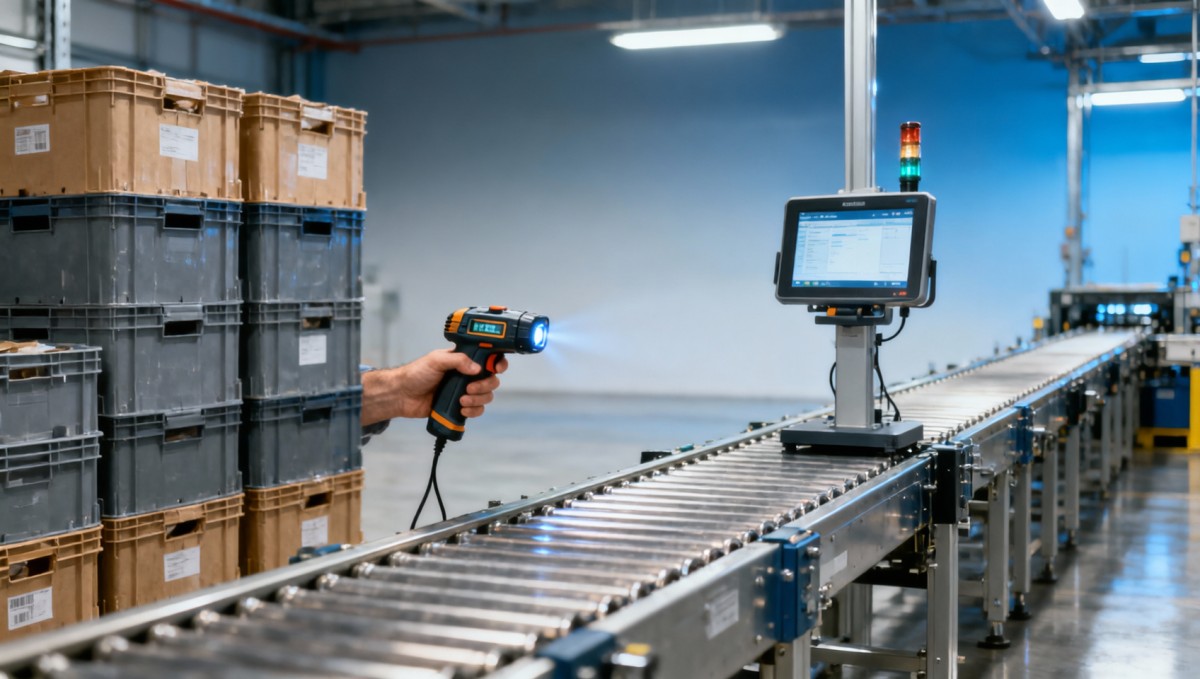
This is especially true in complex supply chains where reverse logistics software must coordinate with warehouse management systems, ERP platforms, transport booking tools, handheld RFID readers, and sortation equipment. A platform can appear technically sound in a demo environment, yet fail after launch when operators face mixed product conditions, incomplete labels, delayed scans, or inconsistent reason codes across 3–5 sites.
For technical evaluators and project leaders, the key point is simple: software failure after launch is usually not a single defect. It is a systems problem. It often combines weak process ownership, unclear exception handling, poor master data governance, and insufficient user adoption in receiving, quality, finance, and customer service teams.
For procurement teams and financial approvers, this means the business case should not be limited to license cost and implementation cost. It should include the first 2–4 quarters of stabilization risk, integration maintenance effort, training intensity, and the operational cost of workarounds when the reverse flow does not match actual warehouse behavior.
Where breakdown typically starts
Most failed projects show early warning signs in four areas. These are rarely isolated. In practice, one weak area usually amplifies the others and causes delayed cycle times, rising manual touches, and disputed inventory status.
- Process mismatch: the configured workflow assumes a clean return path, but actual returns arrive damaged, partially documented, mixed-SKU, or without original order references.
- User adoption failure: operators bypass scanning, quality teams use offline spreadsheets, and finance teams do not trust the disposition status generated by the system.
- Data discipline weakness: reason codes, serial numbers, lot identifiers, and inspection outcomes are entered inconsistently, reducing traceability within weeks.
- Integration fragility: API links to ERP, WMS, carrier portals, or refund systems are technically live but not resilient enough for peak return periods or edge cases.
In sectors covered by TradeNexus Pro, these issues matter even more because returned goods may involve serialized electronics, regulated healthcare components, energy equipment subassemblies, or high-value industrial parts. Reverse logistics software must support detailed disposition logic, not just basic return authorization.
What actually causes reverse logistics software projects to fail after go-live
The most common mistake is assuming that successful implementation equals operational readiness. In reality, go-live only proves that the system can run. It does not prove that warehouse teams, quality teams, finance approvers, and channel partners can use the reverse logistics software consistently under daily load, across multiple return categories and service-level commitments.
A second cause is poor exception design. Returns rarely follow one clean route. Some products are repairable, some are restockable, some require quarantine, and some require vendor debit workflows. If the system only supports 2–3 standard paths but the business actually operates 6–8 common exception types, staff will create manual bypasses within the first month.
A third cause is misaligned ownership. Reverse logistics touches procurement, warehouse operations, quality control, aftermarket service, customer support, and finance. When no function owns the end-to-end return journey, each department optimizes its own step while cycle time, recovery value, and auditability deteriorate across the full process.
The fourth cause is weak KPI design. Many teams track only return volume and processing speed. That is not enough. Reverse logistics software should also be measured against data completeness, first-pass inspection accuracy, disposition lead time, credit-note lag, and closed-loop traceability across at least 5–7 control points.
Failure patterns by operational layer
The table below helps procurement and project stakeholders separate software defects from implementation and governance weaknesses. That distinction is critical during vendor review, SLA negotiation, and post-launch root-cause analysis.
A useful reading of this table is that many so-called software failures are actually design failures at the process and governance level. That is why enterprise buyers should evaluate reverse logistics software as part of an operational ecosystem, not as a standalone application.
Three warning indicators in the first 8 weeks
- More than one unofficial spreadsheet or email-based approval path appears after go-live.
- Return cycle time improves in one department but worsens across the end-to-end chain.
- Teams debate whether the system data is correct, which means governance trust has already weakened.
When those signs appear, the best response is not immediate replatforming. It is a controlled operational review of workflow logic, scan compliance, data ownership, and user role design over a 2–6 week remediation window.
How buyers should evaluate reverse logistics software before and after launch
A practical procurement approach starts with a broader definition of success. Instead of asking whether the reverse logistics software has the required feature list, buyers should ask whether it can sustain real operational conditions: mixed return volumes, uncertain product condition, multiple inspection paths, channel returns, supplier returns, and disposition decisions tied to financial controls.
For technical teams, the assessment should cover data model depth, integration options, exception workflow configurability, and device compatibility. If handheld RFID readers, mobile scanners, automated guided carts, or conveyor sortation systems are already present, the reverse flow must be designed around those interfaces before final vendor sign-off.
For business evaluators and finance approvers, the review should include hidden cost drivers. These often include custom field maintenance, change request volume, re-training cycles every 6–12 months, and manual labor introduced when one integration fails or one warehouse team stops following the digital process consistently.
TradeNexus Pro supports this kind of decision-making by connecting market intelligence with operational realities across advanced manufacturing, smart electronics, healthcare technology, green energy, and supply chain SaaS. That perspective helps teams compare platform claims against real deployment risks, integration dependencies, and downstream supply chain effects.
Procurement checklist for launch resilience
Before contract closure or final acceptance, buyers should test the reverse logistics software against structured criteria rather than only scripted demos. The table below can be used during vendor workshops, site pilots, or cross-functional approval meetings.
This checklist shifts procurement from feature comparison to operational resilience. That change is often what separates a stable deployment from a project that appears complete on paper but fails in practice.
Questions every approval team should ask
- Can the reverse logistics software handle both low-volume serialized returns and higher-volume mixed carton returns without redesign?
- How many approval steps are needed for credit, replacement, repair, scrap, or supplier claim decisions?
- What is the expected stabilization period: 2 weeks, 6 weeks, or a full quarter?
- Which KPIs will be reviewed weekly during the first 60–90 days after go-live?
If these questions are not answered before launch, teams often end up solving them under pressure when backlog, customer claims, and inventory uncertainty are already increasing.
How to reduce failure risk through implementation discipline, compliance, and realistic operating design
The strongest protection against reverse logistics software failure is not a larger feature set. It is disciplined rollout design. In most B2B environments, a phased deployment over 3 stages works better than a single big-bang launch: process mapping, controlled pilot, and scaled rollout with KPI review. This creates time to validate exception handling before all sites and departments are dependent on the platform.
Compliance also matters. In healthcare technology, electronics, and industrial products, reverse flows may require serial traceability, quarantine rules, inspection evidence, or documented chain-of-custody steps. Reverse logistics software must support those records in a way that aligns with internal SOPs and common quality frameworks such as ISO-driven process discipline, even where no single certification directly governs the software itself.
Another practical measure is to define clear service thresholds. For example, receiving identification may need completion within 24 hours, quality triage within 48 hours, and disposition confirmation within 3–5 business days. Without these thresholds, teams may claim the software is slow when the real issue is undefined operational expectation.
Project managers should also plan for governance after launch. A reverse logistics software project needs a structured review cadence, often weekly in the first month, then biweekly for the next 60 days. This is where user behavior, exception volumes, integration failures, and data completeness should be reviewed together rather than in departmental silos.
A practical post-launch control model
The following 4-step control model helps reduce project drift after go-live and is especially useful for enterprises managing multiple product categories or regional return centers.
- Monitor data integrity: review mandatory field completion, duplicate records, unmatched returns, and scan compliance every week.
- Audit process conformance: compare actual user steps against approved SOPs in receiving, inspection, and financial settlement.
- Review exception economics: identify where manual work, delayed credits, or misrouted repairs are eroding recovery value.
- Refine configuration in controlled cycles: batch improvements every 2–4 weeks rather than allowing ad hoc process bypasses.
This model is useful because it protects both operational teams and financial stakeholders. It translates reverse logistics software performance into measurable control points that can be reviewed without relying on anecdotal complaints.
FAQ: procurement, rollout, and recovery questions decision-makers ask most
For teams evaluating a new platform or diagnosing a troubled deployment, the same questions appear repeatedly. The answers below focus on practical decision criteria rather than generic software claims.
How long does it usually take to stabilize reverse logistics software after launch?
In a straightforward environment with one main return center and limited integration points, stabilization may take 4–8 weeks. In multi-site or heavily regulated environments, 1–2 quarters is more realistic. The timeline depends less on the base platform and more on data quality, workflow clarity, user training, and cross-functional ownership.
What should procurement compare beyond feature lists?
Procurement should compare exception handling depth, integration recovery design, role-based permissions, device compatibility, and reporting granularity. Buyers should also ask how the reverse logistics software behaves when return information is incomplete, because that is one of the most common real-world scenarios in channel returns and aftermarket service.
Which teams need to be involved before contract approval?
At minimum, involve warehouse operations, quality, IT or integration leads, finance, and the business owner for returns or aftermarket service. In many cases, procurement and channel operations should also be included. A 5–7 stakeholder review group is often enough to expose missing assumptions before they become expensive post-launch changes.
Can reverse logistics software work well without process redesign?
Usually not. If current return handling depends on emails, local spreadsheets, undocumented inspection judgment, or inconsistent reason codes, software will only digitize the disorder. Light redesign is almost always needed, especially around intake standards, disposition rules, approval timing, and evidence capture.
Why work with TradeNexus Pro when evaluating reverse logistics software and connected return technologies
TradeNexus Pro helps enterprise buyers move beyond surface-level software comparisons. Because TNP focuses on advanced manufacturing, green energy, smart electronics, healthcare technology, and supply chain SaaS, its value lies in connecting platform evaluation with broader supply chain realities such as equipment integration, supplier risk, operational bottlenecks, and regional deployment constraints.
This matters when reverse logistics software must coexist with scanning hardware, warehouse automation, sortation logic, repair loops, and quality traceability requirements. Decision-makers do not just need vendor promises. They need a structured view of where projects fail, how workflows differ by sector, and what procurement red flags tend to appear before launch and again 30–90 days afterward.
If your team is reviewing a new deployment or recovering a weak rollout, TNP can support discussions around platform fit, process readiness, integration scope, delivery timing, and commercial evaluation. That includes practical topics such as parameter confirmation, solution selection, likely implementation stages, return-center workflow design, compliance expectations, and budget-sensitive rollout sequencing.
Contact TradeNexus Pro if you need support comparing reverse logistics software options, validating integration assumptions, clarifying return-process requirements, screening suppliers, or preparing internal approval materials for procurement, finance, operations, and technical stakeholders. The goal is not just to launch a system, but to keep it working under real operational pressure.
Get weekly intelligence in your inbox.
No noise. No sponsored content. Pure intelligence.
 Apr 25, 2026Vietnam Enforces CN-EN Bilingual Safety Labels on Electronic Components from Apr 22, 2026Vietnam Enforces CN-EN Bilingual Safety Labels on Electronic Components from Apr 22, 2026
 Apr 25, 2026ANATEL Mandates Portuguese Offline Voice Assistants for Smart Home Devices in BrazilANATEL Mandates Portuguese Offline Voice Assistants for Smart Home Devices in Brazil
 Apr 25, 2026India BIS Mandates IS 13252:2025 for PLCs & HMIs by Oct 2026India BIS Mandates IS 13252:2025 for PLCs & HMIs by Oct 2026
 Apr 25, 2026SASO EV Charger Rules: Grid Compatibility & Sand Resistance RequiredSASO EV Charger Rules: Grid Compatibility & Sand Resistance Required
 Apr 25, 2026JIS T 0011:2026 Enforces IEC 62366-1:2024 for Rehab Devices in JapanJIS T 0011:2026 Enforces IEC 62366-1:2024 for Rehab Devices in Japan
 Apr 25, 2026THE Alliance Cuts Ningbo–Rotterdam Transit to 18 Days, +35% Spot RateTHE Alliance Cuts Ningbo–Rotterdam Transit to 18 Days, +35% Spot Rate
 Apr 25, 2026TÜV Rheinland Updates IoT EMC Standard: AI Edge Module Immunity Now MandatoryTÜV Rheinland Updates IoT EMC Standard: AI Edge Module Immunity Now Mandatory
 Apr 25, 2026USTR Launches Five-Year China Solar PV AD/CVD ReviewUSTR Launches Five-Year China Solar PV AD/CVD Review
 Apr 25, 2026EU New Battery Regulation Enters Force Apr 24, 2026EU New Battery Regulation Enters Force Apr 24, 2026
 Apr 25, 2026China Customs Launches RCEP Origin Smart Pre-Review for ASEAN机电 ExportsChina Customs Launches RCEP Origin Smart Pre-Review for ASEAN机电 Exports
 Apr 24, 2026India BIS Mandates IS 13252:2025 for PLCs & HMIs by Oct 2026India BIS Mandates IS 13252:2025 for PLCs & HMIs by Oct 2026
 Apr 24, 2026SASO EV Charger Regulation: Sand-Resistant Grid Compatibility Testing RequiredSASO EV Charger Regulation: Sand-Resistant Grid Compatibility Testing Required
 Apr 24, 2026Japan Updates JIS for Rehab Devices: IEC 62366-1:2024 Usability Compliance RequiredJapan Updates JIS for Rehab Devices: IEC 62366-1:2024 Usability Compliance Required
 Apr 24, 2026China Customs Launches RCEP Origin Smart Pre-Review SystemChina Customs Launches RCEP Origin Smart Pre-Review System
 Apr 24, 2026ANATEL Mandates Localized Voice Assistants for Smart Home Devices in BrazilANATEL Mandates Localized Voice Assistants for Smart Home Devices in Brazil
 Apr 24, 2026TÜV Rheinland Updates IoT EMC Standard with AI Edge抗扰度 RequirementTÜV Rheinland Updates IoT EMC Standard with AI Edge抗扰度 Requirement
 Apr 24, 20262M Alliance Shortens Ningbo–Rotterdam Route to 18 Days Amid 35% Slot Premium2M Alliance Shortens Ningbo–Rotterdam Route to 18 Days Amid 35% Slot Premium
 Apr 24, 2026Vietnam Enforces Bilingual Safety Labels for Imported Electronic Components from Apr 22, 2026Vietnam Enforces Bilingual Safety Labels for Imported Electronic Components from Apr 22, 2026
 Apr 24, 2026USTR Launches Sunset Review on China Solar PV AD/CVD DutiesUSTR Launches Sunset Review on China Solar PV AD/CVD Duties
 Apr 24, 2026EU New Battery Regulation Fully Effective Apr 24, 2026EU New Battery Regulation Fully Effective Apr 24, 2026
 Apr 23, 2026Taobao Factory Spark 3.0 Launches AI Workbench for SME Export FactoriesTaobao Factory Spark 3.0 Launches AI Workbench for SME Export Factories
 Apr 23, 2026TENENG Group Inspects IoT Safety Compliance at Jiangnan ChemicalTENENG Group Inspects IoT Safety Compliance at Jiangnan Chemical
 Apr 23, 2026China Launches First Embodied AI Open Data CommunityChina Launches First Embodied AI Open Data Community
 Apr 23, 2026PV Glass Prices Flat for 9 Weeks Amid Rising Integrated ProcurementPV Glass Prices Flat for 9 Weeks Amid Rising Integrated Procurement
 Apr 23, 20262984 NQI One-Stop Platforms Launched Nationwide2984 NQI One-Stop Platforms Launched Nationwide
 Apr 23, 2026China’s Green Smart Ship Tech Norms Accelerate BMS & Shore Power ExportChina’s Green Smart Ship Tech Norms Accelerate BMS & Shore Power Export
 Apr 23, 2026China Builds World's Largest Agri-Meteorological IoT NetworkChina Builds World's Largest Agri-Meteorological IoT Network