
Electronics Market Outlook: What Is Driving Component Demand and Price Shifts?
The Electronics Market is moving through a less predictable phase, where component demand no longer rises in a straight line and price changes rarely come from one cause alone.
Demand from EVs, industrial automation, AI hardware, medical devices, and connected systems is expanding at different speeds. At the same time, supply chains remain sensitive to policy shifts, energy costs, lead-time pressure, and inventory corrections.
That makes the current Electronics Market especially relevant for cross-border evaluation. Timing, supplier resilience, and technology relevance now matter as much as unit price.
Why the Electronics Market looks more uneven now
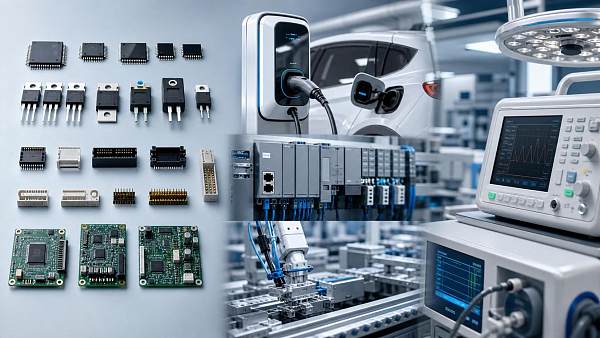
A few years ago, many electronics categories moved together. Today, the Electronics Market is split between fast-growth segments and areas still digesting excess stock.
Memory chips may soften while power semiconductors stay tight. Consumer electronics can slow while industrial controls and energy storage systems continue to pull components upward.
This divergence matters because pricing signals are now more local. A company reviewing the Electronics Market needs to ask which product family, which region, and which application is driving the movement.
In practical terms, the market is being reshaped by three overlapping forces: structural technology demand, post-cycle inventory adjustment, and geopolitical supply chain redesign.
What is actually driving component demand
The strongest demand is not coming from one headline sector. It is spreading across several industries that require more electronics content per finished product.
Electrification raises content intensity
Electric vehicles, charging systems, battery platforms, and smart grids require power devices, sensors, connectors, thermal materials, and control modules.
That pushes the Electronics Market beyond traditional consumer cycles. Even when handset or PC demand slows, electrification can keep key component categories firm.
Automation expands the industrial base
Factories are adding more embedded electronics through robotics, machine vision, motor drives, edge devices, and industrial communication systems.
This creates stable demand for analog chips, MCUs, passives, industrial displays, and reliable interconnect solutions, often with stricter qualification requirements.
Healthcare and infrastructure demand reliability
Medical equipment, diagnostics, and monitoring devices tend to prioritize traceability and lifecycle support. Infrastructure electronics often value long-term availability over short-term pricing.
These segments support a different layer of the Electronics Market, where compliance, continuity, and supplier credibility are central to evaluation.
Why prices shift even when demand appears stable
Price volatility in the Electronics Market is rarely explained by demand alone. Several cost and risk variables move underneath the visible transaction price.
In other words, the Electronics Market often shows mixed pricing because different layers of cost are moving in opposite directions.
A buyer may see lower chip quotes but higher freight, insurance, testing, or compliance costs. That is why total sourcing economics matter more than a single line item.
Where supply chain realignment is changing market behavior
The Electronics Market is also being redefined by regionalization. Companies are diversifying manufacturing footprints to reduce concentration risk, not just to chase lower cost.
This has consequences for lead times, approved vendor lists, and pricing discipline. New facilities may improve resilience, but they can also create temporary inefficiencies during ramp-up periods.
For business evaluation, that means supplier location is no longer a background detail. It becomes part of capacity visibility, geopolitical exposure, and continuity planning.
TradeNexus Pro follows this type of shift closely because electronics demand increasingly intersects with advanced manufacturing, green energy systems, healthcare technology, and digital supply chain tools.
That cross-sector view is useful when one component category is affected by several industries at once. A power module supplier, for example, may be influenced by EV demand, industrial automation, and grid upgrades simultaneously.
How to interpret demand signals more accurately
A common mistake is to read the Electronics Market through headline shipment numbers alone. That can distort the real picture, especially when inventory digestion overlaps with structural growth.
- Separate end-market demand from channel restocking or destocking activity.
- Track whether growth comes from volume expansion or higher electronics content per unit.
- Compare contract pricing with spot behavior before drawing conclusions.
- Assess whether substitute components are technically realistic or only theoretically available.
- Review lead-time trends together with cancellation rates and allocation notices.
This approach helps distinguish a short-lived correction from a meaningful shift in the Electronics Market outlook.
What matters when comparing suppliers and regions
In the current Electronics Market, the lowest quote is not always the strongest option. The quality of visibility around production, testing, and fulfillment often determines the real commercial outcome.
Key comparison points
Useful evaluation usually combines pricing data with operational evidence. That includes qualification status, traceability, revision control, packaging capability, and response speed during shortages.
It is also important to examine whether a supplier serves volatile consumer demand or more stable industrial demand. That customer mix can affect allocation behavior in tight conditions.
Platforms such as TradeNexus Pro provide value here by connecting market commentary with supplier context, technology direction, and broader trade signals rather than isolated listings.
That kind of intelligence becomes more useful when evaluating unfamiliar regions or emerging electronics clusters.
A practical framework for next-step decisions
The Electronics Market is unlikely to return to a simple, uniform cycle soon. Demand is broadening, but risk is becoming more fragmented.
A stronger next step is to map component exposure by application, region, and replacement difficulty. Then compare that map against current supplier depth and policy sensitivity.
It also helps to monitor sectors that shape future pull, especially smart electronics, energy systems, industrial automation, and medical technology.
When the Electronics Market is viewed through that wider lens, price shifts stop looking random. They become signals about capacity, technology adoption, and strategic supply positioning.
The most useful response is not chasing every market move. It is building a clearer decision model, validating supplier resilience, and using trusted intelligence sources to test assumptions before commitments are made.
Get weekly intelligence in your inbox.
No noise. No sponsored content. Pure intelligence.
 Oct 08, 2026How Digital Health Improves Diagnostic Accuracy and Workflow in Clinical LabsHow Digital Health Improves Diagnostic Accuracy and Workflow in Clinical Labs
 Oct 07, 2026Selecting Voice Picking Systems for German Warehouses: Integration, Languages and ROISelecting Voice Picking Systems for German Warehouses: Integration, Languages and ROI
 Oct 06, 2026How to Choose Last Mile Dispatch Software for On-Time Delivery at ScaleHow to Choose Last Mile Dispatch Software for On-Time Delivery at Scale
 Oct 05, 2026Vietnam’s Consumer Electronics Market: Demand Shifts and Sourcing OpportunitiesVietnam’s Consumer Electronics Market: Demand Shifts and Sourcing Opportunities
 Oct 04, 2026Digital Health Investment Priorities for Providers: Improving Access, Outcomes, and EfficiencyDigital Health Investment Priorities for Providers: Improving Access, Outcomes, and Efficiency
 Oct 03, 2026How to Specify an FR4 Custom PCB Board for High-Voltage and High-Heat DesignsHow to Specify an FR4 Custom PCB Board for High-Voltage and High-Heat Designs
 Oct 02, 2026ERP Software Market Intelligence: Adoption, Pricing, and Vendor Signals to WatchERP Software Market Intelligence: Adoption, Pricing, and Vendor Signals to Watch
 Oct 01, 2026How to Select Calibrated Temperature Data Loggers for GMP Cold Storage MonitoringHow to Select Calibrated Temperature Data Loggers for GMP Cold Storage Monitoring
 Sep 30, 2026Custom Molded Rubber Pricing: What Drives Unit Cost and Tooling Fees?Custom Molded Rubber Pricing: What Drives Unit Cost and Tooling Fees?
 Sep 29, 2026How to Evaluate Energy Management Software Vendors for Multi-Site OperationsHow to Evaluate Energy Management Software Vendors for Multi-Site Operations
 Sep 28, 2026How to Select a DIN Rail Smart Meter for Multi-Circuit Energy MonitoringHow to Select a DIN Rail Smart Meter for Multi-Circuit Energy Monitoring
 Sep 27, 2026TWS Earbuds in Vietnam: Demand Drivers, Price Tiers, and Retail Channel OpportunitiesTWS Earbuds in Vietnam: Demand Drivers, Price Tiers, and Retail Channel Opportunities
 Sep 26, 2026How UAE Clinics Can Qualify a Smart Glucometer Supplier for Accuracy and ComplianceHow UAE Clinics Can Qualify a Smart Glucometer Supplier for Accuracy and Compliance
 Sep 25, 2026Buying Aesthetic Lasers in the USA: FDA Status, Wavelengths, and Service SupportBuying Aesthetic Lasers in the USA: FDA Status, Wavelengths, and Service Support
 Sep 24, 2026Laser Cutting Brass Sheet: How to Prevent Burrs and Heat Marks on Thin PartsLaser Cutting Brass Sheet: How to Prevent Burrs and Heat Marks on Thin Parts
 Sep 23, 2026How to Choose Lightweight ANC Headphones for Comfortable All-Day TravelHow to Choose Lightweight ANC Headphones for Comfortable All-Day Travel
 Sep 22, 2026IPX5 TWS Bluetooth Earbuds: What Protection Do They Offer for Workouts?IPX5 TWS Bluetooth Earbuds: What Protection Do They Offer for Workouts?
 Sep 21, 2026What to Look for in a Grid Integration Company for Utility-Scale Solar ProjectsWhat to Look for in a Grid Integration Company for Utility-Scale Solar Projects
 Sep 20, 2026Microgrid Controller Pricing: What Drives Cost in Commercial Energy Projects?Microgrid Controller Pricing: What Drives Cost in Commercial Energy Projects?
 Sep 19, 2026How to Choose a GaN Charger for Laptops Without Compromising Power or PortabilityHow to Choose a GaN Charger for Laptops Without Compromising Power or Portability
 Sep 18, 2026Floating Solar Farm Costs: CAPEX, OPEX, and the Site Factors That Shape ROIFloating Solar Farm Costs: CAPEX, OPEX, and the Site Factors That Shape ROI
 Sep 17, 2026Drone Delivery Solutions for Last-Mile Routes: Site, Payload, and Range PlanningDrone Delivery Solutions for Last-Mile Routes: Site, Payload, and Range Planning
 Sep 16, 2026When Low-Volume Electronics Manufacturing Makes More Sense Than Mass ProductionWhen Low-Volume Electronics Manufacturing Makes More Sense Than Mass Production
 Sep 15, 2026Wholesale WiFi Smart Switches: What Buyers Should Verify Before OrderingWholesale WiFi Smart Switches: What Buyers Should Verify Before Ordering
 Sep 14, 2026How to Select IoT Sensors for Reliable Monitoring in Harsh Industrial EnvironmentsHow to Select IoT Sensors for Reliable Monitoring in Harsh Industrial Environments
 Sep 13, 2026How Procurement Teams Can Improve Supplier Reliability With Supply Chain VisibilityHow Procurement Teams Can Improve Supplier Reliability With Supply Chain Visibility
 Sep 12, 2026Smart Manufacturing Trends 2026: What Leaders Should Prioritize for ROISmart Manufacturing Trends 2026: What Leaders Should Prioritize for ROI



























