Mechanical keyboards: which switch type feels right daily?
Mechanical keyboards can transform your daily typing, gaming, and work experience, but choosing the right switch type is where comfort truly begins. From quiet linear options to tactile and clicky feedback, each feel suits different routines and preferences. This guide explores how mechanical keyboards perform in everyday use, helping you find the switch style that matches your habits, noise tolerance, and productivity needs.
Why switch feel has become a bigger decision than ever
The conversation around mechanical keyboards has changed. A few years ago, many buyers focused mainly on gaming performance, RGB lighting, or brand reputation. Today, daily comfort is driving more purchase decisions. Hybrid work, longer typing sessions, smaller shared spaces, and rising awareness of ergonomics have pushed switch feel into the center of the buying process. People are no longer asking only which mechanical keyboards are fastest; they are asking which switch type feels sustainable for eight hours of work, late-night study, casual gaming, and everyday messaging.
This shift matters because the same keyboard can feel excellent for one user and exhausting for another. A clicky switch may feel engaging during short bursts but become disruptive in shared apartments. A very light linear switch may feel smooth at first, then cause accidental presses during spreadsheet work or coding. In other words, the market is moving from broad enthusiasm for mechanical keyboards toward more personalized selection based on real routines, sound expectations, and hand fatigue patterns.
For consumers, this means the smartest choice is no longer the “best” switch in general. It is the switch that fits your daily environment, your typing force, and your tolerance for noise and feedback.
The strongest trend signals shaping today’s mechanical keyboards
Several practical changes are influencing how people judge mechanical keyboards in 2025 and beyond. The first is the rise of all-day use. Many users now expect one keyboard to handle office work, creative tasks, communication, and entertainment. The second is environmental sensitivity: roommates, family members, video calls, and open offices make loud switches less universally attractive than before. The third is experimentation. Hot-swappable boards, switch testers, and wider retail access have made it easier for buyers to compare feel rather than guessing from marketing claims alone.
Another important signal is that “premium feel” has expanded beyond pure click. Many buyers now value smooth travel, stable keycaps, reduced wobble, and a controlled sound profile more than dramatic actuation noise. That has helped linear and tactile switches gain broader everyday appeal, especially among people who want mechanical keyboards for productivity first and gaming second.
How linear, tactile, and clicky switches fit modern daily use
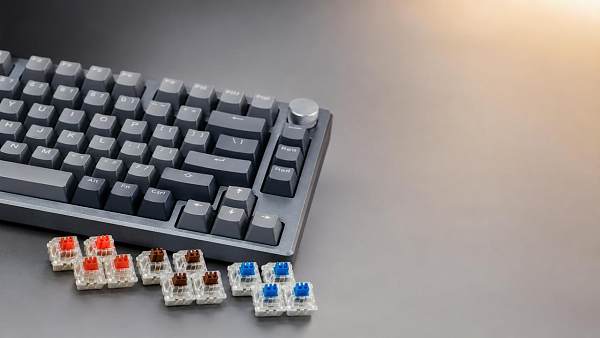
The three main switch families in mechanical keyboards still define most buying decisions, but their daily-use meaning has evolved. Instead of treating them as simple categories, it helps to see them as responses to different patterns of work and comfort.
Linear switches: smooth, quiet, and increasingly mainstream
Linear switches move straight down without a bump or click. Their rise in popularity reflects a wider market preference for smoother and quieter mechanical keyboards. For users in shared spaces, linears often feel modern and practical. They are also favored by many gamers because of their consistent travel and low resistance options.
That said, linears are not automatically ideal for everyone. Very light linears can lead to accidental keypresses, especially for users with heavy resting fingers or those doing precision-heavy office work. If your daily routine includes writing, editing, and data entry, a medium-weight linear may feel safer than an ultra-light one. The key trend here is refinement: consumers increasingly want linears that are smooth and stable, not merely fast.
Tactile switches: the balanced choice for work-focused users
Tactile switches include a noticeable bump during keypress, offering confirmation without the sharp sound of clicky designs. This category has become especially important as more people buy mechanical keyboards for productivity, not only for hobby collecting or competitive play. The tactile bump can improve typing confidence, reduce bottoming out for some users, and create a satisfying sense of control.
In current buying behavior, tactiles often appeal to people moving from laptop keyboards who want more feedback without embracing loud acoustics. They also suit users who split time between documents, email, browsing, and moderate gaming. The caution is that tactile feel varies widely. Some switches have a gentle bump, while others feel sharp or heavy. For daily use, subtle tactiles are often the safer entry point.
Clicky switches: still loved, but increasingly situational
Clicky switches remain iconic in the world of mechanical keyboards. They offer clear auditory and tactile feedback that many users find enjoyable and memorable. For solo home offices, short-form writing, or users who simply love the classic mechanical sound, clicky switches can still be deeply satisfying.
But the broader trend is selective use. As more people work in mixed environments and prioritize call-friendly acoustics, clicky switches have become a preference-driven niche rather than a default recommendation. They are best for buyers who know they genuinely enjoy sound and will not need to minimize disruption. In daily-life terms, clickies are less about universal practicality and more about intentional keyboard personality.
What is driving these preference changes
The demand shift in mechanical keyboards is not random. It reflects broader lifestyle and product changes. First, keyboard use is now more continuous. Many people move from laptop to desktop setups and then spend most of the day typing. That exposes small comfort differences that casual users might once have ignored.
Second, the market itself has matured. Manufacturers now offer factory-lubed switches, sound-dampening cases, better stabilizers, and hot-swappable designs. This means consumers can pursue a more customized feel without deep technical knowledge. Third, content culture has changed expectations. Reviews, typing sound tests, and switch comparison videos have taught buyers to evaluate sound profile, force curve, and long-session comfort rather than buying blindly.
Finally, there is an ergonomic dimension. While no switch type guarantees comfort for every hand, buyers increasingly recognize that a daily keyboard should reduce strain rather than create excitement for only the first week. This is why the best mechanical keyboards for many consumers are no longer the loudest or most dramatic, but the most sustainable over time.
How different users are affected by switch choice
The same trend does not affect every buyer equally. Switch feel has different consequences depending on what you do, where you work, and how sensitive you are to noise or fatigue.
This is why switch buying should begin with self-assessment, not internet popularity. Mechanical keyboards are highly personal devices. Your best option depends less on trend labels and more on whether your real day is quiet, busy, mobile, shared, or accuracy-heavy.
The most important signals to watch before buying mechanical keyboards
If you are comparing mechanical keyboards, several signals deserve more attention than brand hype. One is actuation force. Light switches can feel effortless, but they are not always ideal for people who make frequent mistakes. Another is total sound profile. A switch may be labeled quiet, yet the keyboard case, keycaps, and desk surface can still make it sound sharp. Third is typing duration. A switch that feels exciting for ten minutes may feel tiring after three hours.
You should also watch whether a keyboard is hot-swappable. This feature reflects a major market upgrade because it lowers risk. Instead of committing permanently to one feel, you can change switches later as your habits evolve. That flexibility is especially valuable now that consumer preferences are moving toward long-term usability over one-time novelty.
Another useful signal is whether reviewers discuss real-world use cases rather than only technical specs. Search for comments about office noise, fatigue, accidental presses, and adaptation time. Those details often reveal more about daily comfort than switch marketing names.
A practical framework for judging which switch feels right daily
To make a better decision, think in stages rather than looking for a perfect universal answer. Start with your environment. If other people are nearby, loud clicky mechanical keyboards may create friction even if you enjoy them. Next, consider your dominant tasks. If you type constantly, tactile confirmation or a moderate linear may improve control. If you game heavily and value fluid presses, linears may feel more natural.
Then assess your typing behavior. Heavy typists often prefer more resistance or stronger tactility, while lighter typists may enjoy softer switches. Finally, factor in adaptation. Some users need a week or two before a switch reveals its real strengths or weaknesses. Quick first impressions can be misleading.
Where the market is likely heading next
The next phase for mechanical keyboards is likely to be less about louder features and more about refined everyday experience. Quiet acoustics, smoother stock switches, better stabilizers, and easier customization are becoming standard expectations. Consumers are also becoming more specific in their language, describing boards by feel, weight, and fatigue level instead of simply saying a keyboard is “good for gaming.”
This suggests that future switch selection will become even more context-based. Mechanical keyboards for home offices, content creation, and shared living spaces may continue moving toward quiet linear and subtle tactile setups. Clicky switches will remain relevant, but likely as a deliberate enthusiast choice rather than the broad default for newcomers.
For shoppers, the key insight is simple: the market is rewarding fit over flash. The right switch is the one that still feels good after months of daily use, not just during the first unboxing.
Final judgment: how to choose with confidence
If you are deciding between mechanical keyboards, begin with your real conditions, not online trends. Choose linear if you want smoothness, lower noise, and broad versatility. Choose tactile if you want balanced feedback for everyday productivity. Choose clicky only if sound is part of your enjoyment and your environment allows it.
The strongest current signal in mechanical keyboards is personalization. Daily comfort, noise awareness, and long-session performance now matter more than category hype. If you want to judge which option fits you best, focus on five questions: How much do you type each day? How quiet does your space need to be? Do you prefer smoothness or feedback? Do you often mistype on sensitive keys? And do you want the option to change switches later?
Answer those honestly, and the right switch type becomes much easier to identify. That is the most useful way to buy mechanical keyboards today: by matching feel to life, not just specs to marketing.
Get weekly intelligence in your inbox.
No noise. No sponsored content. Pure intelligence.
 Sep 21, 2026What to Look for in a Grid Integration Company for Utility-Scale Solar ProjectsWhat to Look for in a Grid Integration Company for Utility-Scale Solar Projects
 Sep 20, 2026Microgrid Controller Pricing: What Drives Cost in Commercial Energy Projects?Microgrid Controller Pricing: What Drives Cost in Commercial Energy Projects?
 Sep 19, 2026How to Choose a GaN Charger for Laptops Without Compromising Power or PortabilityHow to Choose a GaN Charger for Laptops Without Compromising Power or Portability
 Sep 18, 2026Floating Solar Farm Costs: CAPEX, OPEX, and the Site Factors That Shape ROIFloating Solar Farm Costs: CAPEX, OPEX, and the Site Factors That Shape ROI
 Sep 17, 2026Drone Delivery Solutions for Last-Mile Routes: Site, Payload, and Range PlanningDrone Delivery Solutions for Last-Mile Routes: Site, Payload, and Range Planning
 Sep 16, 2026When Low-Volume Electronics Manufacturing Makes More Sense Than Mass ProductionWhen Low-Volume Electronics Manufacturing Makes More Sense Than Mass Production
 Sep 15, 2026Wholesale WiFi Smart Switches: What Buyers Should Verify Before OrderingWholesale WiFi Smart Switches: What Buyers Should Verify Before Ordering
 Sep 14, 2026How to Select IoT Sensors for Reliable Monitoring in Harsh Industrial EnvironmentsHow to Select IoT Sensors for Reliable Monitoring in Harsh Industrial Environments
 Sep 13, 2026How Procurement Teams Can Improve Supplier Reliability With Supply Chain VisibilityHow Procurement Teams Can Improve Supplier Reliability With Supply Chain Visibility
 Sep 12, 2026Smart Manufacturing Trends 2026: What Leaders Should Prioritize for ROISmart Manufacturing Trends 2026: What Leaders Should Prioritize for ROI
 Sep 11, 2026B2B Market Analysis: How Buyers Evaluate Suppliers, Pricing, and Delivery RiskB2B Market Analysis: How Buyers Evaluate Suppliers, Pricing, and Delivery Risk
 Sep 10, 2026Residential Solar Kits in Canada: How to Size a System for Your Home and ClimateResidential Solar Kits in Canada: How to Size a System for Your Home and Climate
 Sep 09, 2026How to Specify a Syringe Assembly Line for High-Volume Sterile ProductionHow to Specify a Syringe Assembly Line for High-Volume Sterile Production
 Sep 08, 2026How to Evaluate Warehouse Robotics System Suppliers for Reliable Multi-Site DeploymentHow to Evaluate Warehouse Robotics System Suppliers for Reliable Multi-Site Deployment
 Sep 07, 2026Renewable Geothermal Energy Explained: How It Works for Heating and PowerRenewable Geothermal Energy Explained: How It Works for Heating and Power
 Sep 07, 2026How to Choose an Industrial Packaging Robot Manufacturer for Your Production LineHow to Choose an Industrial Packaging Robot Manufacturer for Your Production Line
 Sep 05, 2026How to Evaluate a Turnkey Hydro Turbine Generator Supplier for Remote Power ProjectsHow to Evaluate a Turnkey Hydro Turbine Generator Supplier for Remote Power Projects
 Sep 04, 2026Automated Ultrasonic Welding for Thermoplastic Assemblies: Process Controls That MatterAutomated Ultrasonic Welding for Thermoplastic Assemblies: Process Controls That Matter
 Sep 03, 2026Energy Forecasting for Grid Planning: Sizing Solar and Storage CapacityEnergy Forecasting for Grid Planning: Sizing Solar and Storage Capacity
 Sep 02, 2026Which Metrics Should an Energy Analytics Dashboard Track for Factory Energy Management?Which Metrics Should an Energy Analytics Dashboard Track for Factory Energy Management?
 Sep 01, 2026How Warehouse Voice Picking Improves Accuracy and Throughput in Order FulfillmentHow Warehouse Voice Picking Improves Accuracy and Throughput in Order Fulfillment
 Aug 31, 2026How to Automate Dropshipping Order Processing Without Overselling StockHow to Automate Dropshipping Order Processing Without Overselling Stock
 Aug 30, 2026How to Evaluate a Smart Lighting Supplier for Multi-Site Commercial ProjectsHow to Evaluate a Smart Lighting Supplier for Multi-Site Commercial Projects
 Aug 29, 2026Recent Advances in Smart Manufacturing and Materials Reshaping Factory InvestmentRecent Advances in Smart Manufacturing and Materials Reshaping Factory Investment
 Aug 29, 2026Selecting Lightweight Aluminum Extrusions for Strength-Critical Industrial DesignsSelecting Lightweight Aluminum Extrusions for Strength-Critical Industrial Designs
 Aug 29, 2026Vertical Powder Anodizing Explained: Process Controls for Uniform Coating QualityVertical Powder Anodizing Explained: Process Controls for Uniform Coating Quality
 Aug 29, 2026PV Module Product Due Diligence: What Buyers Should Verify Before ContractingPV Module Product Due Diligence: What Buyers Should Verify Before Contracting