What changes the price of RFID tags wholesale the most?
For procurement teams, the biggest factor behind RFID tags wholesale pricing is rarely just volume. Material choice, chip type, memory capacity, frequency, durability requirements, and order customization can all shift costs significantly. Understanding which specifications truly affect price helps buyers compare suppliers more accurately, control budgets, and secure RFID solutions that match both operational needs and long-term supply chain goals.
Which factors change RFID tags wholesale pricing the most?
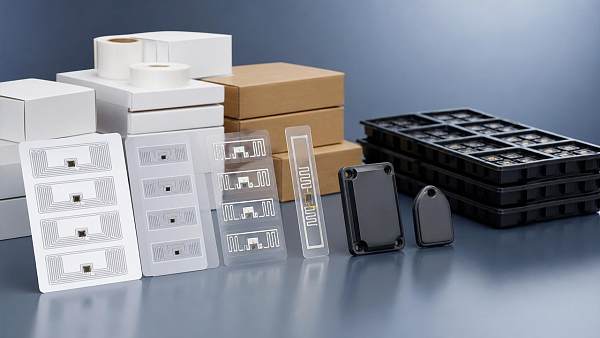
When buyers request rfid tags wholesale quotes, they often receive a surprisingly wide price range for what appears to be the same item. In practice, two tags may look similar but differ in chip family, antenna design, substrate, encoding requirements, environmental resistance, and certification expectations. Each of these changes affects manufacturing yield, raw material cost, lead time, and testing complexity.
For procurement personnel in manufacturing, healthcare technology, electronics, green energy, and supply chain environments, the real challenge is not simply finding a lower unit price. It is identifying which specification drives business value and which one adds cost without improving operational outcomes. That distinction is where purchasing efficiency is won or lost.
In many sourcing discussions, the most influential price drivers fall into six groups:
- Chip selection, including brand positioning, protocol support, memory structure, and sensitivity.
- Tag material and construction, such as paper labels, PET, foam-backed inlays, or rugged encapsulated formats.
- Operating frequency and performance target, especially when read range and metal-surface behavior are critical.
- Environmental durability, including heat, moisture, chemicals, UV exposure, and abrasion.
- Customization requirements, such as printing, encoding, serialization, packaging, and adhesive changes.
- Order structure, including annual volume commitment, batch size, sampling needs, and delivery schedule.
For global sourcing teams, the best approach is to treat rfid tags wholesale as a specification-based procurement category, not a commodity line item. The same purchasing discipline used for electronic components or industrial materials should apply here as well.
How do technical specifications translate into cost?
The table below helps procurement teams identify which tag parameters usually have the strongest influence on cost, and why supplier quotations may diverge even when overall quantities are similar.
The key takeaway is simple: the more a tag must do, survive, or integrate with, the more likely the quote will rise. Buyers who define only quantity and frequency usually end up comparing incomplete offers. A usable quotation for rfid tags wholesale should always include chip model, dimensions, material, memory needs, application surface, and testing expectations.
Why chip choice often matters more than buyers expect
Chip cost is not just about memory size. Different integrated circuits offer different read sensitivity, anti-collision performance, data retention behavior, and compatibility with regional standards. In high-volume retail or warehouse projects, even a modest difference in chip cost becomes significant. In industrial or healthcare settings, however, reliability may outweigh a small unit-price increase because missed reads can disrupt compliance, maintenance, or patient-related workflows.
Why materials create hidden cost gaps
A standard paper label may suit carton tracking in a dry indoor facility. The same label can fail quickly on returnable transport items, sterilization trays, medical devices, outdoor assets, or metal enclosures. Moving from a standard inlay to a durable industrial tag can multiply cost, but it may also prevent replacement labor, scan failures, and downtime. Procurement should evaluate total lifecycle cost, not only the initial tag price.
What should procurement teams compare before requesting RFID tags wholesale?
Sourcing success depends on asking better questions before going to market. Buyers who standardize requirements early reduce quote variance, shorten evaluation cycles, and avoid post-award engineering changes. The checklist below is especially useful when multiple departments influence the purchase decision.
- Define the object being tagged. Is it corrugated packaging, plastic bins, metal tools, medical assets, cables, or finished electronics?
- Clarify the read environment. Dense warehouse racks, conveyor portals, hospital storage rooms, and production cells create different interference risks.
- Specify the required read distance. Overbuying read range often raises cost without measurable operational benefit.
- List software and hardware compatibility needs, including printer-encoders, handheld readers, fixed readers, WMS, MES, or ERP systems.
- Determine whether the project requires pre-encoding, variable printing, tamper evidence, or special packaging.
- Set expectations for pilot quantity, production quantity, replenishment frequency, and safety stock planning.
This is where an intelligence-led sourcing approach becomes valuable. TradeNexus Pro supports procurement leaders by turning fragmented supplier claims into comparable decision inputs. In markets where component pricing shifts, lead times tighten, and application conditions differ by sector, better upstream analysis usually translates into better downstream purchasing outcomes.
How do application scenarios change the right price point?
Not every business should buy the lowest-cost RFID label, and not every project needs a premium industrial tag. The right cost target depends on the operating context. The table below shows how common cross-industry scenarios influence the best-fit sourcing strategy for rfid tags wholesale.
This comparison shows why buyers should not benchmark prices across unrelated use cases. A low-cost label for dry warehouse cartons is not a fair reference point for hospital equipment, metal returnables, or outdoor energy assets. Category clarity improves supplier selection and prevents false savings.
Scenario-based budgeting works better than blanket target pricing
If procurement applies one target price across all RFID deployments, quality mismatches are almost guaranteed. A better method is to classify projects by environment, replacement cost, operational criticality, and expected lifespan. That framework reveals where standard tags are sufficient and where ruggedization delivers a lower total cost of ownership.
Where do hidden costs appear in RFID tags wholesale projects?
The quoted unit price is only one part of the budget. Many procurement teams discover late-stage costs in testing, integration, scrap, or logistics. These hidden items can make an apparently cheap supplier more expensive over the life of the program.
- Pilot failure costs, when tags are selected before real-world read testing on actual materials and packaging.
- Encoding and data management costs, especially if serialization logic is not aligned with internal systems.
- Higher replacement rates caused by weak adhesive, poor environmental fit, or tag damage in transport.
- Lead-time risk, particularly when a specialized chip or material is single-sourced.
- Quality control overhead if incoming inspection reveals inconsistent print, EPC writing errors, or poor attachment performance.
For buyers managing global or multisite supply chains, these issues matter because RFID is often tied to automation, traceability, compliance, and inventory accuracy. A small gap in tag performance can ripple through receiving, picking, returns, and asset utilization. That is why market visibility and supplier intelligence are increasingly important in rfid tags wholesale procurement.
What standards and compliance points should buyers verify?
Exact requirements vary by region and application, but buyers should usually confirm protocol compatibility, frequency suitability for the destination market, labeling consistency, and any sector-specific material or safety expectations. In regulated environments such as healthcare or cross-border supply chains, documentation quality can be as important as tag performance itself.
A practical supplier review should include:
- Protocol and reader compatibility confirmation for the intended deployment architecture.
- Material suitability evidence for heat, moisture, sterilization, or outdoor exposure if relevant.
- Serialization, encoding, and print verification processes.
- Batch traceability and change-control communication procedures.
Common mistakes buyers make when sourcing RFID tags wholesale
Is the cheapest quote usually the best deal?
Not necessarily. The lowest quote may exclude encoding, testing, special adhesive, packaging controls, or quality tolerances that another supplier has already included. Procurement should compare delivered specifications and process scope, not only price per piece.
Do higher order volumes always reduce RFID tags wholesale pricing the most?
Volume helps, but only after the design is stable. If the project still has unresolved chip, material, or performance questions, committing to a large buy can increase risk. Savings from scale can be erased by inventory obsolescence or field failure.
Should one tag design be used across every business unit?
Only when the environment is genuinely similar. A universal tag strategy sounds efficient, but mixed-use deployments often create compromise performance. Standardization should happen at the specification framework level first, then at the SKU level where application overlap is real.
How long should buyers expect for samples and production?
Lead time depends on stock inlays, custom converting, data encoding, and shipment region. Standard samples can move quickly, while custom dimensions, special adhesives, or encoded production batches usually require more coordination. Procurement teams should request separate timing for sampling, validation, mass production, and replenishment.
Why procurement teams use TradeNexus Pro before final supplier selection
RFID sourcing sits at the intersection of materials, semiconductors, labeling, automation, and supply chain execution. That makes it vulnerable to fragmented information. TradeNexus Pro helps procurement leaders filter market noise by focusing on the sectors where RFID decisions are often most strategic: advanced manufacturing, smart electronics, healthcare technology, green energy, and supply chain software ecosystems.
Rather than treating tags as isolated products, TNP supports a broader sourcing view. Buyers can align technical specifications with deployment scenarios, compare supplier positioning more critically, and evaluate how pricing shifts relate to chip availability, production changes, and downstream operational risk. This is especially useful for enterprise teams managing multi-country sourcing, integration-heavy rollouts, or cost pressure across several business units.
What you can discuss with us
- Parameter confirmation for chip, memory, size, adhesive, and read-range expectations.
- Product selection guidance for cartons, metal assets, medical equipment, electronics, or outdoor infrastructure.
- Lead-time planning for samples, pilot runs, serial production, and replenishment cycles.
- Customization discussions covering printing, encoding, serialization, packaging, and deployment workflow.
- Certification and compatibility questions relevant to your region, hardware stack, and industry context.
- Quote benchmarking support to help your team compare rfid tags wholesale offers on a like-for-like basis.
If your team is preparing an RFID purchase, contact TradeNexus Pro with your application surface, expected environment, read-distance target, quantity forecast, and customization needs. That information makes it easier to narrow the right specification, reduce sourcing friction, and move faster from quotation to qualified deployment.
Get weekly intelligence in your inbox.
No noise. No sponsored content. Pure intelligence.
 Sep 21, 2026What to Look for in a Grid Integration Company for Utility-Scale Solar ProjectsWhat to Look for in a Grid Integration Company for Utility-Scale Solar Projects
 Sep 20, 2026Microgrid Controller Pricing: What Drives Cost in Commercial Energy Projects?Microgrid Controller Pricing: What Drives Cost in Commercial Energy Projects?
 Sep 19, 2026How to Choose a GaN Charger for Laptops Without Compromising Power or PortabilityHow to Choose a GaN Charger for Laptops Without Compromising Power or Portability
 Sep 18, 2026Floating Solar Farm Costs: CAPEX, OPEX, and the Site Factors That Shape ROIFloating Solar Farm Costs: CAPEX, OPEX, and the Site Factors That Shape ROI
 Sep 17, 2026Drone Delivery Solutions for Last-Mile Routes: Site, Payload, and Range PlanningDrone Delivery Solutions for Last-Mile Routes: Site, Payload, and Range Planning
 Sep 16, 2026When Low-Volume Electronics Manufacturing Makes More Sense Than Mass ProductionWhen Low-Volume Electronics Manufacturing Makes More Sense Than Mass Production
 Sep 15, 2026Wholesale WiFi Smart Switches: What Buyers Should Verify Before OrderingWholesale WiFi Smart Switches: What Buyers Should Verify Before Ordering
 Sep 14, 2026How to Select IoT Sensors for Reliable Monitoring in Harsh Industrial EnvironmentsHow to Select IoT Sensors for Reliable Monitoring in Harsh Industrial Environments
 Sep 13, 2026How Procurement Teams Can Improve Supplier Reliability With Supply Chain VisibilityHow Procurement Teams Can Improve Supplier Reliability With Supply Chain Visibility
 Sep 12, 2026Smart Manufacturing Trends 2026: What Leaders Should Prioritize for ROISmart Manufacturing Trends 2026: What Leaders Should Prioritize for ROI
 Sep 11, 2026B2B Market Analysis: How Buyers Evaluate Suppliers, Pricing, and Delivery RiskB2B Market Analysis: How Buyers Evaluate Suppliers, Pricing, and Delivery Risk
 Sep 10, 2026Residential Solar Kits in Canada: How to Size a System for Your Home and ClimateResidential Solar Kits in Canada: How to Size a System for Your Home and Climate
 Sep 09, 2026How to Specify a Syringe Assembly Line for High-Volume Sterile ProductionHow to Specify a Syringe Assembly Line for High-Volume Sterile Production
 Sep 08, 2026How to Evaluate Warehouse Robotics System Suppliers for Reliable Multi-Site DeploymentHow to Evaluate Warehouse Robotics System Suppliers for Reliable Multi-Site Deployment
 Sep 07, 2026Renewable Geothermal Energy Explained: How It Works for Heating and PowerRenewable Geothermal Energy Explained: How It Works for Heating and Power
 Sep 07, 2026How to Choose an Industrial Packaging Robot Manufacturer for Your Production LineHow to Choose an Industrial Packaging Robot Manufacturer for Your Production Line
 Sep 05, 2026How to Evaluate a Turnkey Hydro Turbine Generator Supplier for Remote Power ProjectsHow to Evaluate a Turnkey Hydro Turbine Generator Supplier for Remote Power Projects
 Sep 04, 2026Automated Ultrasonic Welding for Thermoplastic Assemblies: Process Controls That MatterAutomated Ultrasonic Welding for Thermoplastic Assemblies: Process Controls That Matter
 Sep 03, 2026Energy Forecasting for Grid Planning: Sizing Solar and Storage CapacityEnergy Forecasting for Grid Planning: Sizing Solar and Storage Capacity
 Sep 02, 2026Which Metrics Should an Energy Analytics Dashboard Track for Factory Energy Management?Which Metrics Should an Energy Analytics Dashboard Track for Factory Energy Management?
 Sep 01, 2026How Warehouse Voice Picking Improves Accuracy and Throughput in Order FulfillmentHow Warehouse Voice Picking Improves Accuracy and Throughput in Order Fulfillment
 Aug 31, 2026How to Automate Dropshipping Order Processing Without Overselling StockHow to Automate Dropshipping Order Processing Without Overselling Stock
 Aug 30, 2026How to Evaluate a Smart Lighting Supplier for Multi-Site Commercial ProjectsHow to Evaluate a Smart Lighting Supplier for Multi-Site Commercial Projects
 Aug 29, 2026Recent Advances in Smart Manufacturing and Materials Reshaping Factory InvestmentRecent Advances in Smart Manufacturing and Materials Reshaping Factory Investment
 Aug 29, 2026Selecting Lightweight Aluminum Extrusions for Strength-Critical Industrial DesignsSelecting Lightweight Aluminum Extrusions for Strength-Critical Industrial Designs
 Aug 29, 2026Vertical Powder Anodizing Explained: Process Controls for Uniform Coating QualityVertical Powder Anodizing Explained: Process Controls for Uniform Coating Quality
 Aug 29, 2026PV Module Product Due Diligence: What Buyers Should Verify Before ContractingPV Module Product Due Diligence: What Buyers Should Verify Before Contracting