Why RGB LED strips fail early in humid installations
In humid environments, rgb led strips often fail far earlier than expected, causing corrosion, color shift, dimming, and repeated service calls. For after-sales maintenance teams, understanding why moisture penetrates seals, damages solder joints, and weakens power connections is essential to preventing recurring faults. This article explains the most common failure mechanisms and practical ways to improve long-term reliability.
For maintenance personnel, early failure is rarely caused by one dramatic defect. In most field cases, it is the result of 3 to 5 small weaknesses combining over weeks or months: marginal ingress protection, poor end-cap sealing, unstable power supply, thin copper traces, or improper installation on wet substrates. When these issues are ignored, rgb led strips installed in coastal buildings, cold rooms, outdoor signage, greenhouses, kitchens, spas, or industrial washdown areas can lose output well before their expected service interval.
In B2B environments, premature strip failure has a wider impact than a simple lighting problem. It increases truck rolls, spare-parts consumption, labor hours, warranty friction, and customer dissatisfaction. For procurement and after-sales teams alike, knowing how humidity affects encapsulation, adhesives, connectors, and driver compatibility helps reduce repeat failures and improves lifecycle cost control.
Why humidity shortens the life of rgb led strips
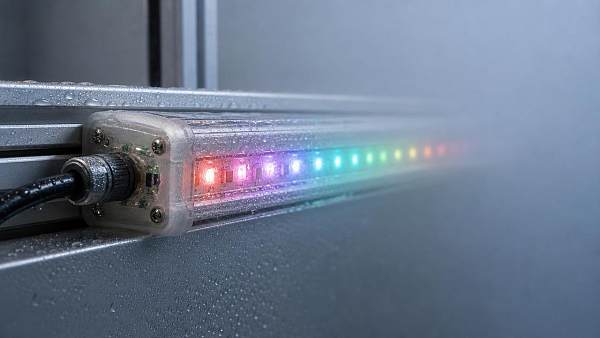
Humidity does not need visible water droplets to cause damage. A relative humidity level above 75% for long periods can be enough to drive moisture into vulnerable points, especially when installations also face temperature swings of 8°C to 20°C between day and night. That cycling creates expansion, contraction, and condensation inside seals that may appear intact during visual inspection.
Moisture ingress usually starts at the weakest interface
The silicone sleeve or coating often gets the blame, but the first failure point is frequently the cut end, solder pad, connector entry, or wire exit. Even when a strip is labeled for splash resistance, the practical protection level depends on how many field cuts were made, whether end caps were bonded correctly, and whether sealant was fully cured for 12 to 24 hours before energizing the circuit.
In after-sales inspections, technicians often find capillary action pulling moisture along copper pads or stranded wire. Once water reaches the solder joint, corrosion can begin invisibly beneath flux residue. Within 30 to 90 days in high-humidity areas, the result may be intermittent color channels, uneven brightness, or complete segment blackout.
Condensation is more dangerous than occasional splashing
A strip near a refrigerated case, exterior façade, or ventilated plant room may face rapid thermal changes several times per day. That repeated dew formation can be more destructive than brief water exposure because moisture remains trapped in enclosed spaces. When trapped condensation sits around pads and connectors, oxidation accelerates, especially on lower-cost terminations or poorly tinned contact surfaces.
Electrical stress amplifies humidity damage
Humidity rarely acts alone. Voltage drop, undersized power injection, and overloaded drivers create extra heat. When strip temperature rises by even 10°C to 15°C above ambient, adhesives soften faster, sealants age more quickly, and micro-gaps can open. In RGB systems, channel imbalance also becomes more visible because one damaged path may affect red, green, or blue output unevenly.
This is why some installations show color shift before total failure. A corroded common anode or damaged negative channel can raise resistance gradually, producing dim blue or unstable green long before the strip stops working. For service teams, those visual symptoms are early warnings, not cosmetic issues.
The table below summarizes the most common failure mechanisms seen in humid installations and the field symptoms that help technicians identify root causes faster.
For maintenance teams, the key lesson is that visible water exposure is not required for early failure. In many commercial and industrial environments, humidity plus thermal cycling is enough to create corrosion pathways. Faster diagnosis starts with checking termination quality, not only the LED chips themselves.
The installation mistakes that cause recurring service calls
A significant share of repeat failures comes from installation practices rather than product defects. In field maintenance, the same 4 to 6 errors appear repeatedly: selecting the wrong protection level, cutting and resealing without process control, using clip-on connectors in damp zones, skipping aluminum mounting profiles, and overloading long runs without adequate power injection.
Mismatched IP rating and real exposure level
Many buyers assume any “waterproof” strip can survive humid service. In practice, there is a major difference between occasional splashes, direct washdown, and sealed installations exposed to condensation every day. A strip suitable for decorative indoor dampness may fail quickly in food prep areas, greenhouse frames, or outdoor channels where moisture remains present for 10 to 16 hours per day.
After-sales teams should verify not only the nominal protection rating but also the installation method. A strip can leave the factory with adequate sealing, then lose that protection immediately after on-site cutting, soldering, or connector modification. Once altered, the field-sealed joint becomes the true risk point.
Field resealing quality is often inconsistent
Technicians under time pressure may energize the strip before sealant fully bonds. Others may use incompatible silicone, leaving poor adhesion to the original jacket. Even a 1 mm to 2 mm unsealed gap around the wire exit can let vapor enter repeatedly. That small opening may not cause instant failure, but over 2 to 6 months it can create corrosion substantial enough to trigger service calls.
Poor thermal management in enclosed or damp areas
Humidity problems become worse when heat cannot dissipate. RGB LED strips mounted directly to wood, plastic, painted steel, or uneven masonry without an aluminum profile run hotter and age faster. Elevated temperature weakens adhesive foam, stresses encapsulation, and increases resistance along long traces. In dense architectural lighting, a 5 m run without proper heat sinking can show noticeably faster lumen loss than the same strip on an aluminum channel.
- Use aluminum profiles or heat-dissipating channels for continuous runs longer than 2 m.
- Avoid placing power supplies inside unventilated cavities with persistent humidity above 70%.
- Separate low-voltage joints from areas where condensate can drip or pool.
- Inspect adhesive condition after the first 7 to 14 days in demanding environments.
Connector choices that do not hold up in damp service
Quick connectors save time during installation, but they often become the first electrical weakness in humid applications. Contact pressure can relax, exposed metal can oxidize, and vibration can worsen the connection. For long-term reliability, soldered and sealed joints usually outperform clip connectors in demanding sites, especially where service intervals are expected to exceed 12 months.
The comparison below helps maintenance teams and procurement staff decide which connection approach better matches the environment and expected service burden.
The practical takeaway is clear: the faster connection method is not always the lower-cost method over the life of the installation. In humid service, reducing 20 minutes during installation can create many more hours of maintenance later.
How after-sales teams can troubleshoot failures more efficiently
When rgb led strips fail in damp installations, replacing the strip alone may not solve the problem. A structured diagnostic process reduces repeat visits and helps distinguish moisture damage from driver instability, overload, or installation abuse. A 5-step service routine is often enough to identify the real cause within one maintenance cycle.
A practical 5-step diagnostic sequence
- Inspect all cut ends, lead exits, and connector points for discoloration, white residue, or trapped moisture.
- Measure input voltage at the power supply and at the far end of the strip to identify drop greater than typical design tolerance.
- Test each RGB channel independently to detect partial corrosion or channel-specific resistance rise.
- Check mounting surface, profile contact, and adhesive integrity for signs of overheating or lifting.
- Review installation history, including any field cuts, resealing work, recent washdowns, or seasonal condensation changes.
What technicians should document on every call
A strong service record makes recurring faults easier to eliminate. At minimum, log 6 items: site humidity condition, temperature pattern, power supply rating, strip length per feed, connection type, and failure location. Over 3 to 10 service cases, these records often reveal patterns that are invisible in isolated inspections.
For enterprise maintenance teams handling multi-site rollouts, this documentation also supports procurement improvement. If one connection method, one encapsulation style, or one mounting approach causes higher repeat incidents, the data can guide future sourcing and specification decisions.
Common misdiagnoses that waste time
One frequent error is blaming the controller when color output becomes unstable. While controllers can fail, humidity-related resistance changes in one channel often create similar symptoms. Another mistake is replacing only the visibly dark section while leaving corroded terminations in place. That usually restores operation briefly but leads to another call within weeks.
Technicians should also avoid assuming that an intact outer sleeve means the strip is sealed. Moisture can enter through a cable gland, a cut point, or a micro-gap at the end cap while leaving the main sleeve visually unchanged. In humid service, internal inspection around terminations is often more valuable than superficial external checks.
Prevention strategies for longer service life and better procurement outcomes
The most effective way to reduce failure is to align specification, installation, and maintenance from the start. For B2B buyers and service teams, the goal is not simply to buy waterproof rgb led strips, but to create a system that remains stable under actual site conditions for 12, 24, or 36 months of operation.
Specify for the environment, not for the catalog headline
When reviewing suppliers, ask practical questions: Is the strip intended for high-condensation zones or only for occasional splashing? Are factory leads molded or field-attached? What sealing process is recommended after cutting? What run length is advised before power injection? These details are far more valuable than generic waterproof claims.
A resilient specification often includes aluminum profile use, sealed solder joints, accessible power supplies, controlled run lengths, and a maintenance inspection after the first 30 days. That early check can catch bond failure, moisture intrusion, or abnormal voltage drop before the site enters a cycle of repeated repairs.
A practical procurement and maintenance checklist
- Confirm the real exposure type: splash, condensation, washdown-adjacent, or outdoor humidity.
- Standardize connection method across sites to reduce service variability.
- Limit unsupported long runs and define power injection points during design.
- Require curing time control for any field resealing activity.
- Schedule periodic inspection every 6 to 12 months in high-humidity zones.
- Track failure mode by location so sourcing decisions reflect real service data.
When replacement is better than repeated patch repair
If a strip shows widespread corrosion, multiple unstable channels, and adhesive separation across several sections, patching may no longer be cost-effective. In many commercial settings, two or three small repairs plus revisit labor can exceed the cost of a full replacement with upgraded connection and mounting methods. This is especially true where downtime affects tenant appearance, safety guidance, or branded visual presentation.
For decision-makers, the better metric is total service burden per site, not just component price. A slightly higher upfront specification can reduce maintenance frequency, service dispatches, and customer complaints over the installation lifecycle.
Early failure of rgb led strips in humid installations is usually the result of moisture ingress, unstable terminations, thermal stress, and specification gaps working together. Maintenance teams that inspect cut ends, verify connection quality, document site conditions, and standardize better installation practices can cut repeat faults significantly. If your organization is evaluating more durable strip lighting configurations, sourcing criteria, or service protocols for damp environments, contact us to discuss a tailored solution, request technical guidance, or explore more reliable options for your next project.
Get weekly intelligence in your inbox.
No noise. No sponsored content. Pure intelligence.
 Sep 21, 2026What to Look for in a Grid Integration Company for Utility-Scale Solar ProjectsWhat to Look for in a Grid Integration Company for Utility-Scale Solar Projects
 Sep 20, 2026Microgrid Controller Pricing: What Drives Cost in Commercial Energy Projects?Microgrid Controller Pricing: What Drives Cost in Commercial Energy Projects?
 Sep 19, 2026How to Choose a GaN Charger for Laptops Without Compromising Power or PortabilityHow to Choose a GaN Charger for Laptops Without Compromising Power or Portability
 Sep 18, 2026Floating Solar Farm Costs: CAPEX, OPEX, and the Site Factors That Shape ROIFloating Solar Farm Costs: CAPEX, OPEX, and the Site Factors That Shape ROI
 Sep 17, 2026Drone Delivery Solutions for Last-Mile Routes: Site, Payload, and Range PlanningDrone Delivery Solutions for Last-Mile Routes: Site, Payload, and Range Planning
 Sep 16, 2026When Low-Volume Electronics Manufacturing Makes More Sense Than Mass ProductionWhen Low-Volume Electronics Manufacturing Makes More Sense Than Mass Production
 Sep 15, 2026Wholesale WiFi Smart Switches: What Buyers Should Verify Before OrderingWholesale WiFi Smart Switches: What Buyers Should Verify Before Ordering
 Sep 14, 2026How to Select IoT Sensors for Reliable Monitoring in Harsh Industrial EnvironmentsHow to Select IoT Sensors for Reliable Monitoring in Harsh Industrial Environments
 Sep 13, 2026How Procurement Teams Can Improve Supplier Reliability With Supply Chain VisibilityHow Procurement Teams Can Improve Supplier Reliability With Supply Chain Visibility
 Sep 12, 2026Smart Manufacturing Trends 2026: What Leaders Should Prioritize for ROISmart Manufacturing Trends 2026: What Leaders Should Prioritize for ROI
 Sep 11, 2026B2B Market Analysis: How Buyers Evaluate Suppliers, Pricing, and Delivery RiskB2B Market Analysis: How Buyers Evaluate Suppliers, Pricing, and Delivery Risk
 Sep 10, 2026Residential Solar Kits in Canada: How to Size a System for Your Home and ClimateResidential Solar Kits in Canada: How to Size a System for Your Home and Climate
 Sep 09, 2026How to Specify a Syringe Assembly Line for High-Volume Sterile ProductionHow to Specify a Syringe Assembly Line for High-Volume Sterile Production
 Sep 08, 2026How to Evaluate Warehouse Robotics System Suppliers for Reliable Multi-Site DeploymentHow to Evaluate Warehouse Robotics System Suppliers for Reliable Multi-Site Deployment
 Sep 07, 2026Renewable Geothermal Energy Explained: How It Works for Heating and PowerRenewable Geothermal Energy Explained: How It Works for Heating and Power
 Sep 07, 2026How to Choose an Industrial Packaging Robot Manufacturer for Your Production LineHow to Choose an Industrial Packaging Robot Manufacturer for Your Production Line
 Sep 05, 2026How to Evaluate a Turnkey Hydro Turbine Generator Supplier for Remote Power ProjectsHow to Evaluate a Turnkey Hydro Turbine Generator Supplier for Remote Power Projects
 Sep 04, 2026Automated Ultrasonic Welding for Thermoplastic Assemblies: Process Controls That MatterAutomated Ultrasonic Welding for Thermoplastic Assemblies: Process Controls That Matter
 Sep 03, 2026Energy Forecasting for Grid Planning: Sizing Solar and Storage CapacityEnergy Forecasting for Grid Planning: Sizing Solar and Storage Capacity
 Sep 02, 2026Which Metrics Should an Energy Analytics Dashboard Track for Factory Energy Management?Which Metrics Should an Energy Analytics Dashboard Track for Factory Energy Management?
 Sep 01, 2026How Warehouse Voice Picking Improves Accuracy and Throughput in Order FulfillmentHow Warehouse Voice Picking Improves Accuracy and Throughput in Order Fulfillment
 Aug 31, 2026How to Automate Dropshipping Order Processing Without Overselling StockHow to Automate Dropshipping Order Processing Without Overselling Stock
 Aug 30, 2026How to Evaluate a Smart Lighting Supplier for Multi-Site Commercial ProjectsHow to Evaluate a Smart Lighting Supplier for Multi-Site Commercial Projects
 Aug 29, 2026Recent Advances in Smart Manufacturing and Materials Reshaping Factory InvestmentRecent Advances in Smart Manufacturing and Materials Reshaping Factory Investment
 Aug 29, 2026Selecting Lightweight Aluminum Extrusions for Strength-Critical Industrial DesignsSelecting Lightweight Aluminum Extrusions for Strength-Critical Industrial Designs
 Aug 29, 2026Vertical Powder Anodizing Explained: Process Controls for Uniform Coating QualityVertical Powder Anodizing Explained: Process Controls for Uniform Coating Quality
 Aug 29, 2026PV Module Product Due Diligence: What Buyers Should Verify Before ContractingPV Module Product Due Diligence: What Buyers Should Verify Before Contracting