Are AR glasses ready for real work beyond product demos?
Are AR glasses truly ready for real work, or are they still confined to polished product demos? For enterprise decision-makers, the answer matters across training, field service, logistics, and collaboration. This article examines how ar glasses are performing in practical business environments, where the technology is delivering measurable value, and what limitations still stand in the way of large-scale adoption.
What ar glasses mean in an enterprise context
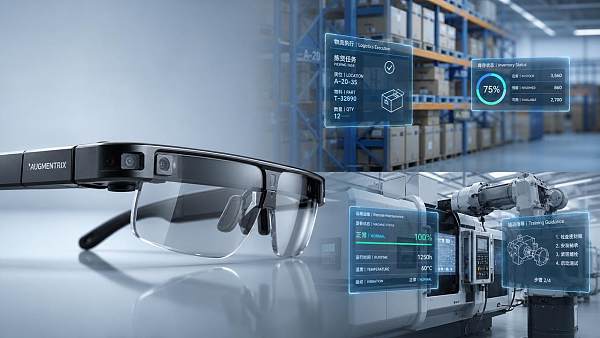
In business settings, ar glasses are wearable devices that place digital instructions, data, or remote support overlays into a user’s field of view while keeping hands free. That simple definition matters because enterprise adoption is not driven by novelty. It is driven by whether the device helps a technician complete a repair faster, a warehouse worker reduce picking errors, or a trainer shorten the path from onboarding to proficiency.
The discussion has moved beyond whether augmented reality is visually impressive. Most decision-makers now ask harder questions: Can the device survive an eight-hour shift? Does it integrate with ERP, MES, WMS, PLM, or field service software? Will employees actually wear it? Can the organization justify deployment at scale? Those questions define whether ar glasses are ready for real work.
For a platform such as TradeNexus Pro, which tracks operational technology across advanced manufacturing, smart electronics, healthcare technology, green energy, and supply chain SaaS, the answer is nuanced. Ar glasses are already viable in selected workflows, especially where visual guidance, expert collaboration, and contextual information improve execution. But broad adoption still depends on ergonomics, software maturity, security, and the quality of operational change management.
Why the market is paying closer attention now
Several market forces explain the renewed enterprise focus. First, labor shortages and skills gaps continue to pressure manufacturers, distributors, and service organizations. When experienced workers retire, companies need tools that make expertise easier to transfer. Ar glasses can support step-by-step instructions, visual standard operating procedures, and live remote guidance, helping less experienced staff perform with more confidence.
Second, operational resilience has become a board-level issue. Global supply chains are more volatile, and downtime is more expensive. If a field engineer can solve a problem on the first visit or if an operator can identify a machine fault earlier, that creates direct business value. Third, enterprise software ecosystems are maturing. More vendors now offer APIs, workflow engines, digital work instructions, and AI-enabled visual assistance that make ar glasses more practical than they were a few years ago.
Finally, the conversation is becoming outcome-based rather than device-based. Leading buyers no longer evaluate ar glasses as isolated hardware. They evaluate them as part of a workflow stack tied to productivity, compliance, quality, and service performance.
Where ar glasses are already delivering real business value
The strongest use cases share a common trait: work happens in physical environments where hands-free access to information reduces friction. This is why adoption is more advanced in industrial and operational contexts than in general office work. The value is not abstract. It usually appears as lower error rates, faster task completion, reduced travel, stronger documentation, or improved safety compliance.
These sectors matter because they represent environments where task context changes constantly and visual information is useful at the point of execution. In those conditions, ar glasses can function as a practical interface, not just a display.
The most mature enterprise applications
Training and guided work
Training is one of the clearest areas where ar glasses are ready for real work. New employees can see visual prompts, checklists, annotated diagrams, and safety reminders while performing tasks. This reduces dependence on paper manuals or repeated supervision. In high-mix production and field service, guided workflows also help standardize execution across locations and shifts.
Remote expert assistance
Remote support remains a strong value driver. A frontline worker wearing ar glasses can stream a first-person view to an expert who then provides instructions, marks up the display, or confirms the next action. This is especially useful in maintenance, utilities, capital equipment service, and geographically distributed operations. The business case improves when travel costs are high or technical specialists are scarce.
Warehouse and logistics execution
In logistics, ar glasses are increasingly assessed for hands-free picking, route optimization inside facilities, and exception handling. Compared with handheld scanners, the appeal lies in reduced context switching. Workers can keep both hands available while receiving location cues, item confirmation, and quantity checks. However, success depends heavily on comfort, scan reliability, battery life, and compatibility with existing warehouse systems.
Inspection and compliance support
For inspection tasks, ar glasses can overlay reference models, tolerances, process steps, or service histories. In regulated environments, they may also help capture evidence trails and enforce checklist completion. The value here is not only speed but consistency, which matters when quality escapes or compliance failures carry significant financial and reputational cost.
What still limits large-scale adoption
Despite meaningful progress, ar glasses are not universally ready for every work environment. The first barrier is ergonomics. If a device is too heavy, generates heat, conflicts with protective equipment, or causes eye strain, user acceptance drops quickly. A successful pilot can fail during shift-length deployment if comfort is overlooked.
The second barrier is software integration. Enterprise value does not come from overlays alone. It comes from linking ar glasses to digital work instructions, asset data, inventory status, service records, and analytics. Without integration, the device becomes another disconnected endpoint that creates operational friction instead of removing it.
Third, use-case design often lags behind expectations. Some organizations try to force ar glasses into workflows better served by tablets, rugged handhelds, or conventional screens. Not every task benefits from an immersive or heads-up interface. The technology works best when visual guidance is frequent, hands-free work is essential, and task complexity justifies the wearable format.
Security and governance also matter. Video capture, voice input, device management, and cloud connectivity raise questions around privacy, intellectual property protection, and compliance. In healthcare technology or high-value manufacturing environments, those concerns are often as important as hardware specifications.
How enterprise leaders should evaluate readiness
A practical assessment should begin with workflow economics rather than product marketing. Decision-makers should identify tasks where ar glasses can remove measurable friction. Examples include long training cycles, repeated field escalations, costly expert travel, complex assembly variation, or frequent picking errors. If the workflow lacks a clear pain point, the project will struggle to show return on investment.
This framework helps buyers avoid a common mistake: treating ar glasses as a broad innovation initiative instead of a workflow-specific operational tool. The strongest programs start small, capture baseline metrics, and expand only after proving repeatable gains.
A realistic view by business function
For operations leaders, ar glasses are most ready in standardized but physically demanding tasks where instructions change by product, asset condition, or service situation. For IT leaders, readiness depends on endpoint management, identity, application delivery, and cybersecurity controls. For finance teams, the case improves when devices reduce avoidable downtime, travel, scrap, or labor ramp-up time. For HR and workforce leaders, the key question is whether the technology improves retention and skill development rather than adding friction.
This cross-functional view is important because enterprise adoption rarely succeeds as a single-department experiment. The device may be worn by technicians, but the value chain touches software architecture, process governance, training design, and procurement strategy.
What a smart pilot should include
If your organization is considering ar glasses, a disciplined pilot is the best next step. Choose one workflow with clear operational pain and measurable outcomes. Define baseline metrics such as task completion time, first-time fix rate, training duration, quality defects, or travel expense. Include frontline users in the design process, not just managers and vendors. Test devices in the actual work environment, with real protective gear, lighting, connectivity, and shift conditions.
Just as important, evaluate content maintenance. Digital work instructions and visual guidance only remain useful if they can be updated quickly when products, processes, or service procedures change. In many cases, the long-term success of ar glasses depends less on the hardware itself and more on the organization’s ability to govern and refresh operational content.
Are ar glasses ready for real work?
Yes, but selectively. Ar glasses are ready for real work in environments where hands-free access to contextual information clearly improves execution. They are already proving useful in training, remote assistance, inspection, industrial maintenance, and certain logistics workflows. However, they are not yet a universal replacement for existing interfaces, and they should not be deployed on the assumption that impressive demos will automatically translate into operational value.
For enterprise decision-makers, the practical takeaway is straightforward: judge ar glasses by workflow fit, integration depth, user comfort, and measurable outcomes. Organizations that approach the technology with disciplined use-case selection and strong operational governance are most likely to see durable returns. Those that treat it as a generic innovation badge are far more likely to stall at pilot stage.
As sectors tracked by TradeNexus Pro continue to modernize, ar glasses will remain an important tool to watch, especially where labor efficiency, knowledge transfer, and service responsiveness shape competitive advantage. The right question is no longer whether the technology can work. It is where it works best, and whether your organization is prepared to implement it with the rigor real operations demand.
Get weekly intelligence in your inbox.
No noise. No sponsored content. Pure intelligence.
 Sep 21, 2026What to Look for in a Grid Integration Company for Utility-Scale Solar ProjectsWhat to Look for in a Grid Integration Company for Utility-Scale Solar Projects
 Sep 20, 2026Microgrid Controller Pricing: What Drives Cost in Commercial Energy Projects?Microgrid Controller Pricing: What Drives Cost in Commercial Energy Projects?
 Sep 19, 2026How to Choose a GaN Charger for Laptops Without Compromising Power or PortabilityHow to Choose a GaN Charger for Laptops Without Compromising Power or Portability
 Sep 18, 2026Floating Solar Farm Costs: CAPEX, OPEX, and the Site Factors That Shape ROIFloating Solar Farm Costs: CAPEX, OPEX, and the Site Factors That Shape ROI
 Sep 17, 2026Drone Delivery Solutions for Last-Mile Routes: Site, Payload, and Range PlanningDrone Delivery Solutions for Last-Mile Routes: Site, Payload, and Range Planning
 Sep 16, 2026When Low-Volume Electronics Manufacturing Makes More Sense Than Mass ProductionWhen Low-Volume Electronics Manufacturing Makes More Sense Than Mass Production
 Sep 15, 2026Wholesale WiFi Smart Switches: What Buyers Should Verify Before OrderingWholesale WiFi Smart Switches: What Buyers Should Verify Before Ordering
 Sep 14, 2026How to Select IoT Sensors for Reliable Monitoring in Harsh Industrial EnvironmentsHow to Select IoT Sensors for Reliable Monitoring in Harsh Industrial Environments
 Sep 13, 2026How Procurement Teams Can Improve Supplier Reliability With Supply Chain VisibilityHow Procurement Teams Can Improve Supplier Reliability With Supply Chain Visibility
 Sep 12, 2026Smart Manufacturing Trends 2026: What Leaders Should Prioritize for ROISmart Manufacturing Trends 2026: What Leaders Should Prioritize for ROI
 Sep 11, 2026B2B Market Analysis: How Buyers Evaluate Suppliers, Pricing, and Delivery RiskB2B Market Analysis: How Buyers Evaluate Suppliers, Pricing, and Delivery Risk
 Sep 10, 2026Residential Solar Kits in Canada: How to Size a System for Your Home and ClimateResidential Solar Kits in Canada: How to Size a System for Your Home and Climate
 Sep 09, 2026How to Specify a Syringe Assembly Line for High-Volume Sterile ProductionHow to Specify a Syringe Assembly Line for High-Volume Sterile Production
 Sep 08, 2026How to Evaluate Warehouse Robotics System Suppliers for Reliable Multi-Site DeploymentHow to Evaluate Warehouse Robotics System Suppliers for Reliable Multi-Site Deployment
 Sep 07, 2026Renewable Geothermal Energy Explained: How It Works for Heating and PowerRenewable Geothermal Energy Explained: How It Works for Heating and Power
 Sep 07, 2026How to Choose an Industrial Packaging Robot Manufacturer for Your Production LineHow to Choose an Industrial Packaging Robot Manufacturer for Your Production Line
 Sep 05, 2026How to Evaluate a Turnkey Hydro Turbine Generator Supplier for Remote Power ProjectsHow to Evaluate a Turnkey Hydro Turbine Generator Supplier for Remote Power Projects
 Sep 04, 2026Automated Ultrasonic Welding for Thermoplastic Assemblies: Process Controls That MatterAutomated Ultrasonic Welding for Thermoplastic Assemblies: Process Controls That Matter
 Sep 03, 2026Energy Forecasting for Grid Planning: Sizing Solar and Storage CapacityEnergy Forecasting for Grid Planning: Sizing Solar and Storage Capacity
 Sep 02, 2026Which Metrics Should an Energy Analytics Dashboard Track for Factory Energy Management?Which Metrics Should an Energy Analytics Dashboard Track for Factory Energy Management?
 Sep 01, 2026How Warehouse Voice Picking Improves Accuracy and Throughput in Order FulfillmentHow Warehouse Voice Picking Improves Accuracy and Throughput in Order Fulfillment
 Aug 31, 2026How to Automate Dropshipping Order Processing Without Overselling StockHow to Automate Dropshipping Order Processing Without Overselling Stock
 Aug 30, 2026How to Evaluate a Smart Lighting Supplier for Multi-Site Commercial ProjectsHow to Evaluate a Smart Lighting Supplier for Multi-Site Commercial Projects
 Aug 29, 2026Recent Advances in Smart Manufacturing and Materials Reshaping Factory InvestmentRecent Advances in Smart Manufacturing and Materials Reshaping Factory Investment
 Aug 29, 2026Selecting Lightweight Aluminum Extrusions for Strength-Critical Industrial DesignsSelecting Lightweight Aluminum Extrusions for Strength-Critical Industrial Designs
 Aug 29, 2026Vertical Powder Anodizing Explained: Process Controls for Uniform Coating QualityVertical Powder Anodizing Explained: Process Controls for Uniform Coating Quality
 Aug 29, 2026PV Module Product Due Diligence: What Buyers Should Verify Before ContractingPV Module Product Due Diligence: What Buyers Should Verify Before Contracting