
Embedded Systems Selection Guide: What Specs Matter for Industrial Projects?
Selecting embedded systems for industrial projects is rarely a simple specification exercise. Processing speed and purchase cost matter, but they do not decide long-term project success on their own. In practice, the better question is whether a platform can operate reliably in harsh conditions, connect with existing equipment, remain supportable for years, and fit the commercial realities of a multi-vendor supply chain.
That is why embedded systems have become a strategic decision point across advanced manufacturing, green energy, smart electronics, healthcare technology, and digital supply operations. The market is moving quickly, yet industrial deployment cycles remain long. This creates a gap between what looks attractive in a datasheet and what actually performs well after installation, scale-up, and maintenance.
A more informed selection process helps reduce integration surprises, hidden lifecycle costs, and supplier risk. It also supports the kind of decision-grade evaluation increasingly valued in specialist industry platforms such as TradeNexus Pro, where technology choice is viewed in the wider context of market trust, technical fit, and cross-border execution.
Why embedded systems now carry more project risk
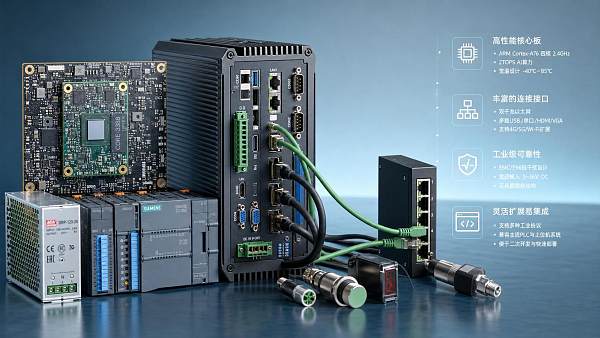
Industrial equipment is becoming more connected, software-defined, and data-intensive. As a result, embedded systems are no longer isolated control boards hidden inside a machine. They often sit at the intersection of sensors, communications, edge analytics, cloud platforms, compliance requirements, and service workflows.
This shift changes the selection criteria. A system that meets functional requirements today may still become a weak choice if it has limited I/O flexibility, uncertain component availability, poor thermal tolerance, or weak software support. In sectors influenced by regional sourcing policies and supply chain volatility, those issues can delay entire projects.
For that reason, embedded systems selection increasingly reflects business resilience as much as engineering capability. The best-fit option is usually the one that balances technical performance with manufacturability, maintainability, vendor transparency, and long-term availability.
What an industrial embedded system really needs to do
In an industrial setting, embedded systems serve specific operational tasks rather than general computing needs. They may control motion, acquire sensor data, manage human-machine interfaces, process video, run communication gateways, or coordinate power electronics. The required specifications depend on that role.
A compact ARM-based module may be enough for a field sensor gateway. A machine vision cell may require GPU acceleration, high-speed memory, and deterministic data transfer. A medical device may prioritize safety architecture, traceability, and validated software behavior over raw throughput.
Simple comparisons can therefore be misleading. Two embedded systems with similar processors may produce very different project outcomes because of their thermal design, OS support, board layout quality, EMC behavior, or vendor documentation.
Core functional layers to review
- Compute resources, including CPU architecture, memory, storage, and accelerator support.
- Interface capability, such as CAN, RS-485, Ethernet, USB, SPI, I2C, GPIO, and fieldbus options.
- Environmental endurance, including vibration tolerance, ingress protection, thermal range, and power stability.
- Software maturity, covering BSP quality, operating system support, security updates, and development tools.
- Lifecycle reliability, including component longevity, revision control, and repair or replacement planning.
The specifications that matter most
A useful way to assess embedded systems is to look beyond headline specs and ask how each parameter affects real deployment. The table below summarizes the dimensions that usually deserve the closest attention.
Performance is only useful when it is sustained
Many embedded systems look strong in benchmark conditions. Industrial projects should instead verify sustained performance inside target enclosures, under continuous load, and across the expected temperature range. Fanless designs, for example, may be excellent for reliability, but only if heat dissipation has been properly engineered.
Connectivity should match the installation reality
Wireless support, multi-gigabit networking, and modern protocols can add value, yet the practical need is often simpler. A robust mix of industrial Ethernet, serial communication, isolated I/O, and gateway compatibility may be more valuable than advanced features that remain unused.
How priorities change by application scenario
The same embedded systems checklist should not be applied identically across every project. Priorities shift with operating conditions, compliance expectations, and service models.
Factory automation and machine control
Here, timing consistency, fieldbus support, EMI resistance, and long-term availability usually outweigh cosmetic interface features. Mechanical vibration and electrical noise are often as important as processor class.
Energy and power infrastructure
Remote monitoring, power stability, cybersecurity, and harsh-environment tolerance become central. Embedded systems used in storage, charging, or renewable installations often need dependable edge communication and minimal maintenance demand.
Smart devices and industrial electronics
Miniaturization, efficient power use, UI capability, and upgrade flexibility usually receive more attention. If future product variants are likely, modular embedded systems can reduce redesign effort and shorten validation cycles.
Healthcare technology and regulated equipment
Traceability, documentation quality, version control, and stable software baselines are especially important. In these environments, a technically impressive platform may still be a poor fit if supplier documentation does not support regulatory review.
Supplier evaluation is part of the specification
For industrial embedded systems, the supplier should be evaluated almost like an extension of the product. Hardware capability without credible support can create the same delays as a weak technical design. This is particularly relevant in global sourcing, where procurement, engineering, logistics, and compliance need alignment.
A strong supplier profile usually includes transparent roadmap communication, documented revision control, export and compliance awareness, and clear answers on component sourcing. Decision-makers increasingly rely on specialist intelligence sources to compare those signals, rather than depending only on promotional claims or incomplete directory listings.
This is where curated B2B intelligence becomes useful. In a platform environment like TradeNexus Pro, embedded systems can be viewed not only as components, but as part of a wider industrial decision landscape involving sector trends, supplier credibility, and long-term strategic fit.
A practical framework for shortlisting options
When comparing embedded systems, a structured shortlist usually works better than open-ended browsing. The aim is to narrow choices using project realities, not idealized feature maps.
- Define the operating environment before reviewing processor families.
- Separate essential interfaces from optional expansion features.
- Estimate three-year and five-year support needs, not just launch requirements.
- Check thermal, power, and enclosure constraints early.
- Request lifecycle statements, software support details, and revision history policies.
- Test one realistic use case before approving broader rollout.
This approach reduces the tendency to overbuy on performance and underbuy on durability or support. It also makes internal comparison easier when multiple teams are involved in vendor evaluation.
What to do next
The best embedded systems choices are usually made before supplier discussions become urgent. A clear requirement matrix, grounded in operating conditions and lifecycle expectations, makes technical review far more reliable. It also helps reveal whether a platform is truly industrial-ready or simply adapted from a commercial design.
A sensible next step is to map current project needs against future service, compliance, and expansion risks. From there, compare embedded systems by sustained performance, interface fit, software maturity, and supplier transparency. That kind of structured evaluation creates better decisions now and fewer corrections later.
Get weekly intelligence in your inbox.
No noise. No sponsored content. Pure intelligence.
 Oct 08, 2026How Digital Health Improves Diagnostic Accuracy and Workflow in Clinical LabsHow Digital Health Improves Diagnostic Accuracy and Workflow in Clinical Labs
 Oct 07, 2026Selecting Voice Picking Systems for German Warehouses: Integration, Languages and ROISelecting Voice Picking Systems for German Warehouses: Integration, Languages and ROI
 Oct 06, 2026How to Choose Last Mile Dispatch Software for On-Time Delivery at ScaleHow to Choose Last Mile Dispatch Software for On-Time Delivery at Scale
 Oct 05, 2026Vietnam’s Consumer Electronics Market: Demand Shifts and Sourcing OpportunitiesVietnam’s Consumer Electronics Market: Demand Shifts and Sourcing Opportunities
 Oct 04, 2026Digital Health Investment Priorities for Providers: Improving Access, Outcomes, and EfficiencyDigital Health Investment Priorities for Providers: Improving Access, Outcomes, and Efficiency
 Oct 03, 2026How to Specify an FR4 Custom PCB Board for High-Voltage and High-Heat DesignsHow to Specify an FR4 Custom PCB Board for High-Voltage and High-Heat Designs
 Oct 02, 2026ERP Software Market Intelligence: Adoption, Pricing, and Vendor Signals to WatchERP Software Market Intelligence: Adoption, Pricing, and Vendor Signals to Watch
 Oct 01, 2026How to Select Calibrated Temperature Data Loggers for GMP Cold Storage MonitoringHow to Select Calibrated Temperature Data Loggers for GMP Cold Storage Monitoring
 Sep 30, 2026Custom Molded Rubber Pricing: What Drives Unit Cost and Tooling Fees?Custom Molded Rubber Pricing: What Drives Unit Cost and Tooling Fees?
 Sep 29, 2026How to Evaluate Energy Management Software Vendors for Multi-Site OperationsHow to Evaluate Energy Management Software Vendors for Multi-Site Operations
 Sep 28, 2026How to Select a DIN Rail Smart Meter for Multi-Circuit Energy MonitoringHow to Select a DIN Rail Smart Meter for Multi-Circuit Energy Monitoring
 Sep 27, 2026TWS Earbuds in Vietnam: Demand Drivers, Price Tiers, and Retail Channel OpportunitiesTWS Earbuds in Vietnam: Demand Drivers, Price Tiers, and Retail Channel Opportunities
 Sep 26, 2026How UAE Clinics Can Qualify a Smart Glucometer Supplier for Accuracy and ComplianceHow UAE Clinics Can Qualify a Smart Glucometer Supplier for Accuracy and Compliance
 Sep 25, 2026Buying Aesthetic Lasers in the USA: FDA Status, Wavelengths, and Service SupportBuying Aesthetic Lasers in the USA: FDA Status, Wavelengths, and Service Support
 Sep 24, 2026Laser Cutting Brass Sheet: How to Prevent Burrs and Heat Marks on Thin PartsLaser Cutting Brass Sheet: How to Prevent Burrs and Heat Marks on Thin Parts
 Sep 23, 2026How to Choose Lightweight ANC Headphones for Comfortable All-Day TravelHow to Choose Lightweight ANC Headphones for Comfortable All-Day Travel
 Sep 22, 2026IPX5 TWS Bluetooth Earbuds: What Protection Do They Offer for Workouts?IPX5 TWS Bluetooth Earbuds: What Protection Do They Offer for Workouts?
 Sep 21, 2026What to Look for in a Grid Integration Company for Utility-Scale Solar ProjectsWhat to Look for in a Grid Integration Company for Utility-Scale Solar Projects
 Sep 20, 2026Microgrid Controller Pricing: What Drives Cost in Commercial Energy Projects?Microgrid Controller Pricing: What Drives Cost in Commercial Energy Projects?
 Sep 19, 2026How to Choose a GaN Charger for Laptops Without Compromising Power or PortabilityHow to Choose a GaN Charger for Laptops Without Compromising Power or Portability
 Sep 18, 2026Floating Solar Farm Costs: CAPEX, OPEX, and the Site Factors That Shape ROIFloating Solar Farm Costs: CAPEX, OPEX, and the Site Factors That Shape ROI
 Sep 17, 2026Drone Delivery Solutions for Last-Mile Routes: Site, Payload, and Range PlanningDrone Delivery Solutions for Last-Mile Routes: Site, Payload, and Range Planning
 Sep 16, 2026When Low-Volume Electronics Manufacturing Makes More Sense Than Mass ProductionWhen Low-Volume Electronics Manufacturing Makes More Sense Than Mass Production
 Sep 15, 2026Wholesale WiFi Smart Switches: What Buyers Should Verify Before OrderingWholesale WiFi Smart Switches: What Buyers Should Verify Before Ordering
 Sep 14, 2026How to Select IoT Sensors for Reliable Monitoring in Harsh Industrial EnvironmentsHow to Select IoT Sensors for Reliable Monitoring in Harsh Industrial Environments
 Sep 13, 2026How Procurement Teams Can Improve Supplier Reliability With Supply Chain VisibilityHow Procurement Teams Can Improve Supplier Reliability With Supply Chain Visibility
 Sep 12, 2026Smart Manufacturing Trends 2026: What Leaders Should Prioritize for ROISmart Manufacturing Trends 2026: What Leaders Should Prioritize for ROI



























