INMETRO Adds Wi-Fi 7 Gateways & Edge AI Boxes to Brazil IoT Certification
On May 6, 2026, Brazil’s National Institute of Metrology, Standardization and Industrial Quality (INMETRO) issued Ordinance No. 44/2026, mandating compulsory certification for Wi-Fi 7–enabled IoT gateways and edge AI boxes equipped with NPUs—particularly those supporting vision recognition and voice processing. The regulation takes effect November 1, 2026. Importers, manufacturers, and distributors supplying these devices to the Brazilian market—especially those based in China, which accounts for over 62% of such imports—must now prepare for compliance across RF compatibility, cybersecurity, and energy efficiency requirements.
Event Overview
On May 6, 2026, INMETRO published Ordinance No. 44/2026, formally adding two product categories to its mandatory conformity assessment scheme: (1) IoT gateways supporting Wi-Fi 7 protocol; and (2) edge AI boxes integrating neural processing units (NPUs), specifically those used for visual recognition or voice processing applications. The requirement becomes enforceable on November 1, 2026. Certification must be conducted by accredited local laboratories in Brazil, covering three technical domains: radiofrequency compatibility (per ABNT NBR 15601), cybersecurity (per ABNT ISO/IEC 27001), and energy efficiency (under PROCEL program).
Which Subsectors Are Affected
Direct Exporters & Trading Companies
Companies exporting Wi-Fi 7 gateways or edge AI boxes from China—and other manufacturing hubs—to Brazil are directly affected. Since China supplies over 62% of such imports into Brazil, exporters face immediate compliance obligations before shipment. Non-compliant products will be barred from customs clearance after November 1, 2026.
Original Equipment Manufacturers (OEMs) & Contract Manufacturers
OEMs producing certified models for global brands—or contract manufacturers assembling devices for export—must verify whether their current designs meet all three test criteria. Product redesign or firmware updates may be needed to satisfy ABNT NBR 15601 (RF immunity/emission) and ABNT ISO/IEC 27001 (e.g., secure boot, update integrity, credential management).
Distribution & Channel Partners
Brazilian importers, distributors, and e-commerce platforms selling these devices must confirm certification status prior to resale. Post-November 2026, uncertified inventory may not be legally marketed or supported under warranty—posing both operational and reputational risk.
Supply Chain & Certification Support Providers
Third-party labs, certification consultants, and logistics firms offering INMETRO-related services will see increased demand for localized testing coordination, documentation review, and lab submission support—particularly for the new cybersecurity and NPU-specific validation elements.
What Relevant Companies or Practitioners Should Focus On Now
Monitor official INMETRO guidance on implementation timelines and scope clarifications
While Ordinance No. 44/2026 is effective November 1, 2026, INMETRO may issue complementary technical notes or FAQs regarding NPU-specific evaluation criteria or Wi-Fi 7 channel/bandwidth definitions. Stakeholders should subscribe to INMETRO’s official notifications and track updates via its public portal.
Prioritize product families with highest Brazilian market exposure
Given limited lab capacity and lead times, companies should identify which SKUs are most frequently imported into Brazil—especially those already in active distribution—and initiate certification planning first. Products without existing ABNT NBR 15601 or PROCEL reports will require full retesting.
Distinguish between policy signal and operational readiness
This ordinance reflects a broader regulatory shift toward performance-based, use-case-aware IoT oversight—not just radiofrequency safety. However, the cybersecurity component remains aligned with ISO/IEC 27001 (a management system standard), not device-specific frameworks like ETSI EN 303 645. Current certification does not yet mandate hardware-rooted trust anchors or formal vulnerability disclosure policies.
Begin coordinating with accredited Brazilian labs ahead of Q3 2026
Accredited labs in Brazil report average turnaround times of 8–12 weeks for full tripartite certification. To meet the November 1 deadline, submissions should be finalized no later than early August 2026—requiring advance sample preparation, documentation translation, and internal technical alignment.
Editorial Perspective / Industry Observation
Observably, this update signals INMETRO’s move toward regulating IoT devices not only by transmission technology (e.g., Wi-Fi generation) but also by computational architecture (e.g., NPU integration) and functional capability (e.g., real-time vision/voice inference). Analysis shows that the inclusion of edge AI boxes—rather than general-purpose computing hardware—suggests targeted scrutiny of devices operating autonomously at network peripheries, where security and energy behavior are less centrally controllable. From an industry perspective, this is better understood as an early-stage regulatory signal rather than a fully matured framework: the cybersecurity assessment remains tied to organizational controls (ISO/IEC 27001), not device-level assurance, and no specific NPU benchmarking or AI model transparency requirements are defined yet. Continued observation is warranted for potential alignment with emerging Latin American harmonization efforts or future updates referencing IEC TR 63297 or ISO/IEC 27002:2022 Annex A.81 (AI security controls).
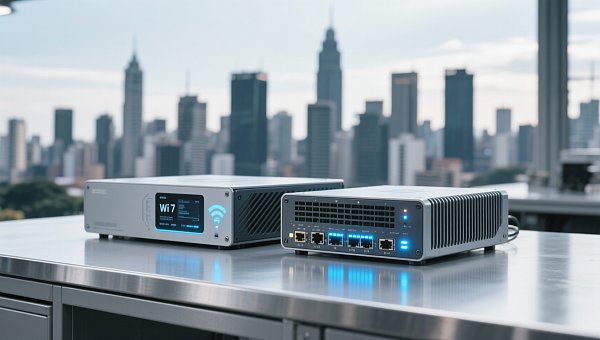
In summary, INMETRO’s Ordinance No. 44/2026 introduces enforceable certification for two high-growth IoT device categories entering the Brazilian market. Its significance lies less in immediate disruption and more in its indication of a maturing, functionally grounded regulatory approach to connected devices. For stakeholders, it is currently more accurate to view this as a structured preparation milestone—not a sudden compliance cliff—where proactive alignment with local testing infrastructure and phased certification planning delivers measurable advantage.
Source: INMETRO Ordinance No. 44/2026 (published May 6, 2026); official INMETRO regulatory database; publicly reported import share data from Brazilian foreign trade statistics (SECEX/MRE).
Note: Implementation details—including lab accreditation status for NPU-specific evaluations and interpretation of ‘edge AI box’ boundaries—remain subject to further clarification by INMETRO and are under ongoing observation.
Get weekly intelligence in your inbox.
No noise. No sponsored content. Pure intelligence.
 Sep 21, 2026What to Look for in a Grid Integration Company for Utility-Scale Solar ProjectsWhat to Look for in a Grid Integration Company for Utility-Scale Solar Projects
 Sep 20, 2026Microgrid Controller Pricing: What Drives Cost in Commercial Energy Projects?Microgrid Controller Pricing: What Drives Cost in Commercial Energy Projects?
 Sep 19, 2026How to Choose a GaN Charger for Laptops Without Compromising Power or PortabilityHow to Choose a GaN Charger for Laptops Without Compromising Power or Portability
 Sep 18, 2026Floating Solar Farm Costs: CAPEX, OPEX, and the Site Factors That Shape ROIFloating Solar Farm Costs: CAPEX, OPEX, and the Site Factors That Shape ROI
 Sep 17, 2026Drone Delivery Solutions for Last-Mile Routes: Site, Payload, and Range PlanningDrone Delivery Solutions for Last-Mile Routes: Site, Payload, and Range Planning
 Sep 16, 2026When Low-Volume Electronics Manufacturing Makes More Sense Than Mass ProductionWhen Low-Volume Electronics Manufacturing Makes More Sense Than Mass Production
 Sep 15, 2026Wholesale WiFi Smart Switches: What Buyers Should Verify Before OrderingWholesale WiFi Smart Switches: What Buyers Should Verify Before Ordering
 Sep 14, 2026How to Select IoT Sensors for Reliable Monitoring in Harsh Industrial EnvironmentsHow to Select IoT Sensors for Reliable Monitoring in Harsh Industrial Environments
 Sep 13, 2026How Procurement Teams Can Improve Supplier Reliability With Supply Chain VisibilityHow Procurement Teams Can Improve Supplier Reliability With Supply Chain Visibility
 Sep 12, 2026Smart Manufacturing Trends 2026: What Leaders Should Prioritize for ROISmart Manufacturing Trends 2026: What Leaders Should Prioritize for ROI
 Sep 11, 2026B2B Market Analysis: How Buyers Evaluate Suppliers, Pricing, and Delivery RiskB2B Market Analysis: How Buyers Evaluate Suppliers, Pricing, and Delivery Risk
 Sep 10, 2026Residential Solar Kits in Canada: How to Size a System for Your Home and ClimateResidential Solar Kits in Canada: How to Size a System for Your Home and Climate
 Sep 09, 2026How to Specify a Syringe Assembly Line for High-Volume Sterile ProductionHow to Specify a Syringe Assembly Line for High-Volume Sterile Production
 Sep 08, 2026How to Evaluate Warehouse Robotics System Suppliers for Reliable Multi-Site DeploymentHow to Evaluate Warehouse Robotics System Suppliers for Reliable Multi-Site Deployment
 Sep 07, 2026Renewable Geothermal Energy Explained: How It Works for Heating and PowerRenewable Geothermal Energy Explained: How It Works for Heating and Power
 Sep 07, 2026How to Choose an Industrial Packaging Robot Manufacturer for Your Production LineHow to Choose an Industrial Packaging Robot Manufacturer for Your Production Line
 Sep 05, 2026How to Evaluate a Turnkey Hydro Turbine Generator Supplier for Remote Power ProjectsHow to Evaluate a Turnkey Hydro Turbine Generator Supplier for Remote Power Projects
 Sep 04, 2026Automated Ultrasonic Welding for Thermoplastic Assemblies: Process Controls That MatterAutomated Ultrasonic Welding for Thermoplastic Assemblies: Process Controls That Matter
 Sep 03, 2026Energy Forecasting for Grid Planning: Sizing Solar and Storage CapacityEnergy Forecasting for Grid Planning: Sizing Solar and Storage Capacity
 Sep 02, 2026Which Metrics Should an Energy Analytics Dashboard Track for Factory Energy Management?Which Metrics Should an Energy Analytics Dashboard Track for Factory Energy Management?
 Sep 01, 2026How Warehouse Voice Picking Improves Accuracy and Throughput in Order FulfillmentHow Warehouse Voice Picking Improves Accuracy and Throughput in Order Fulfillment
 Aug 31, 2026How to Automate Dropshipping Order Processing Without Overselling StockHow to Automate Dropshipping Order Processing Without Overselling Stock
 Aug 30, 2026How to Evaluate a Smart Lighting Supplier for Multi-Site Commercial ProjectsHow to Evaluate a Smart Lighting Supplier for Multi-Site Commercial Projects
 Aug 29, 2026Recent Advances in Smart Manufacturing and Materials Reshaping Factory InvestmentRecent Advances in Smart Manufacturing and Materials Reshaping Factory Investment
 Aug 29, 2026Selecting Lightweight Aluminum Extrusions for Strength-Critical Industrial DesignsSelecting Lightweight Aluminum Extrusions for Strength-Critical Industrial Designs
 Aug 29, 2026Vertical Powder Anodizing Explained: Process Controls for Uniform Coating QualityVertical Powder Anodizing Explained: Process Controls for Uniform Coating Quality
 Aug 29, 2026PV Module Product Due Diligence: What Buyers Should Verify Before ContractingPV Module Product Due Diligence: What Buyers Should Verify Before Contracting