
Smart Home Hubs Explained: Which Protocols and Devices Matter Most?
Why do smart home hubs matter more than many buyers expect?
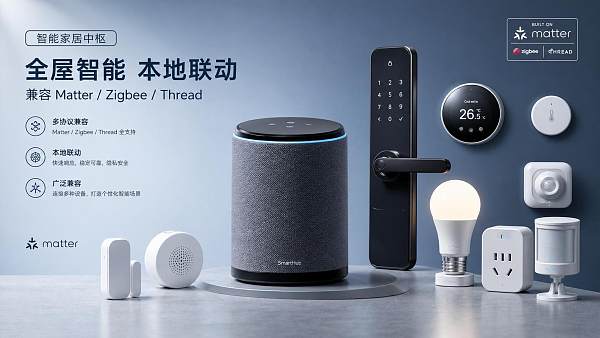
A smart home hub looks simple on the surface. It connects devices, runs routines, and lets everything work from one app or voice assistant.
The real value, however, is compatibility. A good hub reduces app clutter, prevents connection conflicts, and keeps devices useful when you add more products later.
That matters because connected homes no longer run on one standard. Lights, locks, sensors, speakers, and thermostats often rely on different wireless protocols.
When people search for smart home hubs, they usually start with brands. In practice, the better question is whether the hub supports the protocols your devices need.
This is also why the topic reaches beyond home convenience. Smart electronics now sit inside a wider technology supply chain, where standards, interoperability, and security shape product value.
That broader view appears often in sector analysis from platforms such as TradeNexus Pro, where connected hardware is discussed less as a gadget trend and more as an ecosystem decision.
So if your goal is a reliable setup, start by understanding how smart home hubs manage communication, automation, and future expansion.
Which protocols actually matter when comparing smart home hubs?
This is usually the point where buying gets confusing. Product pages mention Matter, Zigbee, Thread, Z-Wave, Bluetooth, and Wi-Fi, often without explaining the difference clearly.
A practical way to read them is to separate device language from network behavior. Some standards improve compatibility, while others define how devices connect across your home.
Matter: the compatibility layer many people were waiting for
Matter is designed to let certified devices work across major ecosystems. It does not replace every radio technology, but it improves cross-brand setup and control.
If you want flexibility between Apple Home, Google Home, Alexa, and similar platforms, Matter support is worth prioritizing.
Thread: low-power networking for modern devices
Thread is a mesh network protocol. It is efficient, responsive, and especially useful for sensors, locks, and battery-powered devices.
Many newer smart home hubs include a Thread border router. Without that feature, some Thread-based devices cannot reach the rest of your system properly.
Zigbee: mature, common, and still relevant
Zigbee remains widely used in bulbs, plugs, switches, and sensors. It is proven, stable, and often preferred for large device networks.
Many smart home hubs support Zigbee because it reduces Wi-Fi congestion and gives low-power devices a dependable mesh structure.
Wi-Fi and Bluetooth: easy, but not always ideal for everything
Wi-Fi devices are common because they are simple to install. The downside is that too many Wi-Fi products can strain home networks and raise power consumption.
Bluetooth is useful for setup and nearby control, but it is usually not the strongest backbone for a whole-home automation system.
If you remember one thing, make it this: the best smart home hubs support more than one useful standard and handle them well locally.
Do you really need a hub, or can apps and Wi-Fi devices be enough?
For a small setup, separate apps can work. A few bulbs, one camera, and a smart speaker may not justify a dedicated hub.
The equation changes once automation becomes important. If you want motion sensors to trigger lights, door locks to set scenes, or routines to run offline, hubs become much more useful.
Another reason is resilience. Many Wi-Fi-only devices depend heavily on cloud services. When the internet fails, some functions slow down or stop entirely.
Smart home hubs with strong local control reduce that risk. They can keep schedules, sensor triggers, and room-based routines running inside the home.
That local-first approach is becoming a bigger talking point in smart electronics coverage, especially where reliability and long-term support matter more than novelty.
So, no, a hub is not mandatory for every home. But if your setup is growing, it usually becomes the cleaner choice.
Which devices benefit most from smart home hubs?
Not every connected product gains the same value from central control. Some categories become noticeably better when they are tied into smart home hubs.
- Sensors: motion, contact, temperature, and leak sensors become more useful when they trigger actions across brands.
- Lighting: bulbs, dimmers, and switches benefit from grouped scenes, schedules, and faster local commands.
- Locks and security devices: centralized control helps with alerts, entry routines, and better status visibility.
- Thermostats and climate devices: hubs can tie occupancy, weather, and time-based logic together.
- Shades and plugs: these are ideal for automation because they often follow predictable patterns.
Cameras are a special case. Some work smoothly with hubs, while others keep advanced features inside their own cloud platforms.
In practical terms, smart home hubs add the most value where timing, automation, and multi-device coordination matter every day.
What mistakes cause the most regret after buying?
The biggest mistake is assuming a well-known brand guarantees broad compatibility. Many buyers discover later that certain devices need a different bridge, app, or ecosystem.
Another common issue is overlooking local control. A hub may support your device, yet still rely on cloud commands for important routines.
Security is often treated as a side topic, but it should not be. Smart home hubs sit near locks, cameras, occupancy data, and household behavior patterns.
Before choosing, verify software update history, account protections, and whether the manufacturer clearly explains privacy handling.
It also helps to watch for ecosystem lock-in. Some platforms make it easy to start, then harder to mix in new brands later.
This is where more research pays off. Editorial platforms such as TradeNexus Pro often frame connected technology around trust signals, vendor clarity, and long-term standards support.
That mindset is useful even at home. A smart device is not only a purchase. It is an ongoing relationship with software, updates, and platform decisions.
How should you choose among smart home hubs without overbuying?
A balanced decision usually starts with three lists: devices you already own, devices you plan to add, and automations you actually want.
That simple exercise prevents a common problem: buying advanced hardware for features you may never use.
A practical checklist helps
- Confirm support for Matter if cross-platform flexibility matters.
- Check for Thread border router capability if newer low-power devices are on your list.
- Review Zigbee support if you expect many sensors or lights.
- Look at local automation options, not just voice assistant integration.
- Read how the hub behaves during internet outages.
- Compare app quality, update frequency, and ease of migration.
Cost also deserves a wider view. The hub price is only one part of the total. Extra bridges, subscriptions, premium features, and replacement devices can raise the real cost later.
For most homes, the best smart home hubs are not the ones with the longest feature list. They are the ones that fit your protocol mix and stay manageable over time.
What is the smartest next step before you build or upgrade?
Start small, but plan with standards in mind. That is usually the most reliable path.
Map your current devices by protocol. Then decide whether your future setup depends more on lighting, security, climate, or convenience routines.
From there, compare smart home hubs by compatibility, local control, and update discipline rather than by branding alone.
If you are unsure, prioritize Matter support, solid Zigbee or Thread capability, and a clear history of software maintenance.
The smart home market is becoming more standardized, but it is still fragmented enough to reward careful choices. A little protocol awareness now can prevent expensive dead ends later.
For anyone tracking how connected devices evolve across supply chains and technology sectors, sources like TradeNexus Pro offer useful context on the broader direction of smart electronics.
At home, the takeaway is simple. Choose a hub that matches how your devices communicate, how your routines run, and how much flexibility you want to keep.
Get weekly intelligence in your inbox.
No noise. No sponsored content. Pure intelligence.
 Oct 08, 2026How Digital Health Improves Diagnostic Accuracy and Workflow in Clinical LabsHow Digital Health Improves Diagnostic Accuracy and Workflow in Clinical Labs
 Oct 07, 2026Selecting Voice Picking Systems for German Warehouses: Integration, Languages and ROISelecting Voice Picking Systems for German Warehouses: Integration, Languages and ROI
 Oct 06, 2026How to Choose Last Mile Dispatch Software for On-Time Delivery at ScaleHow to Choose Last Mile Dispatch Software for On-Time Delivery at Scale
 Oct 05, 2026Vietnam’s Consumer Electronics Market: Demand Shifts and Sourcing OpportunitiesVietnam’s Consumer Electronics Market: Demand Shifts and Sourcing Opportunities
 Oct 04, 2026Digital Health Investment Priorities for Providers: Improving Access, Outcomes, and EfficiencyDigital Health Investment Priorities for Providers: Improving Access, Outcomes, and Efficiency
 Oct 03, 2026How to Specify an FR4 Custom PCB Board for High-Voltage and High-Heat DesignsHow to Specify an FR4 Custom PCB Board for High-Voltage and High-Heat Designs
 Oct 02, 2026ERP Software Market Intelligence: Adoption, Pricing, and Vendor Signals to WatchERP Software Market Intelligence: Adoption, Pricing, and Vendor Signals to Watch
 Oct 01, 2026How to Select Calibrated Temperature Data Loggers for GMP Cold Storage MonitoringHow to Select Calibrated Temperature Data Loggers for GMP Cold Storage Monitoring
 Sep 30, 2026Custom Molded Rubber Pricing: What Drives Unit Cost and Tooling Fees?Custom Molded Rubber Pricing: What Drives Unit Cost and Tooling Fees?
 Sep 29, 2026How to Evaluate Energy Management Software Vendors for Multi-Site OperationsHow to Evaluate Energy Management Software Vendors for Multi-Site Operations
 Sep 28, 2026How to Select a DIN Rail Smart Meter for Multi-Circuit Energy MonitoringHow to Select a DIN Rail Smart Meter for Multi-Circuit Energy Monitoring
 Sep 27, 2026TWS Earbuds in Vietnam: Demand Drivers, Price Tiers, and Retail Channel OpportunitiesTWS Earbuds in Vietnam: Demand Drivers, Price Tiers, and Retail Channel Opportunities
 Sep 26, 2026How UAE Clinics Can Qualify a Smart Glucometer Supplier for Accuracy and ComplianceHow UAE Clinics Can Qualify a Smart Glucometer Supplier for Accuracy and Compliance
 Sep 25, 2026Buying Aesthetic Lasers in the USA: FDA Status, Wavelengths, and Service SupportBuying Aesthetic Lasers in the USA: FDA Status, Wavelengths, and Service Support
 Sep 24, 2026Laser Cutting Brass Sheet: How to Prevent Burrs and Heat Marks on Thin PartsLaser Cutting Brass Sheet: How to Prevent Burrs and Heat Marks on Thin Parts
 Sep 23, 2026How to Choose Lightweight ANC Headphones for Comfortable All-Day TravelHow to Choose Lightweight ANC Headphones for Comfortable All-Day Travel
 Sep 22, 2026IPX5 TWS Bluetooth Earbuds: What Protection Do They Offer for Workouts?IPX5 TWS Bluetooth Earbuds: What Protection Do They Offer for Workouts?
 Sep 21, 2026What to Look for in a Grid Integration Company for Utility-Scale Solar ProjectsWhat to Look for in a Grid Integration Company for Utility-Scale Solar Projects
 Sep 20, 2026Microgrid Controller Pricing: What Drives Cost in Commercial Energy Projects?Microgrid Controller Pricing: What Drives Cost in Commercial Energy Projects?
 Sep 19, 2026How to Choose a GaN Charger for Laptops Without Compromising Power or PortabilityHow to Choose a GaN Charger for Laptops Without Compromising Power or Portability
 Sep 18, 2026Floating Solar Farm Costs: CAPEX, OPEX, and the Site Factors That Shape ROIFloating Solar Farm Costs: CAPEX, OPEX, and the Site Factors That Shape ROI
 Sep 17, 2026Drone Delivery Solutions for Last-Mile Routes: Site, Payload, and Range PlanningDrone Delivery Solutions for Last-Mile Routes: Site, Payload, and Range Planning
 Sep 16, 2026When Low-Volume Electronics Manufacturing Makes More Sense Than Mass ProductionWhen Low-Volume Electronics Manufacturing Makes More Sense Than Mass Production
 Sep 15, 2026Wholesale WiFi Smart Switches: What Buyers Should Verify Before OrderingWholesale WiFi Smart Switches: What Buyers Should Verify Before Ordering
 Sep 14, 2026How to Select IoT Sensors for Reliable Monitoring in Harsh Industrial EnvironmentsHow to Select IoT Sensors for Reliable Monitoring in Harsh Industrial Environments
 Sep 13, 2026How Procurement Teams Can Improve Supplier Reliability With Supply Chain VisibilityHow Procurement Teams Can Improve Supplier Reliability With Supply Chain Visibility
 Sep 12, 2026Smart Manufacturing Trends 2026: What Leaders Should Prioritize for ROISmart Manufacturing Trends 2026: What Leaders Should Prioritize for ROI



























