Smart plugs wholesale and the certification gap to check first
In smart plugs wholesale, the biggest risk often appears before price, lead time, or design review: certification gaps. For quality control and safety managers, checking market-specific compliance first can prevent customs delays, product recalls, and liability exposure. This article outlines the certifications, test reports, and supplier verification points that should be confirmed before moving any smart plug order forward.
Why is certification the first checkpoint in smart plugs wholesale?
In smart plugs wholesale, compliance is not a paperwork formality. It is the gatekeeper for market entry, electrical safety, radio legality, consumer trust, and post-sale risk control. A smart plug combines power switching, wireless communication, thermal management, plastics, firmware, and user interaction. That means it may fall under several regulatory layers at once, including electrical safety, EMC, RF, hazardous substances, energy efficiency, and cybersecurity-related expectations depending on the destination market.
For quality and safety teams, the practical issue is simple: a factory may offer an attractive product and a convincing data sheet, but if the certification file does not match the exact model, plug type, rating, wireless module, or target country, the order can become non-compliant overnight. The cost impact goes beyond rejected shipments. It can include relabeling, retesting, storage charges, recall exposure, insurance disputes, and contract friction with distributors or retailers.
This is why experienced buyers in smart plugs wholesale often review compliance before negotiating price. A low unit cost cannot offset a failed customs inspection or a market surveillance complaint. The first question is not “How cheap is this model?” but “Can this exact model legally and safely enter the intended market?”
Which certifications should quality managers check first for different markets?
The answer depends on where the smart plug will be sold, because smart plugs wholesale is highly market-specific. A product suitable for one region may still require different testing, markings, documentation, or registration elsewhere. Quality managers should begin with a destination-based checklist rather than a generic “certified” claim from the supplier.
For the United States, commonly reviewed items include ETL or UL-based safety certification for the finished product, FCC compliance for wireless communication and electromagnetic emissions, and state-level requirements where relevant. For Canada, cETL or equivalent recognition aligned to Canadian requirements is usually expected. For the European market, CE marking is not one single certificate but a framework that may involve LVD, EMC, RED, and RoHS obligations, supported by a Declaration of Conformity and technical file. For the UK, UKCA may apply depending on the product path and timing. In Australia and New Zealand, RCM-related compliance obligations may be relevant. In some Middle East and Southeast Asian markets, local approvals, importer registration, or national deviations may also apply.
A common mistake in smart plugs wholesale is assuming that a module certification automatically covers the whole product. A Wi-Fi or Zigbee module may have prior approvals, but the assembled smart plug still needs end-product assessment. Socket structure, enclosure material, relay heating, creepage distance, PCB layout, and firmware behavior can all affect conformity.
This table is only a starting map. In smart plugs wholesale, the correct approach is to build a destination matrix for each SKU, because the compliance path can change with wireless protocol, load rating, timer function, USB integration, or app-based control features.
What documents prove that a smart plug is really certified, not just claimed to be certified?
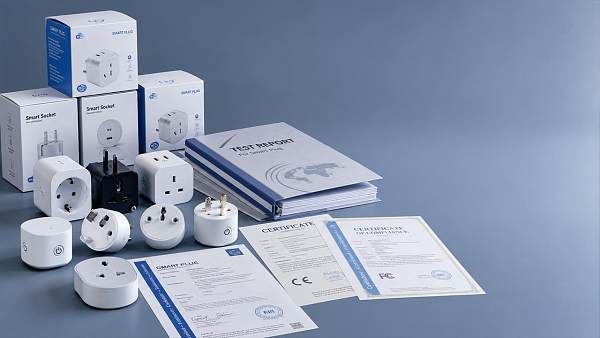
One of the biggest risks in smart plugs wholesale is document substitution. Suppliers sometimes send a test report for a similar model, an expired certificate, or a component-level approval instead of end-product certification. Quality control personnel should ask for a document set that can be cross-checked, not just a single PDF with a familiar logo.
Start with the certificate or listing itself. Check the issuing body, scope, model number, trademark, applicant name, electrical ratings, and standard version. Then compare those details against the product drawing, carton label, user manual, and purchase order. If the smart plug sold to you carries a different plug configuration, housing, PCB revision, or relay rating than the certified version, the file may not cover your order.
Next, review the associated test reports. In smart plugs wholesale, reports should align with the declared certification route. For wireless smart plugs, EMC and RF reports matter alongside electrical safety reports. For EU shipments, the Declaration of Conformity should cite the applicable directives or regulations and relevant harmonized standards. For restricted substances, request RoHS evidence, and where retailer requirements are stricter, ask about REACH, packaging compliance, and material declarations.
It is also wise to verify certification status directly in the issuing body’s public database when available. A downloadable file can be edited; an active listing in the certifier’s system is harder to fake. Good supplier verification in smart plugs wholesale means checking both the document and the source behind the document.
How can you tell whether the certification covers the exact smart plug you plan to buy?
This is where many teams lose control. In smart plugs wholesale, a certificate may appear valid, but the actual shipped item can differ in ways that matter. The most important task is model matching. Confirm the commercial model, internal model, PCB version, firmware version where relevant, socket standard, plug pin layout, current rating, voltage rating, Wi-Fi or Bluetooth module identity, and enclosure material grade.
For example, if the certified product is rated at 10A but your procurement version is labeled 16A, the thermal and endurance profile may no longer match. If the original certified model used a relay from one approved brand and the production lot substitutes another, compliance assumptions may weaken. If the test sample had flame-retardant housing resin but mass production switches to a lower-cost material, fire safety risk rises sharply.
Quality managers in smart plugs wholesale should therefore request a controlled product package: BOM snapshot, critical component list, certification-linked photos, label artwork, and revision history. During pre-shipment inspection, compare the production units against these approved references. This step is especially important for private label orders, where branding changes sometimes trigger labeling or documentation inconsistencies.
What are the most common certification gaps and red flags in smart plugs wholesale?
The most common gap is mismatch between target market and certification scope. A second is mismatch between certified sample and production version. A third is overreliance on supplier statements without independent verification. These issues are frequent because smart plugs wholesale often moves fast, and teams may prioritize pricing or launch dates over technical review.
Watch for red flags such as these:
- The supplier says “CE certified” but cannot provide a complete DoC and supporting reports.
- The file number belongs to another company or another product category.
- The report photos do not match the current housing, plug face, or labeling.
- Electrical ratings on the carton, manual, and product label are inconsistent.
- Wireless module approval is presented as if it certifies the full smart plug.
- There is no change-control process for relay, plastic resin, power cord, or PCB updates.
- The supplier avoids sharing the certifier name, test laboratory details, or public database link.
Another overlooked issue in smart plugs wholesale is user documentation. Some markets require specific warnings, language obligations, traceability details, disposal marks, or importer information. A technically compliant product can still be blocked if the label set or manual is incomplete.
How should safety managers audit suppliers before placing a smart plug order?
A strong supplier audit for smart plugs wholesale should connect compliance files with manufacturing reality. Start by confirming who owns the certification: the factory, a trading company, a related entity, or the brand customer. Then ask whether the factory is authorized to produce under that certification scope. If subcontracting is involved, the risk level rises and traceability becomes even more important.
Review the factory’s incoming quality controls for critical safety parts, including relays, varistors, fuses, shunts, PCB materials, power blades, and flame-retardant plastics. Ask how they prevent unauthorized substitutions. In smart plugs wholesale, a supplier with good compliance discipline should be able to show approved vendor lists, IQC records, hi-pot or functional test procedures, burn-in practices if used, and lot traceability methods.
Also assess firmware control. Smart plugs are not only hardware devices; they depend on software for switching logic, overload behavior, timing functions, and network interaction. If firmware updates can change operating behavior, safety and compliance implications should be reviewed. A mature supplier should have version control, release records, and post-update validation steps.
Finally, include a compliance clause in the purchase agreement. In smart plugs wholesale, contract language should define responsibility for invalid certificates, unauthorized engineering changes, failed inspections, market recalls, and retest costs. Compliance is easier to enforce when obligations are written before production begins.
Does checking certification early save time and cost, or does it slow procurement down?
Early checking almost always saves time in smart plugs wholesale, even if it adds a few days at the evaluation stage. The reason is that compliance problems discovered late are far more disruptive. If gaps appear after tooling, packaging print, or shipment booking, every correction becomes more expensive. By contrast, reviewing files before approval lets buyers reject unsuitable models, request targeted retesting, or shift to a better-qualified supplier before sunk costs accumulate.
It also improves internal coordination. Safety managers, sourcing teams, engineers, and commercial staff can align on one acceptance standard instead of debating after issues emerge. In practical procurement terms, smart plugs wholesale works better when certification review is treated as part of supplier onboarding, not as a final shipping formality.
What is a practical pre-order checklist for smart plugs wholesale?
Before releasing any purchase order, quality and safety teams can use this short decision checklist:
What should you clarify first if you need to move a project forward?
If your team is preparing a smart plugs wholesale program, start the conversation with five practical questions: Which countries will this SKU enter? What exact certification path applies to that model configuration? Which documents prove coverage of the final shipped version? What critical components are compliance-sensitive and locked by change control? Who carries responsibility if certification gaps appear after order placement?
These questions help quality control and safety managers move from assumption to evidence. They also create a stronger foundation for supplier comparison, risk ranking, and contract protection. In smart plugs wholesale, the best first check is not cosmetic quality or quoted lead time. It is whether the product’s compliance story is complete, verifiable, and specific to the market you plan to serve.
For teams needing deeper evaluation, the next step is to align compliance review, sample validation, factory audit findings, and commercial terms into one approval flow. If you need to confirm a specific market path, product variant, testing scope, launch timeline, or supplier cooperation model, those are the priority topics to discuss before any order is released.
Get weekly intelligence in your inbox.
No noise. No sponsored content. Pure intelligence.
 Sep 21, 2026What to Look for in a Grid Integration Company for Utility-Scale Solar ProjectsWhat to Look for in a Grid Integration Company for Utility-Scale Solar Projects
 Sep 20, 2026Microgrid Controller Pricing: What Drives Cost in Commercial Energy Projects?Microgrid Controller Pricing: What Drives Cost in Commercial Energy Projects?
 Sep 19, 2026How to Choose a GaN Charger for Laptops Without Compromising Power or PortabilityHow to Choose a GaN Charger for Laptops Without Compromising Power or Portability
 Sep 18, 2026Floating Solar Farm Costs: CAPEX, OPEX, and the Site Factors That Shape ROIFloating Solar Farm Costs: CAPEX, OPEX, and the Site Factors That Shape ROI
 Sep 17, 2026Drone Delivery Solutions for Last-Mile Routes: Site, Payload, and Range PlanningDrone Delivery Solutions for Last-Mile Routes: Site, Payload, and Range Planning
 Sep 16, 2026When Low-Volume Electronics Manufacturing Makes More Sense Than Mass ProductionWhen Low-Volume Electronics Manufacturing Makes More Sense Than Mass Production
 Sep 15, 2026Wholesale WiFi Smart Switches: What Buyers Should Verify Before OrderingWholesale WiFi Smart Switches: What Buyers Should Verify Before Ordering
 Sep 14, 2026How to Select IoT Sensors for Reliable Monitoring in Harsh Industrial EnvironmentsHow to Select IoT Sensors for Reliable Monitoring in Harsh Industrial Environments
 Sep 13, 2026How Procurement Teams Can Improve Supplier Reliability With Supply Chain VisibilityHow Procurement Teams Can Improve Supplier Reliability With Supply Chain Visibility
 Sep 12, 2026Smart Manufacturing Trends 2026: What Leaders Should Prioritize for ROISmart Manufacturing Trends 2026: What Leaders Should Prioritize for ROI
 Sep 11, 2026B2B Market Analysis: How Buyers Evaluate Suppliers, Pricing, and Delivery RiskB2B Market Analysis: How Buyers Evaluate Suppliers, Pricing, and Delivery Risk
 Sep 10, 2026Residential Solar Kits in Canada: How to Size a System for Your Home and ClimateResidential Solar Kits in Canada: How to Size a System for Your Home and Climate
 Sep 09, 2026How to Specify a Syringe Assembly Line for High-Volume Sterile ProductionHow to Specify a Syringe Assembly Line for High-Volume Sterile Production
 Sep 08, 2026How to Evaluate Warehouse Robotics System Suppliers for Reliable Multi-Site DeploymentHow to Evaluate Warehouse Robotics System Suppliers for Reliable Multi-Site Deployment
 Sep 07, 2026Renewable Geothermal Energy Explained: How It Works for Heating and PowerRenewable Geothermal Energy Explained: How It Works for Heating and Power
 Sep 07, 2026How to Choose an Industrial Packaging Robot Manufacturer for Your Production LineHow to Choose an Industrial Packaging Robot Manufacturer for Your Production Line
 Sep 05, 2026How to Evaluate a Turnkey Hydro Turbine Generator Supplier for Remote Power ProjectsHow to Evaluate a Turnkey Hydro Turbine Generator Supplier for Remote Power Projects
 Sep 04, 2026Automated Ultrasonic Welding for Thermoplastic Assemblies: Process Controls That MatterAutomated Ultrasonic Welding for Thermoplastic Assemblies: Process Controls That Matter
 Sep 03, 2026Energy Forecasting for Grid Planning: Sizing Solar and Storage CapacityEnergy Forecasting for Grid Planning: Sizing Solar and Storage Capacity
 Sep 02, 2026Which Metrics Should an Energy Analytics Dashboard Track for Factory Energy Management?Which Metrics Should an Energy Analytics Dashboard Track for Factory Energy Management?
 Sep 01, 2026How Warehouse Voice Picking Improves Accuracy and Throughput in Order FulfillmentHow Warehouse Voice Picking Improves Accuracy and Throughput in Order Fulfillment
 Aug 31, 2026How to Automate Dropshipping Order Processing Without Overselling StockHow to Automate Dropshipping Order Processing Without Overselling Stock
 Aug 30, 2026How to Evaluate a Smart Lighting Supplier for Multi-Site Commercial ProjectsHow to Evaluate a Smart Lighting Supplier for Multi-Site Commercial Projects
 Aug 29, 2026Recent Advances in Smart Manufacturing and Materials Reshaping Factory InvestmentRecent Advances in Smart Manufacturing and Materials Reshaping Factory Investment
 Aug 29, 2026Selecting Lightweight Aluminum Extrusions for Strength-Critical Industrial DesignsSelecting Lightweight Aluminum Extrusions for Strength-Critical Industrial Designs
 Aug 29, 2026Vertical Powder Anodizing Explained: Process Controls for Uniform Coating QualityVertical Powder Anodizing Explained: Process Controls for Uniform Coating Quality
 Aug 29, 2026PV Module Product Due Diligence: What Buyers Should Verify Before ContractingPV Module Product Due Diligence: What Buyers Should Verify Before Contracting