Hydro turbine generators and the site conditions that decide output
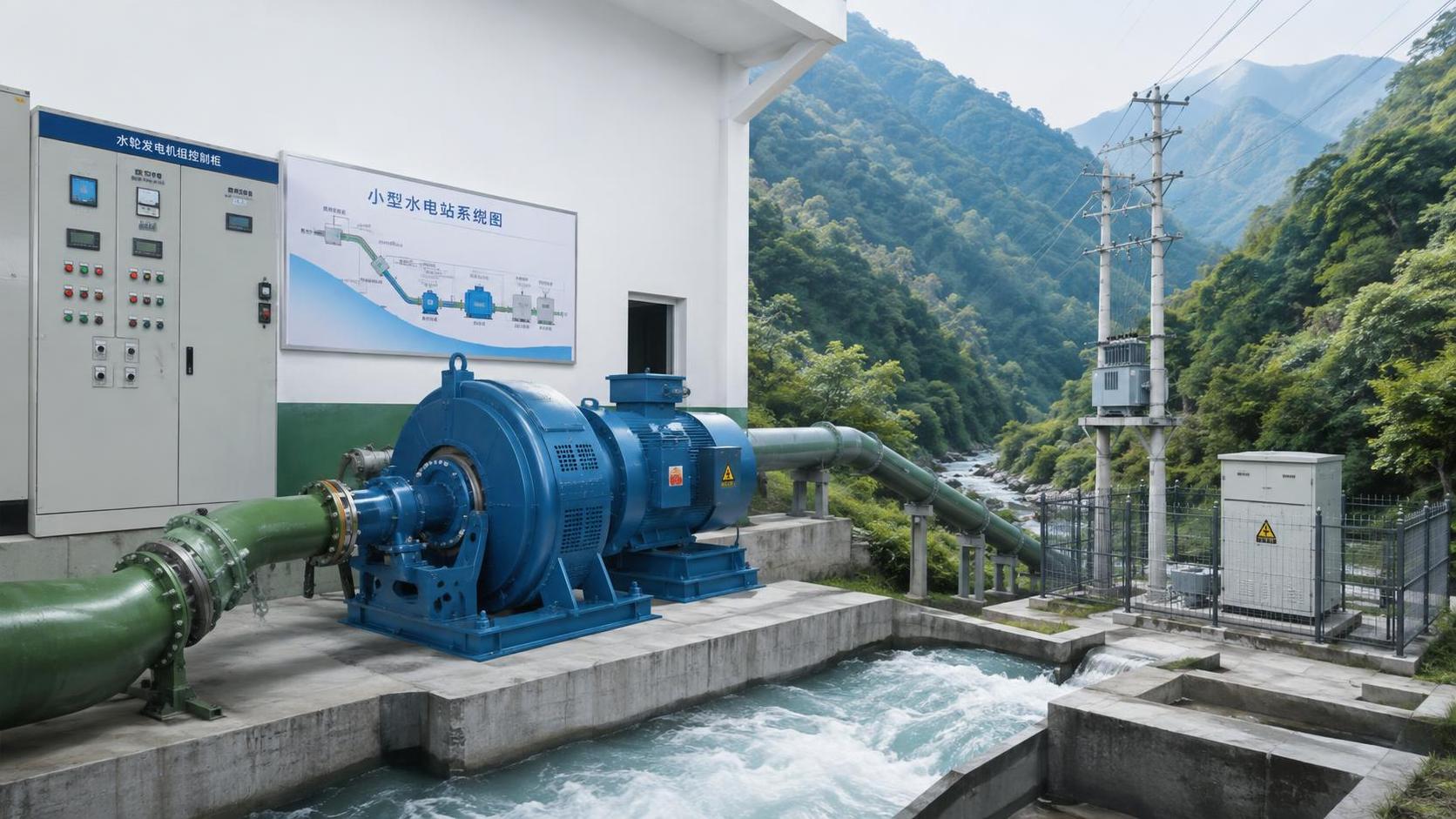
Hydro turbine generators can deliver vastly different results depending on far more than installed capacity alone. For project managers and engineering leads, understanding how head, flow variability, sediment load, grid conditions, and site layout influence output is essential to reducing risk and improving long-term performance. This article outlines the key site conditions that shape generation efficiency, reliability, and investment value.
Why do hydro turbine generators with the same rated capacity produce very different real-world output?
This is one of the most common questions in hydro project planning, and it goes directly to project risk. Two hydro turbine generators may both be labeled at the same megawatt rating, yet their annual energy production can diverge sharply because output depends on the site’s hydraulic reality rather than nameplate numbers alone. Rated capacity is usually based on a specific design head and design flow. Once either condition shifts, actual performance changes.
For project managers, the practical lesson is simple: installed capacity is only one layer of the decision. What matters more is the relationship between water head, available flow throughout the year, turbine efficiency across part-load conditions, outage frequency, and grid acceptance. A technically correct machine placed in a hydraulically unstable or sediment-heavy site can underperform for years, even if the purchase specification looked strong on paper.
Hydro turbine generators are especially sensitive to seasonal conditions. A river with impressive peak flow during the wet season may deliver much lower dry-season output than expected. Likewise, a site with stable flow but low effective head may require a completely different turbine configuration to reach acceptable efficiency. This is why experienced teams evaluate annual energy yield, capacity factor, and dispatch reliability together instead of focusing only on installed megawatts.
Which site conditions matter most when estimating hydro turbine generators output?
Several site variables determine whether hydro turbine generators will operate close to their design point or spend much of the year outside optimal conditions. The most critical factors usually include gross head, net head, flow duration, hydraulic losses, sediment content, water quality, intake design, and grid stability. Among these, net head and flow duration often have the strongest influence on annual generation.
Net head is more important than gross head because it reflects actual usable energy after losses in penstocks, bends, valves, trash racks, and civil structures. A site may appear attractive on a preliminary map, but friction losses or long water conveyance distances can materially reduce available head at the turbine. This is why early hydraulic modeling is not optional for serious procurement decisions.
Flow duration matters just as much. Project teams should not ask only, “What is the peak flow?” They should ask, “How often is that flow available?” and “What proportion of the year can the unit run near best efficiency?” Hydro turbine generators designed around rare peak conditions may spend most of their operating life at reduced efficiency, which affects revenue, maintenance planning, and payback.
Sediment is another decisive condition that is often underestimated during early development. High silt content, abrasive particles, or seasonal sediment surges can damage runners, guide vanes, seals, and cooling systems. Even if generation remains acceptable at first, long-term wear can lower efficiency and raise shutdown frequency. In mountain-fed or monsoon-influenced projects, sediment management deserves the same attention as turbine selection.
For decision-makers on platforms such as TradeNexus Pro, this type of structured evaluation is valuable because it links technical suitability with procurement logic. Hydro turbine generators should be reviewed not only as equipment, but as part of a larger hydraulic, civil, and grid-connected system.
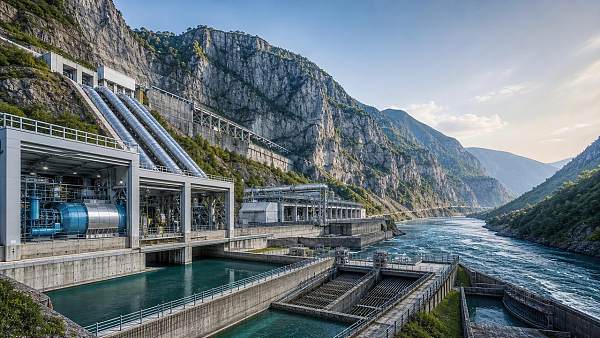
How do head and flow influence the choice and performance of hydro turbine generators?
Head and flow are the foundation of turbine selection. In simple terms, head represents the pressure energy available from elevation difference, while flow represents the volume of water passing through the machine. Hydro turbine generators convert the combination of these two into electrical power, but different turbine families do this best under different conditions.
High-head, lower-flow sites often favor Pelton or other impulse turbine solutions, while medium-head applications may suit Francis turbines, and low-head, high-flow conditions often point toward Kaplan or propeller-type designs. However, project managers should resist turning these into rigid rules. Real projects involve wide seasonal flow bands, environmental flow constraints, fish passage requirements, and budget limits that can shift the best choice.
The critical issue is efficiency across the operating range. A turbine that performs brilliantly at one exact design point may be the wrong asset if the river spends most of the year below that point. In many projects, annual yield is improved not by chasing maximum peak efficiency, but by selecting hydro turbine generators that maintain acceptable efficiency over a wider range of flows. This is particularly important where dispatch obligations, local power demand, or hybrid renewable integration require flexible operation.
Another overlooked point is cavitation risk. At certain head and pressure conditions, poor hydraulic matching can trigger cavitation, leading to pitting, vibration, and premature component damage. That means hydraulic design, turbine setting, and pressure recovery are not abstract engineering details; they are direct determinants of uptime and lifecycle cost.
What mistakes do project teams make when assessing flow variability and annual energy yield?
A frequent mistake is relying on short-term or overly optimistic hydrological data. Hydro turbine generators are long-life assets, so site evaluation should reflect multi-year and ideally long-period flow records. Using a single favorable season or limited gauging campaign can distort generation forecasts and mislead financial models.
Another error is treating average flow as a decision metric by itself. Average values hide volatility. A project may show a respectable annual average, but if water arrives in short bursts with long low-flow intervals, plant operation may be less stable and less profitable than expected. Flow duration curves, exceedance probabilities, and seasonal production profiles provide a more useful basis for evaluating hydro turbine generators.
Teams also sometimes ignore environmental and regulatory constraints. Mandatory ecological release, irrigation demand, upstream reservoir operations, and downstream flood-control rules can all reduce water available for power generation. If these operating constraints are not incorporated early, the selected machine may be oversized for real dispatch conditions.
A final mistake is underestimating climate volatility. In many regions, rainfall patterns are becoming less predictable, and snowmelt timing is shifting. For project leads, the implication is clear: hydro turbine generators should be evaluated against a range of hydrological scenarios, not just a base case. Conservative yield modeling may appear less attractive in the proposal stage, but it typically produces stronger investment resilience.
How do sediment, water quality, and site layout affect reliability and maintenance?
If output is the first priority in project appraisal, reliability is the second. Hydro turbine generators can lose economic value quickly when abrasive sediment, debris, poor intake design, or difficult maintenance access are left unresolved. In many river systems, sediment is not a minor nuisance; it is a central design condition.
Fine quartz-rich particles can erode runner surfaces and nozzles, especially at high velocities. Over time, this wear changes hydraulic profiles and lowers efficiency. Coarse debris can damage intake structures or trigger emergency shutdowns. Site-specific desanders, settling basins, flushing systems, and screen arrangements may be necessary to protect hydro turbine generators, but these civil measures must be planned as part of the plant concept, not added later as afterthoughts.
Water quality can also matter in corrosive or chemically active environments. Temperature, dissolved minerals, biological growth, and contamination may influence material selection, cooling systems, and maintenance intervals. Although these issues vary by geography, they should be addressed before procurement, especially for remote projects where replacement logistics are difficult.
Site layout affects reliability in practical ways that procurement tables often miss. Long penstocks increase head losses and may increase transient pressure complexity. Poor powerhouse access complicates crane operations, spare parts handling, and outage response. Tight civil arrangements may also limit future refurbishment options. For engineering leads, reliable hydro turbine generators are not just machines with good specifications; they are machines placed in layouts that support safe and efficient operation over decades.
Why should grid conditions and electrical integration be evaluated as early as hydraulic conditions?
Many projects invest heavily in hydraulic studies yet leave grid integration questions too late. That is risky. Hydro turbine generators may be mechanically sound and hydraulically well matched, but if the local grid is weak, unstable, or constrained, the plant may still fail to monetize its full potential. Frequency stability, voltage control, short-circuit capacity, dispatch rules, and interconnection limits all shape usable output.
In weak-grid regions, control systems, excitation equipment, protection settings, and step-up transformer design may require additional attention. If the grid cannot absorb peak generation during high-flow periods, curtailment can reduce project returns. In hybrid renewable systems, hydro turbine generators may also be expected to provide balancing support for solar or wind variability, which changes control philosophy and operating duty.
Project managers should therefore align hydraulic design with electrical realities from the outset. Questions such as ramp rate, black-start capability, reactive power support, and grid code compliance are not secondary technical details. They influence equipment selection, commissioning scope, and long-term contractual performance.
What should project managers confirm before selecting suppliers or moving into procurement?
Before issuing RFQs or comparing vendors, teams should confirm a core set of site and business assumptions. First, validate hydrology using dependable data sources and scenario ranges. Second, establish net head with realistic hydraulic losses instead of preliminary gross estimates. Third, define sediment and debris conditions clearly enough that suppliers can propose suitable materials, coatings, and protection measures.
Fourth, clarify operating philosophy. Will the plant run baseload, peaking, seasonal, or in coordination with other renewable assets? Fifth, confirm grid requirements, protection interfaces, and expected dispatch limitations. Sixth, review civil layout constraints, logistics access, lifting requirements, and future maintenance pathways. These points allow suppliers of hydro turbine generators to respond with proposals that reflect real site duty rather than generic catalog assumptions.
It is also wise to compare vendors on lifecycle support, not purchase price alone. Spare parts strategy, remote diagnostics, local service capability, refurbishment intervals, and performance guarantees often matter more than initial capex in challenging locations. For B2B decision-makers, premium supplier evaluation should combine hydraulic fit, service credibility, warranty scope, and long-term operating economics.
What are the most common misconceptions about hydro turbine generators output?
One misconception is that bigger capacity automatically means better project value. In reality, oversized hydro turbine generators may sit underutilized if the site rarely delivers the required flow. Another misconception is that efficiency data from manufacturer curves will translate directly to site results. Those curves are meaningful only when the plant can reproduce the intended hydraulic conditions and maintain the equipment properly.
A third misconception is that civil and mechanical decisions can be separated cleanly. They cannot. Intake geometry, penstock routing, powerhouse elevation, draft tube design, and maintenance access all affect actual performance. Finally, some teams assume that if water resource potential looks strong, grid and commercial integration will take care of themselves. In practice, weak electrical integration can erode the value of otherwise well-designed hydro turbine generators.
How should teams move from feasibility to a confident go/no-go decision?
A sound go/no-go decision should combine hydraulic evidence, site risk mapping, grid readiness, and supplier realism. Instead of asking only whether hydro turbine generators can be installed, project leaders should ask whether the site can sustain efficient, reliable, and commercially bankable generation under real operating constraints. That shift in framing usually leads to better procurement outcomes and fewer surprises during commissioning.
For organizations evaluating opportunities through trusted B2B intelligence channels, the strongest projects are usually those where technical parameters and commercial assumptions are aligned early. If you need to confirm a specific solution, shortlist suppliers, estimate project timeline, compare performance options, or discuss partnership structure for hydro turbine generators, the first questions to raise should be net head validation, seasonal flow profile, sediment severity, grid acceptance conditions, maintenance access, and guarantee terms. These are the issues that most often determine whether a promising hydro site becomes a durable asset or a long-term operational compromise.
Get weekly intelligence in your inbox.
No noise. No sponsored content. Pure intelligence.
 Sep 21, 2026What to Look for in a Grid Integration Company for Utility-Scale Solar ProjectsWhat to Look for in a Grid Integration Company for Utility-Scale Solar Projects
 Sep 20, 2026Microgrid Controller Pricing: What Drives Cost in Commercial Energy Projects?Microgrid Controller Pricing: What Drives Cost in Commercial Energy Projects?
 Sep 19, 2026How to Choose a GaN Charger for Laptops Without Compromising Power or PortabilityHow to Choose a GaN Charger for Laptops Without Compromising Power or Portability
 Sep 18, 2026Floating Solar Farm Costs: CAPEX, OPEX, and the Site Factors That Shape ROIFloating Solar Farm Costs: CAPEX, OPEX, and the Site Factors That Shape ROI
 Sep 17, 2026Drone Delivery Solutions for Last-Mile Routes: Site, Payload, and Range PlanningDrone Delivery Solutions for Last-Mile Routes: Site, Payload, and Range Planning
 Sep 16, 2026When Low-Volume Electronics Manufacturing Makes More Sense Than Mass ProductionWhen Low-Volume Electronics Manufacturing Makes More Sense Than Mass Production
 Sep 15, 2026Wholesale WiFi Smart Switches: What Buyers Should Verify Before OrderingWholesale WiFi Smart Switches: What Buyers Should Verify Before Ordering
 Sep 14, 2026How to Select IoT Sensors for Reliable Monitoring in Harsh Industrial EnvironmentsHow to Select IoT Sensors for Reliable Monitoring in Harsh Industrial Environments
 Sep 13, 2026How Procurement Teams Can Improve Supplier Reliability With Supply Chain VisibilityHow Procurement Teams Can Improve Supplier Reliability With Supply Chain Visibility
 Sep 12, 2026Smart Manufacturing Trends 2026: What Leaders Should Prioritize for ROISmart Manufacturing Trends 2026: What Leaders Should Prioritize for ROI
 Sep 11, 2026B2B Market Analysis: How Buyers Evaluate Suppliers, Pricing, and Delivery RiskB2B Market Analysis: How Buyers Evaluate Suppliers, Pricing, and Delivery Risk
 Sep 10, 2026Residential Solar Kits in Canada: How to Size a System for Your Home and ClimateResidential Solar Kits in Canada: How to Size a System for Your Home and Climate
 Sep 09, 2026How to Specify a Syringe Assembly Line for High-Volume Sterile ProductionHow to Specify a Syringe Assembly Line for High-Volume Sterile Production
 Sep 08, 2026How to Evaluate Warehouse Robotics System Suppliers for Reliable Multi-Site DeploymentHow to Evaluate Warehouse Robotics System Suppliers for Reliable Multi-Site Deployment
 Sep 07, 2026Renewable Geothermal Energy Explained: How It Works for Heating and PowerRenewable Geothermal Energy Explained: How It Works for Heating and Power
 Sep 07, 2026How to Choose an Industrial Packaging Robot Manufacturer for Your Production LineHow to Choose an Industrial Packaging Robot Manufacturer for Your Production Line
 Sep 05, 2026How to Evaluate a Turnkey Hydro Turbine Generator Supplier for Remote Power ProjectsHow to Evaluate a Turnkey Hydro Turbine Generator Supplier for Remote Power Projects
 Sep 04, 2026Automated Ultrasonic Welding for Thermoplastic Assemblies: Process Controls That MatterAutomated Ultrasonic Welding for Thermoplastic Assemblies: Process Controls That Matter
 Sep 03, 2026Energy Forecasting for Grid Planning: Sizing Solar and Storage CapacityEnergy Forecasting for Grid Planning: Sizing Solar and Storage Capacity
 Sep 02, 2026Which Metrics Should an Energy Analytics Dashboard Track for Factory Energy Management?Which Metrics Should an Energy Analytics Dashboard Track for Factory Energy Management?
 Sep 01, 2026How Warehouse Voice Picking Improves Accuracy and Throughput in Order FulfillmentHow Warehouse Voice Picking Improves Accuracy and Throughput in Order Fulfillment
 Aug 31, 2026How to Automate Dropshipping Order Processing Without Overselling StockHow to Automate Dropshipping Order Processing Without Overselling Stock
 Aug 30, 2026How to Evaluate a Smart Lighting Supplier for Multi-Site Commercial ProjectsHow to Evaluate a Smart Lighting Supplier for Multi-Site Commercial Projects
 Aug 29, 2026Recent Advances in Smart Manufacturing and Materials Reshaping Factory InvestmentRecent Advances in Smart Manufacturing and Materials Reshaping Factory Investment
 Aug 29, 2026Selecting Lightweight Aluminum Extrusions for Strength-Critical Industrial DesignsSelecting Lightweight Aluminum Extrusions for Strength-Critical Industrial Designs
 Aug 29, 2026Vertical Powder Anodizing Explained: Process Controls for Uniform Coating QualityVertical Powder Anodizing Explained: Process Controls for Uniform Coating Quality
 Aug 29, 2026PV Module Product Due Diligence: What Buyers Should Verify Before ContractingPV Module Product Due Diligence: What Buyers Should Verify Before Contracting