MPPT controllers vs PWM in low-light charging conditions
When solar input drops under cloudy skies, shade, or early-morning conditions, the choice between MPPT and PWM can directly affect charging efficiency and system stability. For technical evaluators, understanding how mppt controllers perform in low-light charging conditions is essential to selecting the right solution for cost, energy yield, and long-term reliability.
Why low-light charging exposes the real difference between MPPT and PWM
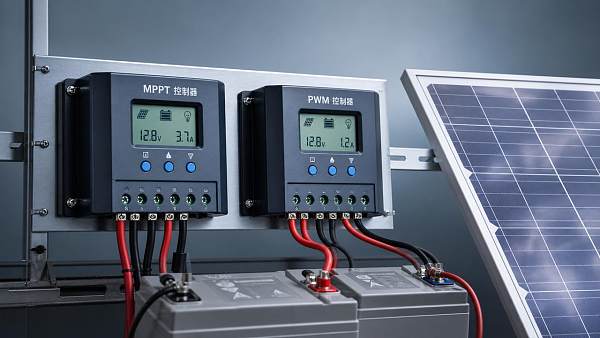
Under strong midday irradiance, both controller types can appear acceptable in basic solar charging systems. The gap becomes much clearer when panel voltage is unstable, current is weak, and battery acceptance changes rapidly. In these moments, mppt controllers are not simply a premium upgrade. They are a different power-conversion strategy with measurable impact on harvestable energy.
PWM units operate by connecting the panel more directly to the battery in pulses. This architecture is simple, low-cost, and effective in small systems where panel voltage closely matches battery voltage. However, when sunlight weakens, the mismatch between panel operating point and battery charging voltage often leaves usable energy on the table.
MPPT technology continuously searches for the panel’s maximum power point and converts excess voltage into additional charging current where possible. In low-light conditions, this tracking behavior can preserve charging activity longer during the day and improve battery recovery after overnight discharge. For technical assessment teams, that difference influences runtime, battery health, and return on installed solar capacity.
- Low irradiance reduces panel current first, but voltage behavior also becomes less predictable across temperature and module design.
- Battery charging stages still require voltage discipline, especially for lithium and sealed lead-acid profiles.
- Controller inefficiency under weak solar input can extend recharge time, deepen cycling, and increase support calls in field deployments.
MPPT controllers vs PWM: what technical evaluators should compare first
For procurement and technical validation, the best comparison is not marketing language but operating behavior. The table below summarizes how mppt controllers and PWM units differ where low-light charging matters most: energy capture, voltage flexibility, battery charging stability, and system design margin.
The key takeaway is practical rather than theoretical. If the system regularly starts and ends the day under weak irradiance, or if cloud cover is common, mppt controllers usually justify evaluation priority because they preserve charging opportunities that PWM units may not capture effectively.
Why voltage headroom matters in poor sunlight
A solar module does not deliver its best power at the same voltage as the battery most of the time. Low-light conditions make this mismatch more important, not less. When the controller can convert higher PV voltage into useful charging current, the battery can remain in a healthier charge trajectory. This is especially relevant in telecom backup, remote sensing, edge devices, portable medical support equipment, and industrial monitoring nodes.
Which low-light application scenarios favor MPPT controllers?
Not every solar installation needs MPPT. Technical evaluators should weigh load criticality, panel-to-battery ratio, weather variability, and access cost for maintenance. The following scenario table helps separate situations where PWM remains viable from those where mppt controllers reduce operational risk.
This scenario view matters in cross-industry sourcing because “low light” is not a single condition. Morning haze, urban shading, winter angle loss, dust accumulation, and cable voltage drop create different field behaviors. TradeNexus Pro helps evaluators compare suppliers and solution architectures by application, not by generic controller labels alone.
Where PWM still makes sense
- Very small off-grid systems where replacing a larger panel is cheaper than upgrading the controller.
- Installations with stable high sun exposure and a low daily depth of discharge.
- Use cases where battery chemistry, module voltage, and load profile are simple and tightly matched.
Technical performance details that often decide the purchase
Evaluators often focus on controller current rating first, but low-light performance depends on a broader set of technical criteria. Several of these are hidden behind headline specifications and only become visible during design review or field troubleshooting.
Critical parameters to verify
- Start-up voltage and operating window: A controller may be rated for a broad PV input range but still require a specific threshold before useful charging begins.
- Tracking efficiency under partial irradiance: Not all mppt controllers behave equally when the panel curve flattens in weak sun.
- Conversion efficiency at low load: Some units perform well near nominal power but lose relative advantage at low input power.
- Self-consumption: In small remote systems, controller standby draw can materially reduce net daily energy gain.
- Battery algorithm compatibility: Flooded lead-acid, AGM, gel, and lithium profiles require different charging logic and temperature considerations.
- Thermal derating behavior: In enclosed cabinets or outdoor heat, the controller may reduce output long before its label rating.
In practical sourcing, the best-performing mppt controllers are usually those with transparent electrical documentation, realistic derating curves, and clear battery profile support. A low price on paper can become expensive if the controller enters float too early, misreads battery state, or fails to start efficiently on dim winter mornings.
How panel configuration changes the result
With higher-voltage modern modules, MPPT becomes more relevant because there is more voltage headroom to convert. In contrast, a nominally matched 12V panel charging a 12V battery offers less room for MPPT to create advantage, especially in warm conditions. This is why system architecture review should precede controller selection. Choosing based only on controller type can distort total system economics.
How to evaluate cost, yield, and lifecycle trade-offs
The cost discussion should not stop at controller purchase price. Technical evaluators need a lifecycle model that includes panel sizing, battery cycling stress, service intervals, and outage cost. The table below provides a decision framework often used in procurement comparison for solar charging systems exposed to low-light variability.
In many commercial evaluations, the most useful question is not “Is MPPT more efficient?” but “What is the cost of missed charging hours over the system’s life?” If low-light periods are frequent, the answer often favors mppt controllers despite their higher purchase price.
A practical procurement rule
If the cost difference between PWM and MPPT is smaller than the cost of one battery replacement cycle, one service visit, or modest panel oversizing, MPPT usually deserves deeper commercial review. This is particularly true in infrastructure, healthcare technology support equipment, smart electronics deployments, and distributed industrial systems where continuity matters.
What procurement teams should ask suppliers before approving a controller
Low-light performance claims are often presented without the context needed for procurement decisions. To avoid specification gaps, technical teams should request evidence that connects controller behavior to the real operating profile of the intended system.
- Ask for the PV input voltage range, start-up behavior, and whether the unit can continue charging below its nominal tracking threshold.
- Request efficiency curves, not only peak efficiency values. Low-load and low-irradiance behavior matters more than laboratory best case.
- Confirm supported battery chemistries, temperature compensation approach, and programmable charging stages.
- Review protections such as reverse polarity, over-temperature, short circuit handling, and communication options for diagnostics.
- For international sourcing, check whether applicable safety, EMC, and environmental compliance documents are available for the target market.
TradeNexus Pro supports this process by helping buyers compare suppliers through technical depth, sector context, and strategic fit. Instead of browsing fragmented listings, decision-makers can prioritize vendors and solution paths aligned with actual use conditions across green energy, smart electronics, healthcare technology, and advanced industrial applications.
Common misconceptions about mppt controllers in weak sunlight
“MPPT always delivers a dramatic gain”
Not always. The gain depends on module voltage, battery voltage, temperature, wiring, and irradiance profile. In tightly matched small systems under stable sun, the advantage may be modest. In variable or shaded environments, it can be operationally significant.
“PWM is outdated and never worth using”
That is also inaccurate. PWM remains useful where simplicity, low cost, and matched component design outweigh the value of advanced tracking. The issue is fit, not status.
“Peak efficiency tells the whole story”
A controller with a strong peak number can still underperform in the conditions your system experiences most. Technical evaluators should focus on usable energy across the full daily irradiance curve, especially morning and late afternoon windows.
FAQ for technical evaluators comparing MPPT and PWM
How do I know if mppt controllers are justified for my project?
Start with four checks: frequent cloud cover, critical load continuity, higher-voltage PV modules, and costly maintenance access. If two or more apply, MPPT should usually be included in the shortlist. Also compare the controller cost difference against panel oversizing and battery replacement exposure.
Are mppt controllers better for lithium batteries in low-light charging?
Often yes, provided the charging algorithm is compatible with the battery management requirements. Lithium systems can benefit from more stable charge delivery and better use of available solar input, but chemistry compatibility and voltage settings must be verified carefully.
What should I prioritize if my budget is limited?
Prioritize total system resilience rather than controller price alone. In some small systems, a PWM controller plus larger panel area can be the better spend. In remote or mission-sensitive systems, mppt controllers often save more through reduced energy shortfall and less battery stress.
Which documents should suppliers provide during evaluation?
Ask for electrical specifications, battery profile details, thermal derating information, installation guidance, communication or monitoring documentation, and applicable compliance records for the destination market. These documents reveal far more than a brochure summary.
Why choose us for market intelligence and sourcing decisions
TradeNexus Pro helps technical evaluators move beyond generic controller comparisons. Our platform connects component analysis, sector-specific application insight, and supplier-side intelligence so procurement teams can judge whether mppt controllers, PWM solutions, or hybrid design changes make the most sense for the project at hand.
If you are assessing low-light charging performance, you can consult TNP for support on parameter confirmation, controller selection logic, battery compatibility review, target-market compliance checkpoints, expected delivery considerations, and supplier comparison for customized solution paths. This is especially valuable when projects span multiple sectors or require coordination between engineering, procurement, and supply chain stakeholders.
- Need help validating whether mppt controllers are worth the added cost in your operating environment?
- Need a shortlist based on battery chemistry, PV voltage window, and low-light duty profile?
- Need support comparing supplier documentation, lead times, sample options, or compliance readiness?
Bring your system parameters, use-case constraints, and sourcing goals to TradeNexus Pro. We help enterprise buyers and technical teams turn controller selection into a defensible, data-backed decision rather than a trial-and-error purchase.
Get weekly intelligence in your inbox.
No noise. No sponsored content. Pure intelligence.
 Sep 21, 2026What to Look for in a Grid Integration Company for Utility-Scale Solar ProjectsWhat to Look for in a Grid Integration Company for Utility-Scale Solar Projects
 Sep 20, 2026Microgrid Controller Pricing: What Drives Cost in Commercial Energy Projects?Microgrid Controller Pricing: What Drives Cost in Commercial Energy Projects?
 Sep 19, 2026How to Choose a GaN Charger for Laptops Without Compromising Power or PortabilityHow to Choose a GaN Charger for Laptops Without Compromising Power or Portability
 Sep 18, 2026Floating Solar Farm Costs: CAPEX, OPEX, and the Site Factors That Shape ROIFloating Solar Farm Costs: CAPEX, OPEX, and the Site Factors That Shape ROI
 Sep 17, 2026Drone Delivery Solutions for Last-Mile Routes: Site, Payload, and Range PlanningDrone Delivery Solutions for Last-Mile Routes: Site, Payload, and Range Planning
 Sep 16, 2026When Low-Volume Electronics Manufacturing Makes More Sense Than Mass ProductionWhen Low-Volume Electronics Manufacturing Makes More Sense Than Mass Production
 Sep 15, 2026Wholesale WiFi Smart Switches: What Buyers Should Verify Before OrderingWholesale WiFi Smart Switches: What Buyers Should Verify Before Ordering
 Sep 14, 2026How to Select IoT Sensors for Reliable Monitoring in Harsh Industrial EnvironmentsHow to Select IoT Sensors for Reliable Monitoring in Harsh Industrial Environments
 Sep 13, 2026How Procurement Teams Can Improve Supplier Reliability With Supply Chain VisibilityHow Procurement Teams Can Improve Supplier Reliability With Supply Chain Visibility
 Sep 12, 2026Smart Manufacturing Trends 2026: What Leaders Should Prioritize for ROISmart Manufacturing Trends 2026: What Leaders Should Prioritize for ROI
 Sep 11, 2026B2B Market Analysis: How Buyers Evaluate Suppliers, Pricing, and Delivery RiskB2B Market Analysis: How Buyers Evaluate Suppliers, Pricing, and Delivery Risk
 Sep 10, 2026Residential Solar Kits in Canada: How to Size a System for Your Home and ClimateResidential Solar Kits in Canada: How to Size a System for Your Home and Climate
 Sep 09, 2026How to Specify a Syringe Assembly Line for High-Volume Sterile ProductionHow to Specify a Syringe Assembly Line for High-Volume Sterile Production
 Sep 08, 2026How to Evaluate Warehouse Robotics System Suppliers for Reliable Multi-Site DeploymentHow to Evaluate Warehouse Robotics System Suppliers for Reliable Multi-Site Deployment
 Sep 07, 2026Renewable Geothermal Energy Explained: How It Works for Heating and PowerRenewable Geothermal Energy Explained: How It Works for Heating and Power
 Sep 07, 2026How to Choose an Industrial Packaging Robot Manufacturer for Your Production LineHow to Choose an Industrial Packaging Robot Manufacturer for Your Production Line
 Sep 05, 2026How to Evaluate a Turnkey Hydro Turbine Generator Supplier for Remote Power ProjectsHow to Evaluate a Turnkey Hydro Turbine Generator Supplier for Remote Power Projects
 Sep 04, 2026Automated Ultrasonic Welding for Thermoplastic Assemblies: Process Controls That MatterAutomated Ultrasonic Welding for Thermoplastic Assemblies: Process Controls That Matter
 Sep 03, 2026Energy Forecasting for Grid Planning: Sizing Solar and Storage CapacityEnergy Forecasting for Grid Planning: Sizing Solar and Storage Capacity
 Sep 02, 2026Which Metrics Should an Energy Analytics Dashboard Track for Factory Energy Management?Which Metrics Should an Energy Analytics Dashboard Track for Factory Energy Management?
 Sep 01, 2026How Warehouse Voice Picking Improves Accuracy and Throughput in Order FulfillmentHow Warehouse Voice Picking Improves Accuracy and Throughput in Order Fulfillment
 Aug 31, 2026How to Automate Dropshipping Order Processing Without Overselling StockHow to Automate Dropshipping Order Processing Without Overselling Stock
 Aug 30, 2026How to Evaluate a Smart Lighting Supplier for Multi-Site Commercial ProjectsHow to Evaluate a Smart Lighting Supplier for Multi-Site Commercial Projects
 Aug 29, 2026Recent Advances in Smart Manufacturing and Materials Reshaping Factory InvestmentRecent Advances in Smart Manufacturing and Materials Reshaping Factory Investment
 Aug 29, 2026Selecting Lightweight Aluminum Extrusions for Strength-Critical Industrial DesignsSelecting Lightweight Aluminum Extrusions for Strength-Critical Industrial Designs
 Aug 29, 2026Vertical Powder Anodizing Explained: Process Controls for Uniform Coating QualityVertical Powder Anodizing Explained: Process Controls for Uniform Coating Quality
 Aug 29, 2026PV Module Product Due Diligence: What Buyers Should Verify Before ContractingPV Module Product Due Diligence: What Buyers Should Verify Before Contracting