When a solar charge controller is too small for the array
When the array outgrows the controller, performance losses and system risks can escalate fast. For project managers overseeing solar deployments, understanding what happens when solar charge controllers are undersized is critical to protecting yield, battery health, and long-term ROI. This guide explains the warning signs, technical consequences, and practical sizing considerations needed to keep projects compliant, efficient, and scalable.
A checklist approach is the fastest way to evaluate this issue because an undersized controller rarely fails in only one way. It can reduce harvest, trigger chronic current limiting, increase thermal stress, shorten battery life, and create documentation gaps that become expensive during commissioning or warranty review. For engineering leads and project managers, the priority is not just knowing the theory behind solar charge controllers, but identifying the exact checks that confirm whether the controller-array relationship is acceptable for the site, climate, battery chemistry, and future expansion plan.
Start here: the first five checks project teams should complete
Before discussing replacement or redesign, verify these five items. They provide the clearest indication of whether the installed or proposed solar charge controllers are too small for the PV array.
- Compare array short-circuit current and operating current against the controller’s maximum input current and charging current limits, using manufacturer derating guidance rather than nameplate figures alone.
- Check array open-circuit voltage at the site’s lowest expected temperature. A controller that survives normal daytime conditions may still be exposed to dangerous overvoltage on cold mornings.
- Review battery bank voltage, chemistry, and allowable charge profile. A controller can appear adequate for the array but still be incompatible with lithium, AGM, or high-voltage battery requirements.
- Confirm ambient temperature, enclosure ventilation, altitude, and duty cycle. Solar charge controllers lose effective capacity when operating in hot enclosures or high-continuous-load conditions.
- Verify whether the system design assumes future string additions. Many projects become undersized not on day one, but after later capacity expansion.
If even one of these checks shows weak margin, the controller should be treated as a project risk item rather than a minor optimization issue.
How to tell when a controller is too small for the array
In practice, undersized solar charge controllers usually reveal themselves through a pattern of symptoms rather than a single alarm. Project teams should look for the following indicators during design review, FAT, SAT, or field troubleshooting.
Operational warning signs
- The controller repeatedly clips available PV power during peak irradiance, especially at midday or during cool, bright conditions.
- Output current remains at the controller’s maximum rating for long periods, indicating sustained saturation rather than occasional peak loading.
- The controller runs unusually hot, derates frequently, or requires fan operation more often than expected.
- Battery charging stages are delayed, unstable, or incomplete because the charging profile is interrupted by current limiting or thermal foldback.
- Energy yield reports show lower-than-modeled capture even when modules, orientation, and irradiance are within expectations.
These symptoms matter because undersizing is not always catastrophic in the short term. Sometimes the controller simply limits current and “protects itself,” which can make the issue seem harmless. However, for commercial and industrial systems, consistent clipping translates into lost production and weaker project economics.
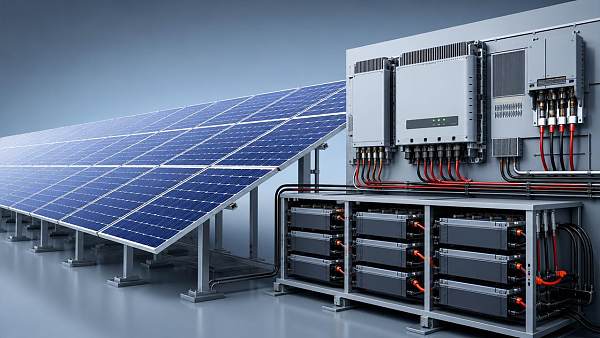
What actually happens when solar charge controllers are undersized
For project managers, it helps to separate consequences into four categories: energy loss, equipment stress, battery impact, and compliance risk.
1. Energy harvest is capped
The most immediate effect is power clipping. If the PV array can produce more current than the controller can process, the excess energy is simply not converted into useful charging power. In some systems, occasional oversizing of the array relative to the controller is acceptable and even intentional, especially where irradiance is variable. But if the mismatch is too large, the clipping window becomes frequent enough to materially reduce annual yield.
2. Thermal stress increases
Undersized solar charge controllers often operate near their limits for extended periods. That raises internal temperatures, accelerates wear on capacitors and semiconductors, and may trigger thermal derating. In harsh climates or poorly ventilated cabinets, this becomes a reliability concern, not just an efficiency issue.
3. Battery charging quality can degrade
Battery health depends on stable, chemistry-appropriate charging. If the controller is constantly constrained, absorption and float stages may not be delivered as intended, especially in systems with fluctuating loads. Over time, that can contribute to undercharging, imbalanced cells, or reduced usable battery capacity.
4. Documentation and warranty exposure grow
A system that exceeds controller specifications may still run, but it can become difficult to defend during claims, insurer review, or owner acceptance testing. If the installation ignores voltage or current limits stated by the manufacturer, warranty support may be weakened.
Checklist: sizing standards that should be validated before approval
Use the following checklist during design approval or procurement comparison. This is where many avoidable mistakes with solar charge controllers are caught.
Different project scenarios require different judgment
Not every mismatch has the same business impact. Project managers should judge solar charge controllers according to system type, battery dependence, and service expectations.
Off-grid and remote power systems
This is the highest-risk scenario for undersizing. In remote telecom, rural microgrid, pumping, or monitoring applications, every lost charging hour affects autonomy. A controller that clips regularly may leave batteries undercharged before multi-day low-sun periods. The result is not only poor efficiency but possible service interruption.
Hybrid systems with generator backup
Here, undersized solar charge controllers may not cause immediate outages, but they can increase generator runtime and fuel cost. What looks like a small component decision can undermine the project’s operating-cost model and emissions assumptions.
Commercial battery storage or resilience projects
For systems supporting peak shaving, backup readiness, or resilience targets, missed charging opportunities reduce asset availability. If the business case depends on batteries reaching a target state of charge by a certain time, controller bottlenecks should be treated as a financial risk.
Common items teams overlook during review
Many projects do not fail because no one checked the controller rating. They fail because one of the following “secondary” factors was omitted from the decision process.
- Using STC module values without modeling actual cold-weather voltage and seasonal irradiance peaks.
- Assuming an MPPT controller can absorb any amount of array oversizing without meaningful clipping.
- Ignoring cable losses, combiner behavior, and balance-of-system constraints that change real operating current.
- Not checking enclosure temperature rise when multiple power devices are installed together.
- Failing to coordinate battery supplier requirements with controller settings and firmware capabilities.
- Treating future expansion as optional even when the commercial plan already assumes load growth.
Practical decision rules: repair, reconfigure, or replace?
When solar charge controllers appear too small for the array, the next step should follow a clear decision path.
- If voltage limits are exceeded at any expected temperature, prioritize immediate redesign or replacement. This is a hard-stop risk.
- If current clipping is modest and expected only during limited peak windows, quantify annual energy loss before changing equipment. Some DC oversizing is economically acceptable.
- If thermal derating is frequent, improve ventilation and reassess effective controller capacity. Do not assume nameplate output remains available in the field.
- If battery charging quality is compromised, treat the issue as urgent even if generation losses seem manageable. Battery replacement costs can exceed controller savings.
- If future expansion is likely within the asset plan, compare adding a parallel controller now versus paying for rework later.
Execution advice for procurement and project management teams
To reduce risk, procurement and engineering teams should require a documented controller sizing sheet as part of vendor evaluation. That document should include module data, string configuration, low-temperature voltage calculation, controller derating assumptions, battery specifications, expected clipping estimate, and expansion headroom. For critical projects, ask suppliers to show how their solar charge controllers perform under the site’s real ambient and duty-cycle conditions, not only under ideal test assumptions.
It is also wise to align the controller decision with broader project controls: commissioning criteria, KPI baselines, warranty terms, spare-parts strategy, and remote monitoring points. If the controller reaches current limit, temperature threshold, or repeated derating states, those events should be visible in the monitoring platform so the owner is not blind to hidden performance losses.
FAQ for managers reviewing solar charge controllers
Can a solar array be larger than the controller rating?
Yes, within manufacturer guidance. Controlled array oversizing can improve energy capture in less-than-ideal conditions, but it must stay within voltage and thermal limits and should be modeled for acceptable clipping.
Is current oversizing as dangerous as voltage oversizing?
Usually not in the same way. Moderate current oversizing often leads to clipping, while voltage oversizing can damage the controller. Both matter, but voltage exceedance is generally the more immediate equipment risk.
Should the solution always be a larger controller?
Not always. Reconfiguration, parallel controllers, improved ventilation, or revised string design may solve the issue more cost-effectively. The right answer depends on loss analysis, battery requirements, and expansion plans.
Final checklist before you move forward
If you are reviewing solar charge controllers for a current or upcoming project, prioritize these final action items: confirm worst-case voltage, validate effective current capacity after derating, estimate clipping losses, check battery charging compatibility, and document expansion assumptions. Those five inputs usually determine whether the controller is right-sized, marginal, or a hidden liability.
For enterprises planning procurement, retrofits, or multisite deployments, the most productive next step is to gather the array configuration, local temperature range, battery chemistry, target autonomy, enclosure conditions, expected future expansion, and budget tolerance for energy loss versus hardware cost. With that information, teams can compare controller options, verify compliance, and decide whether the present design supports long-term ROI and operational resilience.
Get weekly intelligence in your inbox.
No noise. No sponsored content. Pure intelligence.
 Sep 21, 2026What to Look for in a Grid Integration Company for Utility-Scale Solar ProjectsWhat to Look for in a Grid Integration Company for Utility-Scale Solar Projects
 Sep 20, 2026Microgrid Controller Pricing: What Drives Cost in Commercial Energy Projects?Microgrid Controller Pricing: What Drives Cost in Commercial Energy Projects?
 Sep 19, 2026How to Choose a GaN Charger for Laptops Without Compromising Power or PortabilityHow to Choose a GaN Charger for Laptops Without Compromising Power or Portability
 Sep 18, 2026Floating Solar Farm Costs: CAPEX, OPEX, and the Site Factors That Shape ROIFloating Solar Farm Costs: CAPEX, OPEX, and the Site Factors That Shape ROI
 Sep 17, 2026Drone Delivery Solutions for Last-Mile Routes: Site, Payload, and Range PlanningDrone Delivery Solutions for Last-Mile Routes: Site, Payload, and Range Planning
 Sep 16, 2026When Low-Volume Electronics Manufacturing Makes More Sense Than Mass ProductionWhen Low-Volume Electronics Manufacturing Makes More Sense Than Mass Production
 Sep 15, 2026Wholesale WiFi Smart Switches: What Buyers Should Verify Before OrderingWholesale WiFi Smart Switches: What Buyers Should Verify Before Ordering
 Sep 14, 2026How to Select IoT Sensors for Reliable Monitoring in Harsh Industrial EnvironmentsHow to Select IoT Sensors for Reliable Monitoring in Harsh Industrial Environments
 Sep 13, 2026How Procurement Teams Can Improve Supplier Reliability With Supply Chain VisibilityHow Procurement Teams Can Improve Supplier Reliability With Supply Chain Visibility
 Sep 12, 2026Smart Manufacturing Trends 2026: What Leaders Should Prioritize for ROISmart Manufacturing Trends 2026: What Leaders Should Prioritize for ROI
 Sep 11, 2026B2B Market Analysis: How Buyers Evaluate Suppliers, Pricing, and Delivery RiskB2B Market Analysis: How Buyers Evaluate Suppliers, Pricing, and Delivery Risk
 Sep 10, 2026Residential Solar Kits in Canada: How to Size a System for Your Home and ClimateResidential Solar Kits in Canada: How to Size a System for Your Home and Climate
 Sep 09, 2026How to Specify a Syringe Assembly Line for High-Volume Sterile ProductionHow to Specify a Syringe Assembly Line for High-Volume Sterile Production
 Sep 08, 2026How to Evaluate Warehouse Robotics System Suppliers for Reliable Multi-Site DeploymentHow to Evaluate Warehouse Robotics System Suppliers for Reliable Multi-Site Deployment
 Sep 07, 2026Renewable Geothermal Energy Explained: How It Works for Heating and PowerRenewable Geothermal Energy Explained: How It Works for Heating and Power
 Sep 07, 2026How to Choose an Industrial Packaging Robot Manufacturer for Your Production LineHow to Choose an Industrial Packaging Robot Manufacturer for Your Production Line
 Sep 05, 2026How to Evaluate a Turnkey Hydro Turbine Generator Supplier for Remote Power ProjectsHow to Evaluate a Turnkey Hydro Turbine Generator Supplier for Remote Power Projects
 Sep 04, 2026Automated Ultrasonic Welding for Thermoplastic Assemblies: Process Controls That MatterAutomated Ultrasonic Welding for Thermoplastic Assemblies: Process Controls That Matter
 Sep 03, 2026Energy Forecasting for Grid Planning: Sizing Solar and Storage CapacityEnergy Forecasting for Grid Planning: Sizing Solar and Storage Capacity
 Sep 02, 2026Which Metrics Should an Energy Analytics Dashboard Track for Factory Energy Management?Which Metrics Should an Energy Analytics Dashboard Track for Factory Energy Management?
 Sep 01, 2026How Warehouse Voice Picking Improves Accuracy and Throughput in Order FulfillmentHow Warehouse Voice Picking Improves Accuracy and Throughput in Order Fulfillment
 Aug 31, 2026How to Automate Dropshipping Order Processing Without Overselling StockHow to Automate Dropshipping Order Processing Without Overselling Stock
 Aug 30, 2026How to Evaluate a Smart Lighting Supplier for Multi-Site Commercial ProjectsHow to Evaluate a Smart Lighting Supplier for Multi-Site Commercial Projects
 Aug 29, 2026Recent Advances in Smart Manufacturing and Materials Reshaping Factory InvestmentRecent Advances in Smart Manufacturing and Materials Reshaping Factory Investment
 Aug 29, 2026Selecting Lightweight Aluminum Extrusions for Strength-Critical Industrial DesignsSelecting Lightweight Aluminum Extrusions for Strength-Critical Industrial Designs
 Aug 29, 2026Vertical Powder Anodizing Explained: Process Controls for Uniform Coating QualityVertical Powder Anodizing Explained: Process Controls for Uniform Coating Quality
 Aug 29, 2026PV Module Product Due Diligence: What Buyers Should Verify Before ContractingPV Module Product Due Diligence: What Buyers Should Verify Before Contracting