
MRI Machine Components Explained: Key Parts, Functions, and Failure Points
MRI Machine Components Explained: Key Parts, Functions, and Failure Points
Understanding MRI machine components is essential for fast fault isolation and stable scanner performance.
When one subsystem drifts, image quality, uptime, and safety can all suffer.
That is why maintenance work must go beyond part replacement.
It requires a clear view of how major MRI machine components interact under load.
This guide breaks down the main assemblies, their functions, and the failure points that appear most often in field service.
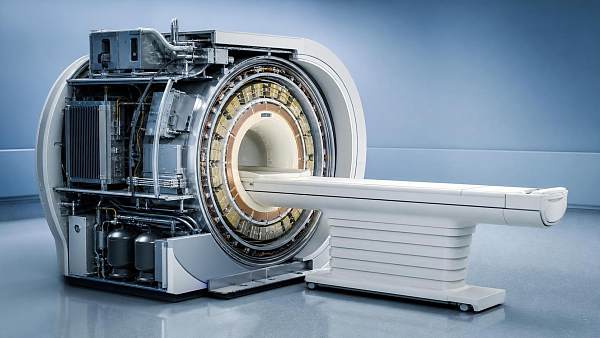
It also highlights practical checks that help reduce repeat faults and unplanned downtime.
Why MRI Machine Components Must Be Understood as a System
An MRI scanner is not a single machine in the usual sense.
It is a tightly linked system of magnetic, electrical, thermal, mechanical, and software-driven modules.
A symptom in one area may start elsewhere.
For example, unstable images may come from RF drift, gradient timing errors, cooling weakness, or control board issues.
From a service perspective, knowing the hierarchy of MRI machine components shortens troubleshooting time.
It also helps distinguish a primary fault from a secondary alarm.
Main MRI Machine Components and What They Do
1. Main Magnet
The main magnet creates the strong static field that makes MRI imaging possible.
In most modern systems, this is a superconducting magnet cooled by liquid helium.
Its performance affects field strength, homogeneity, and overall scan consistency.
Typical stress points
- Helium loss and cryogen boil-off
- Vacuum degradation in the cryostat
- Shim imbalance affecting field uniformity
- Quench pipe obstruction or leakage risk
Common failure signs
Watch for rising helium consumption, unstable field lock, image distortion, or abnormal cryogenic alarms.
These issues often point to deeper magnet-related MRI machine components concerns.
2. Gradient Coil Assembly
Gradient coils vary the magnetic field in controlled directions.
They define spatial encoding and directly influence scan speed and image precision.
Among MRI machine components, gradients face heavy thermal and electrical stress.
Typical stress points
- Insulation fatigue from repeated high-current pulses
- Cooling channel blockage or flow reduction
- Mechanical vibration and acoustic stress
- Connector heating and cable wear
Common failure signs
Listen for unusual knocking, buzzing, or changing vibration patterns during demanding sequences.
Thermal trips, geometric distortion, and intermittent scan aborts also appear often.
3. RF Coil and RF Transmission Chain
The RF system transmits radiofrequency energy and receives the return signal from tissue.
This group includes body coils, local coils, preamplifiers, transmitters, and related cabling.
Small weaknesses here can seriously affect signal-to-noise ratio.
Typical stress points
- Coil detuning or channel imbalance
- Connector contamination or bent pins
- Cable shield damage and signal leakage
- Preamplifier drift or amplifier overheating
Common failure signs
Image noise, banding, weak signal regions, and failed coil recognition are common clues.
In practice, many RF issues trace back to handling damage rather than sudden component collapse.
Support MRI Machine Components That Often Drive Downtime
Cooling System
Cooling is one of the most overlooked MRI machine components groups.
Yet it protects gradients, power electronics, compressors, and magnet stability.
Most systems rely on chillers, heat exchangers, pumps, and flow monitoring devices.
Poor water quality, filter blockage, and unstable ambient conditions create avoidable failures.
Power Supply and Distribution
Power quality affects nearly all MRI machine components.
Voltage dips, grounding problems, and harmonic distortion can create misleading faults.
Rectifiers, inverters, breakers, and protection circuits need routine inspection.
Heat marks, loose terminals, and inconsistent logs are early warning signs.
Patient Table and Mechanical Drives
The patient table seems simple, but it is one of the most used MRI machine components.
Drive motors, position encoders, belts, locks, and limit sensors all affect workflow and safety.
Positioning errors may cause scan repeats, collision risks, or patient handling delays.
Control Electronics and Software Interfaces
Modern MRI machine components depend heavily on control electronics.
This layer includes system boards, timing modules, communication buses, firmware, and host workstations.
When this layer becomes unstable, faults can appear random even when hardware is healthy.
Recent service trends show more issues linked to board aging, cooling dust, software mismatch, and storage failure.
What to watch closely
- Event logs with recurring communication timeouts
- Boot delays or unexpected restarts
- Synchronization errors between gradient and RF modules
- Firmware changes without full compatibility checks
In many cases, replacing a suspected board too early leads to unnecessary cost.
Signal tracing, thermal checks, and version verification usually provide a clearer answer.
Common Failure Points Across MRI Machine Components
Although each scanner model differs, several failure patterns repeat across brands and field strengths.
This pattern matters because it guides spare part planning and preventive maintenance priorities.
A Practical Inspection Approach for MRI Machine Components
A structured inspection routine usually catches weakness before it becomes a hard failure.
- Start with logs, alarms, and sequence history before touching hardware.
- Check environmental conditions, especially room temperature, humidity, and power stability.
- Inspect cooling flow, filter condition, and heat exchanger cleanliness.
- Verify cable integrity, connectors, and grounding across RF and gradient paths.
- Compare image artifacts with known failure signatures from prior service records.
- Confirm firmware, calibration, and subsystem communication after any replacement.
This method is especially useful when several MRI machine components appear to be involved at once.
It reduces guesswork and helps preserve first-time fix rates.
What Better Maintenance Decisions Look Like
The most reliable maintenance programs treat MRI machine components as performance indicators, not just replaceable parts.
That means tracking thermal trends, helium behavior, connector wear, software revisions, and recurring artifact patterns.
It also means linking service data to actual failure points rather than relying only on alarm codes.
As MRI systems become more integrated, clearer component-level knowledge becomes even more valuable.
If the goal is lower downtime and more stable imaging, understanding MRI machine components is the starting point that pays back every time.
Get weekly intelligence in your inbox.
No noise. No sponsored content. Pure intelligence.
 Oct 08, 2026How Digital Health Improves Diagnostic Accuracy and Workflow in Clinical LabsHow Digital Health Improves Diagnostic Accuracy and Workflow in Clinical Labs
 Oct 07, 2026Selecting Voice Picking Systems for German Warehouses: Integration, Languages and ROISelecting Voice Picking Systems for German Warehouses: Integration, Languages and ROI
 Oct 06, 2026How to Choose Last Mile Dispatch Software for On-Time Delivery at ScaleHow to Choose Last Mile Dispatch Software for On-Time Delivery at Scale
 Oct 05, 2026Vietnam’s Consumer Electronics Market: Demand Shifts and Sourcing OpportunitiesVietnam’s Consumer Electronics Market: Demand Shifts and Sourcing Opportunities
 Oct 04, 2026Digital Health Investment Priorities for Providers: Improving Access, Outcomes, and EfficiencyDigital Health Investment Priorities for Providers: Improving Access, Outcomes, and Efficiency
 Oct 03, 2026How to Specify an FR4 Custom PCB Board for High-Voltage and High-Heat DesignsHow to Specify an FR4 Custom PCB Board for High-Voltage and High-Heat Designs
 Oct 02, 2026ERP Software Market Intelligence: Adoption, Pricing, and Vendor Signals to WatchERP Software Market Intelligence: Adoption, Pricing, and Vendor Signals to Watch
 Oct 01, 2026How to Select Calibrated Temperature Data Loggers for GMP Cold Storage MonitoringHow to Select Calibrated Temperature Data Loggers for GMP Cold Storage Monitoring
 Sep 30, 2026Custom Molded Rubber Pricing: What Drives Unit Cost and Tooling Fees?Custom Molded Rubber Pricing: What Drives Unit Cost and Tooling Fees?
 Sep 29, 2026How to Evaluate Energy Management Software Vendors for Multi-Site OperationsHow to Evaluate Energy Management Software Vendors for Multi-Site Operations
 Sep 28, 2026How to Select a DIN Rail Smart Meter for Multi-Circuit Energy MonitoringHow to Select a DIN Rail Smart Meter for Multi-Circuit Energy Monitoring
 Sep 27, 2026TWS Earbuds in Vietnam: Demand Drivers, Price Tiers, and Retail Channel OpportunitiesTWS Earbuds in Vietnam: Demand Drivers, Price Tiers, and Retail Channel Opportunities
 Sep 26, 2026How UAE Clinics Can Qualify a Smart Glucometer Supplier for Accuracy and ComplianceHow UAE Clinics Can Qualify a Smart Glucometer Supplier for Accuracy and Compliance
 Sep 25, 2026Buying Aesthetic Lasers in the USA: FDA Status, Wavelengths, and Service SupportBuying Aesthetic Lasers in the USA: FDA Status, Wavelengths, and Service Support
 Sep 24, 2026Laser Cutting Brass Sheet: How to Prevent Burrs and Heat Marks on Thin PartsLaser Cutting Brass Sheet: How to Prevent Burrs and Heat Marks on Thin Parts
 Sep 23, 2026How to Choose Lightweight ANC Headphones for Comfortable All-Day TravelHow to Choose Lightweight ANC Headphones for Comfortable All-Day Travel
 Sep 22, 2026IPX5 TWS Bluetooth Earbuds: What Protection Do They Offer for Workouts?IPX5 TWS Bluetooth Earbuds: What Protection Do They Offer for Workouts?
 Sep 21, 2026What to Look for in a Grid Integration Company for Utility-Scale Solar ProjectsWhat to Look for in a Grid Integration Company for Utility-Scale Solar Projects
 Sep 20, 2026Microgrid Controller Pricing: What Drives Cost in Commercial Energy Projects?Microgrid Controller Pricing: What Drives Cost in Commercial Energy Projects?
 Sep 19, 2026How to Choose a GaN Charger for Laptops Without Compromising Power or PortabilityHow to Choose a GaN Charger for Laptops Without Compromising Power or Portability
 Sep 18, 2026Floating Solar Farm Costs: CAPEX, OPEX, and the Site Factors That Shape ROIFloating Solar Farm Costs: CAPEX, OPEX, and the Site Factors That Shape ROI
 Sep 17, 2026Drone Delivery Solutions for Last-Mile Routes: Site, Payload, and Range PlanningDrone Delivery Solutions for Last-Mile Routes: Site, Payload, and Range Planning
 Sep 16, 2026When Low-Volume Electronics Manufacturing Makes More Sense Than Mass ProductionWhen Low-Volume Electronics Manufacturing Makes More Sense Than Mass Production
 Sep 15, 2026Wholesale WiFi Smart Switches: What Buyers Should Verify Before OrderingWholesale WiFi Smart Switches: What Buyers Should Verify Before Ordering
 Sep 14, 2026How to Select IoT Sensors for Reliable Monitoring in Harsh Industrial EnvironmentsHow to Select IoT Sensors for Reliable Monitoring in Harsh Industrial Environments
 Sep 13, 2026How Procurement Teams Can Improve Supplier Reliability With Supply Chain VisibilityHow Procurement Teams Can Improve Supplier Reliability With Supply Chain Visibility
 Sep 12, 2026Smart Manufacturing Trends 2026: What Leaders Should Prioritize for ROISmart Manufacturing Trends 2026: What Leaders Should Prioritize for ROI



























