What Affects Image Quality in Digital X Ray Detectors?
Image quality in digital x ray detectors directly shapes diagnostic confidence, workflow efficiency, and equipment value. For technical evaluators, understanding how detector material, pixel size, DQE, noise control, and system calibration interact is essential when comparing solutions. This article outlines the core factors that influence performance, helping decision-makers assess detector capabilities with greater precision and strategic clarity.
What determines image quality in digital x ray detectors?
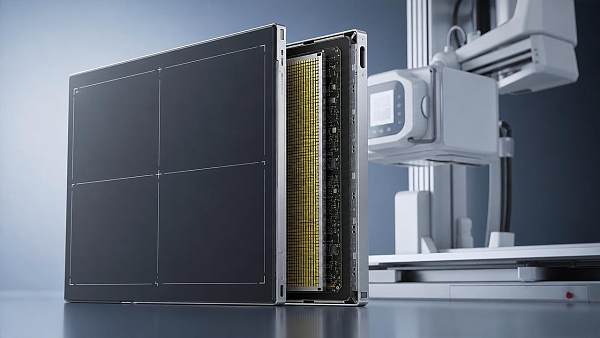
When technical teams compare digital x ray detectors, they often focus first on resolution. That matters, but image quality is broader. A detector must convert x ray photons into usable digital data with minimal signal loss, low noise, stable uniformity, and repeatable output over time. In practical procurement, image quality is the result of physics, electronics, software, and calibration working together.
For buyers in healthcare technology, smart electronics, and advanced manufacturing supply chains, the challenge is not only identifying a detector with strong nominal specifications. The harder task is judging whether those specifications translate into reliable performance in the intended operating environment. Portable imaging, fixed radiography, mobile systems, and specialty applications can stress a detector in different ways.
The most influential factors usually include:
- Scintillator or conversion material, which affects photon absorption efficiency and sharpness.
- Pixel pitch and active area, which influence spatial resolution and coverage.
- DQE and MTF, which indicate efficiency and detail transfer across frequencies.
- Electronic noise, lag, and dynamic range, which shape low-dose visibility and contrast fidelity.
- Mechanical durability and calibration stability, which affect long-term consistency and lifecycle cost.
A useful evaluation framework therefore asks two questions at the same time: how good is the image under controlled conditions, and how dependable is that image under real operating conditions?
Which technical parameters matter most during evaluation?
The table below summarizes the parameters that most often influence image quality in digital x ray detectors and how technical evaluators should interpret them during vendor comparison.
These parameters should never be read in isolation. A detector with very small pixels may look attractive on paper, yet if noise rises or sensitivity falls, the final image can be less useful. Technical evaluation should focus on parameter balance rather than maximum specification claims.
Why DQE and MTF should be reviewed together
MTF tells you how well the detector preserves detail. DQE tells you how efficiently it converts incoming radiation into image signal relative to noise. A detector can appear sharp but still underperform in low-dose situations if efficiency is weak. Conversely, strong efficiency with poor sharpness can limit fine-structure visibility. For digital x ray detectors used in procurement-sensitive environments, that tradeoff affects both clinical output and system economics.
Why pixel size is not a shortcut to image quality
Smaller pixel pitch generally improves sampling resolution, but it can reduce full well capacity and challenge noise performance. Evaluators should match pixel architecture to the intended use case. General radiography may prioritize balanced dose efficiency and workflow robustness, while specialty imaging may justify finer sampling if the detector and software chain can support it.
How do detector materials and design choices change performance?
Material choice sits at the center of image formation. In digital x ray detectors, indirect conversion designs commonly use scintillators such as cesium iodide or gadolinium oxysulfide, while direct conversion systems use photoconductive materials such as amorphous selenium. Each route has implications for sharpness, dose response, and manufacturing complexity.
Indirect conversion detectors translate x rays into visible light before the sensor reads the signal. This architecture can provide strong absorption efficiency and broad commercial availability. However, light spread inside the scintillator may influence sharpness. Structured scintillators can reduce this spread and support better image definition.
Direct conversion detectors convert x ray energy more directly into electrical charge. This can improve sharpness because there is no intermediate light spread. The tradeoff may involve different cost structures, system integration requirements, and application fit. Technical evaluators should review not just conversion method but also the quality of readout electronics, panel bonding, and image processing pipeline.
- Structured scintillator design can support detail retention while maintaining good absorption.
- TFT quality and readout architecture affect uniformity, lag, and bad-pixel behavior.
- Panel housing, shielding, and thermal management can influence long-term stability.
In supply chain evaluation, these design choices also affect replacement availability, manufacturing lead time, and serviceability. That matters when procurement must balance performance with lifecycle continuity.
What role do calibration, software, and system integration play?
Even strong detector hardware can deliver inconsistent output if calibration and software integration are weak. Image quality in digital x ray detectors depends on offset correction, gain correction, defect mapping, exposure synchronization, and image preprocessing. These steps influence noise uniformity, artifact suppression, and repeatability across operating shifts.
Technical evaluators should ask whether a vendor provides clear calibration procedures, field service documentation, and software compatibility details. Integration with generator timing, workstation software, and PACS or industrial imaging platforms can alter practical image quality as much as detector hardware itself.
- Verify baseline calibration steps for factory acceptance and site installation.
- Review bad-pixel thresholds and correction behavior under repeated use.
- Check whether image processing can be tuned by application rather than locked into generic presets.
- Confirm software update policy, cybersecurity maintenance path, and compatibility roadmap.
For enterprise buyers, this is where a market intelligence platform such as TradeNexus Pro becomes valuable. Cross-referencing technical claims with supply chain readiness, support depth, and integration maturity helps teams avoid selecting a detector that tests well in isolation but performs poorly in deployment.
Which digital x ray detectors fit different application scenarios?
Application context determines what “good image quality” actually means. A portable detector used in mobile workflows may need ruggedness and fast readout more than the finest possible detail. A fixed-room system may prioritize uniformity, dose efficiency, and seamless integration. Evaluators should start from the use case, then map technical needs backward.
The following comparison helps frame digital x ray detectors by scenario rather than by marketing language alone.
This scenario-based view helps procurement teams avoid overbuying for one parameter while underestimating deployment risk. A detector that is technically excellent for one site may be inefficient for a distributed purchasing program with strict service-level expectations.
What should technical evaluators check before procurement approval?
A structured buying process reduces the chance of choosing digital x ray detectors based on incomplete data. Procurement should combine engineering review, user workflow analysis, compliance screening, and total cost assessment. This is especially important when delivery timelines are tight or when cross-border sourcing adds documentation complexity.
Practical procurement checklist
- Request parameter sheets that include DQE curves, MTF values, pixel pitch, active area, and acquisition time.
- Ask for information on calibration workflow, service intervals, and defect pixel management.
- Confirm interface compatibility with generators, consoles, image management systems, and network security policies.
- Evaluate durability factors such as ingress protection, impact resistance, and thermal operating limits where relevant.
- Review lead time, repair route, spare part availability, and logistics support for international deployment.
Why total value beats purchase price alone
The lower quoted unit cost does not always produce the lower operating cost. If a detector requires more frequent recalibration, slower service turnaround, or replacement because of fragile housing, the budget impact expands quickly. For technical evaluators, the better question is how image quality, uptime, and support cost combine over the planned service life.
In sectors covered by TradeNexus Pro, procurement leaders increasingly rely on comparative intelligence rather than isolated brochures. Supply continuity, vendor responsiveness, and product maturity have become part of technical due diligence, not just purchasing administration.
Which standards and compliance points deserve attention?
For digital x ray detectors, compliance review should cover electrical safety, electromagnetic compatibility, software documentation, and application-specific regulatory requirements. The exact standard set depends on geography and end use, but evaluators should expect clear evidence that the detector can be integrated into a compliant imaging environment.
Common review points include:
- Safety and EMC documentation appropriate to the target market.
- Traceable quality management processes for manufacturing and post-sale support.
- Cybersecurity and software maintenance procedures for networked detector systems.
- Import, labeling, and local registration requirements when the detector crosses jurisdictions.
Compliance is not separate from image quality. Poor documentation can delay acceptance testing, postpone deployment, and complicate maintenance. A technically suitable detector becomes operationally risky if documentation does not support installation and audit needs.
Common misconceptions about digital x ray detectors
“Higher resolution always means better images”
Not necessarily. Resolution helps only when the detector maintains adequate efficiency and low noise. If dose must rise significantly to exploit finer pixels, the practical advantage may narrow.
“Two detectors with similar specs will perform the same”
Headline specifications can hide differences in calibration quality, panel uniformity, software tuning, and service design. Technical evaluators should test operational consistency, not just compare brochures.
“Image processing can fix weak detector hardware”
Processing can enhance usability, but it cannot fully recover information that the detector failed to capture cleanly. Strong raw signal quality remains the foundation.
FAQ: how should buyers assess digital x ray detectors?
How do I choose digital x ray detectors for low-dose imaging?
Prioritize DQE behavior at relevant spatial frequencies, low electronic noise, and stable calibration. Ask vendors for application-level examples of low-dose performance and clarify how image processing supports contrast preservation without masking artifacts.
What is more important, pixel size or DQE?
Neither should be judged alone. Pixel size supports fine sampling, while DQE supports efficient signal capture. For most procurement decisions, the better detector is the one that balances both according to the real task and exposure conditions.
What should I ask vendors beyond image specs?
Ask about software compatibility, calibration procedures, replacement lead time, service response path, spare parts availability, and documentation for compliance review. These factors often determine whether image quality remains stable after installation.
How long does evaluation and deployment usually take?
Timing varies by region, integration complexity, and documentation readiness. In many B2B sourcing cases, the schedule includes specification review, compliance checking, sample or demo assessment, procurement approval, and installation planning. Delays often come from interface mismatches or incomplete documentation rather than from detector shipment alone.
Why work with TradeNexus Pro when comparing digital x ray detectors?
Technical evaluators rarely struggle because information is unavailable. They struggle because information is fragmented, inconsistent, or disconnected from procurement reality. TradeNexus Pro helps bridge that gap through focused intelligence across healthcare technology, smart electronics, advanced manufacturing, and supply chain strategy.
If your team is reviewing digital x ray detectors, we can support more than a basic supplier search. We help decision-makers frame the right comparison logic, align technical specifications with deployment conditions, and identify questions that reduce sourcing risk before purchase commitment.
- Parameter confirmation for DQE, MTF, pixel pitch, active area, and detector architecture.
- Selection guidance based on use case, workflow, and budget constraints.
- Discussion of delivery timelines, documentation readiness, and supply continuity risks.
- Support for custom sourcing paths, sample evaluation planning, and quote-stage comparison.
- Review of compliance expectations, integration questions, and service-related decision points.
If you need a clearer evaluation path for digital x ray detectors, contact TradeNexus Pro to discuss specification matching, application fit, lead time, certification considerations, sample support, or quotation analysis. A better detector decision starts with better questions, better comparisons, and better market visibility.
Get weekly intelligence in your inbox.
No noise. No sponsored content. Pure intelligence.
 Sep 21, 2026What to Look for in a Grid Integration Company for Utility-Scale Solar ProjectsWhat to Look for in a Grid Integration Company for Utility-Scale Solar Projects
 Sep 20, 2026Microgrid Controller Pricing: What Drives Cost in Commercial Energy Projects?Microgrid Controller Pricing: What Drives Cost in Commercial Energy Projects?
 Sep 19, 2026How to Choose a GaN Charger for Laptops Without Compromising Power or PortabilityHow to Choose a GaN Charger for Laptops Without Compromising Power or Portability
 Sep 18, 2026Floating Solar Farm Costs: CAPEX, OPEX, and the Site Factors That Shape ROIFloating Solar Farm Costs: CAPEX, OPEX, and the Site Factors That Shape ROI
 Sep 17, 2026Drone Delivery Solutions for Last-Mile Routes: Site, Payload, and Range PlanningDrone Delivery Solutions for Last-Mile Routes: Site, Payload, and Range Planning
 Sep 16, 2026When Low-Volume Electronics Manufacturing Makes More Sense Than Mass ProductionWhen Low-Volume Electronics Manufacturing Makes More Sense Than Mass Production
 Sep 15, 2026Wholesale WiFi Smart Switches: What Buyers Should Verify Before OrderingWholesale WiFi Smart Switches: What Buyers Should Verify Before Ordering
 Sep 14, 2026How to Select IoT Sensors for Reliable Monitoring in Harsh Industrial EnvironmentsHow to Select IoT Sensors for Reliable Monitoring in Harsh Industrial Environments
 Sep 13, 2026How Procurement Teams Can Improve Supplier Reliability With Supply Chain VisibilityHow Procurement Teams Can Improve Supplier Reliability With Supply Chain Visibility
 Sep 12, 2026Smart Manufacturing Trends 2026: What Leaders Should Prioritize for ROISmart Manufacturing Trends 2026: What Leaders Should Prioritize for ROI
 Sep 11, 2026B2B Market Analysis: How Buyers Evaluate Suppliers, Pricing, and Delivery RiskB2B Market Analysis: How Buyers Evaluate Suppliers, Pricing, and Delivery Risk
 Sep 10, 2026Residential Solar Kits in Canada: How to Size a System for Your Home and ClimateResidential Solar Kits in Canada: How to Size a System for Your Home and Climate
 Sep 09, 2026How to Specify a Syringe Assembly Line for High-Volume Sterile ProductionHow to Specify a Syringe Assembly Line for High-Volume Sterile Production
 Sep 08, 2026How to Evaluate Warehouse Robotics System Suppliers for Reliable Multi-Site DeploymentHow to Evaluate Warehouse Robotics System Suppliers for Reliable Multi-Site Deployment
 Sep 07, 2026Renewable Geothermal Energy Explained: How It Works for Heating and PowerRenewable Geothermal Energy Explained: How It Works for Heating and Power
 Sep 07, 2026How to Choose an Industrial Packaging Robot Manufacturer for Your Production LineHow to Choose an Industrial Packaging Robot Manufacturer for Your Production Line
 Sep 05, 2026How to Evaluate a Turnkey Hydro Turbine Generator Supplier for Remote Power ProjectsHow to Evaluate a Turnkey Hydro Turbine Generator Supplier for Remote Power Projects
 Sep 04, 2026Automated Ultrasonic Welding for Thermoplastic Assemblies: Process Controls That MatterAutomated Ultrasonic Welding for Thermoplastic Assemblies: Process Controls That Matter
 Sep 03, 2026Energy Forecasting for Grid Planning: Sizing Solar and Storage CapacityEnergy Forecasting for Grid Planning: Sizing Solar and Storage Capacity
 Sep 02, 2026Which Metrics Should an Energy Analytics Dashboard Track for Factory Energy Management?Which Metrics Should an Energy Analytics Dashboard Track for Factory Energy Management?
 Sep 01, 2026How Warehouse Voice Picking Improves Accuracy and Throughput in Order FulfillmentHow Warehouse Voice Picking Improves Accuracy and Throughput in Order Fulfillment
 Aug 31, 2026How to Automate Dropshipping Order Processing Without Overselling StockHow to Automate Dropshipping Order Processing Without Overselling Stock
 Aug 30, 2026How to Evaluate a Smart Lighting Supplier for Multi-Site Commercial ProjectsHow to Evaluate a Smart Lighting Supplier for Multi-Site Commercial Projects
 Aug 29, 2026Recent Advances in Smart Manufacturing and Materials Reshaping Factory InvestmentRecent Advances in Smart Manufacturing and Materials Reshaping Factory Investment
 Aug 29, 2026Selecting Lightweight Aluminum Extrusions for Strength-Critical Industrial DesignsSelecting Lightweight Aluminum Extrusions for Strength-Critical Industrial Designs
 Aug 29, 2026Vertical Powder Anodizing Explained: Process Controls for Uniform Coating QualityVertical Powder Anodizing Explained: Process Controls for Uniform Coating Quality
 Aug 29, 2026PV Module Product Due Diligence: What Buyers Should Verify Before ContractingPV Module Product Due Diligence: What Buyers Should Verify Before Contracting