Rehabilitation Equipment Types Explained: What to Use for Mobility, Strength, and Recovery
Why does rehabilitation equipment matter so much in recovery planning?
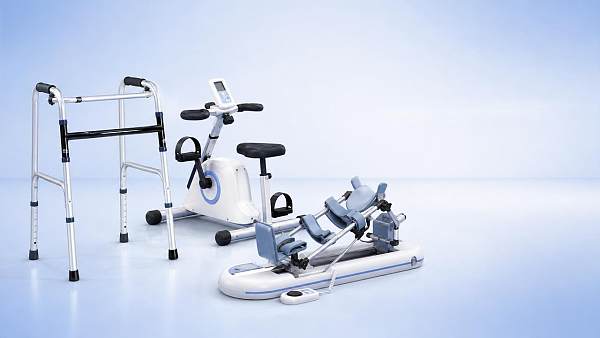
Rehabilitation equipment is not just an accessory to therapy. It often shapes how safely, consistently, and effectively recovery happens.
When mobility drops after surgery, injury, or age-related decline, the right device can reduce strain and restore daily function faster.
That is why rehabilitation equipment is usually grouped by purpose: mobility support, strength rebuilding, balance training, pain relief, and monitored recovery.
In practical terms, a walker solves a different problem than a resistance system or an electrotherapy unit.
The challenge is that many people search by condition, not by equipment category. They ask what helps with walking, weakness, joint stiffness, or post-operative recovery.
A clearer understanding of rehabilitation equipment types makes those questions easier to answer before comparing brands or suppliers.
This topic also matters beyond clinical use. In the broader healthcare technology landscape, equipment selection is tied to usability, compliance, maintenance, and long-term value.
Platforms such as TradeNexus Pro often highlight this wider context by connecting equipment categories with market intelligence, supplier credibility, and technical evaluation signals.
What counts as rehabilitation equipment, and how is it usually classified?
The term covers a broad range of tools used to improve movement, strength, coordination, endurance, and physical independence.
Some products are simple and mechanical. Others include sensors, digital tracking, or programmable support functions.
A useful way to classify rehabilitation equipment is by the recovery goal rather than by product name alone.
- Mobility equipment: canes, crutches, walkers, wheelchairs, gait trainers, transfer aids.
- Strength equipment: resistance bands, pulley systems, weight stations, therapy bikes.
- Balance and coordination tools: wobble boards, parallel bars, stability trainers.
- Recovery support devices: CPM machines, braces, compression systems, cold therapy units.
- Therapeutic technology: electrical stimulation, ultrasound therapy, robotic rehabilitation systems.
This classification matters because two devices may look similar in a catalog but serve different recovery stages.
A transport wheelchair, for example, addresses movement assistance. It does not replace gait rehabilitation equipment intended to retrain walking.
The same logic applies to strength recovery. Light elastic resistance may fit early rehabilitation, while progressive loading systems suit later phases.
Which rehabilitation equipment types are used for mobility, strength, and recovery?
Most searches around rehabilitation equipment fall into three practical buckets. People want to move better, get stronger, or recover more comfortably.
Mobility support equipment
Mobility-focused rehabilitation equipment helps users stand, walk, transfer, or travel with less risk.
Common examples include walkers, rollators, wheelchairs, patient lifts, stair aids, and parallel bars.
These are often chosen when balance is poor, weight-bearing is limited, or endurance is temporarily reduced.
Strength rebuilding equipment
Strength-related rehabilitation equipment targets muscles weakened by inactivity, injury, stroke, or surgery.
This group includes hand exercisers, pedal trainers, therapy bikes, resistance tubing, cable systems, and adjustable exercise stations.
The best choice depends on whether the goal is gentle activation, joint-safe strengthening, or progressive functional training.
Recovery and comfort equipment
Some rehabilitation equipment does not directly build muscle or teach walking. Instead, it supports healing conditions.
Examples include continuous passive motion devices, cold therapy systems, compression boots, positioning cushions, and support braces.
These options are often valuable early in recovery, when swelling, pain, stiffness, or limited range of motion slows progress.
How do you decide which equipment fits the actual need?
A common mistake is choosing rehabilitation equipment by popularity instead of by function, setting, and recovery stage.
A more reliable approach is to match the equipment to a specific physical barrier.
This kind of comparison prevents overbuying and under-supporting at the same time.
In real settings, selection also depends on space, user size, adjustability, cleaning requirements, and ease of training.
Where equipment sourcing involves cross-border evaluation, decision quality improves when technical content is paired with credible supplier analysis.
That is one reason intelligence platforms in healthcare technology are becoming more relevant than simple directory listings.
What differences matter most when comparing rehabilitation equipment options?
Price is only one part of the picture. Two rehabilitation equipment options can differ more in outcomes than in appearance.
The first difference is user capability. Equipment should support current function without making movement passive when training is still possible.
The second is progression. Good rehabilitation equipment allows adjustment as strength, balance, or endurance improves.
The third is environment. A hospital, outpatient center, and home setting rarely need identical solutions.
- Manual versus powered support affects effort level, control, and maintenance burden.
- Fixed versus modular designs affect storage, upgrades, and multi-user flexibility.
- Basic versus sensor-enabled systems affect monitoring depth and documentation value.
- Short-term recovery tools differ from long-term functional independence equipment.
These distinctions are especially important in a market where smart rehabilitation equipment is growing quickly.
Digital tracking, connected devices, and data-led therapy design increasingly overlap with broader smart electronics and healthcare technology trends.
Where do buyers and researchers often get rehabilitation equipment wrong?
The biggest mistake is confusing support with recovery. Equipment that makes movement easier does not always restore function.
Another common issue is selecting rehabilitation equipment without thinking about training, maintenance, or user compliance.
If a device is difficult to adjust, too large for the space, or uncomfortable, usage often drops.
There is also a documentation problem in the market. Product descriptions may sound similar while material quality, certifications, and after-sales support differ sharply.
More careful evaluation usually includes these checkpoints:
- Check intended recovery stage, not just the disease name.
- Confirm load capacity, dimensions, and adjustment range.
- Review cleaning, service, and replacement part availability.
- Compare certifications and evidence behind therapeutic claims.
- Look for clear supplier transparency, not copied catalog language.
This is where curated sector content can help. TradeNexus Pro, for example, reflects a market trend toward decision-grade information rather than shallow listings.
For rehabilitation equipment, that means better context around technology shifts, sourcing risks, and supplier trust signals.
How should the next step be planned before choosing rehabilitation equipment?
A sensible next step is to define the recovery objective in one sentence. Is the goal safer walking, stronger legs, less stiffness, or easier transfers?
From there, narrow the rehabilitation equipment list by function, setting, and expected duration of use.
It also helps to separate must-have criteria from optional features. That keeps evaluation focused and easier to compare.
When the market is unfamiliar, structured industry resources can shorten the learning curve by combining technical explanation with supplier and sector context.
The most effective rehabilitation equipment is rarely the most complex option. It is the one that matches the real functional problem and can be used consistently.
If the decision still feels broad, compare three things first: intended outcome, user limitations, and implementation demands.
That simple framework usually makes the field of rehabilitation equipment much easier to understand, compare, and act on.
Get weekly intelligence in your inbox.
No noise. No sponsored content. Pure intelligence.
 Sep 15, 2026Wholesale WiFi Smart Switches: What Buyers Should Verify Before OrderingWholesale WiFi Smart Switches: What Buyers Should Verify Before Ordering
 Sep 14, 2026How to Select IoT Sensors for Reliable Monitoring in Harsh Industrial EnvironmentsHow to Select IoT Sensors for Reliable Monitoring in Harsh Industrial Environments
 Sep 13, 2026How Procurement Teams Can Improve Supplier Reliability With Supply Chain VisibilityHow Procurement Teams Can Improve Supplier Reliability With Supply Chain Visibility
 Sep 12, 2026Smart Manufacturing Trends 2026: What Leaders Should Prioritize for ROISmart Manufacturing Trends 2026: What Leaders Should Prioritize for ROI
 Sep 11, 2026B2B Market Analysis: How Buyers Evaluate Suppliers, Pricing, and Delivery RiskB2B Market Analysis: How Buyers Evaluate Suppliers, Pricing, and Delivery Risk
 Sep 10, 2026Residential Solar Kits in Canada: How to Size a System for Your Home and ClimateResidential Solar Kits in Canada: How to Size a System for Your Home and Climate
 Sep 09, 2026How to Specify a Syringe Assembly Line for High-Volume Sterile ProductionHow to Specify a Syringe Assembly Line for High-Volume Sterile Production
 Sep 08, 2026How to Evaluate Warehouse Robotics System Suppliers for Reliable Multi-Site DeploymentHow to Evaluate Warehouse Robotics System Suppliers for Reliable Multi-Site Deployment
 Sep 07, 2026Renewable Geothermal Energy Explained: How It Works for Heating and PowerRenewable Geothermal Energy Explained: How It Works for Heating and Power
 Sep 07, 2026How to Choose an Industrial Packaging Robot Manufacturer for Your Production LineHow to Choose an Industrial Packaging Robot Manufacturer for Your Production Line
 Sep 05, 2026How to Evaluate a Turnkey Hydro Turbine Generator Supplier for Remote Power ProjectsHow to Evaluate a Turnkey Hydro Turbine Generator Supplier for Remote Power Projects
 Sep 04, 2026Automated Ultrasonic Welding for Thermoplastic Assemblies: Process Controls That MatterAutomated Ultrasonic Welding for Thermoplastic Assemblies: Process Controls That Matter
 Sep 03, 2026Energy Forecasting for Grid Planning: Sizing Solar and Storage CapacityEnergy Forecasting for Grid Planning: Sizing Solar and Storage Capacity
 Sep 02, 2026Which Metrics Should an Energy Analytics Dashboard Track for Factory Energy Management?Which Metrics Should an Energy Analytics Dashboard Track for Factory Energy Management?
 Sep 01, 2026How Warehouse Voice Picking Improves Accuracy and Throughput in Order FulfillmentHow Warehouse Voice Picking Improves Accuracy and Throughput in Order Fulfillment
 Aug 31, 2026How to Automate Dropshipping Order Processing Without Overselling StockHow to Automate Dropshipping Order Processing Without Overselling Stock
 Aug 30, 2026How to Evaluate a Smart Lighting Supplier for Multi-Site Commercial ProjectsHow to Evaluate a Smart Lighting Supplier for Multi-Site Commercial Projects
 Aug 29, 2026Recent Advances in Smart Manufacturing and Materials Reshaping Factory InvestmentRecent Advances in Smart Manufacturing and Materials Reshaping Factory Investment
 Aug 29, 2026Selecting Lightweight Aluminum Extrusions for Strength-Critical Industrial DesignsSelecting Lightweight Aluminum Extrusions for Strength-Critical Industrial Designs
 Aug 29, 2026Vertical Powder Anodizing Explained: Process Controls for Uniform Coating QualityVertical Powder Anodizing Explained: Process Controls for Uniform Coating Quality
 Aug 29, 2026PV Module Product Due Diligence: What Buyers Should Verify Before ContractingPV Module Product Due Diligence: What Buyers Should Verify Before Contracting
 Aug 29, 2026Solar Design for Challenging Terrain: Managing Slope, Soil, and Shading RisksSolar Design for Challenging Terrain: Managing Slope, Soil, and Shading Risks
 Aug 29, 2026IS 16444 Smart Meter Requirements: Key Functions, Tests, and ComplianceIS 16444 Smart Meter Requirements: Key Functions, Tests, and Compliance
 Aug 29, 2026Rehabilitation Equipment Market Outlook: Demand Drivers and Growth SegmentsRehabilitation Equipment Market Outlook: Demand Drivers and Growth Segments
 Aug 29, 2026When Does Container Handling Automation Deliver ROI in Port Yard Operations?When Does Container Handling Automation Deliver ROI in Port Yard Operations?
 Aug 29, 2026Customs API Integration: A Practical Checklist for Automated Trade ComplianceCustoms API Integration: A Practical Checklist for Automated Trade Compliance
 Aug 29, 2026Returnable Packaging for Automotive: How to Cut Damage and Reverse Logistics CostsReturnable Packaging for Automotive: How to Cut Damage and Reverse Logistics Costs