
SCARA Robots vs 6-Axis Robots: Which Is Better for Fast Assembly Lines?
Fast assembly lines leave little room for the wrong automation choice. When throughput targets are tight, comparing scara robots with 6-axis robots is not just a technical exercise. It shapes cycle time, floor layout, maintenance planning, and payback speed. In sectors tracked closely by TradeNexus Pro, especially advanced manufacturing, smart electronics, and healthcare technology, this decision often appears early in factory expansion and line redesign.
Why this comparison matters on high-speed lines
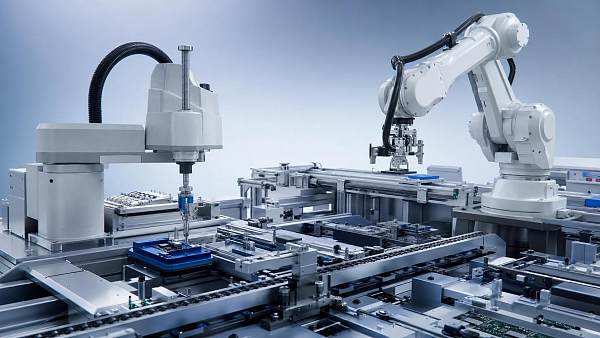
The appeal of scara robots starts with motion efficiency. Their horizontal articulated structure is built for fast pick-and-place, insertion, screwdriving, dispensing, and compact assembly tasks.
6-axis robots, by contrast, offer broader movement freedom. They can approach parts from multiple angles, rotate around obstacles, and handle more varied tooling paths.
That difference sounds simple, but on real production lines it affects fixture design, guarding, upstream feeding, and future product changeovers.
In practical terms, the question is rarely which robot is better in isolation. The better question is which robot fits the process physics, takt time, and product roadmap.
The core difference in motion and structure
Scara robots usually move in X-Y-Z with rotational capability around the vertical axis. This architecture keeps motion direct and rigid for repetitive horizontal operations.
That is why scara robots are often faster on short travel paths. Less unnecessary movement means less time lost between picking, aligning, and placing.
A 6-axis robot adds wrist articulation and full orientation control. It can tilt, twist, and reach around complex tooling zones that a SCARA format may struggle to access.
This flexibility matters when assemblies include angled insertion, multi-face part handling, or shared cells with mixed operations.
What that means for line behavior
- Scara robots usually win on speed in compact, repetitive assembly windows.
- 6-axis robots usually win on flexibility when part orientation changes frequently.
- Scara robots often need simpler path programming.
- 6-axis systems can reduce the need for complex mechanical repositioning fixtures.
Where scara robots usually perform best
For fast assembly lines, scara robots are strong candidates when motion is mostly planar and the product path is repeatable. Electronics assembly is a common example.
They are also effective in battery subassembly, small consumer device production, connector insertion, and medical consumable handling, where speed and footprint matter more than complex wrist movement.
In many cases, scara robots help reduce cell size. That can improve line density, especially where factory space is constrained or expansion must happen inside an existing building.
Another benefit is repeatable vertical compliance for insertion tasks. When mating parts need controlled downward movement, SCARA mechanics often match the job well.
Typical high-fit applications
- High-speed pick-and-place from trays, feeders, or conveyors
- Press-fit or connector insertion with controlled vertical force
- Small-part screwdriving and dispensing
- Packaging and transfer steps near the end of assembly
When 6-axis robots make more sense
A 6-axis robot becomes more attractive when the product is less predictable. If the line must handle several SKUs, varying part geometries, or awkward approach angles, flexibility can outweigh raw speed.
This is common in automotive subassemblies, mixed medical device builds, metal component handling, and stations where inspection, assembly, and transfer happen in one cell.
A 6-axis platform may also simplify future upgrades. If the line could later add vision guidance, tool changes, or more complex paths, extra articulation can protect the investment.
The trade-off is that motion can be slower than scara robots on short, repetitive cycles, especially when full orientation control is not actually needed.
A practical side-by-side view
A simple comparison helps clarify where each format creates value.
What the market is paying attention to now
The growing interest in scara robots is tied to broader manufacturing changes. Product cycles are shorter, labor planning is harder, and traceability expectations are rising.
At the same time, companies are under pressure to automate without overbuilding. That has made robot selection more data-driven than before.
TradeNexus Pro reflects this shift across industrial sectors. Decision-making now depends on supplier credibility, system integration capability, service support, and the ability to match technology to real production constraints.
That is why the scara robots versus 6-axis discussion is now linked to sourcing strategy, regional automation trends, and long-term operational resilience.
Signals worth monitoring
- Whether cycle-time gains come from robot motion or better feeding systems
- How quickly a supplier can support integration and spare parts
- Whether the line is likely to shift toward more product variants
- How software, vision, and tooling affect total system performance
How to choose without oversimplifying the decision
The fastest robot on paper is not always the best line investment. Selection should begin with the process, not with a preferred robot category.
A useful evaluation starts by mapping part presentation, required orientation, insertion tolerance, reach envelope, payload, and actual dwell time.
Then compare how scara robots and 6-axis robots perform when vision delays, feeder inconsistency, and maintenance access are included. Those factors often change the answer.
A grounded evaluation checklist
- Measure actual required orientation changes, not assumed flexibility needs.
- Test cycle time with real end-of-arm tooling and part supply conditions.
- Review footprint, cable routing, guarding, and operator access together.
- Check service network strength, software usability, and spare parts availability.
- Estimate ROI under both current volume and likely future mix changes.
A sensible next step for robot selection
For fast assembly lines, scara robots are often the stronger choice when the process is compact, repetitive, and cycle-time sensitive. A 6-axis robot is often the better fit when orientation freedom and future variation matter more.
The most reliable decision comes from matching robot architecture to product behavior, tooling reality, and line economics. That is also where decision-grade industry intelligence becomes useful.
When comparing suppliers or expansion options, it helps to build a short list around motion needs, integration risk, support capability, and expected line changes over the next two to three years.
From there, a pilot test, a realistic cycle study, and a structured vendor comparison usually reveal whether scara robots or 6-axis robots will create the better long-term result.
Get weekly intelligence in your inbox.
No noise. No sponsored content. Pure intelligence.
 Oct 08, 2026How Digital Health Improves Diagnostic Accuracy and Workflow in Clinical LabsHow Digital Health Improves Diagnostic Accuracy and Workflow in Clinical Labs
 Oct 07, 2026Selecting Voice Picking Systems for German Warehouses: Integration, Languages and ROISelecting Voice Picking Systems for German Warehouses: Integration, Languages and ROI
 Oct 06, 2026How to Choose Last Mile Dispatch Software for On-Time Delivery at ScaleHow to Choose Last Mile Dispatch Software for On-Time Delivery at Scale
 Oct 05, 2026Vietnam’s Consumer Electronics Market: Demand Shifts and Sourcing OpportunitiesVietnam’s Consumer Electronics Market: Demand Shifts and Sourcing Opportunities
 Oct 04, 2026Digital Health Investment Priorities for Providers: Improving Access, Outcomes, and EfficiencyDigital Health Investment Priorities for Providers: Improving Access, Outcomes, and Efficiency
 Oct 03, 2026How to Specify an FR4 Custom PCB Board for High-Voltage and High-Heat DesignsHow to Specify an FR4 Custom PCB Board for High-Voltage and High-Heat Designs
 Oct 02, 2026ERP Software Market Intelligence: Adoption, Pricing, and Vendor Signals to WatchERP Software Market Intelligence: Adoption, Pricing, and Vendor Signals to Watch
 Oct 01, 2026How to Select Calibrated Temperature Data Loggers for GMP Cold Storage MonitoringHow to Select Calibrated Temperature Data Loggers for GMP Cold Storage Monitoring
 Sep 30, 2026Custom Molded Rubber Pricing: What Drives Unit Cost and Tooling Fees?Custom Molded Rubber Pricing: What Drives Unit Cost and Tooling Fees?
 Sep 29, 2026How to Evaluate Energy Management Software Vendors for Multi-Site OperationsHow to Evaluate Energy Management Software Vendors for Multi-Site Operations
 Sep 28, 2026How to Select a DIN Rail Smart Meter for Multi-Circuit Energy MonitoringHow to Select a DIN Rail Smart Meter for Multi-Circuit Energy Monitoring
 Sep 27, 2026TWS Earbuds in Vietnam: Demand Drivers, Price Tiers, and Retail Channel OpportunitiesTWS Earbuds in Vietnam: Demand Drivers, Price Tiers, and Retail Channel Opportunities
 Sep 26, 2026How UAE Clinics Can Qualify a Smart Glucometer Supplier for Accuracy and ComplianceHow UAE Clinics Can Qualify a Smart Glucometer Supplier for Accuracy and Compliance
 Sep 25, 2026Buying Aesthetic Lasers in the USA: FDA Status, Wavelengths, and Service SupportBuying Aesthetic Lasers in the USA: FDA Status, Wavelengths, and Service Support
 Sep 24, 2026Laser Cutting Brass Sheet: How to Prevent Burrs and Heat Marks on Thin PartsLaser Cutting Brass Sheet: How to Prevent Burrs and Heat Marks on Thin Parts
 Sep 23, 2026How to Choose Lightweight ANC Headphones for Comfortable All-Day TravelHow to Choose Lightweight ANC Headphones for Comfortable All-Day Travel
 Sep 22, 2026IPX5 TWS Bluetooth Earbuds: What Protection Do They Offer for Workouts?IPX5 TWS Bluetooth Earbuds: What Protection Do They Offer for Workouts?
 Sep 21, 2026What to Look for in a Grid Integration Company for Utility-Scale Solar ProjectsWhat to Look for in a Grid Integration Company for Utility-Scale Solar Projects
 Sep 20, 2026Microgrid Controller Pricing: What Drives Cost in Commercial Energy Projects?Microgrid Controller Pricing: What Drives Cost in Commercial Energy Projects?
 Sep 19, 2026How to Choose a GaN Charger for Laptops Without Compromising Power or PortabilityHow to Choose a GaN Charger for Laptops Without Compromising Power or Portability
 Sep 18, 2026Floating Solar Farm Costs: CAPEX, OPEX, and the Site Factors That Shape ROIFloating Solar Farm Costs: CAPEX, OPEX, and the Site Factors That Shape ROI
 Sep 17, 2026Drone Delivery Solutions for Last-Mile Routes: Site, Payload, and Range PlanningDrone Delivery Solutions for Last-Mile Routes: Site, Payload, and Range Planning
 Sep 16, 2026When Low-Volume Electronics Manufacturing Makes More Sense Than Mass ProductionWhen Low-Volume Electronics Manufacturing Makes More Sense Than Mass Production
 Sep 15, 2026Wholesale WiFi Smart Switches: What Buyers Should Verify Before OrderingWholesale WiFi Smart Switches: What Buyers Should Verify Before Ordering
 Sep 14, 2026How to Select IoT Sensors for Reliable Monitoring in Harsh Industrial EnvironmentsHow to Select IoT Sensors for Reliable Monitoring in Harsh Industrial Environments
 Sep 13, 2026How Procurement Teams Can Improve Supplier Reliability With Supply Chain VisibilityHow Procurement Teams Can Improve Supplier Reliability With Supply Chain Visibility
 Sep 12, 2026Smart Manufacturing Trends 2026: What Leaders Should Prioritize for ROISmart Manufacturing Trends 2026: What Leaders Should Prioritize for ROI



























