
Custom Metal Fabrication for Marine Projects: Materials, Tolerances, and Corrosion Risks
Custom Metal Fabrication for Marine Projects: What Really Drives Risk and Reliability
In custom metal fabrication for marine projects, small material or tolerance mistakes can lead to major safety failures, corrosion losses, and inspection problems. For quality control and safety teams, understanding how alloy selection, fabrication precision, and harsh seawater exposure interact is essential to reducing risk, improving compliance, and ensuring long-term structural reliability.
That is especially true when parts must perform under salt spray, vibration, impact loading, and frequent maintenance cycles. In practice, custom metal fabrication for marine work is less about making a part that looks right and more about making one that survives in service.
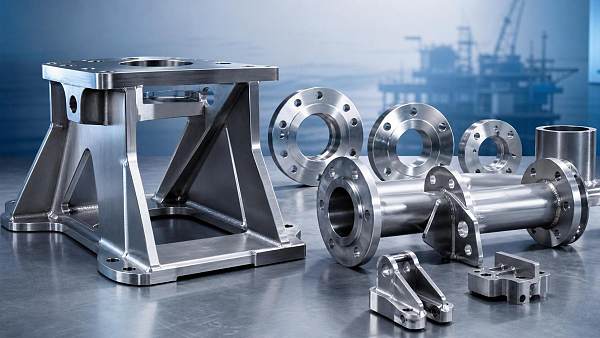
The most effective way to manage this is to connect design intent, material control, and inspection criteria from the start. When those three pieces move together, marine fabrications become easier to verify, easier to maintain, and far less likely to fail early.
Material Selection: Where Marine Performance Starts
Material choice is the first major decision in custom metal fabrication for marine applications. Stainless steel, aluminum alloys, duplex stainless, and specialty copper alloys all behave differently in saltwater environments, especially when welding, fastening, or pairing with dissimilar metals.
For many projects, 316L stainless steel is chosen because it balances corrosion resistance and availability. But it is not a universal answer. In splash zones, stagnant water areas, or high-chloride conditions, pitting and crevice corrosion can still appear sooner than expected.
Aluminum is attractive for weight reduction, yet it needs tight control over alloy grade, surface finish, and isolation from galvanic contact. If the fabrication team overlooks coating compatibility or drainage design, the lighter choice can become the higher-risk choice.
A practical QC review should ask three questions early: What is the exposure zone? What metals will touch each other? What maintenance access will the owner realistically have? Those answers often matter more than the nominal grade on the material certificate.
Tolerances: Small Deviations, Big Marine Consequences
In custom metal fabrication for marine projects, tolerance control affects fit-up, sealing, alignment, and load transfer. A bracket that is only slightly out of square may still be usable on land, but on a vessel or dock structure it can create stress concentration, vibration, or seal failure.
This is why marine tolerances should not be treated as generic fabrication tolerances. They need to reflect assembly reality, thermal distortion from welding, and the behavior of the final structure in a wet, moving environment.
For quality control teams, the key is to define which dimensions are truly critical. Hole position, flange flatness, weld penetration, and interface alignment often deserve tighter checks than cosmetic edges or non-contact surfaces.
A useful rule is simple: if a deviation can affect drainage, gasket compression, load distribution, or installation time, it should be treated as a controlled characteristic. That approach keeps inspection focused on what actually changes risk.
Corrosion Risks: The Real Test Happens After Delivery
Corrosion is the main long-term threat in custom metal fabrication for marine service. The problem is not only direct seawater contact. It also comes from trapped moisture, poor coating preparation, weld discoloration, and hidden gaps that hold chlorides.
Galvanic corrosion is another common issue. When stainless steel, aluminum, and carbon steel are connected without proper isolation, the less noble metal can degrade quickly. Even a small fastener or bracket can become the starting point of a larger failure path.
Surface finish matters here more than many teams expect. Smooth, clean, and properly passivated surfaces reduce contamination and make coatings perform better. Rough welds, spatter, and incomplete cleaning create small corrosion traps that are hard to see during installation.
This is where custom metal fabrication for marine projects should be judged by lifecycle performance, not only delivery quality. A part that passes visual inspection but fails after one season is still a bad result.
What QC and Safety Teams Should Check
A strong inspection plan for custom metal fabrication for marine use should combine documentation, dimensional checks, and corrosion-prevention controls. It should also reflect the actual service environment, not just shop-floor convenience.
Useful checkpoints include material traceability, weld procedure compliance, coating thickness, drainage design, and fastener compatibility. If any of these are missing, the risk picture is incomplete.
- Verify material certificates against the specified alloy and heat number.
- Confirm weld procedures match the base metal and exposure condition.
- Inspect critical dimensions after welding, not only before fabrication.
- Check isolation between dissimilar metals and coated interfaces.
- Document coating prep, repair points, and final surface condition.
These steps are not administrative extras. They are the fastest way to catch failures before the structure reaches seawater.
A Practical Way to Reduce Marine Fabrication Risk
The best results usually come from early collaboration between engineering, procurement, fabrication, and inspection teams. When custom metal fabrication for marine projects is reviewed only at the end, the most expensive problems are already built in.
A better workflow is to define exposure zone, structural duty, tolerance class, and corrosion protection method before production starts. That makes it easier to choose the right alloy, approve the right weld sequence, and set realistic acceptance criteria.
It also helps to require a maintenance view during design review. If technicians cannot clean, inspect, and recoat a joint later, the design may be compliant on paper but fragile in the field.
Conclusion: Build for Exposure, Not Just for Delivery
Custom metal fabrication for marine projects succeeds when materials, tolerances, and corrosion controls are treated as one system. Separate them, and risk grows quickly. Manage them together, and long-term reliability becomes much more achievable.
For QC and safety teams, the most valuable habit is to keep asking one question: will this part still perform after salt, motion, and time do their work? If the answer is uncertain, the design or inspection plan still needs tightening.
The safest marine fabrications are usually the ones that look simple because the hard decisions were made early, documented clearly, and verified carefully.
Get weekly intelligence in your inbox.
No noise. No sponsored content. Pure intelligence.
 Oct 08, 2026How Digital Health Improves Diagnostic Accuracy and Workflow in Clinical LabsHow Digital Health Improves Diagnostic Accuracy and Workflow in Clinical Labs
 Oct 07, 2026Selecting Voice Picking Systems for German Warehouses: Integration, Languages and ROISelecting Voice Picking Systems for German Warehouses: Integration, Languages and ROI
 Oct 06, 2026How to Choose Last Mile Dispatch Software for On-Time Delivery at ScaleHow to Choose Last Mile Dispatch Software for On-Time Delivery at Scale
 Oct 05, 2026Vietnam’s Consumer Electronics Market: Demand Shifts and Sourcing OpportunitiesVietnam’s Consumer Electronics Market: Demand Shifts and Sourcing Opportunities
 Oct 04, 2026Digital Health Investment Priorities for Providers: Improving Access, Outcomes, and EfficiencyDigital Health Investment Priorities for Providers: Improving Access, Outcomes, and Efficiency
 Oct 03, 2026How to Specify an FR4 Custom PCB Board for High-Voltage and High-Heat DesignsHow to Specify an FR4 Custom PCB Board for High-Voltage and High-Heat Designs
 Oct 02, 2026ERP Software Market Intelligence: Adoption, Pricing, and Vendor Signals to WatchERP Software Market Intelligence: Adoption, Pricing, and Vendor Signals to Watch
 Oct 01, 2026How to Select Calibrated Temperature Data Loggers for GMP Cold Storage MonitoringHow to Select Calibrated Temperature Data Loggers for GMP Cold Storage Monitoring
 Sep 30, 2026Custom Molded Rubber Pricing: What Drives Unit Cost and Tooling Fees?Custom Molded Rubber Pricing: What Drives Unit Cost and Tooling Fees?
 Sep 29, 2026How to Evaluate Energy Management Software Vendors for Multi-Site OperationsHow to Evaluate Energy Management Software Vendors for Multi-Site Operations
 Sep 28, 2026How to Select a DIN Rail Smart Meter for Multi-Circuit Energy MonitoringHow to Select a DIN Rail Smart Meter for Multi-Circuit Energy Monitoring
 Sep 27, 2026TWS Earbuds in Vietnam: Demand Drivers, Price Tiers, and Retail Channel OpportunitiesTWS Earbuds in Vietnam: Demand Drivers, Price Tiers, and Retail Channel Opportunities
 Sep 26, 2026How UAE Clinics Can Qualify a Smart Glucometer Supplier for Accuracy and ComplianceHow UAE Clinics Can Qualify a Smart Glucometer Supplier for Accuracy and Compliance
 Sep 25, 2026Buying Aesthetic Lasers in the USA: FDA Status, Wavelengths, and Service SupportBuying Aesthetic Lasers in the USA: FDA Status, Wavelengths, and Service Support
 Sep 24, 2026Laser Cutting Brass Sheet: How to Prevent Burrs and Heat Marks on Thin PartsLaser Cutting Brass Sheet: How to Prevent Burrs and Heat Marks on Thin Parts
 Sep 23, 2026How to Choose Lightweight ANC Headphones for Comfortable All-Day TravelHow to Choose Lightweight ANC Headphones for Comfortable All-Day Travel
 Sep 22, 2026IPX5 TWS Bluetooth Earbuds: What Protection Do They Offer for Workouts?IPX5 TWS Bluetooth Earbuds: What Protection Do They Offer for Workouts?
 Sep 21, 2026What to Look for in a Grid Integration Company for Utility-Scale Solar ProjectsWhat to Look for in a Grid Integration Company for Utility-Scale Solar Projects
 Sep 20, 2026Microgrid Controller Pricing: What Drives Cost in Commercial Energy Projects?Microgrid Controller Pricing: What Drives Cost in Commercial Energy Projects?
 Sep 19, 2026How to Choose a GaN Charger for Laptops Without Compromising Power or PortabilityHow to Choose a GaN Charger for Laptops Without Compromising Power or Portability
 Sep 18, 2026Floating Solar Farm Costs: CAPEX, OPEX, and the Site Factors That Shape ROIFloating Solar Farm Costs: CAPEX, OPEX, and the Site Factors That Shape ROI
 Sep 17, 2026Drone Delivery Solutions for Last-Mile Routes: Site, Payload, and Range PlanningDrone Delivery Solutions for Last-Mile Routes: Site, Payload, and Range Planning
 Sep 16, 2026When Low-Volume Electronics Manufacturing Makes More Sense Than Mass ProductionWhen Low-Volume Electronics Manufacturing Makes More Sense Than Mass Production
 Sep 15, 2026Wholesale WiFi Smart Switches: What Buyers Should Verify Before OrderingWholesale WiFi Smart Switches: What Buyers Should Verify Before Ordering
 Sep 14, 2026How to Select IoT Sensors for Reliable Monitoring in Harsh Industrial EnvironmentsHow to Select IoT Sensors for Reliable Monitoring in Harsh Industrial Environments
 Sep 13, 2026How Procurement Teams Can Improve Supplier Reliability With Supply Chain VisibilityHow Procurement Teams Can Improve Supplier Reliability With Supply Chain Visibility
 Sep 12, 2026Smart Manufacturing Trends 2026: What Leaders Should Prioritize for ROISmart Manufacturing Trends 2026: What Leaders Should Prioritize for ROI



























