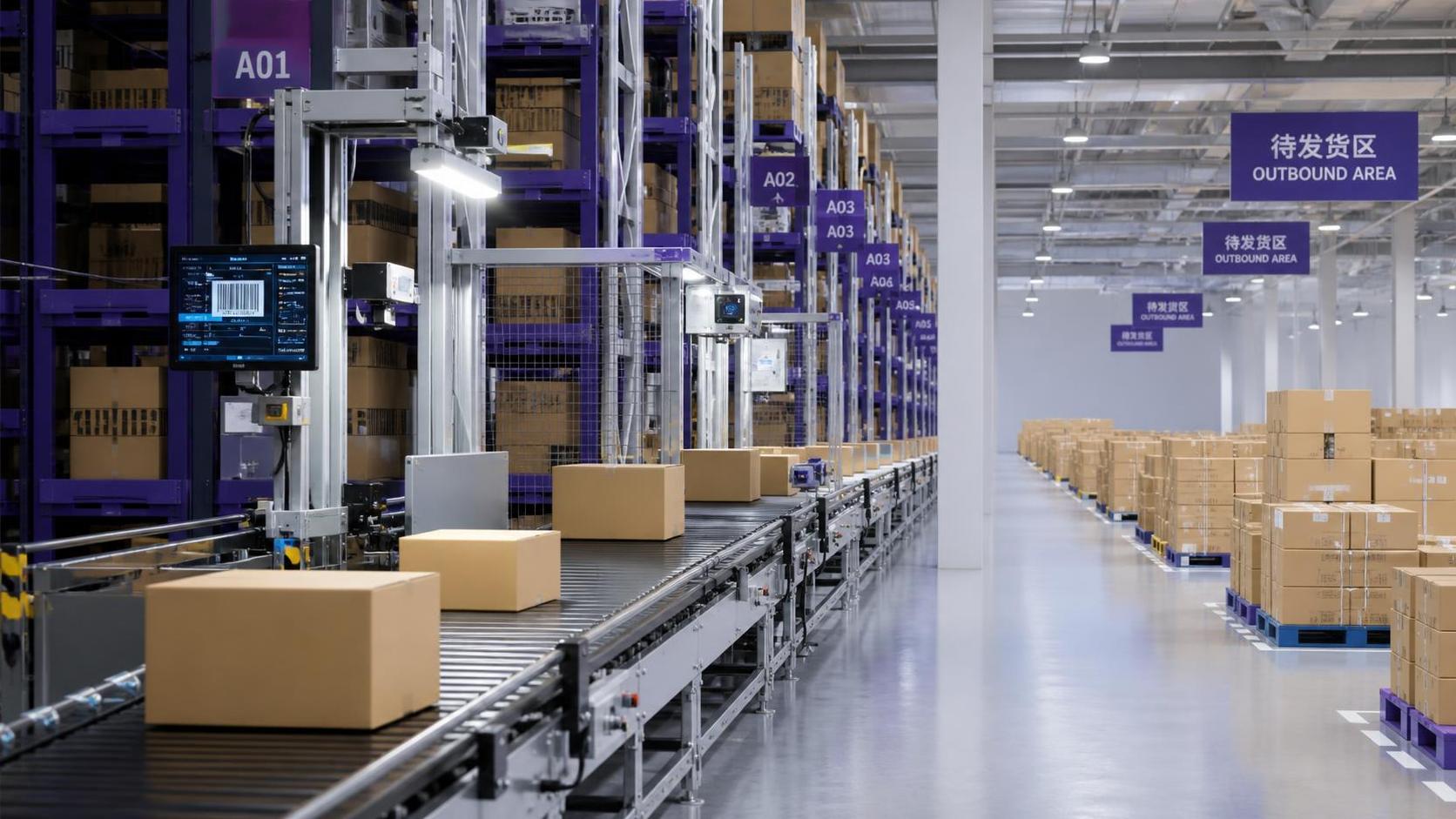
Shanghai Waigaoqiao Launches First Green Consolidation Lane for Industrial Materials
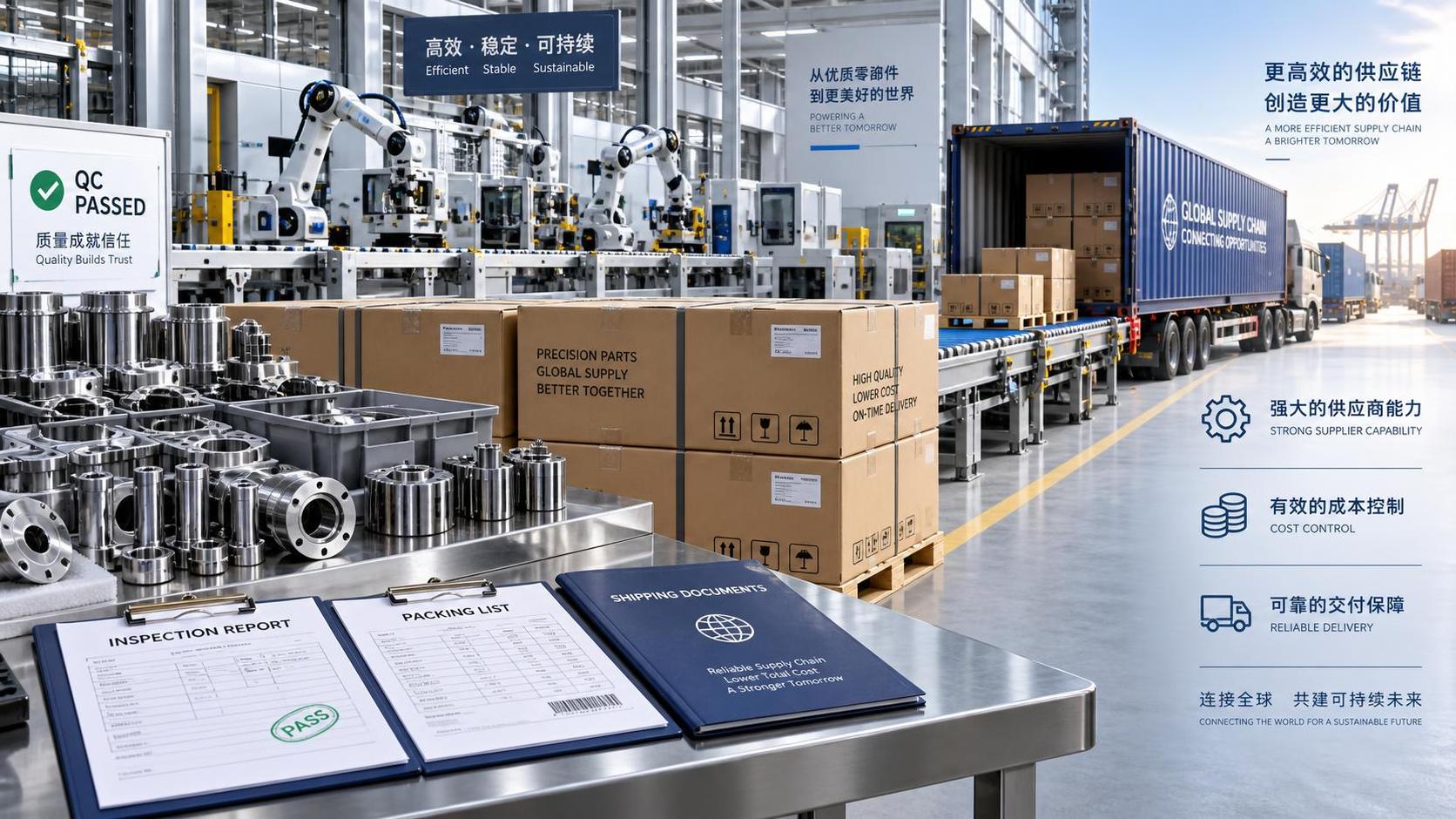
On May 6, 2026, Shanghai Customs and SIPG jointly launched the first dedicated green consolidation lane for industrial materials at Waigaoqiao Port—targeting high-value-added materials including stainless steel coils, nickel-based alloys, and titanium and titanium alloys. This development is especially relevant for exporters and logistics providers in advanced manufacturing, specialty metals, and precision engineering sectors, as it directly reduces lead times and logistics costs for time-sensitive, high-margin industrial exports.
Event Overview
On May 6, 2026, Shanghai Customs and the Shanghai International Port Group (SIPG) officially activated the Industrial Materials Green Consolidation Lane at Waigaoqiao港区. The lane covers stainless steel coils, nickel-based alloys, titanium, and titanium alloys. It operates under an integrated model of ‘advance declaration + intelligent cargo routing + priority customs inspection + direct pickup at ship side’, reducing average export clearance time to 12.3 hours—a 68% improvement over standard lanes. Per-container logistics cost drops by approximately USD 180. The lane is integrated with the RCEP origin certification intelligent verification system to enhance export stability to ASEAN, Japan, and South Korea.
Industries Affected by Segment
Direct Exporters (e.g., alloy producers, titanium fabricators)
These enterprises face tighter delivery windows and higher compliance expectations for high-value industrial shipments. The lane shortens total export cycle by 5–7 days, improving on-time delivery performance—especially critical for contract-bound OEM or project-based supply chains.
Raw Material Procurement Teams (e.g., procurement units of aerospace, energy equipment firms)
Procurement functions relying on imported inputs from China—or managing dual-sourcing strategies involving Chinese-origin titanium/nickel alloys—may observe improved predictability in inbound material arrival schedules, supporting just-in-time planning and inventory optimization.
Contract Manufacturers & Precision Metal Fabricators
Firms that process base alloys into finished components (e.g., turbine blades, chemical reactor linings) benefit indirectly: faster outbound movement of semi-finished goods from upstream suppliers improves their own production scheduling and order responsiveness—particularly where final assembly occurs offshore.
Freight Forwarders & NVOCCs Specializing in Industrial Cargo
Service providers handling consolidated LCL or FCL shipments of industrial materials now have a verified, priority-access channel. This enables more reliable transit time quoting and reduced demurrage/detention risk—but only for eligible commodity codes and documentation.
What Relevant Enterprises or Practitioners Should Focus On Now
Monitor official eligibility criteria and commodity code updates
The lane applies only to specific HS codes and declared product categories. Companies should verify whether their exported items—including sub-grades and surface treatments—are formally included in the pilot scope, as exclusions (e.g., certain scrap or secondary forms) may apply despite material classification.
Validate RCEP certificate integration with actual shipment workflows
While the lane connects to the RCEP origin smart verification system, analysis shows that automated validation depends on accurate pre-declaration data alignment (e.g., invoice line items matching packing list and certificate fields). Misalignment may still trigger manual review—even within the green lane.
Distinguish between policy launch and operational readiness
Observably, initial throughput capacity remains limited. Early adopters report queue prioritization rather than guaranteed slot allocation. Current more suitable understanding is that this is a phased capability rollout—not an immediately scalable service—and volume ramp-up may take several weeks post-launch.
Align internal documentation and warehouse staging with ‘ship-side direct pickup’ requirements
To leverage the ‘direct pickup’ component, shippers must ensure container readiness (seal integrity, correct manifest, pre-loaded EIR), yard appointment coordination, and real-time customs release notification setup. Delays often originate from internal handoff gaps—not port infrastructure.
Editorial Perspective / Industry Observation
This initiative is better understood as a targeted infrastructure signal—not yet a fully matured operational solution. From an industry perspective, it reflects growing regulatory emphasis on de-risking and accelerating high-value industrial trade corridors, particularly those aligned with RCEP supply chain resilience goals. Analysis shows the 68% clearance time reduction is achievable only when all four enablers (advance declaration, intelligent routing, priority inspection, direct pickup) function synchronously—a condition still dependent on cross-agency coordination and shipper discipline. Its current significance lies less in immediate scalability and more in its role as a benchmark for future green lanes across other Chinese ports and material categories.
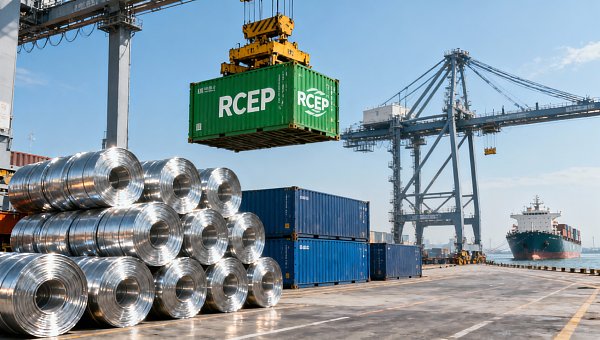
Conclusion: The Waigaoqiao green consolidation lane marks a procedural upgrade—not a systemic overhaul—for select industrial exporters. Its value is real but bounded: most impactful for firms already compliant with RCEP origin rules, operating with digital declaration capabilities, and shipping standardized, high-documentation-integrity consignments. For others, it serves more as an early indicator of tightening expectations around traceability, speed, and automation in industrial material logistics—rather than an off-the-shelf efficiency gain.
Source: Official announcement issued jointly by Shanghai Customs and Shanghai International Port Group (SIPG), May 6, 2026. Note: Ongoing observation required for expansion to additional materials (e.g., cobalt alloys, zirconium), extension to import flows, and formalization of lane access protocols beyond the pilot phase.
Get weekly intelligence in your inbox.
No noise. No sponsored content. Pure intelligence.
 Sep 23, 2026How to Choose Lightweight ANC Headphones for Comfortable All-Day TravelHow to Choose Lightweight ANC Headphones for Comfortable All-Day Travel
 Sep 22, 2026IPX5 TWS Bluetooth Earbuds: What Protection Do They Offer for Workouts?IPX5 TWS Bluetooth Earbuds: What Protection Do They Offer for Workouts?
 Sep 21, 2026What to Look for in a Grid Integration Company for Utility-Scale Solar ProjectsWhat to Look for in a Grid Integration Company for Utility-Scale Solar Projects
 Sep 20, 2026Microgrid Controller Pricing: What Drives Cost in Commercial Energy Projects?Microgrid Controller Pricing: What Drives Cost in Commercial Energy Projects?
 Sep 19, 2026How to Choose a GaN Charger for Laptops Without Compromising Power or PortabilityHow to Choose a GaN Charger for Laptops Without Compromising Power or Portability
 Sep 18, 2026Floating Solar Farm Costs: CAPEX, OPEX, and the Site Factors That Shape ROIFloating Solar Farm Costs: CAPEX, OPEX, and the Site Factors That Shape ROI
 Sep 17, 2026Drone Delivery Solutions for Last-Mile Routes: Site, Payload, and Range PlanningDrone Delivery Solutions for Last-Mile Routes: Site, Payload, and Range Planning
 Sep 16, 2026When Low-Volume Electronics Manufacturing Makes More Sense Than Mass ProductionWhen Low-Volume Electronics Manufacturing Makes More Sense Than Mass Production
 Sep 15, 2026Wholesale WiFi Smart Switches: What Buyers Should Verify Before OrderingWholesale WiFi Smart Switches: What Buyers Should Verify Before Ordering
 Sep 14, 2026How to Select IoT Sensors for Reliable Monitoring in Harsh Industrial EnvironmentsHow to Select IoT Sensors for Reliable Monitoring in Harsh Industrial Environments
 Sep 13, 2026How Procurement Teams Can Improve Supplier Reliability With Supply Chain VisibilityHow Procurement Teams Can Improve Supplier Reliability With Supply Chain Visibility
 Sep 12, 2026Smart Manufacturing Trends 2026: What Leaders Should Prioritize for ROISmart Manufacturing Trends 2026: What Leaders Should Prioritize for ROI
 Sep 11, 2026B2B Market Analysis: How Buyers Evaluate Suppliers, Pricing, and Delivery RiskB2B Market Analysis: How Buyers Evaluate Suppliers, Pricing, and Delivery Risk
 Sep 10, 2026Residential Solar Kits in Canada: How to Size a System for Your Home and ClimateResidential Solar Kits in Canada: How to Size a System for Your Home and Climate
 Sep 09, 2026How to Specify a Syringe Assembly Line for High-Volume Sterile ProductionHow to Specify a Syringe Assembly Line for High-Volume Sterile Production
 Sep 08, 2026How to Evaluate Warehouse Robotics System Suppliers for Reliable Multi-Site DeploymentHow to Evaluate Warehouse Robotics System Suppliers for Reliable Multi-Site Deployment
 Sep 07, 2026Renewable Geothermal Energy Explained: How It Works for Heating and PowerRenewable Geothermal Energy Explained: How It Works for Heating and Power
 Sep 07, 2026How to Choose an Industrial Packaging Robot Manufacturer for Your Production LineHow to Choose an Industrial Packaging Robot Manufacturer for Your Production Line
 Sep 05, 2026How to Evaluate a Turnkey Hydro Turbine Generator Supplier for Remote Power ProjectsHow to Evaluate a Turnkey Hydro Turbine Generator Supplier for Remote Power Projects
 Sep 04, 2026Automated Ultrasonic Welding for Thermoplastic Assemblies: Process Controls That MatterAutomated Ultrasonic Welding for Thermoplastic Assemblies: Process Controls That Matter
 Sep 03, 2026Energy Forecasting for Grid Planning: Sizing Solar and Storage CapacityEnergy Forecasting for Grid Planning: Sizing Solar and Storage Capacity
 Sep 02, 2026Which Metrics Should an Energy Analytics Dashboard Track for Factory Energy Management?Which Metrics Should an Energy Analytics Dashboard Track for Factory Energy Management?
 Sep 01, 2026How Warehouse Voice Picking Improves Accuracy and Throughput in Order FulfillmentHow Warehouse Voice Picking Improves Accuracy and Throughput in Order Fulfillment
 Aug 31, 2026How to Automate Dropshipping Order Processing Without Overselling StockHow to Automate Dropshipping Order Processing Without Overselling Stock
 Aug 30, 2026How to Evaluate a Smart Lighting Supplier for Multi-Site Commercial ProjectsHow to Evaluate a Smart Lighting Supplier for Multi-Site Commercial Projects
 Aug 29, 2026Recent Advances in Smart Manufacturing and Materials Reshaping Factory InvestmentRecent Advances in Smart Manufacturing and Materials Reshaping Factory Investment
 Aug 29, 2026Selecting Lightweight Aluminum Extrusions for Strength-Critical Industrial DesignsSelecting Lightweight Aluminum Extrusions for Strength-Critical Industrial Designs