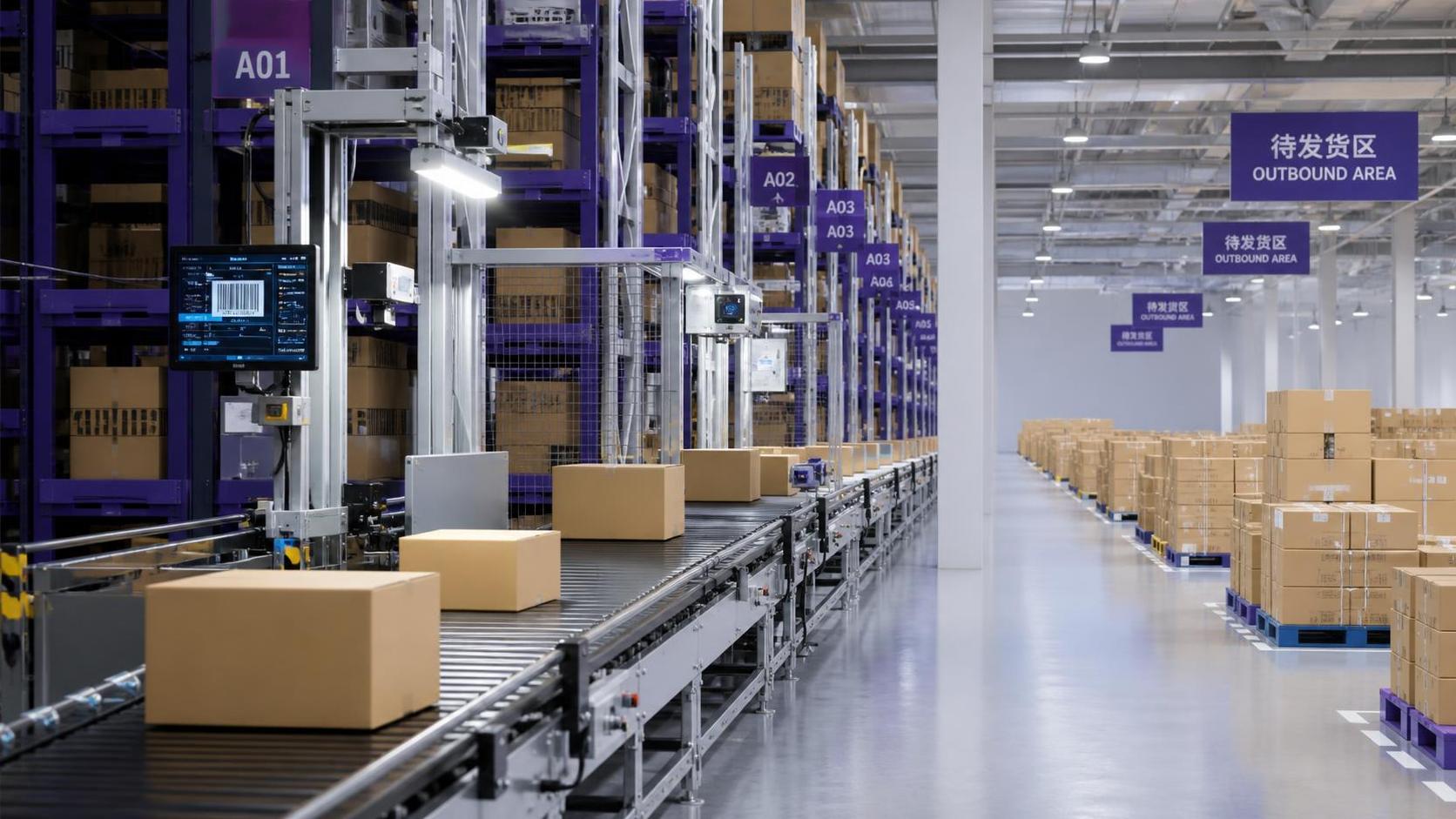
Warehouse Automation for Growing Facilities: Where to Start and What to Automate First
Warehouse Automation for Growing Facilities: Where to Start and What to Automate First

Warehouse automation is no longer reserved for giant distribution networks.
For growing facilities, the harder question is where to begin without creating operational friction.
That matters because the wrong automation layer can lock in poor workflows instead of fixing them.
A practical warehouse automation strategy starts with process visibility, not equipment shopping.
In real operations, the best early wins usually come from repetitive, error-prone, and labor-sensitive tasks.
These first moves improve accuracy, throughput, and staffing flexibility while preserving room to scale.
For companies tracking global supply chain risk, this is also a resilience decision, not just a productivity project.
The goal is simple: automate what creates measurable value first, then expand with discipline.
Start With the Real Bottlenecks
Before investing in warehouse automation, map the daily pain points across receiving, storage, picking, packing, and shipping.
Many facilities assume labor cost is the main problem.
Often, the bigger issue is process inconsistency that causes rework, delays, and inventory confusion.
A growing site should measure three things first: error frequency, task time, and queue buildup.
Those numbers usually reveal where warehouse automation can pay back fastest.
- Look for manual scans repeated several times in one workflow.
- Track where operators wait for instructions, approvals, or inventory confirmation.
- Review misshipments, mispicks, and cycle count adjustments by process step.
- Check whether peak volumes depend on overtime more than system control.
This baseline helps decision-makers choose automation based on operational evidence rather than vendor claims.
Automate Data Flow Before Heavy Equipment
One common mistake is buying machines before fixing information flow.
If inventory records are weak, even advanced warehouse automation will underperform.
For many facilities, the first automation layer should be digital control.
That includes warehouse management system logic, barcode discipline, mobile workflows, and real-time location visibility.
These tools create cleaner inputs for every later investment, from conveyors to autonomous mobile robots.
Best first-step digital upgrades
- Directed putaway to reduce random storage decisions.
- Mobile picking instructions to replace paper lists.
- Scan validation at pack-out to catch order errors early.
- Cycle count prompts triggered by movement or variance.
- Dock scheduling tools to smooth inbound and outbound congestion.
This stage of warehouse automation is usually lower risk, faster to deploy, and easier to scale across multiple facilities.
What to Automate First for the Fastest Return
Not every process deserves the same priority.
The strongest early warehouse automation candidates usually share three traits.
They are repetitive, highly manual, and directly linked to service performance.
1. Receiving and check-in
Inbound errors spread everywhere.
Automated receiving with scanning, digital labeling, and exception alerts improves stock accuracy from the start.
2. Picking workflows
Picking often consumes the most labor in a growing warehouse.
Pick-to-light, voice picking, zone routing, or robot-assisted picking can sharply reduce travel time.
3. Packing and verification
This is a high-impact point for quality control.
Warehouse automation here may include dimensioning, weight checks, label generation, and scan-based order validation.
4. Replenishment triggers
Short picks and empty forward locations create hidden delays.
Automated replenishment rules keep fast movers available without constant manual supervision.
In most cases, these areas outperform storage automation as the first investment.
Choose the Right Automation Level
Warehouse automation is not a single decision.
It is a stack of choices, each with different cost, flexibility, and implementation risk.
A growing facility should match tools to order profile, SKU mix, labor volatility, and space limits.
From a planning view, mid-level warehouse automation often delivers the best balance first.
It improves output without forcing a full site redesign too early.
Avoid the Most Expensive Mistakes
As adoption grows across advanced manufacturing and supply chain operations, the same warning signs keep appearing.
Companies do not usually fail because warehouse automation is ineffective.
They fail because the deployment logic is weak.
- Automating broken workflows instead of simplifying them first.
- Choosing systems that cannot integrate with ERP or warehouse software.
- Ignoring SKU growth, order variability, or seasonal spikes.
- Underestimating training, change management, and maintenance readiness.
- Using ROI assumptions that exclude downtime, support, and transition costs.
These risks matter even more in cross-border supply chains, where service disruptions affect customer trust and inventory positioning.
A phased warehouse automation roadmap reduces these risks while preserving optionality.
Build a Practical Roadmap for Scale
The smartest warehouse automation plans are not the most aggressive.
They are the most sequenced.
A useful roadmap links each investment to a measurable business problem.
- Stabilize inventory accuracy and process data.
- Automate receiving, picking, and pack verification.
- Add movement optimization through conveyors or mobile robots.
- Expand storage automation only when throughput patterns are proven.
- Review labor, service, and capacity metrics every quarter.
This sequence keeps warehouse automation tied to demand reality instead of theoretical future volume.
It also supports better supplier evaluation, especially when comparing technologies across regions and operating models.
For decision-makers using sector intelligence platforms such as TradeNexus Pro, that comparison process becomes more strategic.
It is easier to assess market direction, vendor credibility, integration fit, and long-term scalability before capital is committed.
That kind of informed selection matters in a market where automation options are expanding faster than many teams can evaluate them.
Final Takeaway
The best warehouse automation strategy does not start with the most impressive machine.
It starts with the workflow that wastes the most time, creates the most errors, or limits the most growth.
For growing facilities, early success usually comes from digital control, picking efficiency, pack accuracy, and replenishment logic.
Once those foundations are stable, broader warehouse automation becomes easier to justify and easier to scale.
In practice, the right first step is the one that improves service today while supporting expansion tomorrow.
Use that principle to prioritize investments, evaluate technology partners, and build a warehouse automation roadmap that stays resilient under real-world demand.
Get weekly intelligence in your inbox.
No noise. No sponsored content. Pure intelligence.
 Sep 15, 2026Wholesale WiFi Smart Switches: What Buyers Should Verify Before OrderingWholesale WiFi Smart Switches: What Buyers Should Verify Before Ordering
 Sep 14, 2026How to Select IoT Sensors for Reliable Monitoring in Harsh Industrial EnvironmentsHow to Select IoT Sensors for Reliable Monitoring in Harsh Industrial Environments
 Sep 13, 2026How Procurement Teams Can Improve Supplier Reliability With Supply Chain VisibilityHow Procurement Teams Can Improve Supplier Reliability With Supply Chain Visibility
 Sep 12, 2026Smart Manufacturing Trends 2026: What Leaders Should Prioritize for ROISmart Manufacturing Trends 2026: What Leaders Should Prioritize for ROI
 Sep 11, 2026B2B Market Analysis: How Buyers Evaluate Suppliers, Pricing, and Delivery RiskB2B Market Analysis: How Buyers Evaluate Suppliers, Pricing, and Delivery Risk
 Sep 10, 2026Residential Solar Kits in Canada: How to Size a System for Your Home and ClimateResidential Solar Kits in Canada: How to Size a System for Your Home and Climate
 Sep 09, 2026How to Specify a Syringe Assembly Line for High-Volume Sterile ProductionHow to Specify a Syringe Assembly Line for High-Volume Sterile Production
 Sep 08, 2026How to Evaluate Warehouse Robotics System Suppliers for Reliable Multi-Site DeploymentHow to Evaluate Warehouse Robotics System Suppliers for Reliable Multi-Site Deployment
 Sep 07, 2026Renewable Geothermal Energy Explained: How It Works for Heating and PowerRenewable Geothermal Energy Explained: How It Works for Heating and Power
 Sep 07, 2026How to Choose an Industrial Packaging Robot Manufacturer for Your Production LineHow to Choose an Industrial Packaging Robot Manufacturer for Your Production Line
 Sep 05, 2026How to Evaluate a Turnkey Hydro Turbine Generator Supplier for Remote Power ProjectsHow to Evaluate a Turnkey Hydro Turbine Generator Supplier for Remote Power Projects
 Sep 04, 2026Automated Ultrasonic Welding for Thermoplastic Assemblies: Process Controls That MatterAutomated Ultrasonic Welding for Thermoplastic Assemblies: Process Controls That Matter
 Sep 03, 2026Energy Forecasting for Grid Planning: Sizing Solar and Storage CapacityEnergy Forecasting for Grid Planning: Sizing Solar and Storage Capacity
 Sep 02, 2026Which Metrics Should an Energy Analytics Dashboard Track for Factory Energy Management?Which Metrics Should an Energy Analytics Dashboard Track for Factory Energy Management?
 Sep 01, 2026How Warehouse Voice Picking Improves Accuracy and Throughput in Order FulfillmentHow Warehouse Voice Picking Improves Accuracy and Throughput in Order Fulfillment
 Aug 31, 2026How to Automate Dropshipping Order Processing Without Overselling StockHow to Automate Dropshipping Order Processing Without Overselling Stock
 Aug 30, 2026How to Evaluate a Smart Lighting Supplier for Multi-Site Commercial ProjectsHow to Evaluate a Smart Lighting Supplier for Multi-Site Commercial Projects
 Aug 29, 2026Recent Advances in Smart Manufacturing and Materials Reshaping Factory InvestmentRecent Advances in Smart Manufacturing and Materials Reshaping Factory Investment
 Aug 29, 2026Selecting Lightweight Aluminum Extrusions for Strength-Critical Industrial DesignsSelecting Lightweight Aluminum Extrusions for Strength-Critical Industrial Designs
 Aug 29, 2026Vertical Powder Anodizing Explained: Process Controls for Uniform Coating QualityVertical Powder Anodizing Explained: Process Controls for Uniform Coating Quality
 Aug 29, 2026PV Module Product Due Diligence: What Buyers Should Verify Before ContractingPV Module Product Due Diligence: What Buyers Should Verify Before Contracting
 Aug 29, 2026Solar Design for Challenging Terrain: Managing Slope, Soil, and Shading RisksSolar Design for Challenging Terrain: Managing Slope, Soil, and Shading Risks
 Aug 29, 2026IS 16444 Smart Meter Requirements: Key Functions, Tests, and ComplianceIS 16444 Smart Meter Requirements: Key Functions, Tests, and Compliance
 Aug 29, 2026Rehabilitation Equipment Market Outlook: Demand Drivers and Growth SegmentsRehabilitation Equipment Market Outlook: Demand Drivers and Growth Segments
 Aug 29, 2026When Does Container Handling Automation Deliver ROI in Port Yard Operations?When Does Container Handling Automation Deliver ROI in Port Yard Operations?
 Aug 29, 2026Customs API Integration: A Practical Checklist for Automated Trade ComplianceCustoms API Integration: A Practical Checklist for Automated Trade Compliance
 Aug 29, 2026Returnable Packaging for Automotive: How to Cut Damage and Reverse Logistics CostsReturnable Packaging for Automotive: How to Cut Damage and Reverse Logistics Costs