Point of sale terminals: where upgrade costs usually appear later
Point of sale terminals often appear affordable at the moment of purchase, but for finance approvers, the bigger cost story usually starts after deployment. Monthly software subscriptions, PCI compliance work, integration projects, device support, network dependencies, and replacement cycles can quickly push the total cost far beyond the quoted hardware price.
For companies comparing payment infrastructure, the key question is not “How much does the terminal cost today?” but “What will this terminal environment cost us over three to five years?” That shift in perspective helps protect margins, reduce approval mistakes, and avoid being locked into a payment setup that becomes more expensive as the business grows.
In practice, most delayed costs are not hidden in a deceptive sense. They are simply underestimated during procurement because hardware pricing is easy to compare, while support models, software layers, compliance obligations, and operational dependencies are harder to quantify upfront. For finance leaders, this is where stronger evaluation discipline creates real value.
Why finance approvers should evaluate point of sale terminals as a long-term operating cost
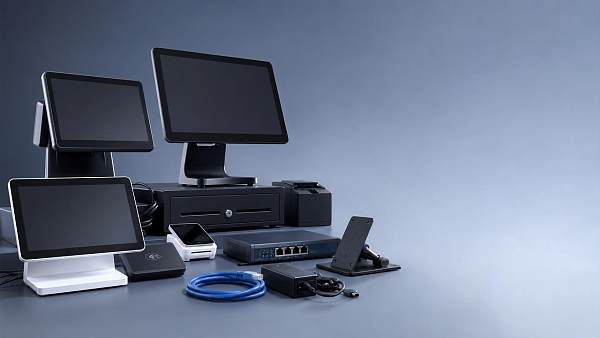
When vendors present point of sale terminals, the conversation often starts with unit price, leasing options, or an attractive bundled package. That framing can make approvals feel straightforward. However, the terminal itself is only one part of a broader payment stack that includes software, security, connectivity, support, and lifecycle management.
For a finance approver, the commercial risk comes from treating a terminal decision as a one-time capital purchase instead of a multi-year operating commitment. Even a low-cost device can become expensive if it requires proprietary software, frequent service calls, expensive accessories, or specialized integration with ERP, POS, or inventory systems.
The most useful financial lens is total cost of ownership. This means evaluating not just purchase price, but the full cost structure attached to deployment, operation, updates, compliance, downtime, and end-of-life replacement. In many organizations, that broader view is the difference between a payment system that scales efficiently and one that drains margin through recurring friction.
Where upgrade costs usually appear later in the terminal lifecycle
The first delayed cost category is software. Many point of sale terminals depend on subscription-based applications for payment acceptance, reporting, fleet management, remote updates, fraud controls, and device analytics. These services may look modest on a monthly basis, but multiplied across locations and devices over several years, they become material budget items.
The second category is compliance and security. Payment terminals operate in a regulated environment shaped by PCI standards, encryption requirements, software certification rules, and evolving cybersecurity expectations. When standards change, businesses may need firmware upgrades, security patches, audits, configuration changes, or even hardware replacement if older devices can no longer meet compliance thresholds.
A third cost area is integration. Point of sale terminals rarely operate in isolation. They must often connect with cashier systems, accounting software, CRM tools, tax engines, loyalty platforms, e-commerce systems, and back-office reporting tools. If these integrations are limited, unstable, or customized, every future upgrade can trigger additional implementation work and outside vendor fees.
The fourth category is maintenance and support. Devices in busy retail, hospitality, healthcare, or field-service environments face wear, connectivity issues, battery decline, cable damage, printer failures, and accidental breakage. Service-level agreements, swap programs, technician visits, replacement stock, and helpdesk support often become recurring expenses that were not fully priced into the original approval.
Finally, replacement cycles themselves introduce delayed costs. A terminal may still function physically, but become commercially obsolete because the processor changes requirements, the operating system reaches end of support, security updates stop, or customer payment preferences evolve toward mobile wallets, QR acceptance, or contactless-first workflows.
Software fees are often the biggest long-tail expense
Among all post-purchase costs, software is frequently the most underestimated. Many finance approvers focus on hardware procurement because it is tangible and easy to benchmark. Yet terminal ecosystems increasingly rely on licensed software services that continue for the full life of the deployment.
Examples include transaction dashboards, centralized device management, cloud reporting, API access, remote diagnostics, digital receipt tools, customer engagement modules, employee permissions, and advanced reconciliation functions. What begins as a “nice-to-have” platform often becomes operationally essential once the business is trained around it.
This creates two financial effects. First, the organization becomes dependent on a recurring service whose pricing may rise over time. Second, switching away from that service later becomes disruptive because workflows, staff habits, and reporting structures have already been built around it.
Finance teams should ask whether software fees are charged per device, per location, per user, per transaction, or by feature tier. They should also clarify which functions are included in the base package and which require paid add-ons later. A terminal quote that looks competitive may rely on a pricing structure that becomes expensive as transaction volume, branch count, or reporting needs increase.
Compliance updates can turn into unplanned budget events
Payment acceptance is not a static environment. Standards change, fraud tactics evolve, and acquirers regularly adjust technical requirements. As a result, point of sale terminals must remain updateable, certifiable, and supportable over time. Devices that cannot keep pace may create both direct costs and risk exposure.
Direct costs can include firmware upgrade projects, re-certification fees, security consulting, hardware replacements, or migration costs to newer terminal models. Indirect costs can include operational disruptions, temporary inability to process certain payment methods, internal IT workload, and audit pressure.
For finance approvers, the practical question is whether the terminal estate is built for change. Vendors should be able to explain how updates are deployed, how long devices are supported, what happens when standards shift, and whether future compliance changes are included in support contracts or billed separately.
It is also important to understand the cost of doing nothing. Choosing the cheapest terminal may save budget in year one but expose the business to a larger replacement event in year three if the device can no longer satisfy updated processor or security requirements.
Integration work is where “simple” deployments become expensive
Many payment terminal projects begin with the assumption that setup will be straightforward. In reality, integration is one of the most common areas where costs grow after approval. The more closely payment data needs to interact with accounting, inventory, customer records, subscription billing, or omnichannel reporting, the more important technical fit becomes.
If a terminal solution uses proprietary interfaces or offers weak documentation, internal teams may need outside developers or systems integrators. That introduces additional project spending, longer deployment timelines, and future dependency on specialist support whenever systems change.
Integration-related costs also surface later when the business adds locations, launches new products, expands internationally, or adopts additional software. A terminal ecosystem that was acceptable for a small deployment may become inefficient when the organization needs centralized visibility, multi-entity reconciliation, tax flexibility, or local payment method support.
For finance decision-makers, this means assessing not only whether the terminal works today, but whether it fits the company’s broader systems roadmap. A slightly higher upfront investment in open, well-supported integration can reduce future spending on patchwork fixes and manual reconciliation.
Maintenance, support, and downtime have real margin impact
A terminal problem is not just a technical inconvenience. It can directly affect revenue capture, checkout speed, staff productivity, customer satisfaction, and cash-flow timing. That is why maintenance and support should be evaluated as financial performance issues, not merely operational details.
Common ongoing costs include device swap fees, warranty extensions, battery replacements, printer paper and peripherals, mobile connectivity plans, support subscriptions, and on-site service. In distributed operations, logistics costs for shipping, staging, and replacing units can become substantial.
Downtime is especially important. If a terminal fails during peak trading hours, the cost is not limited to repair. The business may lose sales, create longer queues, increase abandoned transactions, or push staff into manual fallback processes that create reconciliation errors later.
Finance approvers should therefore ask vendors for measurable support commitments: replacement turnaround times, remote diagnostic capabilities, first-call resolution rates, local service coverage, and warranty boundaries. A cheaper terminal with weak support can become much more expensive when business continuity is considered.
Replacement cycles are shaped by technology, not just physical wear
Many organizations assume that terminals should be replaced only when they stop working. In practice, replacement decisions are often forced earlier by technical or commercial change. Operating systems age out, chipsets lose support, processors end certification, and customer expectations shift toward faster or more flexible payment experiences.
This matters because replacement is rarely limited to the hardware line item. It can trigger new mounting accessories, staff retraining, updated integrations, fresh deployment labor, and disposal or asset write-down considerations. When multiplied across a network of sites, the budget effect can be significant.
Businesses with international operations or multi-format footprints should be especially careful. Different regions, transaction environments, and connectivity conditions can shorten effective device life or create uneven replacement schedules that complicate budgeting.
The better approach is to ask vendors for a realistic support horizon and roadmap visibility. Finance teams should understand not only how long a point of sale terminal is expected to last physically, but how long it is likely to remain secure, certifiable, and commercially relevant.
How finance approvers can evaluate point of sale terminals more accurately
A stronger approval process starts with moving beyond unit pricing. Request a three- to five-year cost model that includes hardware, software subscriptions, transaction-linked platform fees, deployment services, accessories, support, connectivity, compliance updates, and expected replacement assumptions.
It is also wise to compare scenarios rather than quotes alone. For example, what happens to cost if the company doubles terminal count, expands to new regions, adds mobile checkout, or requires deeper integration with ERP and analytics systems? A vendor that looks economical at small scale may become less attractive as complexity rises.
Ask direct questions about lock-in. Can software be replaced independently of hardware? Are data exports straightforward? Do integrations rely on open APIs? Can the company change acquirers or processors without replacing the entire terminal fleet? Flexibility has financial value, even if it does not appear on the first invoice.
Internal stakeholders should also be involved early. Finance, IT, operations, procurement, and compliance teams often see different cost drivers. A terminal decision approved solely on procurement price can miss downstream implications that another department would have identified immediately.
A practical checklist before approving a terminal investment
Before signing, finance approvers should confirm several points. First, identify every recurring fee tied to the terminal environment, including software, support, connectivity, reporting, and compliance-related services. Second, verify the expected support life and update policy for each model.
Third, ask what future changes are likely to require paid work: new payment methods, software upgrades, processor migration, geographic expansion, accessory replacement, or ERP integration updates. Fourth, quantify downtime risk and understand the service response model in real operating conditions.
Fifth, assess exit risk. If the business wants to change provider in two years, what cost and disruption would that create? Finally, review whether the solution fits the organization’s growth strategy, not just current transaction needs. A terminal that is too narrow can become a costly constraint.
These questions help convert a reactive purchase into a structured financial decision. For organizations managing margins carefully, that discipline often matters more than negotiating a small discount on the initial hardware order.
Conclusion: the cheapest point of sale terminals are not always the least expensive choice
For finance approvers, the most important insight is simple: point of sale terminals should be judged by lifecycle economics, not sticker price. The costs that usually appear later, software subscriptions, compliance updates, integration work, support burdens, downtime exposure, and replacement cycles, are often the costs that determine whether the investment performs well.
A better terminal decision is one that aligns with business scale, system architecture, compliance demands, and future operating needs. That may mean paying more upfront for stronger supportability, better integration, or a longer useful life. In many cases, that is the more conservative financial choice.
When terminal approvals are based on total cost of ownership rather than purchase price alone, organizations are better positioned to protect margin, reduce operational surprises, and build a payment infrastructure that remains efficient as the business evolves.
Get weekly intelligence in your inbox.
No noise. No sponsored content. Pure intelligence.
 Sep 21, 2026What to Look for in a Grid Integration Company for Utility-Scale Solar ProjectsWhat to Look for in a Grid Integration Company for Utility-Scale Solar Projects
 Sep 20, 2026Microgrid Controller Pricing: What Drives Cost in Commercial Energy Projects?Microgrid Controller Pricing: What Drives Cost in Commercial Energy Projects?
 Sep 19, 2026How to Choose a GaN Charger for Laptops Without Compromising Power or PortabilityHow to Choose a GaN Charger for Laptops Without Compromising Power or Portability
 Sep 18, 2026Floating Solar Farm Costs: CAPEX, OPEX, and the Site Factors That Shape ROIFloating Solar Farm Costs: CAPEX, OPEX, and the Site Factors That Shape ROI
 Sep 17, 2026Drone Delivery Solutions for Last-Mile Routes: Site, Payload, and Range PlanningDrone Delivery Solutions for Last-Mile Routes: Site, Payload, and Range Planning
 Sep 16, 2026When Low-Volume Electronics Manufacturing Makes More Sense Than Mass ProductionWhen Low-Volume Electronics Manufacturing Makes More Sense Than Mass Production
 Sep 15, 2026Wholesale WiFi Smart Switches: What Buyers Should Verify Before OrderingWholesale WiFi Smart Switches: What Buyers Should Verify Before Ordering
 Sep 14, 2026How to Select IoT Sensors for Reliable Monitoring in Harsh Industrial EnvironmentsHow to Select IoT Sensors for Reliable Monitoring in Harsh Industrial Environments
 Sep 13, 2026How Procurement Teams Can Improve Supplier Reliability With Supply Chain VisibilityHow Procurement Teams Can Improve Supplier Reliability With Supply Chain Visibility
 Sep 12, 2026Smart Manufacturing Trends 2026: What Leaders Should Prioritize for ROISmart Manufacturing Trends 2026: What Leaders Should Prioritize for ROI
 Sep 11, 2026B2B Market Analysis: How Buyers Evaluate Suppliers, Pricing, and Delivery RiskB2B Market Analysis: How Buyers Evaluate Suppliers, Pricing, and Delivery Risk
 Sep 10, 2026Residential Solar Kits in Canada: How to Size a System for Your Home and ClimateResidential Solar Kits in Canada: How to Size a System for Your Home and Climate
 Sep 09, 2026How to Specify a Syringe Assembly Line for High-Volume Sterile ProductionHow to Specify a Syringe Assembly Line for High-Volume Sterile Production
 Sep 08, 2026How to Evaluate Warehouse Robotics System Suppliers for Reliable Multi-Site DeploymentHow to Evaluate Warehouse Robotics System Suppliers for Reliable Multi-Site Deployment
 Sep 07, 2026Renewable Geothermal Energy Explained: How It Works for Heating and PowerRenewable Geothermal Energy Explained: How It Works for Heating and Power
 Sep 07, 2026How to Choose an Industrial Packaging Robot Manufacturer for Your Production LineHow to Choose an Industrial Packaging Robot Manufacturer for Your Production Line
 Sep 05, 2026How to Evaluate a Turnkey Hydro Turbine Generator Supplier for Remote Power ProjectsHow to Evaluate a Turnkey Hydro Turbine Generator Supplier for Remote Power Projects
 Sep 04, 2026Automated Ultrasonic Welding for Thermoplastic Assemblies: Process Controls That MatterAutomated Ultrasonic Welding for Thermoplastic Assemblies: Process Controls That Matter
 Sep 03, 2026Energy Forecasting for Grid Planning: Sizing Solar and Storage CapacityEnergy Forecasting for Grid Planning: Sizing Solar and Storage Capacity
 Sep 02, 2026Which Metrics Should an Energy Analytics Dashboard Track for Factory Energy Management?Which Metrics Should an Energy Analytics Dashboard Track for Factory Energy Management?
 Sep 01, 2026How Warehouse Voice Picking Improves Accuracy and Throughput in Order FulfillmentHow Warehouse Voice Picking Improves Accuracy and Throughput in Order Fulfillment
 Aug 31, 2026How to Automate Dropshipping Order Processing Without Overselling StockHow to Automate Dropshipping Order Processing Without Overselling Stock
 Aug 30, 2026How to Evaluate a Smart Lighting Supplier for Multi-Site Commercial ProjectsHow to Evaluate a Smart Lighting Supplier for Multi-Site Commercial Projects
 Aug 29, 2026Recent Advances in Smart Manufacturing and Materials Reshaping Factory InvestmentRecent Advances in Smart Manufacturing and Materials Reshaping Factory Investment
 Aug 29, 2026Selecting Lightweight Aluminum Extrusions for Strength-Critical Industrial DesignsSelecting Lightweight Aluminum Extrusions for Strength-Critical Industrial Designs
 Aug 29, 2026Vertical Powder Anodizing Explained: Process Controls for Uniform Coating QualityVertical Powder Anodizing Explained: Process Controls for Uniform Coating Quality
 Aug 29, 2026PV Module Product Due Diligence: What Buyers Should Verify Before ContractingPV Module Product Due Diligence: What Buyers Should Verify Before Contracting