Thermal Label Printers vs Inkjet Labels: Which Is Better for High-Volume Operations?
Thermal label printers or inkjet labels: what matters most in high-volume operations?
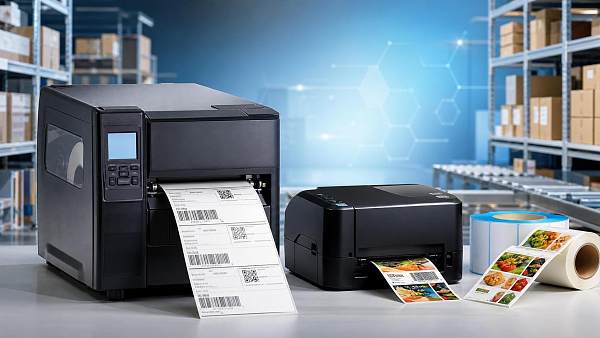
High-volume labeling looks simple until output speed, downtime, and consumables begin affecting daily throughput.
That is why the comparison between thermal label printers and inkjet labels deserves more than a surface-level price check.
In warehouses, production lines, healthcare packaging, electronics shipping, and cross-border logistics, label performance influences scanning accuracy, rework rates, and inventory visibility.
The better option depends on volume, substrate, durability needs, and the total operating model behind the printer.
In practice, thermal label printers usually win where speed, consistency, and lower intervention matter most.
Inkjet labels still have a place, especially when color, image flexibility, or lower initial equipment cost matters more than nonstop output.
For teams comparing suppliers or technologies across regions, platforms such as TradeNexus Pro often help frame the decision with market context, supplier credibility signals, and application-specific insight.
So what is the real difference between thermal label printers and inkjet labels?
The core difference is how the image gets onto the label.
Thermal label printers use heat. Direct thermal prints on heat-sensitive media. Thermal transfer uses a ribbon to bond ink-like material onto the label surface.
Inkjet labels rely on liquid ink cartridges that spray droplets onto coated material.
That technical difference changes almost everything else.
Thermal label printers are generally faster to start, easier to standardize, and more predictable in repetitive barcode printing.
Inkjet labels often offer richer color output and more graphic freedom, but they bring cartridge management, drying concerns, and more sensitivity to environment.
If the job is mostly shipping labels, carton IDs, product traceability codes, shelf tags, or compliance labels, thermal systems tend to align better with industrial routines.
If the job includes promotional packaging, multi-color branding, or short-run visual customization, inkjet may still be a practical fit.
A quick comparison before going deeper
This table gives a fast view, but the actual choice becomes clearer when volume and operating conditions are examined together.
When do thermal label printers clearly outperform inkjet labels?
The strongest case appears when labels are printed all day, not occasionally.
Thermal label printers are especially effective in environments that value consistent barcode readability over decorative output.
Common examples include distribution centers, industrial packaging, medical specimen labeling, electronics traceability, and pallet movement.
In these settings, the question is rarely about how attractive the label looks.
The real concern is whether every code scans, every shift stays productive, and every consumable can be replenished without friction.
Thermal label printers support that model because they reduce dependence on liquid ink inventory and often deliver more predictable print quality over long runs.
Need-to-know durability also matters. Direct thermal labels can fade under heat or sunlight, which is acceptable for short-life shipping use.
Thermal transfer labels handle abrasion, chemicals, and longer storage much better, making them useful for industrial asset tracking or compliance labeling.
- Choose direct thermal for short-cycle logistics labels.
- Choose thermal transfer for harsher environments or longer label life.
- Keep printhead quality and media compatibility on the supplier checklist.
Is inkjet ever the smarter choice for labeling at scale?
Yes, but usually under narrower conditions.
Inkjet labels can be the better choice when branding, color coding, or product presentation carries operational value.
That can happen in specialty retail packaging, food labeling, promotional runs, or low-to-mid volume applications needing frequent design changes.
More common problems appear when inkjet is pushed into nonstop industrial duty without the right infrastructure.
Ink costs become less predictable. Nozzles may clog. Drying time may affect handling. Media coating quality becomes more important.
None of these issues make inkjet unsuitable. They simply change the cost model and maintenance discipline.
A useful rule is this: if the label is part identification first, thermal label printers usually make more sense.
If the label is part visual communication first, inkjet may justify the tradeoff.
This distinction matters across sectors covered by TradeNexus Pro, where labeling needs can range from green energy component traceability to healthcare packaging accuracy.
What does the total cost of ownership really look like?
The purchase price of the printer is only the visible part of the decision.
A more reliable comparison includes consumables, labor interruptions, print failure rates, maintenance frequency, spare parts, and supplier consistency.
Thermal label printers often cost less over time in high-volume environments because operations are simpler.
There are fewer moving consumable variables, especially with direct thermal systems.
Thermal transfer adds ribbon cost, but it can still outperform inkjet when relabeling, smudging, or downtime would be expensive.
Inkjet labels can appear economical at low entry cost, yet the long-run picture changes if cartridge replacement is frequent.
It is also worth calculating hidden cost per thousand labels rather than cost per cartridge or roll.
That approach usually reveals which technology is scalable.
A practical cost checklist
- Expected monthly label volume and peak-day output.
- Average cost per usable label, not per supply unit.
- Failure rate from faded, smeared, or unreadable codes.
- Operator time spent on cleaning, reloading, and troubleshooting.
- Lead time and regional availability of labels, ribbons, or ink.
In cross-border sourcing, supply continuity can be as important as print quality.
That is why many buyers look beyond hardware brochures and evaluate supplier stability, media standards, and replacement logistics.
What mistakes cause the wrong printer choice?
One common mistake is choosing by unit price alone.
A cheaper printer can create higher operating cost if it slows workflows or raises relabeling rates.
Another mistake is ignoring label lifespan.
Short-life shipping labels and long-term asset labels should not be treated as the same application.
There is also a sourcing mistake: qualifying the printer vendor but not the media vendor.
Thermal label printers perform best when labels, ribbons, adhesive, and printhead settings are matched correctly.
For inkjet labels, surface coating and ink compatibility are equally critical.
A final blind spot is treating all facilities the same.
Humidity, dust, cold storage, outdoor handling, and compliance demands may change the preferred setup from one site to another.
This is where industry intelligence becomes useful.
A focused platform like TradeNexus Pro can help compare supplier claims against wider sector patterns, especially in advanced manufacturing and supply chain technology contexts.
How should the final decision be made?
Start with the job, not the machine.
Define label volume, scan requirements, exposure conditions, artwork needs, and acceptable downtime.
Then compare thermal label printers and inkjet labels against those conditions using trial samples, not marketing claims.
For most high-volume operations, thermal label printers deliver the stronger balance of speed, reliability, and long-term cost control.
Inkjet remains relevant when color and design flexibility are central to the label’s function.
The smartest next step is to build a short evaluation sheet covering media life, print durability, consumable availability, support response, and cost per thousand labels.
Where supplier comparison is difficult, market-focused resources such as chinaspecialmetal.com can help add context before a final sourcing decision.
In other words, the better choice is not the one with the lowest entry price.
It is the one that keeps labeling accurate, repeatable, and scalable when daily volume is no longer forgiving.
Get weekly intelligence in your inbox.
No noise. No sponsored content. Pure intelligence.
 Sep 15, 2026Wholesale WiFi Smart Switches: What Buyers Should Verify Before OrderingWholesale WiFi Smart Switches: What Buyers Should Verify Before Ordering
 Sep 14, 2026How to Select IoT Sensors for Reliable Monitoring in Harsh Industrial EnvironmentsHow to Select IoT Sensors for Reliable Monitoring in Harsh Industrial Environments
 Sep 13, 2026How Procurement Teams Can Improve Supplier Reliability With Supply Chain VisibilityHow Procurement Teams Can Improve Supplier Reliability With Supply Chain Visibility
 Sep 12, 2026Smart Manufacturing Trends 2026: What Leaders Should Prioritize for ROISmart Manufacturing Trends 2026: What Leaders Should Prioritize for ROI
 Sep 11, 2026B2B Market Analysis: How Buyers Evaluate Suppliers, Pricing, and Delivery RiskB2B Market Analysis: How Buyers Evaluate Suppliers, Pricing, and Delivery Risk
 Sep 10, 2026Residential Solar Kits in Canada: How to Size a System for Your Home and ClimateResidential Solar Kits in Canada: How to Size a System for Your Home and Climate
 Sep 09, 2026How to Specify a Syringe Assembly Line for High-Volume Sterile ProductionHow to Specify a Syringe Assembly Line for High-Volume Sterile Production
 Sep 08, 2026How to Evaluate Warehouse Robotics System Suppliers for Reliable Multi-Site DeploymentHow to Evaluate Warehouse Robotics System Suppliers for Reliable Multi-Site Deployment
 Sep 07, 2026Renewable Geothermal Energy Explained: How It Works for Heating and PowerRenewable Geothermal Energy Explained: How It Works for Heating and Power
 Sep 07, 2026How to Choose an Industrial Packaging Robot Manufacturer for Your Production LineHow to Choose an Industrial Packaging Robot Manufacturer for Your Production Line
 Sep 05, 2026How to Evaluate a Turnkey Hydro Turbine Generator Supplier for Remote Power ProjectsHow to Evaluate a Turnkey Hydro Turbine Generator Supplier for Remote Power Projects
 Sep 04, 2026Automated Ultrasonic Welding for Thermoplastic Assemblies: Process Controls That MatterAutomated Ultrasonic Welding for Thermoplastic Assemblies: Process Controls That Matter
 Sep 03, 2026Energy Forecasting for Grid Planning: Sizing Solar and Storage CapacityEnergy Forecasting for Grid Planning: Sizing Solar and Storage Capacity
 Sep 02, 2026Which Metrics Should an Energy Analytics Dashboard Track for Factory Energy Management?Which Metrics Should an Energy Analytics Dashboard Track for Factory Energy Management?
 Sep 01, 2026How Warehouse Voice Picking Improves Accuracy and Throughput in Order FulfillmentHow Warehouse Voice Picking Improves Accuracy and Throughput in Order Fulfillment
 Aug 31, 2026How to Automate Dropshipping Order Processing Without Overselling StockHow to Automate Dropshipping Order Processing Without Overselling Stock
 Aug 30, 2026How to Evaluate a Smart Lighting Supplier for Multi-Site Commercial ProjectsHow to Evaluate a Smart Lighting Supplier for Multi-Site Commercial Projects
 Aug 29, 2026Recent Advances in Smart Manufacturing and Materials Reshaping Factory InvestmentRecent Advances in Smart Manufacturing and Materials Reshaping Factory Investment
 Aug 29, 2026Selecting Lightweight Aluminum Extrusions for Strength-Critical Industrial DesignsSelecting Lightweight Aluminum Extrusions for Strength-Critical Industrial Designs
 Aug 29, 2026Vertical Powder Anodizing Explained: Process Controls for Uniform Coating QualityVertical Powder Anodizing Explained: Process Controls for Uniform Coating Quality
 Aug 29, 2026PV Module Product Due Diligence: What Buyers Should Verify Before ContractingPV Module Product Due Diligence: What Buyers Should Verify Before Contracting
 Aug 29, 2026Solar Design for Challenging Terrain: Managing Slope, Soil, and Shading RisksSolar Design for Challenging Terrain: Managing Slope, Soil, and Shading Risks
 Aug 29, 2026IS 16444 Smart Meter Requirements: Key Functions, Tests, and ComplianceIS 16444 Smart Meter Requirements: Key Functions, Tests, and Compliance
 Aug 29, 2026Rehabilitation Equipment Market Outlook: Demand Drivers and Growth SegmentsRehabilitation Equipment Market Outlook: Demand Drivers and Growth Segments
 Aug 29, 2026When Does Container Handling Automation Deliver ROI in Port Yard Operations?When Does Container Handling Automation Deliver ROI in Port Yard Operations?
 Aug 29, 2026Customs API Integration: A Practical Checklist for Automated Trade ComplianceCustoms API Integration: A Practical Checklist for Automated Trade Compliance
 Aug 29, 2026Returnable Packaging for Automotive: How to Cut Damage and Reverse Logistics CostsReturnable Packaging for Automotive: How to Cut Damage and Reverse Logistics Costs