Vietnam Enforces Bilingual Safety Labels for Electronic Components from Apr 22, 2026
Vietnam’s Ministry of Science and Technology (MOST) has introduced a mandatory bilingual labeling requirement for imported electronic components—effective April 22, 2026. The regulation directly impacts exporters, manufacturers, and supply chain operators serving the Vietnamese market, particularly those handling PCBs, capacitors, connectors, and power modules. Its enforcement signals a tightening of technical compliance expectations at customs clearance points, notably Ho Chi Minh City.
Event Overview
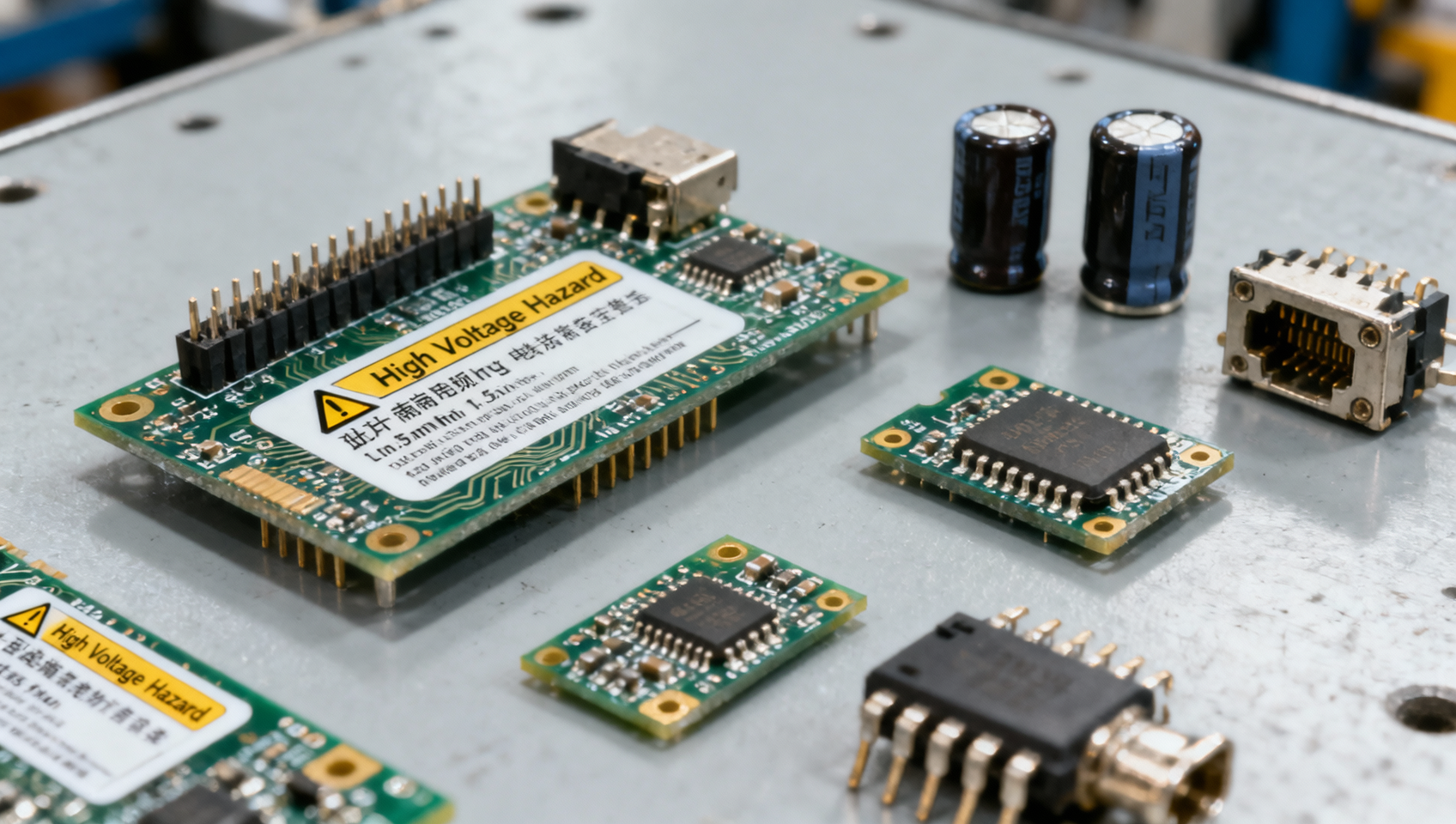
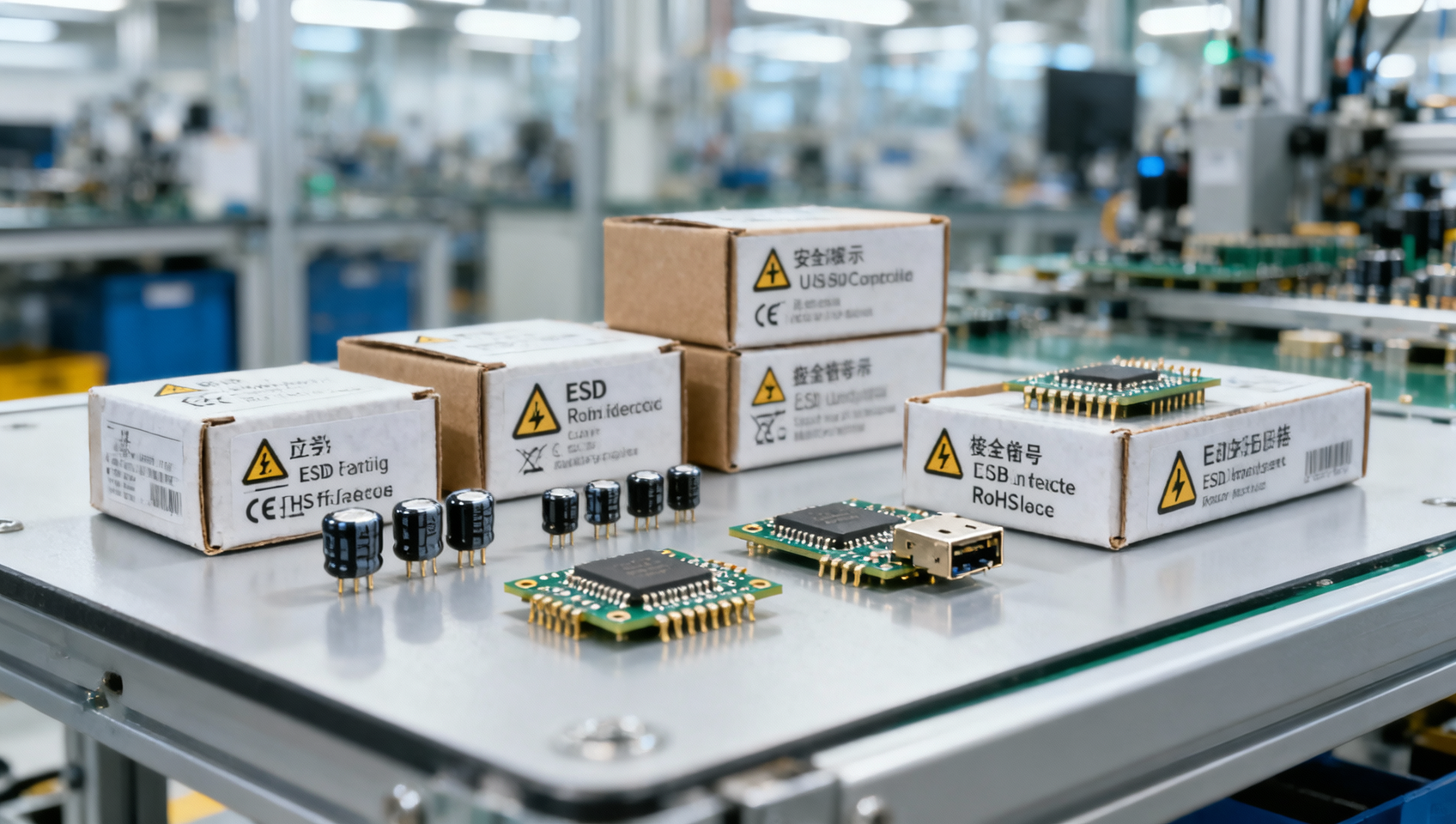
MOST Circular No. 12/2026/TT-BKHCN enters into force on April 22, 2026. It mandates that all imported electronic components—including printed circuit boards (PCBs), capacitors, connectors, and power modules—must display safety warnings (e.g., ‘High Voltage Hazard’, ‘ESD Sensitive’, ‘Do Not Disassemble’) in both Chinese and English. These warnings must appear on both the smallest retail packaging unit and the product body itself, using a minimum font size of 1.5 mm. Non-compliant shipments will be rejected by Ho Chi Minh City Customs.
Which Sub-Sectors Are Affected
Direct Exporters to Vietnam
Exporters shipping electronic components to Vietnam must revise labeling specifications for affected products. Since the requirement applies to the smallest retail unit and the product body—not just master cartons—label redesign, print verification, and production line adjustments are necessary before shipment.
Component Manufacturers (OEM/ODM)
Manufacturers supplying components to Vietnamese importers or distributors face upstream compliance pressure. If their standard product markings do not include bilingual safety text at the required legibility, they may need to implement custom labeling per order—or risk rejection upon Vietnamese customs inspection.
Contract Electronics Assemblers & EMS Providers
EMS providers integrating components into finished goods for Vietnamese clients must verify whether incoming parts meet the labeling rule. Absence of compliant labeling could delay assembly or trigger rework, especially if final products are subject to downstream compliance audits.
Distributors & Import Agents in Vietnam
Distributors receiving shipments from overseas suppliers now bear responsibility for pre-clearance verification. Customs rejection at Ho Chi Minh City port implies storage costs, reshipment delays, and potential contractual liability—making label validation a critical step prior to cargo arrival.
What Relevant Enterprises or Practitioners Should Focus On—and How to Respond Now
Verify applicability against actual product scope
Confirm whether your exported items fall under the defined categories: PCBs, capacitors, connectors, and power modules. Note that the regulation does not explicitly cover semiconductors, passive discrete devices beyond capacitors, or bare ICs—unless classified as ‘electronic components’ under Vietnamese customs tariff codes. Current more appropriate interpretation is to treat the listed categories as the primary enforcement focus.
Update labeling assets and production workflows
Review current packaging artwork and product marking files. Adjust bilingual safety text placement, font size (≥1.5 mm), and contrast ratio to ensure readability. Where direct product marking is impractical (e.g., miniature SMD capacitors), confirm whether packaging-only labeling suffices—this remains unclarified in the circular and warrants follow-up with MOST or Vietnamese customs.
Align documentation and communication with trading partners
Share updated labeling requirements with overseas suppliers and internal QA teams. Include bilingual label specifications in purchase orders and quality agreements. For shipments scheduled between April 22 and June 2026, allow buffer time for label revision cycles and sample approvals.
Monitor official guidance and early enforcement patterns
While the circular is effective April 22, 2026, implementation details—including inspection frequency, acceptable translation variants, and transitional arrangements—are not yet published. From industry perspective, early enforcement activity at Ho Chi Minh City Customs will indicate how strictly the font size and dual-language criteria are applied in practice.
Editorial Perspective / Industry Observation
This regulation is better understood as an operational signal than an immediate market barrier. Analysis来看, it reflects Vietnam’s broader trend toward aligning technical regulatory frameworks with regional trade partners—particularly where Chinese-language labeling serves both domestic end-users and cross-border logistics stakeholders. Observation来看, the emphasis on physical product marking (not just packaging) suggests growing scrutiny of end-product traceability and user safety accountability. From industry angle, this is less about new safety testing and more about documentation discipline and labeling governance—making it a low-cost but high-visibility compliance checkpoint.
Current more appropriate understanding is that this rule establishes a baseline expectation for market access—not a one-off audit trigger. Continued attention should focus on whether similar bilingual labeling provisions extend to other electronics categories (e.g., power supplies, sensors) in future MOST amendments.
Conclusion
This requirement marks a procedural shift—not a technical overhaul—for companies exporting electronic components to Vietnam. Its significance lies not in complexity, but in enforceability at the port level and its role as a precedent for localized labeling obligations. Enterprises should treat it as a fixed operational parameter in export planning, rather than a temporary adjustment. Current more appropriate interpretation is that it formalizes an emerging expectation for multilingual consumer-facing safety communication in regulated electronics trade corridors.
Information Sources
Main source: Vietnam Ministry of Science and Technology (MOST), Circular No. 12/2026/TT-BKHCN, effective April 22, 2026. Official text available via MOST’s legal database (https://vanban.moet.gov.vn). Areas requiring ongoing observation include: (1) interpretation of ‘smallest sales unit’ for bulk-packed components; (2) acceptance of machine-readable bilingual labels (e.g., QR-linked translations); (3) alignment with ASEAN MRA or IEC standards on safety marking.
Get weekly intelligence in your inbox.
No noise. No sponsored content. Pure intelligence.
") Apr 26, 2026China Releases Green Design Guidelines for Industrial Products (2026)China Releases Green Design Guidelines for Industrial Products (2026)
Apr 26, 2026China Releases Green Design Guidelines for Industrial Products (2026)China Releases Green Design Guidelines for Industrial Products (2026) Apr 26, 2026ANATEL Mandates Portuguese Offline Voice Assistant for Smart Home Devices in BrazilANATEL Mandates Portuguese Offline Voice Assistant for Smart Home Devices in Brazil
 Apr 26, 2026Vietnam Enforces Bilingual Safety Labels for Electronic Components from Apr 22, 2026Vietnam Enforces Bilingual Safety Labels for Electronic Components from Apr 22, 2026
 Apr 26, 2026Japan Updates JIS for Rehab Devices: IEC 62366-1:2024 RequiredJapan Updates JIS for Rehab Devices: IEC 62366-1:2024 Required
 Apr 26, 2026THE Alliance Cuts Ningbo–Rotterdam Transit to 18 Days, Spot Rates Up 35%THE Alliance Cuts Ningbo–Rotterdam Transit to 18 Days, Spot Rates Up 35%
 Apr 26, 2026India BIS Mandates PLC & HMI Certification under IS 13252:2025 by Oct 2026India BIS Mandates PLC & HMI Certification under IS 13252:2025 by Oct 2026
") Apr 26, 2026SASO Enforces New EV Charger Rules in Saudi Arabia (2026)SASO Enforces New EV Charger Rules in Saudi Arabia (2026)
Apr 26, 2026SASO Enforces New EV Charger Rules in Saudi Arabia (2026)SASO Enforces New EV Charger Rules in Saudi Arabia (2026) Apr 26, 2026TÜV Rheinland Updates IoT EMC Guidelines: AI Edge Modules Now Mandatory for Immunity TestingTÜV Rheinland Updates IoT EMC Guidelines: AI Edge Modules Now Mandatory for Immunity Testing
 Apr 26, 2026USTR Launches First Annual Review of China Solar PV AD/CVD OrdersUSTR Launches First Annual Review of China Solar PV AD/CVD Orders
 Apr 26, 2026EU New Battery Regulation Fully Enforced Apr 24, 2026EU New Battery Regulation Fully Enforced Apr 24, 2026
 Apr 25, 2026Vietnam Enforces CN-EN Bilingual Safety Labels on Electronic Components from Apr 22, 2026Vietnam Enforces CN-EN Bilingual Safety Labels on Electronic Components from Apr 22, 2026
 Apr 25, 2026ANATEL Mandates Portuguese Offline Voice Assistants for Smart Home Devices in BrazilANATEL Mandates Portuguese Offline Voice Assistants for Smart Home Devices in Brazil
 Apr 25, 2026India BIS Mandates IS 13252:2025 for PLCs & HMIs by Oct 2026India BIS Mandates IS 13252:2025 for PLCs & HMIs by Oct 2026
 Apr 25, 2026SASO EV Charger Rules: Grid Compatibility & Sand Resistance RequiredSASO EV Charger Rules: Grid Compatibility & Sand Resistance Required
 Apr 25, 2026JIS T 0011:2026 Enforces IEC 62366-1:2024 for Rehab Devices in JapanJIS T 0011:2026 Enforces IEC 62366-1:2024 for Rehab Devices in Japan
 Apr 25, 2026THE Alliance Cuts Ningbo–Rotterdam Transit to 18 Days, +35% Spot RateTHE Alliance Cuts Ningbo–Rotterdam Transit to 18 Days, +35% Spot Rate
 Apr 25, 2026TÜV Rheinland Updates IoT EMC Standard: AI Edge Module Immunity Now MandatoryTÜV Rheinland Updates IoT EMC Standard: AI Edge Module Immunity Now Mandatory
 Apr 25, 2026USTR Launches Five-Year China Solar PV AD/CVD ReviewUSTR Launches Five-Year China Solar PV AD/CVD Review
 Apr 25, 2026EU New Battery Regulation Enters Force Apr 24, 2026EU New Battery Regulation Enters Force Apr 24, 2026
 Apr 25, 2026China Customs Launches RCEP Origin Smart Pre-Review for ASEAN机电 ExportsChina Customs Launches RCEP Origin Smart Pre-Review for ASEAN机电 Exports
 Apr 24, 2026India BIS Mandates IS 13252:2025 for PLCs & HMIs by Oct 2026India BIS Mandates IS 13252:2025 for PLCs & HMIs by Oct 2026
 Apr 24, 2026SASO EV Charger Regulation: Sand-Resistant Grid Compatibility Testing RequiredSASO EV Charger Regulation: Sand-Resistant Grid Compatibility Testing Required
 Apr 24, 2026Japan Updates JIS for Rehab Devices: IEC 62366-1:2024 Usability Compliance RequiredJapan Updates JIS for Rehab Devices: IEC 62366-1:2024 Usability Compliance Required
 Apr 24, 2026China Customs Launches RCEP Origin Smart Pre-Review SystemChina Customs Launches RCEP Origin Smart Pre-Review System
 Apr 24, 2026ANATEL Mandates Localized Voice Assistants for Smart Home Devices in BrazilANATEL Mandates Localized Voice Assistants for Smart Home Devices in Brazil
 Apr 24, 2026TÜV Rheinland Updates IoT EMC Standard with AI Edge抗扰度 RequirementTÜV Rheinland Updates IoT EMC Standard with AI Edge抗扰度 Requirement
 Apr 24, 20262M Alliance Shortens Ningbo–Rotterdam Route to 18 Days Amid 35% Slot Premium2M Alliance Shortens Ningbo–Rotterdam Route to 18 Days Amid 35% Slot Premium